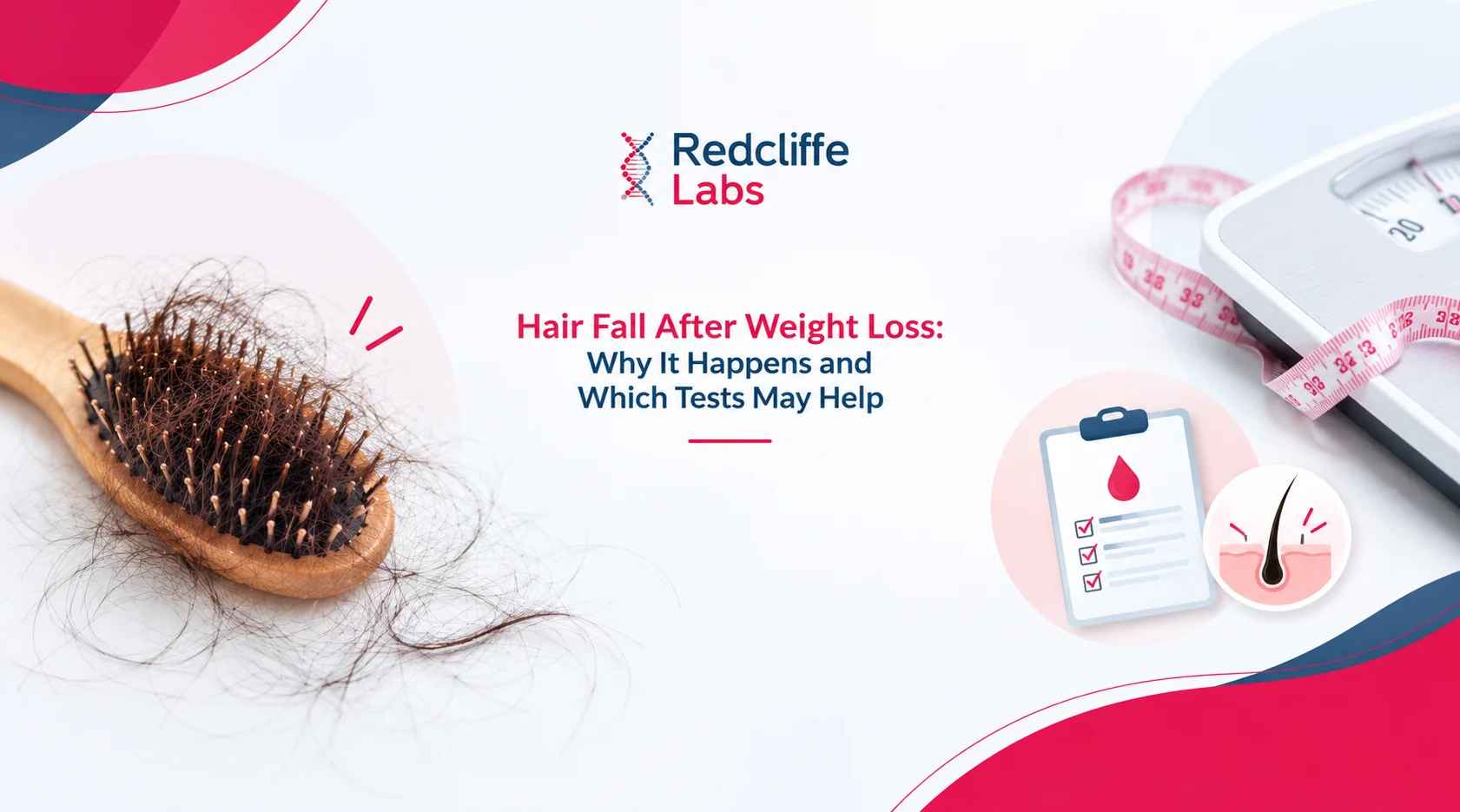
Hair Fall After Weight Loss: Why It Happens and Which Tests May Help

Overview
- Rapid weight loss and restrictive diets can trigger excessive hair shedding.
- Inadequate protein, iron and other nutrients may affect normal hair growth.
- Hair shedding may become noticeable a few months after the triggering event.
- Blood tests may help identify nutritional deficiencies or thyroid problems when indicated.
- A balanced diet, adequate protein intake and gradual weight loss can support hair health.
- Redcliffe Labs offers the Healthy Hairfall Package to help investigate potential factors associated with hair fall, when testing is appropriate.
- Persistent or severe hair loss needs medical evaluation to identify the underlying cause.
Losing weight can feel rewarding, but noticing more hair on your pillow, hairbrush or bathroom floor can be worrying. If you have recently changed your diet, reduced your calorie intake or lost weight quickly, you may wonder whether these changes are affecting your hair health.
Hair fall after weight loss can occur when rapid weight reduction, inadequate protein intake or nutritional deficiencies place stress on the body. In some cases, the shedding is temporary. However, thyroid conditions, iron deficiency and other factors can also contribute to hair loss. Understanding the possible reasons and knowing which blood tests may help can guide the next steps.
Why Does Hair Fall After Weight Loss?
Hair grows in a natural cycle that includes growth, transition, resting and shedding phases. Major changes in nutrition or physical stress can disrupt this cycle, causing more hairs than usual to enter the shedding phase.
1. Rapid weight loss can trigger temporary hair shedding
Losing weight quickly, particularly through crash diets or a very low-calorie intake, can place stress on the body. This may trigger telogen effluvium, in which more hair follicles than usual enter the resting phase and shed later.
Shedding often becomes noticeable about two to three months after the trigger, so you may not immediately connect it to your recent weight loss. This type of hair shedding is often temporary, although recovery can take several months.
2. Low protein intake may affect hair growth
Protein provides amino acids that the body uses to build hair. When you lose weight by eating too little protein, your body may not get enough nutrients to support normal hair growth.
This can be a concern when meals consist mainly of low-calorie foods without enough protein-rich options. Including foods such as dal, beans, chickpeas, milk, curd, paneer, soy and nuts can help improve protein intake as part of a balanced diet.
3. Nutritional deficiencies can contribute to hair fall
Restrictive diets may reduce the intake of essential vitamins and minerals. Iron deficiency, in particular, can be associated with hair loss, while inadequate intake of other nutrients may affect overall hair health.
The relationship between nutritional deficiencies and hair loss depends on the nutrient, the severity of the deficiency and the individual's health. Not everyone experiencing hair fall has a vitamin deficiency, and taking supplements without confirming the need may not help.
4. Thyroid problems or other health conditions may play a role
Thyroid disorders can affect the hair growth cycle and cause diffuse hair thinning or shedding. Other factors, such as recent illness, emotional stress, hormonal changes, certain medicines and hereditary hair loss, may also contribute.
So don't assume weight loss is the only reason for increased hair shedding.
Also read:
https://redcliffelabs.com/myhealth/lifestyle/increasing-hair-fall-in-winter-and-ways-to-deal-with-it
When Should You Be Concerned About Hair Fall After Weight Loss?
Some hair shedding is normal, but a noticeable increase that continues for weeks or months deserves attention, especially if it follows rapid weight loss or restrictive dieting.
Look out for:
- More hair than usual on your pillow, comb or in the shower.
- Noticeable thinning across the scalp.
- Hair shedding that begins a few months after significant weight loss.
- Hair fall accompanied by fatigue, weakness or other symptoms that may suggest a nutritional problem.
- Persistent shedding or hair loss that continues despite dietary improvements.
Sudden bald patches, scalp redness, pain, scaling or severe hair loss should be assessed by a healthcare professional. These features may indicate a condition other than typical temporary shedding.
Which Blood Tests May Help Identify the Cause of Hair Fall?
The required tests depend on your symptoms, medical history, eating habits, weight loss, and a clinical examination. A healthcare professional may recommend selected blood tests to look for possible contributing factors.
1. Complete Blood Count (CBC)
A CBC measures different blood components, including haemoglobin and red blood cells. It can help identify anemia and other blood abnormalities that may need further evaluation.
2. Ferritin and iron studies
Ferritin reflects the body's stored iron, while iron studies assess iron levels and related measures. These tests may help identify iron deficiency, which can contribute to hair shedding in some people.
Ferritin can also be affected by inflammation, so results should be interpreted alongside other findings rather than in isolation.
3. Vitamin B12 and folate tests
Vitamin B12 and folate support red blood cell production and other important body functions. Testing may be considered when your dietary intake, symptoms or medical history suggest a possible deficiency.
These tests do not establish the cause of hair fall on their own, but they can help identify deficiencies that require attention.
4. Vitamin D test
A vitamin D test measures 25-hydroxyvitamin D levels in the blood. It may be considered when deficiency is suspected. However, a low vitamin D level does not automatically mean it causes hair loss.
5. Thyroid profile
Thyroid tests, such as TSH, T3 and T4, help assess thyroid function. They may be recommended if symptoms, examination findings, or medical history suggest a thyroid disorder that could contribute to hair shedding.
6. Zinc and other tests, when indicated
Zinc supports normal cell function, including processes involved in hair growth. A zinc test may be considered when there is a specific reason to suspect deficiency. Other investigations may be needed depending on the individual's symptoms and clinical findings.
Remember: Not everyone with hair fall needs every test listed above. A healthcare professional can help determine which investigations are appropriate.
Also read:
https://redcliffelabs.com/myhealth/lifestyle/how-to-stop-hair-fall-know-effective-remedies
How Can You Manage Hair Fall After Weight Loss?
The best approach is to address the possible trigger while supporting your body's nutritional needs.
Follow a balanced diet
Avoid crash diets and excessively restrictive eating plans. Include adequate protein, whole grains, vegetables, fruits, healthy fats and other nutrient-rich foods to support overall health.
Aim for gradual, sustainable weight loss
Rapid weight loss can put extra stress on the body. A sustainable eating plan and regular physical activity can help you work towards your weight goals without unnecessary dietary restriction.
Avoid supplements without professional advice
Don't start iron, zinc, vitamin D, or other supplements just because your hair is shedding. Excess amounts of certain nutrients can cause harm, and supplements are most useful when there is a confirmed need.
Give your hair time to recover
If telogen effluvium is causing the shedding, it may take several months for shedding to settle and regrowth to become noticeable. Recovery varies from person to person. Persistent hair fall may require further evaluation by a dermatologist.
Which Redcliffe Labs Hair Fall Package May Be Suitable?
If you have noticed increased hair shedding after losing weight, blood tests may help identify potential nutritional deficiencies or other health factors, as recommended by a healthcare professional.
Redcliffe Labs offers two packages that may be relevant:
Hairfall Package - Advance
The Hairfall Package - Advance includes 41 test parameters, including CBC, ferritin, iron studies, vitamin B12, folate, vitamin D, zinc, and a thyroid profile, among others. Its broader panel may be worth discussing with your healthcare professional if you need to assess several possible contributors to hair fall.
Explore the Hairfall Package - Advance
Healthy Hair Package
The Healthy Hair Package includes 11 test parameters, including iron studies, folate, vitamin B12, vitamin D, a thyroid profile and CRP. It may be a better option if a more focused screening panel suits your needs.
Explore the Healthy Hair Package
Neither package can independently confirm that weight loss caused your hair fall. Your symptoms, examination, and test results need to be considered together, and you should choose the most appropriate package or individual tests based on clinical advice.
Conclusion
Hair fall after weight loss may occur when rapid weight reduction, inadequate protein intake or nutritional deficiencies disrupt the normal hair growth cycle. Although temporary shedding can improve over time, persistent or severe hair loss should not be ignored. A balanced diet, sustainable weight management and appropriate medical evaluation can help address possible causes. When indicated, blood tests can provide useful information about iron status, nutritional deficiencies and thyroid function.
If you experience ongoing hair shedding, speak with a healthcare professional about appropriate tests. Redcliffe Labs' hair fall packages offer different screening options to help investigate potential contributing factors.
Frequently Asked Questions
1. Can hair fall start even after reaching your target weight?
Yes. Hair shedding may begin or continue after you reach your target weight because the effects of rapid weight loss or dietary changes can be delayed. The timing depends on the trigger and your hair growth cycle. Persistent shedding should be assessed to check for other possible causes.
2. Can intermittent fasting cause hair fall?
Intermittent fasting does not automatically cause hair fall. However, if your eating window makes it hard to get enough calories, protein, iron, and other essential nutrients, it may contribute to excessive shedding. A balanced diet that meets your nutritional needs matters, regardless of your meal timing.
3. Can hair fall after weight loss be caused by muscle loss?
Muscle loss does not directly cause hair fall. However, losing muscle alongside weight may indicate inadequate protein intake, excessive calorie restriction or insufficient physical activity. Nutritional inadequacy and the stress associated with rapid weight loss may contribute to shedding in some people.
4. Does hair fall after weight loss mean you are losing too much weight?
Not necessarily. Hair shedding can occur after rapid weight loss, but it can also be linked to nutritional deficiencies, thyroid conditions, illness, or other factors. Hair fall alone cannot determine whether your weight loss is excessive. A healthcare professional can assess your weight changes, diet and symptoms to identify possible concerns.
5. Can hair fall after weight loss happen even if you eat a healthy diet?
Yes. Hair shedding can still occur after significant weight loss, even with a balanced diet. Weight loss itself may trigger temporary shedding, and factors such as iron deficiency, thyroid disorders, recent illness, or hereditary hair loss may also contribute. Persistent symptoms warrant medical assessment.