10 Signs of Dehydration You Should Never Ignore

Overview
- Dehydration happens when your body loses more fluid than it takes in.
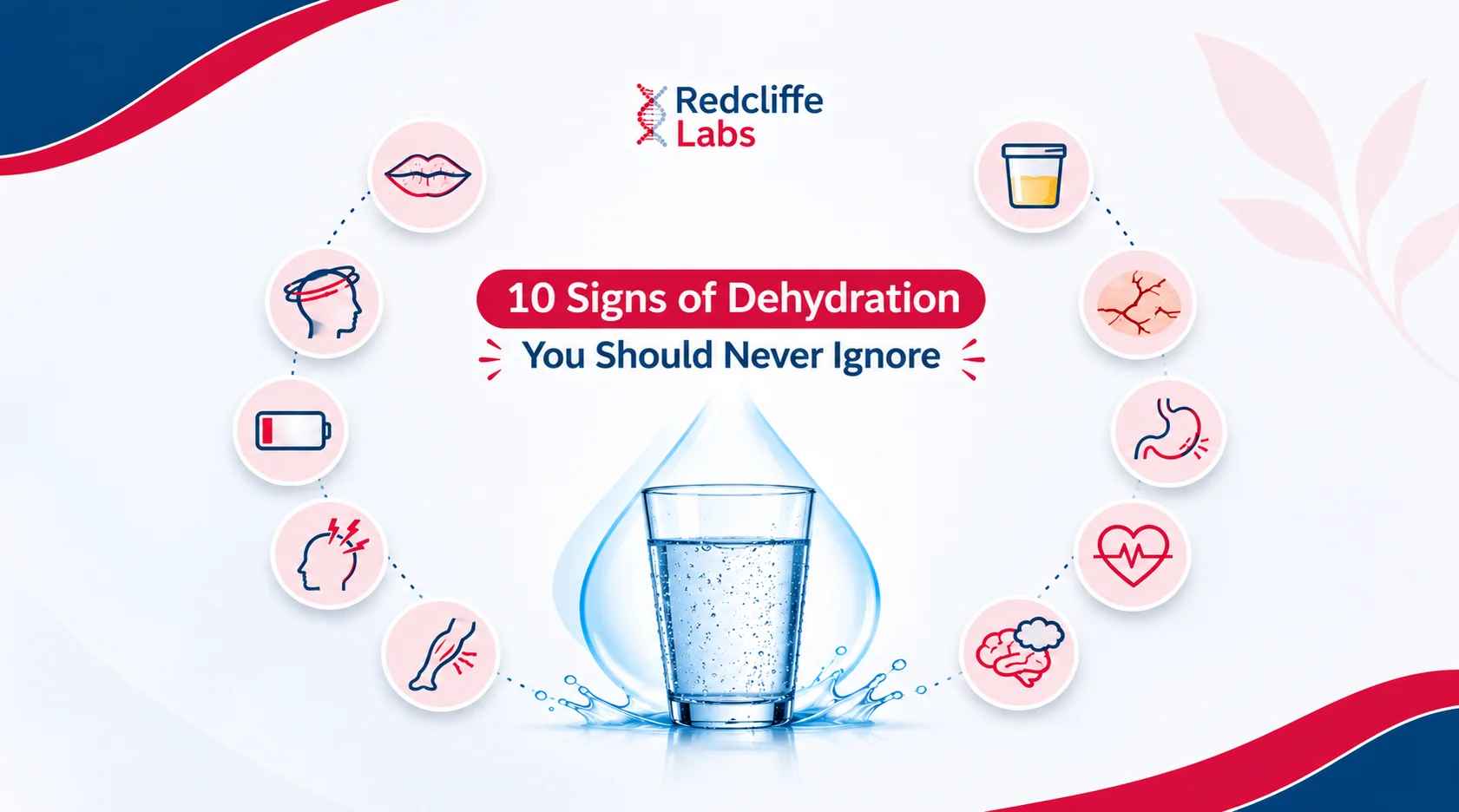
- Common signs include thirst, dark urine, passing urine less often, dry mouth, tiredness, headache, or dizziness.
- Very little or no urine, a fast heartbeat or breathing, confusion, or fainting can be signs of severe dehydration. Seek urgent medical help.
- Heat, heavy sweating, fever, vomiting, diarrhoea (loose motions), some medicines and uncontrolled diabetes can increase the risk.
- Mild dehydration may improve with fluids. If vomiting or diarrhoea is causing fluid loss, ORS can help replace water and salts. Mix it exactly as directed on the packet.
Quick Answer: What are the 10 Signs of Dehydration?
Dehydration happens when your body loses more water than it takes in. Some common signs include feeling thirsty, passing dark yellow urine, peeing less than usual, having a dry mouth, feeling tired, getting a headache, feeling dizzy, and having muscle cramps. In more serious cases, you may notice a fast heartbeat, rapid breathing, confusion, or fainting. These symptoms can be a sign that your body needs more fluids. Severe symptoms, especially confusion or fainting, need urgent medical attention.
What is Dehydration?
Dehydration happens when your body loses more water than you take in. You lose water all day through urine, sweat, breath, and stool, and you lose it faster with fever, vomiting, loose motions, or heavy sweating. Along with water, you lose salts such as sodium and potassium, called electrolytes. Your body needs both to work properly.
Mild dehydration is common and usually easy to fix. Severe dehydration is a medical emergency.
10 Signs of Dehydration to Look Out For
1. Feeling thirsty
Thirst is your body’s first alarm, but it isn’t a perfect one. Many people, especially older adults, don’t feel thirsty until they’re already dehydrated. India’s health ministry says thirst is not a good guide to dehydration, and advises drinking enough water in hot weather even when you don’t feel thirsty.
2. Dark yellow or strong-smelling urine
Dark yellow, strong-smelling pee is one of the most common signs. Very dark yellow or amber pee points to more serious fluid loss. Pale yellow is what you’re aiming for. One catch: some vitamins and medicines can change urine colour, so look at your other symptoms before deciding.
3. Peeing less often than usual
When you’re short on fluid, your body holds on to water and makes less urine. If you’ve barely passed any all day, don’t brush it off. Passing very little or no urine is a sign of serious dehydration and needs medical help.
4. Dry mouth, lips or tongue
A dry or sticky mouth, cracked lips, and a dry tongue are common. They can have other causes too, so check whether thirst, dark urine, or tiredness are there as well.
5. Feeling unusually tired or weak
When you’re low on fluid, you can feel drained and slow. Tiredness has many causes, so it points to dehydration mainly when it comes with thirst, dark urine or dizziness. If you feel unusually sleepy or hard to rouse, treat that as a more serious sign (see sign 10).
6. Headache
Headache is a commonly listed dehydration symptom. It also has a long list of other causes, so a headache alone tells you very little. If it starts after a hot day, a long stretch without water or a stomach bug, sipping fluids in a cool place is a sensible first step.
7. Dizziness or feeling light-headed
You may notice it most when you stand up quickly. Sit or lie down somewhere cool and sip water. If the dizziness doesn’t settle, keeps coming back, or comes with very little urine or a racing heart, get medical advice urgently.
8. Muscle cramps
Heavy sweating can bring painful cramps in the legs, arms, or stomach, especially in hot weather or after exercise. The health ministry’s heat advisory says to rest in a cool place and drink an oral rehydration solution, and to get medical help if cramps last more than an hour. Cramps have other causes too, so on their own they don’t confirm dehydration.
9. Fast heartbeat or rapid breathing
A racing or pounding heart, or quick breathing while you’re resting, can mean serious dehydration or a heat-related illness. Get medical help right away, especially if you also feel weak, faint, or confused.
10. Confusion, fainting or being hard to wake
These are emergency signs. Don’t wait to see if a glass of water fixes them. Call 112 or get to a hospital, and ask someone to take you instead of driving yourself. Pale, grey, blotchy, or cold skin, or trouble breathing, alongside any dehydration sign, is also a reason to call for emergency help straight away.
Two more clues doctors check. Sunken eyes and skin that sags back slowly after a gentle pinch can also point to dehydration. Doctors use them along with other findings. They’re hard to judge on yourself, so don’t rely on them at home.
Mild or Severe? How to Tell the Difference
|
Category |
Mild to Moderate |
Severe: Get Help Now |
|
Common Signs |
• Thirst • Dry or sticky mouth • Darker yellow urine • Peeing less • Headache • Muscle cramps • Mild light-headedness that settles |
• Little or no urine • Very dark or amber urine • Dizziness that won’t settle • Racing heartbeat • Fast breathing • Confusion or irritability • Fainting • Sunken eyes • Extreme sleepiness |
|
What to Do |
Move to a cool place, sip fluids, and rest. Use ORS if you’ve been vomiting, have loose motions, or have sweated heavily. |
Call 112 or go to the nearest emergency department. Don’t wait to see if drinking water helps, and don’t drive yourself. |
Not sure which column fits? Treat it as the more serious one, especially for children and older adults.
What Happens in Your Body When You're Dehydrated?
Water makes up a big part of your blood. When there’s less of it, your blood volume drops. Your heart may beat faster to keep blood moving, and in severe cases, blood pressure can fall, which is why you feel dizzy or faint. Your kidneys hold on to water, so you pass less urine, and it turns darker.
Electrolytes like sodium and potassium help your muscles and nerves send signals. When they go out of balance, you can get cramps and, in serious cases, seizures.
Dehydration that is long-lasting or keeps coming back can lead to urinary infections, kidney stones, and kidney problems. Severe dehydration can cause seizures and a dangerous drop in blood pressure called shock.
What Causes Dehydration?
- Not drinking enough. A busy day, a journey with no safe water, or feeling too sick to drink.
- Heat, humidity and heavy sweating. Outdoor work, hard workouts, and long hours in hot weather all raise the amount of fluid you lose.
- Vomiting and loose motions. Both drain water and salts quickly. Having both together is worse.
- Fever. In general, the higher the fever, the more fluid you can lose.
- Medicines that make you pee more. Water pills (diuretics) and some blood pressure medicines can do this. Don’t stop a prescribed medicine on your own. Talk to your doctor if you think it’s causing a problem.
- Diabetes that isn’t diagnosed or isn’t well controlled. High blood sugar can make you pass a lot of urine.
- Alcohol. Drinking too much can leave you short of fluid.
Who is More Likely to Get Dehydrated?
Anyone can, but babies, young children, and older adults are at higher risk. Older adults hold less water in their bodies and often feel thirst less. People with diabetes, people who work or exercise in the heat, people on water pills, and anyone who can’t easily get a drink for themselves are also at higher risk.
Signs look different in babies and young children
Watch for fewer wet nappies, no tears when crying, sunken eyes or a sunken soft spot on the head, and a baby who is drowsy or unusually irritable. These need a doctor’s attention quickly.
What Should You Do If You Notice Signs of Dehydration?
If you’re alert, can drink, and the signs are mild:
- Move out of the heat and sit somewhere cool.
- Take small, regular sips of water. If you feel sick, start with tiny sips and build up slowly.
- After heavy sweating, vomiting or loose motions, use ORS. The government’s heat advisory also lists lemon water and buttermilk or lassi as home drinks.
- Skip alcohol and caffeinated or fizzy drinks for now.
- Don’t take salt tablets. They can cause serious complications.
- Rest, and keep checking how you feel.
How to Use ORS Properly
- Mix one whole sachet in the exact amount of clean drinking water printed on the pack. Don’t add extra sugar or salt, and don’t boil it after mixing. Use the prepared solution within the time stated on the pack, usually 24 hours.
- Read the label. Since October 2025, FSSAI has said only products that follow the WHO-recommended formula can use the name “ORS”. A sweet fruit drink or energy drink with “ORS” in its branding is not the same thing.
- Ask a doctor or pharmacist first if you have diabetes, kidney, heart or liver disease, or have been told to limit salt or fluids. ORS contains both sugar and salt, so it doesn’t suit everyone.
When Should You See a Doctor?
Get medical advice soon if:
- You’ve had diarrhoea for more than 24 hours.
- You can’t keep fluids down.
- You have a fever of 102°F (about 39°C) or higher.
- You notice blood or black colour in your stool.
- You feel unusually sleepy, tired or less active than normal.
- You stay dizzy when you stand up, or you’re passing much less urine than usual.
Call 112 or go to the nearest hospital now if:
- You’re confused, faint, very hard to wake, or have a seizure.
- Your heartbeat is racing, or your breathing is fast, especially with weakness.
- You’ve passed little or no urine.
- Your skin is pale, grey, blotchy or cold.
Never delay emergency care to arrange a blood test.
Can a Test Check for Dehydration?
There’s no single test that confirms dehydration. A doctor usually starts by asking about your symptoms, checking your pulse and blood pressure, and examining you. Depending on what they find, they may order blood tests to check kidney function and electrolytes, or urine tests to look for the cause. If diabetes may be involved, a blood sugar test helps too.
An electrolyte test measures sodium, potassium, and chloride in a blood sample. These salts help control your body’s fluid balance, nerves and muscles. A doctor reads the numbers together with your symptoms, medicines and other results. A doctor may suggest it if you’ve had repeated vomiting or loose motions, you’re on water pills, or you keep having cramps, weakness, or dizziness without a clear reason.
If your doctor advises it, you can book the Electrolytes (Na/K/Cl) Test with Redcliffe Labs. It’s a simple blood test; fasting isn't required, and a trained phlebotomist can collect the sample at home. If your doctor wants kidney markers, blood sugar, and electrolytes checked together, the Metabolic Panel Essential covers all three in one blood sample.
Also Read: Understanding the Normal Range for an Electrolytes Test & How to Read Your Report
How Can You Prevent Dehydration?
- Drink fluids throughout the day, even when you’re well, and more when it’s hot or you’re exercising.
- Use your urine as a guide. Aim for pale yellow.
- Before a hard workout, start drinking more the day before, then keep sipping during and after.
- Carry drinking water when you travel.
- Eat water-rich fruits and vegetables such as watermelon, cucumber and oranges.
- In extreme heat, avoid going out between 12 noon and 3 pm.
- If someone at home has a fever, vomiting or loose motions, start extra fluids early instead of waiting for signs. Keep a close eye on children and older family members.
- If your doctor has set a fluid limit for a heart, kidney or liver condition, follow it, and ask before drinking more.
A Simple Next Step
Mild dehydration usually settles with fluids and rest. But if your symptoms are severe, keep coming back, or don’t improve, talk to a doctor. If your doctor asks for your electrolytes to be checked, Redcliffe Labs can collect the sample at home and share your digital report. You can book the Electrolytes Test here.
FAQs
How much water should I drink in a day?
There’s no single number that fits everyone. What you need depends on the weather, how active you are and your health. A simple guide is to drink enough throughout the day that your urine stays pale yellow, and to drink more when it’s hot, when you’re exercising, or when you have a fever, vomiting or loose motions. If your doctor has set a fluid limit for a heart, kidney or liver condition, follow that.
Why do I still feel dehydrated after drinking water?
Water replaces fluid but not the salts you lose through heavy sweating, vomiting or loose motions. In those cases, ORS can help. Medicines that make you pee more, uncontrolled diabetes and fever can also make you lose more fluid than you expect. And tiredness, headache and dizziness have many other causes. If you keep feeling this way even when you’re drinking enough, see a doctor.
Do chai, coffee, nimbu pani and coconut water count?
Most drinks add some fluid, but they’re not equal when you’re already dehydrated. You should skip drinks with caffeine or a lot of sugar, such as sodas and some energy drinks. Better choices are water, ORS and the home drinks Indian heat advisories list: lemon water, buttermilk or lassi, and coconut water. If you have diabetes, go easy on sweetened versions.
How long does it take to recover from dehydration?
Mild dehydration usually gets better once you replace the lost fluid, but the time depends on the cause. Dehydration from a stomach virus should improve on its own over a few days. If you’re no better after several hours of steady drinking, or you’re getting worse, speak to a doctor. Severe dehydration may need fluids through a drip in hospital.
Can repeated dehydration harm your kidneys?
It can. Long-lasting or repeated dehydration can lead to urinary infections, kidney stones and, in some cases, kidney failure. If dehydration keeps coming back, it’s worth finding the cause with your doctor, who may also check your kidney function and electrolytes.
Can I take salt tablets or extra salt to fix dehydration?
No. You should avoid taking salt tablets because they can cause serious complications. Use a proper ORS sachet mixed exactly as the pack says, or ask a doctor or pharmacist what suits you.