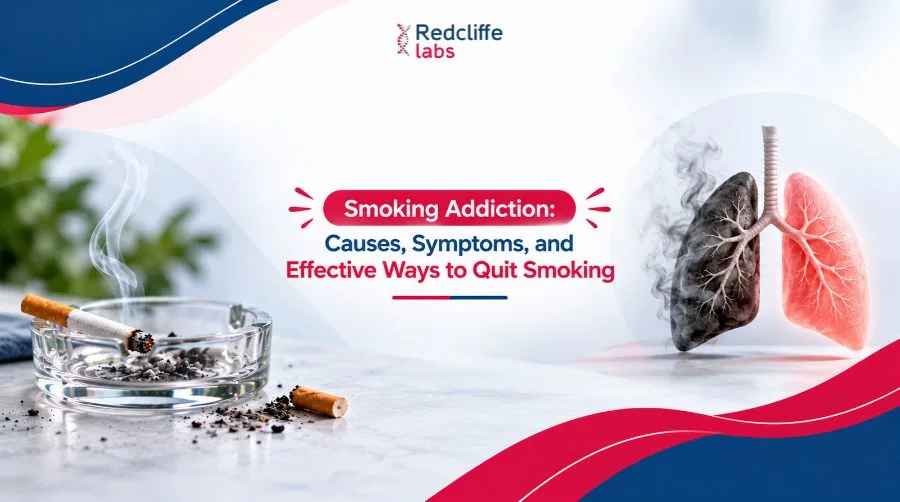
Smoking Addiction: Causes, Symptoms, and Effective Ways to Quit Smoking

Overview
- Nicotine is the main addictive substance in cigarettes, and dependence can make quitting difficult.
- Strong cravings, withdrawal, and difficulty stopping can be signs of dependence.
- Quitting works better with support and suitable treatment.
- Withdrawal is usually hardest early on and eases over time.
- Health checks may help some people, but you do not need blood tests to start quitting.
Quick Answer: What Helps With Smoking Addiction?
Smoking addiction can be treated with a clear quit plan, help with cravings, counselling, and suitable medicines. Nicotine replacement products, such as patches and gum, and certain prescription medicines can help. Combining counselling with medication gives people the best chance of quitting.
What Is Smoking Addiction?
Smoking addiction, also known as nicotine dependence, happens when your body and brain become used to nicotine, making it difficult to stop smoking even when you want to quit.
When you smoke a cigarette, nicotine reaches your brain within seconds and gives you a feeling of pleasure or relief. Over time, your brain gets used to nicotine, and you may start feeling like you need it regularly.
When nicotine levels drop, you might crave smoking again or experience withdrawal symptoms, making it harder to go without a cigarette.
Nicotine can also increase your heart rate and blood pressure. However, most of the cancer-causing effects and serious lung damage linked to smoking come from the harmful chemicals in cigarette smoke. This is why nicotine replacement products, when used as directed, are much safer than continuing to smoke.
What Causes Smoking Addiction, and Why Is It Difficult to Quit?
People may start smoking out of curiosity, because friends smoke, or because they expect it to help with stress. Nicotine can then keep the habit going.
Over time, smoking becomes linked with ordinary moments: waking up, drinking tea, finishing a meal, or taking a work break. These reminders are called triggers. Even after the body adjusts to less nicotine, familiar situations can bring back the urge to smoke.
The feeling that a cigarette relieves stress can also be misleading. Sometimes, the relief is simply withdrawal discomfort easing after more nicotine. The underlying stress still needs attention.
Quitting therefore means dealing with both nicotine dependence and the routines around it.
What Are the Signs of Cigarette Addiction?
Possible signs include:
- Feeling a strong urge to smoke.
- Repeatedly trying to stop but returning to cigarettes.
- Feeling irritable, restless, or unable to concentrate when you cannot smoke.
- Finding it difficult to avoid smoking where it is not allowed.
- Smoking soon after waking up.
- Continuing to smoke despite health concerns.
Needing a cigarette within 30 minutes of waking can suggest stronger dependence. These signs help a healthcare professional understand your needs; they are not a diagnosis by themselves.
A cough or breathlessness is different: it may be a sign of a health problem that needs checking, rather than a measure of addiction.
How Does Smoking Affect Your Health?
Smoking can cause heart disease, stroke, lung cancer, and chronic obstructive pulmonary disease, or COPD. COPD is a long-term lung condition that makes breathing difficult.
Smoking also increases the risk of type 2 diabetes, affects fertility, and can harm pregnancy. Smoke breathed in by people nearby can harm them too.
Switching to bidis, hookah, or gutka is not a safe way to quit cigarettes. These products also carry serious health risks. Keep your home and car free of tobacco smoke to protect the people around you.
How Can You Quit Smoking?
Start with a practical plan and add support early. You can ask for treatment on your first attempt; you do not have to struggle alone before getting help.
1. Choose a quit date and a reason that matters to you
Pick a date you can prepare for. Write down why you want to stop: protecting your health, saving money, planning a pregnancy, or spending less time thinking about the next cigarette.
Before that date, remove cigarettes, lighters, and ashtrays from the places you use most. Ask people around you not to offer you cigarettes.
2. Plan for your usual smoking moments
Notice when you smoke and what happens just before it. Then choose something else to do at that moment.
For example, if your usual pattern is tea followed by a cigarette, try drinking tea in a different place and taking a short walk afterwards. If you smoke after dinner, try brushing your teeth or washing the dishes as soon as you finish.
These are everyday ways to interrupt a familiar routine. Keep the ones that suit you and change the ones that do not.
3. Have a simple response ready for cravings
When an urge arrives:
- Pause before acting on it.
- Sip water or chew sugar-free gum.
- Take a few slow breaths.
- Walk, stretch, or move to a different place.
- Message someone who supports your quit attempt.
Cravings come and go. You do not have to solve the whole day at once; focus on getting through the urge in front of you.
4. Ask about treatments that reduce cravings
The World Health Organization recommends proven medicines and behavioural support for adults who want to stop using tobacco. Your doctor can help you choose according to your health, smoking pattern and local availability.
|
Treatment |
How it can help |
What to know |
|
Nicotine replacement therapy (NRT) |
Patches, gum, or lozenges reduce cravings and withdrawal without cigarette smoke. |
Correct strength and technique matter. Ask a doctor or pharmacist for guidance. |
|
Varenicline |
Can reduce cravings and make smoking feel less rewarding. |
Requires a prescription and a review of your health and other medicines. |
|
Bupropion |
Can reduce cravings and withdrawal symptoms. |
Requires a prescription. It is unsuitable for some people, including those with a seizure disorder or certain eating disorders. |
A nicotine patch provides a steady supply of nicotine. Gum or a lozenge works more quickly for sudden cravings. Using a patch with one of these shorter-acting products can work better than using one NRT product alone. Ask a healthcare professional whether this approach suits you.
If you are pregnant, breastfeeding, have recently had a heart attack or have a serious heart rhythm problem, speak with your doctor before choosing a quit-smoking medicine. Do not start prescription treatment or combine medicines on your own.
5. Get support close to home
Counselling can help you prepare for difficult moments and work through cravings. It can be offered in person, in a group, or over the phone.
For free support in India, call the National Tobacco Quitline on 1800-11-2356. You can also give a missed call to 011-22901701 for the government’s mobile cessation service.
6. Treat a setback as a reason to adjust the plan
If you smoke a cigarette after quitting, stop again and look at what led to it. Was it alcohol, a difficult day, or being around people who smoke? Decide what you will do differently next time.
A slip does not erase your progress. If you have returned to regular smoking, contact your doctor or counsellor and restart with more support.
What Does Nicotine Withdrawal Feel Like, and How Long Does It Last?
Nicotine withdrawal can cause cravings, irritability, restlessness, poor concentration, sleep problems, anxiety, low mood, and increased appetite.
|
Time after stopping cigarettes |
What you may notice |
|
Within a few hours |
Cravings and other withdrawal symptoms may begin. |
|
First week, especially the first three days |
Symptoms are often strongest. |
|
Around three to four weeks |
Many symptoms have eased, although some people need longer. |
|
Later on |
Familiar situations can still trigger an urge to smoke. |
This is a general pattern, not a deadline for recovery. Treatment can make withdrawal easier to manage. Get help if anxiety or low mood is worsening or lasts more than two weeks.
What Improves After You Stop Smoking?
Quitting benefits your health at any age. Over time, it lowers the risk of heart disease, stroke, cancer, and lung disease. Coughing and breathlessness often decrease over the following months, and heart attack risk drops sharply within one to two years.
Recovery varies. Quitting cannot promise to reverse every existing injury, but it remains worthwhile even after many years of smoking.
What Tests You Need If You Smoke?
You do not need a blood test to begin quitting. A doctor usually assesses nicotine dependence by asking about cravings, smoking habits, and previous quit attempts.
Depending on your age, symptoms, blood pressure, and family history, your doctor may recommend checks for other health risks.
|
Test or check |
What it checks |
When it may help |
|
Cholesterol and other fats in the blood. |
As part of an assessment of heart disease risk. | |
|
Average blood sugar over the past two to three months. |
When testing for or monitoring diabetes is appropriate. | |
|
Measures the pressure of blood against artery walls. |
To identify high blood pressure, a risk factor for heart disease. | |
|
Blood glucose after fasting. |
When screening for or monitoring diabetes is appropriate. | |
|
Records the electrical activity of the heart. |
When a doctor recommends it based on symptoms or medical history. |
Both use a blood sample. HbA1c alone does not usually require fasting; a lipid test may require it. Follow the instructions for the tests you have booked. Your doctor will interpret the results with your medical history and advise on follow-up.
If your doctor recommends checking both blood sugar and cholesterol, explore Redcliffe Labs’ Lipid & Diabetes Monitoring package and Smoking Impact Assessment Profile Advance package if you want an advanced evaluation of health effects due to smoking. It includes fasting blood sugar, HbA1c, and a lipid profile. Check availability in your area and follow the fasting instructions.
These tests assess specific health risks. They cannot measure all the harm caused by smoking, and normal results do not mean smoking is safe. Breathing problems may need a separate examination, breathing tests, or scans.
When Should You Seek Medical Help?
See a doctor for a cough that persists or worsens, unexplained weight loss, or repeated chest infections. Do not assume these symptoms are simply part of being a smoker.
Even a small amount of blood in your phlegm needs prompt medical advice. Seek emergency care for severe trouble breathing, severe chest pain, or coughing up more than a few spots or streaks of blood.
You can also ask for help simply because quitting feels difficult. There is no need to wait for a worrying symptom or test result.
Smoking addiction is treatable with proper planning and help. Start with one clear action today. You do not need a perfect past attempt to make your next one count.
Frequently Asked Questions
Is smoking only one or two cigarettes a day safe?
No. There is no safe level of cigarette smoking. Even a small daily amount can increase health risks. Cutting down can be a step towards quitting, but stopping completely offers greater protection.
Can I stop smoking suddenly?
Yes, you can quit smoking all at once by choosing a quit date. You may experience cravings or other withdrawal symptoms for a while, but support and treatments such as nicotine replacement products can make the process easier. If you have a serious health condition or take regular medicines, talk to your doctor about your quit plan, as stopping smoking can affect how some medicines work.
Will I gain weight after quitting?
Yes, you may gain some weight after quitting smoking because you might feel hungrier than usual. Eating balanced meals, staying active, and keeping up with healthy habits can help. Remember, the health benefits of quitting smoking are much greater than the risks of gaining a little weight.
Can I chew nicotine gum like ordinary chewing gum?
No. Chew it slowly until you notice a tingling sensation, then rest it between your cheek and gum. Repeat as directed on the pack. Continuous chewing can cause side effects such as hiccups or nausea. Ask a pharmacist to explain the technique.
Why am I coughing more after quitting?
Some people temporarily cough more or bring up extra mucus as their airways recover. However, a cough that persists, worsens or comes with blood, fever or breathlessness needs medical advice. Do not assume every new symptom is caused by quitting
Can quitting affect medicines I already take?
Yes. Stopping smoking can change how the body handles some medicines, including clozapine, olanzapine and theophylline. Your doctor may need to monitor treatment or adjust a dose. Tell your prescriber when you plan to quit; do not change doses yourself.
How can I help my partner quit without nagging?
Ask your partner how you can help instead of telling them what to do. Encourage them to spend time on activities that don’t involve smoking, and appreciate the effort they make to quit. If they smoke again, don’t blame them. Help them get back on track and remind them that they can try again. Let them decide what kind of support works best for them.