Early Signs of Prediabetes in Women and Men: What to Look For


Blood sugar problems do not always begin with obvious symptoms. Sometimes, a person may feel completely healthy while their blood glucose levels are gradually rising. This is one reason prediabetes often goes unnoticed until a routine health check reveals an abnormal result.
The Early signs of prediabetes are not always easy to recognize because this condition usually develops without noticeable symptoms. However, certain physical changes, lifestyle factors, and medical conditions may indicate a higher risk.
Both women and men can develop prediabetes, although some risk factors differ. For example, women with PCOS or a history of gestational diabetes may have a higher risk, while abdominal obesity, physical inactivity, and family history can increase the risk in both sexes.
Understanding these risk factors, recognizing possible changes, and getting appropriate blood sugar tests can help identify the condition early and support timely preventive care.
What Is Prediabetes?
Prediabetes is a metabolic condition in which blood glucose levels are higher than normal but not high enough to meet the criteria for type 2 diabetes.
It commonly develops when the body does not respond effectively to insulin, a hormone that helps glucose move from the bloodstream into cells for energy.
When cells become less responsive to insulin, the pancreas may produce more insulin to maintain normal blood glucose levels. Over time, the body may struggle to maintain this balance, resulting in elevated blood sugar. Prediabetes is important because it increases the likelihood of developing type 2 diabetes and may also be associated with cardiovascular risk factors.
Also Read: Does Prediabetes Always Turn Into Diabetes? Myths vs Facts
How common is prediabetes in India?
The ICMR-INDIAB national study estimated that approximately 136 million Indians had prediabetes, representing 15.3% of the adult population studied.
This highlights why preventive screening and awareness are important, particularly among people with a family history of diabetes, excess abdominal fat, or other metabolic risk factors.
What Are the Early Signs of Prediabetes?
Prediabetes usually does not cause clear physical symptoms. Many people discover it through blood sugar testing rather than noticing a particular change in their body.
However, certain changes may warrant medical attention, especially when they occur alongside established risk factors.
|
Possible sign |
What you may notice |
|
Increased thirst |
Feeling thirsty more frequently than usual |
|
Frequent urination |
Needing to pass urine more often |
|
Unusual fatigue |
Feeling tired despite adequate rest |
|
Increased hunger |
Feeling hungry more frequently |
|
Darkened skin patches |
Thick, darker skin around the neck or armpits |
|
Changes in waist size |
Increasing abdominal fat, which is a risk factor |
|
Blurred vision |
Temporary changes in vision associated with elevated glucose |
Important: These changes are not specific to prediabetes. Increased thirst, frequent urination, and blurred vision may occur when blood glucose is considerably elevated, including in diabetes. Darkened skin patches may be associated with insulin resistance but cannot confirm the condition.
If you experience persistent or unexplained symptoms, consult a doctor instead of relying on symptoms to determine your blood sugar status.
Symptoms of prediabetes in females: What Should Women Look For?
Women may experience the same possible blood sugar-related changes as men. However, certain reproductive and hormonal health conditions can increase their risk of developing insulin resistance and prediabetes.
Here are some important factors women should understand.
1. PCOS and insulin resistance
Polycystic ovary syndrome (PCOS) is a hormonal condition that can be associated with insulin resistance.
Some women with PCOS may have difficulty maintaining healthy blood glucose levels because their cells do not respond effectively to insulin.
Possible PCOS-related changes include:
- Irregular or missed menstrual periods.
- Acne and increased facial or body hair.
- Difficulty managing body weight.
- Darkened skin around the neck or underarms.
Not every woman with PCOS has insulin resistance or prediabetes. However, PCOS is an important reason to discuss metabolic screening with a healthcare professional.
2. History of gestational diabetes
Gestational diabetes develops when blood glucose levels become elevated during pregnancy.
Women who have experienced gestational diabetes have a higher risk of developing type 2 diabetes later in life. Even if blood glucose levels return to normal after delivery, regular follow-up screening remains important.
3. Increasing abdominal fat
An increase in abdominal fat can be associated with insulin resistance and metabolic health concerns.
Women may notice changes in waist circumference due to aging, hormonal changes, lifestyle, or weight fluctuations. However, waist size alone cannot establish whether someone has prediabetes.
4. Family history of diabetes
Women with a parent or sibling who has type 2 diabetes may have a higher risk.
The risk may be further influenced by physical inactivity, excess body weight, PC, OS, and other metabolic conditions.
Symptoms of prediabetes in Male adults: What Should Men Look For?
Men and women share many of the same risk factors and possible symptoms. However, abdominal fat accumulation and certain lifestyle-related factors deserve particular attention in men.
1. Increased abdominal fat
Excess fat around the abdomen is associated with insulin resistance and a higher risk of metabolic disorders. A person can have a higher metabolic risk even without appearing visibly overweight. This is particularly relevant when assessing health risks in South Asian populations.
2. Dark patches around the neck and underarms
Acanthosis nigricans is a skin condition that causes darker, thicker, and sometimes velvety-looking patches.
It commonly appears around the neck, armpits, or other skin folds and may be associated with insulin resistance. However, it can have other causes and should not be considered a standalone sign of prediabetes.
3. Physical inactivity
Men who spend long hours sitting, have limited physical activity, or frequently consume calorie-dense foods may have a higher risk of metabolic problems. Regular movement and a balanced diet can support better metabolic health.
4. Family history and increasing age
Men with a family history of type 2 diabetes or other metabolic conditions may have an increased risk.
Aging can also influence insulin sensitivity and body composition, making periodic health assessments important. Remember: There is no reliable set of symptoms that can distinguish prediabetes in men from prediabetes in women. Blood tests are needed to evaluate blood glucose levels.
Why Do Women and Men Develop Prediabetes?
Prediabetes usually develops through a combination of genetic, metabolic, and lifestyle-related factors.
Insulin resistance plays an important role, but it is not the only factor involved.
Some common contributing factors include:
|
Risk factor |
How it may contribute |
|
Family history |
Inherited factors may increase susceptibility to type 2 diabetes. |
|
Abdominal obesity |
Excess abdominal fat is associated with reduced insulin sensitivity. |
|
Physical inactivity |
Limited movement can affect glucose utilization. |
|
Unhealthy eating patterns |
Excess calorie intake and poor dietary quality may contribute to metabolic problems. |
|
PCOS |
Often associated with insulin resistance in women |
|
Gestational diabetes |
Increases future risk of type 2 diabetes |
|
Increasing age |
Metabolic risk can increase with age |
|
High blood pressure |
Often occurs alongside other metabolic risk factors |
|
Sleep-related problems |
Poor sleep and sleep disorders may affect metabolic health |
Having one or more risk factors does not mean that you definitely have prediabetes. A healthcare professional can assess your individual risk and recommend appropriate testing.
What Is the Difference Between Insulin Resistance and Prediabetes?
Insulin resistance and prediabetes are related but different conditions.
Insulin resistance occurs when the body's cells do not respond effectively to insulin. Prediabetes develops when blood glucose levels rise above the normal range but remain below the diabetes threshold.
|
Parameter |
Insulin resistance |
Prediabetes |
|
Meaning |
Reduced response of cells to insulin |
Blood glucose levels higher than normal |
|
Blood sugar |
May remain normal initially |
Elevated within the prediabetes range |
|
Insulin levels |
May be higher than expected |
May be normal, high, or variable |
|
Identification |
Can be evaluated through clinical assessment and selected tests |
Identified using established blood glucose criteria |
|
Relationship |
Can contribute to prediabetes |
May occur alongside insulin resistance |
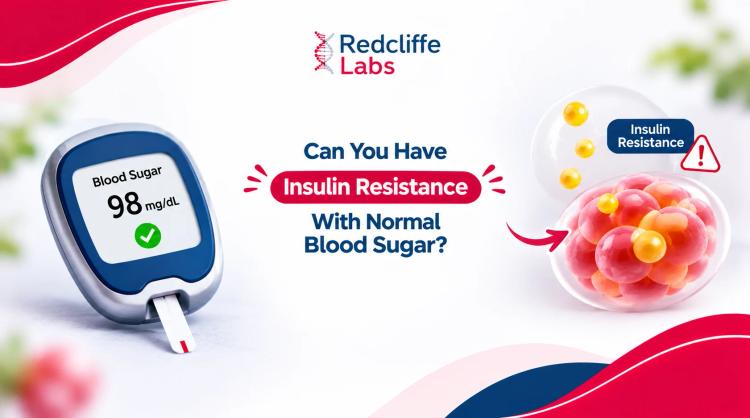
A person can have insulin resistance before their blood sugar levels become abnormal. This is why understanding metabolic health involves more than checking glucose alone.
How Is Prediabetes Diagnosed?
Prediabetes cannot be confirmed through physical symptoms alone. Doctors use blood tests to evaluate glucose levels and determine whether they fall within the normal, prediabetes, or diabetes range.
The three commonly used tests are
- HbA1c test.
- Fasting plasma glucose test.
- Oral glucose tolerance test (OGTT).
Each test measures blood glucose differently, and the doctor may recommend one or more depending on your medical history and risk factors.
What are the normal and prediabetes blood sugar ranges?
The following are commonly used American Diabetes Association criteria for non-pregnant adults.
|
Test |
Normal range |
Prediabetes range |
Diabetes range |
|
HbA1c |
Below 5.7% |
5.7–6.4% |
6.5% or above |
|
Fasting blood glucose |
99 mg/dL or below |
100–125 mg/dL |
126 mg/dL or above |
|
2-hour OGTT |
139 mg/dL or below |
140–199 mg/dL |
200 mg/dL or above |
Interpret these thresholds in the appropriate clinical context. Diagnostic criteria can differ across guidelines, and abnormal results may require confirmation. Pregnancy also requires separate diagnostic criteria.
Also Read: Why Is It So Hard to Lose Weight With Insulin Resistance or Diabetes? 7 Possible Reasons
What Blood Tests Help Identify Prediabetes?
Different tests provide different information about blood glucose regulation and insulin function.
1. HbA1c Test
The HbA1c test measures the percentage of hemoglobin in red blood cells that has glucose attached to it. It provides an estimate of average blood glucose levels over approximately the previous two to three months.
Why is it useful?
- Helps identify prediabetes and diabetes.
- Does not usually require fasting.
- Provides a longer-term picture of glucose levels.
Certain conditions, including some forms of anemia, kidney disease, and hemoglobin disorders, can affect HbA1c accuracy.
2. Fasting Blood Sugar Test
This test measures blood glucose after an overnight fast. It helps assess how the body regulates glucose when food has not been consumed for several hours.
Why is it useful?
- Helps identify elevated fasting glucose.
- Supports prediabetes and diabetes screening.
- Provides a blood glucose measurement at a specific point in time.
3. Oral Glucose Tolerance Test
An OGTT evaluates how the body processes glucose after consuming a standardized glucose drink.
Blood glucose is measured before and after the drink, usually at the two-hour mark for the standard adult diagnostic assessment. It can help identify impaired glucose tolerance, even when fasting glucose results do not indicate the same problem.
4. HOMA-IR Assessment
HOMA-IR is a calculation based on fasting glucose and fasting insulin measurements. It helps estimate how effectively the body responds to insulin.
Doctors may consider it when evaluating insulin resistance in selected individuals, especially those with metabolic risk factors. However, HOMA-IR is not a standard standalone test for diagnosing prediabetes or diabetes. Its interpretation depends on the calculation method, laboratory assay, and clinical context.
Can Prediabetes Be Reversed?
Prediabetes can often be improved, and some people can return their blood glucose levels to the normal range through sustained lifestyle changes. However, improvement does not mean that future diabetes risk disappears permanently. Continued monitoring remains important.
Some practical steps include:
- Improve your daily diet: Include vegetables, whole grains, pulses, fruits, nuts,s and suitable protein sources. Reduce frequent consumption of sugary drinks and highly processed foods.
- Increase physical activity: Walking, cycling, swimming, ng and other regular activities can support insulin sensitivity.
- Manage body weight: If you have excess weight, gradual and sustainable weight management may improve metabolic health.
- Prioritise sleep: Maintain a consistent sleep routine and seek help for persistent sleep problems.
- Monitor your health: Follow your doctor's advice regarding blood glucose testing and other relevant health assessments.
People with higher risk may benefit from structured diabetes prevention programmes and medical guidance rather than relying on lifestyle advice alone.
Pre-diabetes symptoms and treatment: What Are the Available Management Options?
Management depends on blood glucose levels, overall health, individual risk factors,ors and whether other medical conditions are present.
Lifestyle modification is generally the first step for people with prediabetes.
In selected high-risk individuals, doctors may also consider medication such as metformin alongside lifestyle interventions.
Treatment decisions depend on individual clinical assessment. Medication should never be started without medical advice.
Women with PCOS, people with a history of gestational diabetes, and individuals with obesity may require additional attention to their metabolic health.
When Should You Get Your Blood Sugar Tested?
Consider discussing blood sugar screening with a doctor if you:
- Have a parent or sibling with type 2 diabetes.
- Have PCOS or a history of gestational diabetes.
- Have excess abdominal fat or obesity.
- Have high blood pressure or abnormal cholesterol.
- Lead a physically inactive lifestyle.
- Have previously received borderline blood glucose results.
- Are above 35–45 years and have additional risk factors.
People without symptoms may also need screening depending on their age, medical history, and risk profile.
Conclusion
Prediabetes can develop quietly, without causing obvious physical changes. Although women and men share many risk factors, conditions such as PCOS and previous gestational diabetes deserve particular attention in women.
Recognizing possible changes, understanding your family history, and getting appropriate blood sugar tests can help identify metabolic concerns before they progress.
The most important step is not to wait for symptoms. If you have risk factors, discuss preventive screening with your doctor and take practical steps towards better metabolic health.
FAQs
Can prediabetes affect skin health?
Prediabetes may be associated with certain skin changes. Some people develop skin tags or dark, velvety patches around the neck, armpits, or groin. These changes may indicate insulin resistance, but they cannot confirm prediabetes. A blood glucose test helps determine whether blood sugar levels are elevated.
Can prediabetes cause frequent infections?
High blood sugar can affect the body's ability to fight infections. Some people with elevated glucose levels may experience recurring urinary tract infections, yeast infection,s or skin infections. However, these symptoms can have several causes and do not automatically indicate prediabetes. Persistent or recurring infections should be evaluated by a healthcare professional.
Can prediabetes affect menstrual cycles?
Prediabetes itself does not always cause menstrual irregularities. However, insulin resistance associated with conditions such as PCOS may contribute to irregular periods, hormonal changes, and ovulation problems. Women experiencing persistent changes in their menstrual cycle should discuss their symptoms and metabolic health with a gynecologist.
Is prediabetes possible during pregnancy?
Prediabetes may be present before pregnancy, while gestational diabetes develops during pregnancy. Both involve elevated blood glucose levels but are different conditions. Women planning pregnancy or having risk factors such as PCOS, obesity, or a family history of diabetes should discuss appropriate glucose screening with their doctor.
Can prediabetes cause vision changes?
Prediabetes generally does not cause noticeable vision changes. However, fluctuating or significantly elevated blood glucose can temporarily affect the eye's lens and cause blurred vision. Sudden or persistent vision changes need medical evaluation rather than being assumed to result from blood sugar fluctuations.
Does prediabetes increase the risk of fatty liver?
Insulin resistance is commonly associated with metabolic dysfunction-associated steatotic liver disease (MASLD), previously called non-alcoholic fatty liver disease. People with prediabetes may have a higher likelihood of developing fatty liver, particularly when other metabolic risk factors are present. A doctor can recommend appropriate evaluation based on individual risk.
Can prediabetes return after blood sugar levels become normal?
Yes. Blood sugar levels can return to the normal range through sustainable lifestyle changes and medical guidance. However, this does not mean the risk disappears permanently. Weight changes, physical inactivity, aging, and family history can influence future risk, so periodic glucose monitoring remains important.