Lipid Profile Test: Price, Preparation, Normal Range & Benefits
This test measures cholesterol and triglyceride levels in the blood to assess your cardiovascular health and understand your risk of heart disease.




Blood


Unlock special
discount on
this package
Login to Unlock 🔓
9 Test Parameters

Lipid Profile
9 PARAMETERS INCLUDED
9 PARAMETERS INCLUDED
- Cholesterol-Total, Serum
- CHOL/HDL RATIO
- HDL Cholesterol Direct
- HDL / LDL Cholesterol Ratio
- LDL Cholesterol - Calculated
- LDL/HDL RATIO
- Non - HDL Cholesterol, Serum
- Triglycerides, Serum
- VLDL
Helps you know your test better
Who all are eligible for this test?
- The Lipid profile test is a test that detects the amount of triglyceride and cholesterol levels in the blood.
- Everyone above 35 years of age.
- If a person has been diagnosed with heart disease, high blood pressure, diabetes, stroke, or any other heart condition.
- People with a family history of high cholesterol, physically inactive, overweight, smoke or drink excessively.
- People who are already taking high cholesterol treatment.
- If you are feeling a headache, jaw pain, upper abdominal discomfort, sweating, a feeling of fullness, or shortness of breath.
Why take this test?
- Helps evaluate cardiovascular health by analyzing cholesterol levels in the blood.
- It can determine the risk of building up cholesterol and fatty deposits in blood vessels.
- Reduces the chances of heart diseases, heart attacks, and strokes.
- Helps to detect coronary artery disease and cholesterol analysis.
What are the benefits of taking a lipid profile test?
- It will restore your heart's health.
- This test is recommended to maintain healthy cholesterol levels.
- Helps in determining the seriousness of the heart problems.
- After completing the test, you will be able to manage your lifestyle and make the necessary changes to stay healthy.
- Reduces the risk of heart attack, other cardiac problems and stroke.
Helps you know your test better
Q. How can I book my test?
Q. In how much time will I get my test report?
Q. Where can I see or get my test results?
Q. Is home sample collection available for Lipid Profile test?
Overview Of Lipid Profile Test:
Lipids are fatty and waxy compounds that support your immune system. Moreover, they structure and support every cell wall. For a healthy body, your lipid levels should be balanced. Doctors, therefore, call for Lipid Profile Test to look for abnormalities in lipids, or simple words, measures cholesterol and triglycerides in your blood.
Too much lipid or elevated lipid levels indicate hyperlipidemia, which increases one’s risk of strokes, heart diseases, and heart attacks. Low lipid is usually considered fine and possesses no risks. However, in rare cases, when levels drop to an extremely low level, it increases your risk for hemorrhagic stroke, depression, and cancer. Therefore, addressing any abnormalities and managing the levels in time is essential to understand your health and taking preventive measures accordingly. You can book a Lipid Panel Test at an affordable Lipid Profile Test Price.
A Lipid Profile Test measures cholesterol and triglyceride levels in the blood to identify your risks for being affected with cardiovascular diseases. Getting tested is the proven way that potentially reduces your significant health risks and helps you manage your health better. A Lipid Test is a series of blood tests that measure different lipids in your blood.
What Is a Lipid Panel Blood Test?
A lipid panel, also called a lipid profile, is a blood test that measures different types of fats, or lipids, in your blood. It mainly checks cholesterol and triglyceride levels to help assess your risk of heart disease, stroke, and blocked arteries.
Doctors recommend a lipid panel to detect high cholesterol, high triglycerides, low HDL, and abnormal lipid levels. These changes may increase the risk of heart attack, stroke, atherosclerosis, diabetes-related complications, and metabolic syndrome. High triglycerides, along with low HDL or high LDL, can increase heart disease risk.
Lipid Profile Test details in brief:
| Also Known As | Lipid Profile, Lipid Panel, Lipid Screen, Lipid Analysis |
| Purpose | It measures cholesterol & triglycerides in the blood & screens your risk for cardiovascular disease. |
| Preparation | Do not take any over-the-counter medicine without confirming with your Doctor. |
| Fasting | 10-12 hours Fasting Required |
| Get Reports Within | Within 12 hours |
| Cost | 449 |
Purpose of the Lipid Profile Test
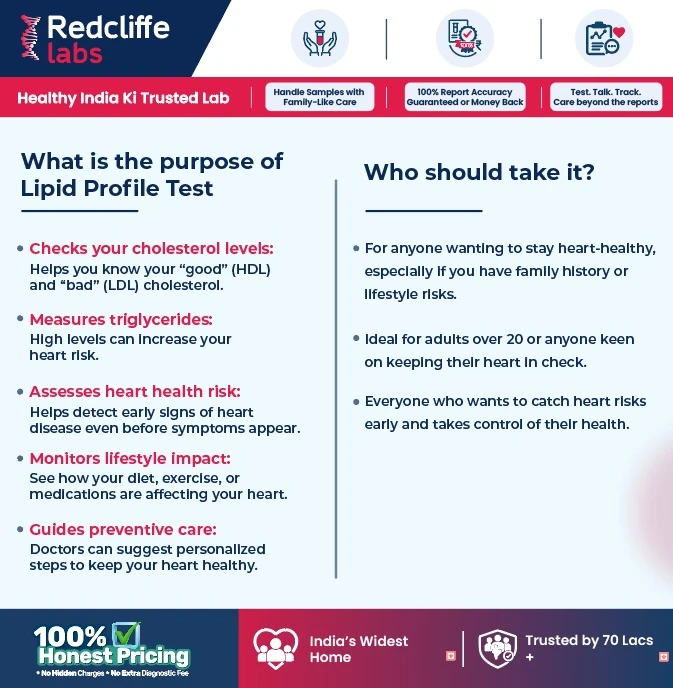
- Diagnosis: It is used to diagnose lipid and cholesterol-related disorders, such as hyperlipidemia, which can lead to cardiovascular diseases.
- Screening: The test for routine screening to identify people at risk of heart disease, even before symptoms.
- Monitoring: For people with lipid abnormalities or cardiovascular conditions, the test monitors how well the treatment works or if any adjustments are required.
- Measuring Response to Treatment: It assesses how well treatments, including lifestyle changes and cholesterol-lowering medications, manage lipid levels and reduce cardiovascular risk.
- Risk Assessment: The test helps to assess the risk of cardiovascular risk and guide preventive measures.
Which Parameters Are Measured in a Lipid Profile Test?
- Total Cholesterol: Measures the total amount of cholesterol, including low-density lipoprotein & high-density lipoprotein cholesterol, and certain fats in the blood screen your risks for heart diseases. The imbalance can be managed with an early diagnosis.
- Low-Density Lipoprotein Cholesterol (LDL): It assesses your blood's bad cholesterol and determines your odds of getting heart disease, stroke, or attacks. Too much LDL in the blood can build up plaque on your blood vessels’ walls, which affects their normal functioning, reduces blood flow, and lead to various health issues.
- Very Low-Density Lipoprotein Cholesterol (VLDL): VLDL is associated with the development of plaque deposits on artery walls and defines your risks of developing cardiovascular complications. You should measure VLDL levels in your blood with Lipids Blood Test to understand your risks and manage them while there is still time.
- High-Density Lipoprotein Cholesterol (HDL): HDL, also called good cholesterol, absorbs other forms of cholesterols in the blood and reduces your risks of heart disease. The HDL test measures the amount of good cholesterol in your blood to track your levels and keep your health in check.
- Triglycerides: As long as it is balanced, Triglycerides act as a significant source of energy in the body, but as the levels elevate, they can harden or thickening of artery walls and increases your risks for cardiovascular diseases and liver and pancreas problems.
A Lipid Panel Blood Test is essential to measure overall changes in your LDL, VLDL, and HDL levels and take preventive measures before the problem arises. Measuring changes in cholesterol levels is a good practice to understand your risks, but you must get it done more frequently if you are obese, have a family history of high cholesterol or high blood pressure, or smoke.
S Lipid Profile Test is essential to monitor your cholesterol levels and avoid complications related to abnormal levels. Besides measuring levels, getting tested would help you and your healthcare professional track your health.
What Are Some Symptoms That May Call For A Lipid Profile Test?
A Lipid Profile Blood Test measures cholesterol, triglycerides, and other fatty substances in the blood. And your body may give the following symptoms that may indicate the need for a lipid profile test.
- Unusual chest pain or discomfort is a sign that indicates heart conditions or heart attacks, which can be due to high cholesterol levels, and a test is a must to confirm that.
- Moreover, difficulty breathing or shortness of breath is a sign of several medical conditions. And getting tested for lipids is crucial to identify the cause contributing to the problem.
- You may also need a lipid profile test if you have a family history of high cholesterol that increases your risk of heart disease. And diagnosing it in time is essential to manage it better.
- Individuals with underlying health conditions like Diabetes, Obesity, or High Blood Pressure, are advised to take a lipid test to monitor cholesterol levels, which can otherwise worsen the problem.

Not everyone with elevated cholesterol levels may experience the same symptoms for many reasons. Being a crucial part of a routine test, it determines if your cholesterol levels are normal, at the borderline, or in the high-risk category. If you have symptoms or fall into the risk factor category mentioned above, get tested in time. And even if you have no risks or symptoms, your doctor might recommend it as a part of a preventive health checkup to check cholesterol levels and assess your overall wellness. So, book your S Lipid Profile Test with Redcliffe Labs today.
Types of Lipid Profile Tests: What’s the Difference?
A lipid profile test, also called a lipid panel or cholesterol test, measures different types of fats in your blood. These values help assess your risk of heart disease, stroke, blocked arteries, and other cholesterol-related problems.
- The test assesses your risk of heart disease, stroke, blocked arteries, and other cholesterol-related problems. A Lipid profile test includes Cholesterol-Total, HDL cholesterol (direct), LDL Cholesterol, triglycerides, VLDL, Non-HDL cholesterol, and Cholesterol Ratio.
- Total Cholesterol Test: This measures the total cholesterol in your blood. It includes cholesterol carried by LDL, HDL, and other lipoproteins, giving a basic overview of your cholesterol status.
- LDL Cholesterol Test: LDL is often called “bad cholesterol” because high levels can build up in the artery walls and form plaques. This can increase the risk of heart disease and stroke. HDL Cholesterol Test
- HDL is known as “good cholesterol” because it helps remove extra cholesterol from the blood. Higher HDL levels are generally considered better for heart health.
- Triglycerides Test: This test measures triglycerides, a type of fat used by the body for energy. High triglycerides may increase the risk of heart disease, especially when LDL is high or HDL is low.
- VLDL Cholesterol Test: VLDL carries triglycerides in the blood and is also considered a harmful type of cholesterol. High VLDL levels may contribute to plaque buildup in the arteries.
- Non-HDL Cholesterol Test: Non-HDL cholesterol includes all “bad” cholesterol particles except HDL. It gives a broader idea of heart risk than LDL alone, especially when triglycerides are high.
- Cholesterol Ratio Test: This compares total cholesterol with HDL cholesterol. Doctors may use this ratio along with LDL, HDL, and triglycerides to better understand cardiovascular risk.
When Should You Get a Lipid Profile Test?
You should get a lipid profile test to check cholesterol and triglyceride levels, especially if you want to understand your risk of heart disease, stroke, or blocked arteries. High cholesterol often has no clear symptoms, so regular testing helps detect problems early.
- For routine health screening: Most healthy adults should have their cholesterol checked every 4–6 years.
- If you have high blood pressure: High blood pressure and high cholesterol together increase your risk of heart disease. A lipid profile helps your doctor assess your overall cardiovascular health.
- If you are overweight, Excess weight and inactivity can raise LDL cholesterol and triglycerides. Regular health checkups allow you to identify changes before complications develop.
- If you have a family history of heart disease, you may need earlier or more frequent testing if close family members had high cholesterol, a heart attack, a stroke, or early heart disease.
- If you smoke or drink alcohol regularly: Smoking lowers good cholesterol and increases heart risk, while alcohol can raise triglycerides in some people.
- If you eat a high-fat or processed-food diet: Diets high in saturated fat, trans fat, fried foods, and processed foods can raise cholesterol levels. Testing helps check how your diet affects your blood fats.
- If you already have heart disease, you need regular lipid monitoring. It helps doctors check treatment progress and reduce the risk of future heart attacks or strokes.
- If you are taking cholesterol medicines: If you take statins or other cholesterol-lowering medicines, your doctor may repeat the lipid profile to see whether treatment is working.
- For children and teenagers with risk factors: Children may need cholesterol screening if they have obesity, diabetes, or a family history of high cholesterol or early heart disease. Children should have a lipid profile test at least once between the ages of 9 and 11 and again between 17 and 21.
What Diseases Can a Lipid Profile Test Detect?
A lipid profile test helps detect abnormal cholesterol and triglyceride levels in the blood. Here are some conditions that a Lipid profile test helps to detect:
1. High Cholesterol or Dyslipidemia
A lipid profile test can detect high LDL cholesterol, high total cholesterol, low HDL cholesterol, and high triglycerides. These abnormal levels are called dyslipidemia. High LDL cholesterol can build plaque in the arteries and increase your risk of heart disease and stroke.
2. Heart Disease Risk
High LDL cholesterol and triglycerides can narrow or block arteries over time, increasing the risk of heart attack and other heart-related conditions.
3. Stroke Risk
Abnormal cholesterol levels can affect blood vessels supplying the brain. High LDL, high triglycerides, and low HDL may increase the risk of stroke.
4. Atherosclerosis
Atherosclerosis occurs when fat, cholesterol, and other substances build up inside the walls of arteries.
5. Metabolic Syndrome
High triglycerides and low HDL cholesterol are common markers of metabolic syndrome. Triglyceride levels of 150 mg/dL or above are a risk factor for metabolic syndrome.
6. Pancreatitis Risk
Very high triglyceride levels can increase the risk of pancreatitis, which is inflammation of the pancreas. Triglyceride levels of 500 mg/dL or above are severely elevated and can increase pancreatitis risk.
Therefore, regular testing is especially important if you have obesity, diabetes, high blood pressure, smoking habits, family history of heart disease, or a sedentary lifestyle.
What Can Be Some Health Complications Of Avoiding Lipid Profile Test?
High lipid or high cholesterol can influence the accumulation of cholesterol and plaque on artery walls, which minimizes the blood flow and cause problems like:
- Chest Pain: High lipid reduces the blood supply through your arteries, which affects their normal functioning and increases your complications like chest pain or symptoms of coronary artery diseases.
- Heart Attack & Stroke: Elevated lipids are directly linked with cardiovascular diseases. The plaque formation can block the adequate amount of blood to your heart and increases your risk of a heart attack or a stroke. Getting diagnosed and treated in time is essential to avoid complications.
- Peripheral Vascular Disease: Besides affecting your heart, high lipid or cholesterol can also affect arteries in the legs or arms. If you already have the disease, the change in lipid levels can complicate the condition.
Not managing high lipids in time can invite many health complications, which can be severe and fatal in a few cases. Therefore, addressing the condition and acting in time is essential to avoid risks and increase your chances of recovery. So, book a Serum Lipid Profile Test today.
Normal Range of Lipid Profile Levels
|
Test |
Men |
Women |
|
Total cholesterol |
125mg/dL to 200mg/dL |
125mg/dL to 200mg/dL |
|
Non-HDL |
less than 130 mg/dL |
less than 120mg/dL |
|
LDL |
Less than 100 mg/dL |
Less than 100 mg/dL |
|
HDL |
40mg/dL or higher |
50mg/dL or higher |
|
Triglycerides |
Less than 150 mg/dL |
Less than 150 mg/dL |
Lipid Profile Test Sample Report

How to Read Lipid Profile Test Results? (High & Low Levels Explained)
A lipid profile test measures different types of fats in your blood, including total cholesterol, LDL, HDL, VLDL, and triglycerides.
Total Cholesterol
- Total cholesterol shows the overall amount of cholesterol in your blood.
- A value below 200 mg/dL is normal for adults.
- If total cholesterol is high, it may mean you have increased levels of LDL, VLDL, triglyceride-rich particles, or other harmful lipids.
- High total cholesterol may increase the risk of arterial plaque buildup. Low total cholesterol is usually not a concern unless it is linked with poor nutrition, chronic illness, or another health condition.
LDL Cholesterol
- LDL cholesterol is often called “bad cholesterol” because high LDL can collect in artery walls and form plaque.
- LDL below 100 mg/dL is generally considered optimal for most adults.
- If LDL is high, it may increase the risk of coronary artery disease, heart attack, and stroke. Your doctor may advise diet changes, exercise, weight management, diabetes control, smoking cessation, or medicines depending on your overall risk.
HDL Cholesterol
- HDL cholesterol is called “good cholesterol” because it helps remove extra cholesterol from the blood.
- Higher HDL is good, and 60 mg/dL or above is considered harmless.
- Low HDL may increase heart disease risk, especially when LDL or triglycerides are also high. Regular exercise, healthy fats, weight control, and avoiding smoking may help improve HDL levels.
Triglycerides
- Triglycerides are a type of fat your body uses for energy.
- A triglyceride level below 150 mg/dL is considered normal for adults.
- High triglycerides may happen due to excess sugar intake, obesity, diabetes, alcohol use, thyroid problems, kidney disease, or certain medicines. High triglycerides, low HDL, or high LDL can increase the risk of heart-related problems.
VLDL Cholesterol
- VLDL cholesterol carries triglycerides in the blood.
- High VLDL may contribute to plaque formation in the arteries and increase cardiovascular risk.
- VLDL is often calculated from triglyceride levels. A high VLDL result usually means triglycerides are also high, so your doctor may focus on reducing sugar intake, refined carbohydrates, unhealthy fats, alcohol, and excess body weight.
What Do Abnormal Lipid Profile Results Mean?
If your lipid profile shows high LDL, high triglycerides, high VLDL, or low HDL, it may suggest increased risk of heart disease or blocked arteries. However, a single abnormal value does not always indicate you have heart disease.
Your doctor will read your lipid profile along with your age, blood pressure, diabetes status, smoking history, family history, weight, diet, physical activity, and existing medical conditions. Treatment may include lifestyle changes, repeat testing, or cholesterol-lowering medicines if needed.
What Affects Lipid Profile Test Results?
Several factors can affect your lipid profile results, including your diet, fasting status, lifestyle, medicines, and existing health conditions. Your doctor reviews these results along with your age, weight, blood pressure, diabetes status, family history, and heart risk factors.
- Fasting or non-fasting sample: Some lipid profile tests may need 8–12 hours of fasting. If you do not fast when required, triglyceride and VLDL levels may appear higher.
- Alcohol intake: Alcohol can raise triglyceride levels and may interfere with lipid test results. Avoid alcohol before the test if your doctor or lab advises it.
- Diet and eating habits: A diet high in saturated fat, processed foods, fried foods, and full-fat dairy can raise LDL cholesterol. Consume healthy foods to improve cholesterol levels over time.
- Body weight: Being overweight can increase the risk of high LDL cholesterol and triglycerides and may lower HDL cholesterol.
- Physical activity level: Lack of exercise may lower HDL, also called good cholesterol. Regular activity can help improve HDL and support better heart health.
- Smoking: Smoking can lower HDL cholesterol and increase heart disease risk. It may also affect overall lipid balance and cardiovascular health.
- Medicines and supplements: Some medicines can affect cholesterol or triglyceride levels. Inform your doctor about all prescribed medicines, over-the-counter drugs, vitamins, and supplements you are taking before the test.
- Diabetes or thyroid problems: Diabetes, insulin resistance, and thyroid disorders can affect cholesterol and triglycerides. Your doctor may suggest additional tests if lipid levels are abnormal.
- Liver or kidney disease: Liver and kidney conditions can change how the body processes fats. These conditions may affect LDL, HDL, triglycerides, and total cholesterol levels.
- Pregnancy and hormonal changes: Pregnancy, menopause, and hormonal medicines may affect lipid levels. Always tell your doctor if you are pregnant or taking hormonal treatment.
- Genetic factors: Some people have high cholesterol due to family history or inherited conditions. In such cases, lifestyle changes help, but medical treatment may also be needed.
Recent illness or stress: Fever, infection, surgery, inflammation, or major stress may temporarily change lipid values. Your doctor may advise repeat testing after recovery.
Other Heart & Cholesterol Tests/Packages That You Can Book with Redcliffe Labs
| Tests/Packages | Price in Rs. |
| Cholesterol Test | ₹250 |
| HDL Cholesterol Direct Test | ₹360 |
| Cholesterol Profile | ₹350 |
| LDL Cholesterol Direct Test | ₹400 |
| Healthy Heart Package | ₹1299 |
| Healthy Heart Advance Package | ₹1699 |
| Healthy Heart Premium Package | ₹4199 |
Preparation Before a Lipid Profile Test (Fasting & Guidelines)
Although it is a simple blood test and doesn’t ask for much, there are certain things you should keep in mind to ensure that your test results are accurate and reliable. Some common preparation steps that everyone must follow are:
- Fasting: Certain foods can influence your cholesterol & triglyceride levels. Hence, your doctor may ask you to fast for at least 10-12 hours before the test. So, avoid eating or drinking anything except water before the test.
- Medication: Individuals undergoing a specific treatment, taking medicines or supplements, especially for cholesterol or triglycerides, should discuss this with their healthcare professionals. They may advise you to stop the medicine temporarily. Do not stop your medicine without a doctor’s advice, and follow their instructions.
- Avoid Alcohol: Alcohol can influence your triglyceride levels. Hence, your healthcare professional may suggest you stop drinking alcohol before the test.
If you have any chronic illness or are pregnant or on period, keep your healthcare professional informed before the test. Following instructions before the test is essential to avoid discrepancies and obtain accurate and reliable test reports.
Lipid Profile Test Procedure (Step-by-Step Process)
A lipid profile test is a simple blood test that measures cholesterol and triglyceride levels. The procedure is quick, safe, and usually takes only a few minutes.
- Step 1: The phlebotomist will clean the skin on your arm using an antiseptic solution to reduce the risk of infection.
- Step 2: A sterile needle is inserted into a vein in your arm to collect a small blood sample. You may feel a slight prick or mild discomfort during the sample collection.
- Step 3: After the blood is collected, the needle is removed, and a cotton swab or bandage is placed on the puncture site. You may be asked to apply gentle pressure to stop bleeding.
- Step 4: The collected blood sample is sent to the laboratory for analysis. The lab will share your report within the given turnaround time.
The test is generally safe, but mild pain, swelling, or bruising may occur at the needle site. If bleeding continues or discomfort persists, contact your healthcare provider.
Why do Doctors recommend Lipid profile Tests?
Your doctor might recommend a lipid profile test for several important reasons:
- Assess Cardiovascular Health: It helps assess a person's risk of cardiovascular diseases, such as heart attacks and strokes.
- Identify High Cholesterol Levels: It measures cholesterol levels, including LDL (bad) cholesterol, HDL (good) cholesterol, and total cholesterol.
- To Detect Atherosclerosis Risk: High cholesterol levels can lead to plaque buildup in arteries (atherosclerosis).
- Evaluate Overall Health: Abnormal lipid levels may indicate other health conditions or metabolic disorders.
Who needs a Lipid Profile test?
Here are some groups of people who may need this lipid profile test:
- People who are 45+
- Have cardiovascular problem
- Having family history
- Being overweight
- Having unhealthy lifestyle
- Having High blood pressure
- Having diabetes or prediabetes
- People who smoke
Lipid Profile vs Cholesterol Test: What’s the Difference?
A lipid profile test and a cholesterol test are used to assess heart disease risk.
What Does a Lipid Profile Measure?
A lipid profile test usually includes:
- Total Cholesterol: Shows the total amount of cholesterol in your blood.
- LDL Cholesterol: Often called “bad cholesterol” because it can build up in artery walls.
- HDL Cholesterol: Often called “good cholesterol” because it helps remove excess cholesterol from the blood.
- Triglycerides: A type of fat used for energy; high levels with low HDL or high LDL can increase heart-related health risks.
- VLDL Cholesterol: Carries triglycerides in the blood and may contribute to plaque buildup when levels are high.
What Does a Cholesterol Test Measure?
The Cholesterol Test measures the total amount of cholesterol present in your blood, including LDL, HDL, and other cholesterol components. Doctors use this test to assess your risk of heart disease, stroke, blocked arteries, and cholesterol imbalance.
Is a Lipid Profile Better Than a Cholesterol Test?
Yes, a lipid profile is usually more useful because it gives a complete picture of your cholesterol and fat levels. A basic cholesterol test may only show Cholesterol-Total (Serum), but that number alone does not indicate whether LDL is high, HDL is low, or triglycerides are raised.
What are the lifestyle tips to keep your heart healthy?
Below are some essential lifestyle tips that can help keep your heart healthy:
- Eat a heart-healthy diet: To keep your heart in good shape, include foods like whole grains, fruits, vegetables, beans, and lean protein in your diet. These foods are good for your heart. You should also try to limit your intake of saturated fats, trans fats, added sugars, and excessive salt, as they can increase your cholesterol and blood pressure levels.
- Exercise regularly: Try to get in at least 150 minutes of moderate exercise or 75 minutes of more strenuous exercise each week. Regular exercise strengthens your heart and improves blood flow.
- Quit smoking: Smoking damages blood vessels and makes you more likely to get heart disease. It does this by contributing to plaque buildup in your arteries and by raising your blood pressure. Even secondhand smoke can be harmful to you since it interferes with your heart health. The great thing is that when you stop smoking, blood pressure improves.
- Manage stress effectively: Chronic stress can raise blood pressure and lead to unhealthy habits. Techniques like meditation, deep breathing, yoga, or journaling can help calm the mind and reduce stress levels.
- Get quality sleep: Try to get 7 to 9 hours of good sleep every night. It's essential for maintaining a healthy heart. Not getting enough sleep can raise your chances of high blood pressure, obesity, and diabetes. ;
- Keep blood pressure, cholesterol & blood sugar in check: Monitor your blood pressure, cholesterol, and blood sugar levels to help you catch any issues early on. Make sure to always listen to your doctor, take your medications as directed, and try to eat a healthy diet and make good lifestyle choices.
- Maintain a healthy weight: Carrying excess body weight, especially around the abdomen, significantly increases your risk of developing heart disease. It affects your blood pressure, cholesterol levels, and how your body processes sugar.
- Limit alcohol consumption: If you drink, keep it light; no more than one drink a day for women, and two for men. Going over can raise your blood pressure, cause weight gain with the extra calories, and make heart problems more likely.
- Go for regular health screenings: Regular health checkups are essential. They help catch heart disease risks early, before you even notice anything is wrong. Routine tests, such as lipid profiles, blood pressure monitoring, and an ECG, can provide valuable insights into your heart health.
Lipid Profile Test Price - Redcliffe Labs
Awareness is the first step that can save you from severe complications. So, say no to delays and drastic health problems with a timely Lipid Profile Blood Test @ a reasonable Lipid Profile Test Cost of 449 with Redcliffe Labs. The test can help you know your risks early to help you upgrade your lifestyle before your health gets degraded. Our laboratory has the most advanced resources and skilled team to process multiple testing adhering to defined testing standards. You can get tested with us from the comfort of your home. Book a test in 1 minute directly via the website or mobile app.