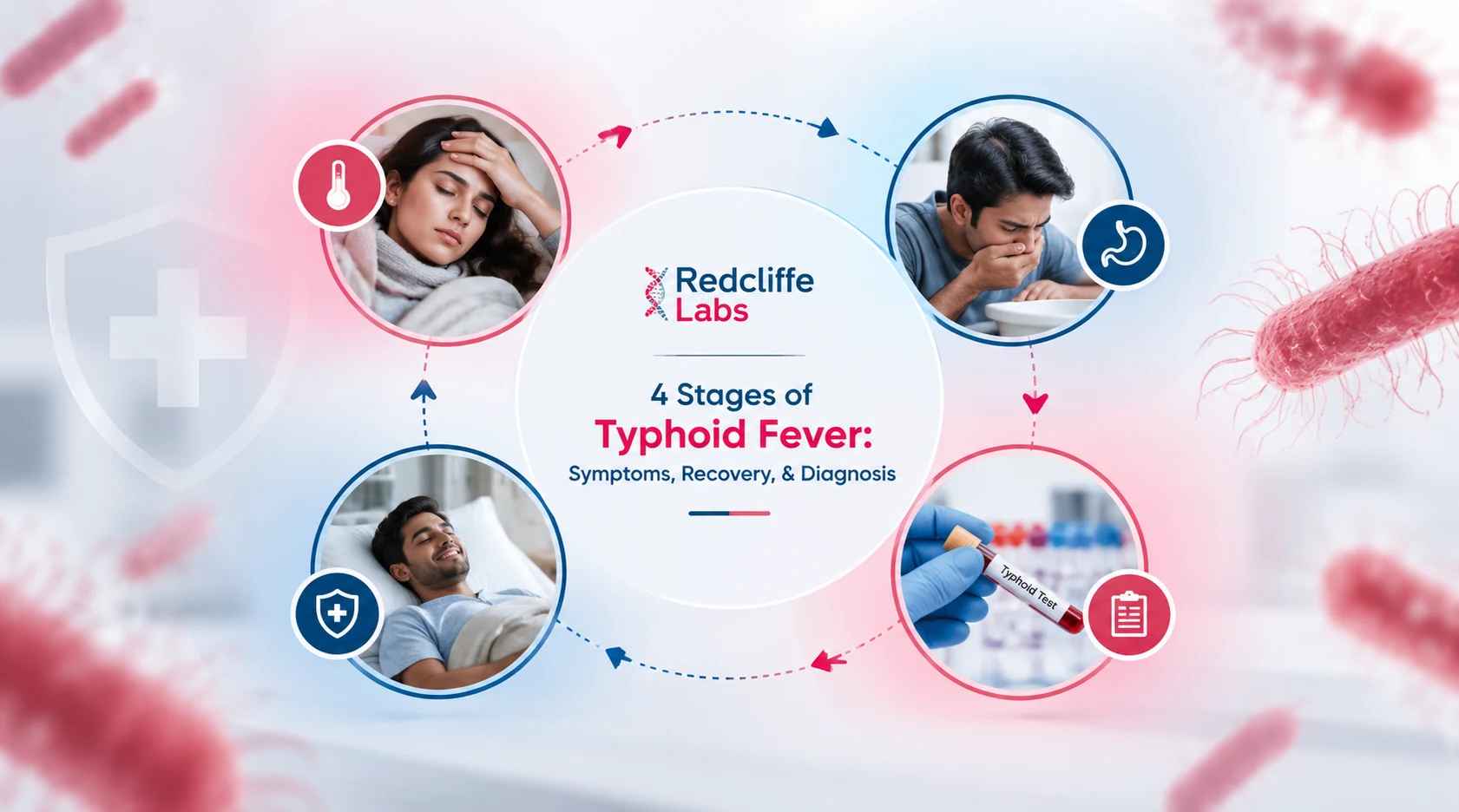
4 Stages of Typhoid Fever: Symptoms, Recovery, & Diagnosis

Overview
- The 4 stages of typhoid fever describe the infection's traditional progression, although symptoms and severity vary by individual.
- Typhoid fever is caused by Salmonella Typhi and usually spreads through contaminated food or water.
- Common signs of typhoid fever include persistent fever, headache, weakness, abdominal pain, and digestive symptoms.
- Typhoid fever in children may cause digestive symptoms and dehydration, so timely medical assessment is important.
- Treatment generally involves prescribed antibiotics, with the choice depending on clinical assessment and antibiotic resistance.
- Blood culture is the main diagnostic test, and early treatment can reduce the risk of serious complications.
Typhoid fever is a bacterial infection caused by Salmonella Typhi, which usually spreads through contaminated food or water. It can cause prolonged fever, headache, weakness, abdominal pain, and digestive problems. Without timely treatment, the infection can lead to serious complications.
Understanding the 4 stages of typhoid fever can help readers recognise how symptoms may progress and why early medical evaluation matters. This article explains the stages, common causes, symptoms in children, treatment options, recovery, and tests used to diagnose typhoid fever.

What are the 4 stages of typhoid fever?
The four distinct stages of typhoid describe the traditional pattern in which the illness may progress over several weeks when it is not adequately treated. However, symptoms vary from person to person, and not everyone experiences all four stages. Early diagnosis and appropriate treatment can reduce the risk of serious complications.
Stage 1: Gradual Onset of Symptoms
During the first week, symptoms may begin gradually. A person may experience a mild fever that increases over several days, headache, dry cough, fatigue, loss of appetite, and general body aches.
Stage 2: Increasing Fever and Digestive Symptoms
During the second week, fever may become higher and more persistent. Abdominal pain, weakness, constipation or diarrhoea, and a loss of appetite may occur. Some people may also develop a rash consisting of faint, rose-coloured spots.
Stage 3: Risk of Serious Complications
During the third week, severe or untreated typhoid fever may lead to complications such as intestinal bleeding, intestinal perforation, or changes in mental alertness. These complications require urgent medical attention. They do not occur in every patient.
Stage 4: Recovery or Continued Severe Illness
In the traditional four-stage description, the fourth week may involve gradual improvement or continued severe illness. Recovery depends on the severity of the infection and whether appropriate treatment has been started. People who do not receive adequate treatment may develop complications or experience a relapse.

What Causes Typhoid Fever?
The causes of typhoid fever are linked to infection with Salmonella Typhi, a bacterium that usually spreads through contaminated food or water. Although readers may search for the 4 stages of typhoid fever causes, the stages describe how the illness may progress, while the causes explain how the infection occurs. Understanding both can help readers recognise the importance of safe food, clean drinking water, and proper hygiene.
Common routes of transmission include:
- Drinking water contaminated with the bacteria.
- Eating food prepared or handled with poor hygiene.
- Consuming food washed with contaminated water.
- Eating food handled by someone who is infected and has not followed proper hand hygiene.
Poor sanitation, unsafe drinking water, and inadequate food hygiene increase the risk of typhoid fever.
How Do the 4 Stages of Typhoid Fever in Children Progress?
The typhoid fever in children can be described using the same traditional progression as in adults. However, symptoms may vary with age, and children may experience diarrhoea and vomiting more frequently.
Parents should look for persistent fever, unusual tiredness, abdominal discomfort, reduced appetite, vomiting, or diarrhoea. Younger children may also show signs of dehydration, such as reduced urination or unusual drowsiness.
Seek prompt medical advice if a child has a persistent fever or appears unwell. Severe abdominal pain, confusion, difficulty waking, or signs of significant dehydration require urgent assessment. Do not wait for symptoms to progress through all four stages before seeking care.
What Are the 4 Stages of Typhoid Fever Treatment?
Treatment for the different stages of typhoid fever depends on the infection's severity and how the patient responds to treatment. Antibiotics prescribed by a healthcare professional are the main treatment, while severe cases may require hospital care.
Stage 1: Early Symptoms and Rising Fever
- Goal: Diagnose the infection early and begin appropriate treatment.
- Care: Blood culture may be recommended, along with prescribed antibiotics and fluids.
Stage 2: Persistent Fever and Worsening Symptoms
- Goal: Monitor symptoms and response to treatment.
- Care: Continue prescribed antibiotics, maintain hydration, and seek medical reassessment if symptoms worsen.
Stage 3: Severe Illness and Complications
- Goal: Manage complications such as intestinal bleeding or perforation.
- Care: Urgent hospital treatment may include intravenous fluids, antibiotics, and surgery if required.
Recovery and Relapse Monitoring
- Goal: Support recovery and identify recurring symptoms.
- Care: Complete the prescribed antibiotic course, stay hydrated and eat well, and seek medical advice if fever returns.
Note: These stages describe a traditional pattern, not a fixed timeline. Treatment depends on clinical assessment and antibiotic resistance.
How long does typhoid fever last?
The incubation period of typhoid fever, which is the time between infection and the onset of symptoms, is typically 6–30 days. Without appropriate treatment, the illness can last for about a month or longer. After starting antibiotics, fever may continue for 3–5 days, but the temperature should generally decrease gradually. Recovery time varies depending on the severity of the infection and response to treatment.
What Tests Can Diagnose Typhoid Fever?
Blood culture is the main test used to diagnose typhoid fever. It helps identify Salmonella Typhi in the blood. Depending on the patient's condition, a healthcare professional may recommend additional cultures or investigations.
- Blood culture: Helps detect Salmonella Typhi in the bloodstream.
- Bone marrow culture: May be used in selected cases, as it can be more sensitive than blood culture.
- Stool culture: May help detect the bacteria, although results can vary depending on the stage of illness.
The Widal test is also used in some settings, but it has limitations and should not be considered definitive confirmation of typhoid fever. Test results should be interpreted alongside symptoms and clinical findings.
Who is likely to get affected by typhoid fever?
Typhoid fever is most common in areas with poor sanitation and limited access to clean water. Hence, the disease is prevalent in the rural areas of developing countries in South and Southeast Asia, Central and South America, Africa, and the Caribbean.
Travelers from other parts of the world worry when visiting Pakistan, India, or Bangladesh. They are most at risk of developing typhoid fever.
Approximately 11 million to 21 million people worldwide contract typhoid fever each year. It is uncommon in Canada, Western Europe, the U.S., Australia, and Japan.
Also read:
https://redcliffelabs.com/myhealth/food-creative/typhoid-diet-chart-food-to-eat-and-avoid/
Typhoid fever vs. Typhus
Typhoid and typhus may sound similar, but they are diseases caused by different illnesses. Here is a table showing the difference between typhoid and typhus:
| Typhoid fever | Typhus |
| 1. It is caused by the bacterium Salmonella typhi. | 1. Bacteria of the Rickettsia genus cause it. |
| 2. It is spread through contaminated food and water. | 2. It is spread by parasites like lice, fleas, or mites, usually from infected animals to humans. |
| 3. Its symptoms include high fever, abdominal pain, headache, fatigue, weakness, diarrhea, or constipation. | 3. Its symptoms include sudden high fever, severe headache, rash, muscle pain, confusion, or photophobia. |
| 4. It is common in developing countries, in areas with poor sanitation. | 4. It is more common when poor sanitary conditions and crowding are present. |
| 5. Typhoid fever is diagnosed with blood, stool, or bone marrow cultures. | 5. It involves blood tests to detect Rickettsia species, often using serological methods. |
| 6. It is treated with antibiotics. | 6. It is also treated with antibiotics. |
| 7. It can be prevented with vaccination, better sanitation, and hygiene practices. | 7. It can be prevented by reducing exposure to lice, fleas, and mites, maintaining personal hygiene, and controlling rodent populations. |
What are the signs of recovery?
The signs of recovery from typhoid fever generally include easing of the symptoms of typhoid fever such as:
- Improvement in appetite
- Relief from headache, abdominal pain, and other pains in the body
- Normal body temperature, that is, no fever
- Feeling less lethargic
- Relief from diarrhoea
- No congestion in the chest
- Less discomfort
What are the main symptoms of typhoid fever?
The main symptoms of typhoid fever are:
- The high temperature slowly increases every day.
- Aches and pains
- Headaches
- Cough
- Constipation
- Extreme tiredness
- Loss of appetite
- Faint pink spots on your chest or stomach
- nausea and vomiting
- Muscles aches
How is typhoid fever diagnosed?
Your doctor will perform a physical exam and ask about the specific symptoms. He may also ask about your travel history to diagnose typhoid fever.
If you have traveled recently or been exposed to typhoid, it is essential to inform your doctor about your symptoms. This will help your healthcare professional make an accurate diagnosis and decide on treatment.
When should you see a doctor for typhoid fever?
The signs and situations when you should meet a doctor for typhoid fever include:
- If you have a fever that lasts longer than 3-4 days and doesn’t respond to over-the-counter medications.
- If you have a high fever (above 103°F or 39.4°C), you should seek medical help immediately. Also, if you have symptoms such as severe headache, abdominal pain, weakness, sunken eyes, fatigue, or malaise, seek medical assistance immediately.
- If “rose spots” develop in the chest and abdomen, they could be a sign of typhoid fever requiring immediate attention.
- If you recently traveled to a country with typhoid fever and developed flu-like symptoms, seek medical advice for early and accurate diagnosis and treatment to prevent serious illness.
- Symptoms such as mental confusion, or agitation can indicate a severe infection or complications like encephalitis (brain inflammation). Get yourself tested.
- Typhoid fever can be more dangerous in young children and older adults. If a child or older adult develops symptoms resembling typhoid, do not delay. Consult a healthcare professional promptly, as they are more susceptible to complications.
Also read: https://redcliffelabs.com/myhealth/blood-test/which-test-is-done-for-typhoid/
What tests can be done to diagnose typhoid fever?
List of tests that can be done to diagnose typhoid fever:
- Blood test: An expert will draw a small amount of blood from a vein in your arm. It will be sent to a laboratory for analysis.
- Stool test: It is easy and simple. Collect your stool sample in a clean, disposable container. Ensure your poo sample doesn't mix with the pee.
- Urine test: A healthcare provider may ask you to pee into a disposable cup or container.
- Bone marrow test: involves using a special needle to get a sample of the inside of your bones.
Typhoid fever vaccination
Typhoid vaccines can help reduce the risk of infection. Available vaccine types and their eligibility vary by age, vaccine product, and applicable recommendations. Consult a healthcare professional about the appropriate vaccine and schedule, particularly for children and people travelling to areas where typhoid fever is common. Vaccination does not replace safe drinking water, food hygiene, and handwashing.
Who should get vaccinated?
It is a good idea to get vaccinated, especially if you belong to these categories:
- Travelers are traveling to areas where typhoid fever is common. These include countries, particularly South Asia, parts of Southeast Asia, and Africa.
- Laboratory workers who frequently deal with Salmonella typhi bacteria.
- Individuals in close contact with a carrier of the bacteria should get a vaccination for typhoid fever.
Book a typhoid fever test from Redcliffe Labs at affordable rates!
If your healthcare provider recommends testing based on your symptoms, book a typhoid fever test with Redcliffe Labs through the official website, app, or by calling 898 898 87 87. Check test availability, pricing, and home sample collection in your area.
How to Book a Typhoid Fever Test Online
- Visit the Redcliffe Labs website or app.
- Search for the test recommended by your healthcare provider, such as a Widal test.
- Check the test details and price.
- Enter your details and select a convenient home collection slot, if available in your PIN code.
- Confirm your booking and complete the payment as prompted.
Note: Booking confirmation details will be shared through the available communication channels.
Takeaway
Typhoid fever is an illness that is treated when diagnosed at an early stage. The treatment of typhoid is only through antibiotics. When diagnosed late, it can turn out to be fatal. Now, you know how typhoid fever is caused, what are its symptoms, how it is diagnosed, and its cost in India.
Frequently Asked Questions (FAQs)
1. Can typhoid fever return after treatment?
Yes, typhoid fever can recur in some people after treatment. A relapse may occur within one to three weeks after apparent recovery. Some people may also continue carrying Salmonella Typhi without symptoms and can spread the bacteria to others anyone whose symptoms return should consult a healthcare professional for reassessment and appropriate testing.
2. Can a person spread typhoid fever to others?
Yes, a person with typhoid fever can spread the infection through food or water contaminated with infected faeces. Some people continue to carry and shed Salmonella Typhi even after their symptoms improve. Washing hands thoroughly after using the toilet, maintaining safe food-handling practices, and following medical advice help reduce the risk of transmission.
3. Can typhoid fever be prevented without vaccination?
Vaccination helps reduce the risk of typhoid fever, but everyday hygiene practices are also important. Drink safe water, wash your hands with soap before eating and preparing food, and choose thoroughly cooked food served hot. Avoid unsafe drinking water and food prepared under unhygienic conditions, especially in areas where typhoid is common.
4. Can someone have typhoid fever without diarrhoea?
Yes, diarrhoea is not present in every case of typhoid fever. Some people experience constipation, abdominal discomfort, reduced appetite, headache, or weakness instead. Symptoms can vary between individuals and may resemble other infections. A healthcare professional can assess symptoms and recommend appropriate tests, rather than relying on a single symptom to identify typhoid fever.
5. Can typhoid fever cause complications if left untreated?
Yes, untreated typhoid fever can cause serious complications, particularly after several weeks of illness. These may include intestinal bleeding, intestinal perforation, and changes in mental alertness. Severe illness may require hospital care. Early medical assessment and appropriate antibiotic treatment can reduce the risk of complications. Severe abdominal pain, confusion, or signs of internal bleeding require urgent medical attention.
6. What are the signs of recovery from typhoid fever?
Signs of recovery from typhoid fever may include a gradually reducing fever, improved appetite, increased energy, and relief from abdominal discomfort or digestive symptoms. However, improvement can take time, and symptoms may persist after treatment begins. Complete the prescribed antibiotic course and follow medical advice. Seek reassessment if fever returns, symptoms worsen, or new warning signs develop.
Leave a comment
19 Comments
Nitesh
Nov 7, 2024 at 6:13 PM.
Mujhe 10 din hogya bukhar hote aur sardi khasi hote Puri body pain kar rahi he aur meine test karwaya to typhoid nikla mere doctor ne mujhe xykaa 650, azisthromisin 500, oratil 500 diya he par mujhe relieve nahi mila koi acchi medicine bataye
Myhealth Team
Nov 8, 2024 at 1:43 PM.
Agar aapko prescribed medicines se relief nahi mil raha hai, to doctor se dobara consult karna zaroori hai. Typhoid ke liye proper treatment and hydration bohot zaroori hai. Aapko pain aur fever ke liye paracetamol (Xykaa) chal raha hai, lekin agar infection control nahi ho raha, to doctor ko antibiotic ka course adjust karna padega. Fluids aur light diet bhi zaroori hai.
Ashutosh Dixit
Nov 7, 2024 at 1:04 PM.
क्या टायफाइड के दौरान occult blood positive होता है
Myhealth Team
Nov 8, 2024 at 1:47 PM.
टायफाइड के दौरान अक्सर आंतों में सूजन और अल्सर हो सकते हैं, जिससे कभी-कभी occult blood (गुप्त रक्त) पॉज़िटिव हो सकता है। यह तब होता है जब आंतों में हल्की रक्तस्राव हो, जो आमतौर पर ग़ैर-देखी जाती है। हालांकि, यह टायफाइड के सभी मामलों में नहीं होता। अगर occult blood पॉज़िटिव है, तो डॉक्टर स्थिति का मूल्यांकन करेंगे और सही उपचार की सलाह देंगे।
अशोक मीणा
Sep 25, 2024 at 4:08 AM.
टाइफाइट में फायदा है लेकिन हाथ पैरो के जोड़ो से दर्द कम नही हो रहा बार बार इलाज करने के बाद भी शरीर में जकड़न और जोड़ो पर दर्द रेता है कृपया निधान बताए
Myhealth Team
Sep 25, 2024 at 3:49 PM.
Hi, टाइफाइड के बाद शरीर में जकड़न और जोड़ो में दर्द सामान्य हो सकता है। इसके लिए, एक चिकित्सक से पुनः सलाह लें और फिजियोथेरेपी पर विचार करें। नियमित हल्का व्यायाम, पर्याप्त हाइड्रेशन, और विटामिन D व कैल्शियम से भरपूर आहार लें। डॉक्टर की सलाह पर दर्द निवारक दवाएं भी ले सकते हैं। यदि समस्या बनी रहती है, तो विशेषज्ञ से संपर्क करना जरूरी है।
Malik
Sep 13, 2024 at 5:50 PM.
Ek saptah bukhar ke utarne k bad bhuk bhi sahi lag rahi ho bas chakkar aate ho to hum partner k sath sex kar sakte h
MyHealth Team
Sep 17, 2024 at 6:53 AM.
यदि आपको बुखार के बाद चक्कर आ रहे हैं, तो सेक्स से बचना बेहतर है जब तक आप पूरी तरह से ठीक न हो जाएं। चक्कर आना और थकावट की स्थिति में, सेक्स आपके स्वास्थ्य पर नकारात्मक प्रभाव डाल सकता है। पूरी तरह से ठीक होने के बाद और डॉक्टर की सलाह पर ही ऐसा करें।
Rek
Sep 4, 2024 at 9:09 PM.
Mujhe 4mahine se tayfaed h or mai 4mahine se elaj krwa rahi hu par tayfaed thik hi nahi ho raha h ab mai thak chuki hu ab mai kya karu?
MyHealth Team
Sep 5, 2024 at 6:37 AM.
Agar 4 mahine se typhoid ka ilaj ho raha hai aur behtar nahi aa rahi, to apne doctor se consult karen aur treatment plan ko review Karen. Ek doosre specialist se bhi second opinion le sakte hain. Apni lifestyle aur diet ko check karen aur stress management par bhi dhyan den.
Sandeep yadav
Aug 21, 2024 at 1:09 PM.
नमस्कार सर मैंने विडाल टेस्ट कराया था मुझे 1:80 टाइफाइड huwa था मैं अभी बीस दिन से पैराक्सीन 500 ले रहा हू मुझे अच्छा महसूस हो रहा है पर कभी कभी हल्का सा बुखार हो जाता है तो मैं दवा जारी रखी या बंद कर दूं
MyHealth Team
Aug 22, 2024 at 5:53 AM.
नमस्कार, यदि आप पैराक्सिन 500 (एंटीबायोटिक) ले रहे हैं और बुखार कुछ हद तक कम हो गया है, तो दवा को बंद करने का निर्णय केवल आपके डॉक्टर को लेना चाहिए। बुखार की हल्की वृद्धि को लेकर चिंता करने की बजाय, यह जरूरी है कि आप डॉक्टर से संपर्क करें ताकि वे आपकी स्थिति की पूरी जांच कर सकें और दवा के बारे में उचित सलाह दे सकें। डॉक्टर की सलाह पर ही दवा जारी रखें या बंद करें।
Burse Meera Kailash
Jun 14, 2024 at 12:41 PM.
I have typhoid again and again what I do ?
MyHealth Team
Jun 17, 2024 at 11:36 AM.
If you're experiencing recurrent typhoid fever, ensure you complete your prescribed antibiotics, discuss possible antibiotic resistance with your doctor, practice good hygiene, and consider vaccination if not already vaccinated. Consult your healthcare provider for further evaluation and personalized advice.
Suprith V
Jan 30, 2024 at 11:07 AM.
Hi, I have typhoid. From last 20 days I am on medication. One of doctor prescribed me to take Azee 500 and Taxim O for 5 days. While taking medicines I was feeling better, I was feeling recovering. Then again I started getting fever, shivering. Then again I consultant another doctor, he also said I have typhoid Then ge suggested antibiotics for 3 days. From yesterday again I am having fever and diarrhea as well. Do I need to visit doctor again. Please suggest me. From 11-Jam-2024 I am having fever with shivering.
Myhealth Team
Jan 30, 2024 at 12:23 PM.
Persistent fever and diarrhea despite antibiotics for typhoid. Visit doctor promptly for evaluation and adjusted treatment. Stay hydrated.
D Goswami
Jan 29, 2024 at 2:19 PM.
I got discoved my typhoid in mid of after 3 days of being bed ridden Dec2023, I called for blood test for Dengue which was common those days in New Delhi India, I think I was already infeced for around 2 months prior to discovery of my typhi. I had also lost Humoglobing , So 4th day I goto doc and he gave me 3 days medication after that I from 3rd day I stateded taking Green coconut water, Multivitamin syrup/tonic with vitamin B, Apples, Carrots, Dryfruits, Like Almond,Cashew, and prunes (Lots for Blood sake), beet root, guava, Kiwi fruit Banana.. Etc , lots of fruits....took only 3 day medicine as per doc, and lots of Good diet. Note i never gone for boiled food... In my case my digestive systems were working fine...My symtoms were Only lots of fatigue, physical and metal, taste loss, Smell loss, and pain in joints. Now after a 1.5months gone I feel much better...
Myhealth Team
Jan 30, 2024 at 12:29 PM.
Discovered typhoid mid-Dec 2023, treated 3 days, followed balanced diet, now feeling better after 1.5 months. Listen to body, prioritize health.
Kishore
Jan 22, 2024 at 6:38 AM.
I tested Typhiod positive 1:160 and after 20 days ,l don't get relif from weakness and pain and stomach problems even my medical course completed .and tested it comes 1:80, and i tested after one month and result is 1:40 fever gone but my weakness and stomach problem not gone please help me
Myhealth Team
Jan 23, 2024 at 11:25 AM.
Persistent weakness and stomach issues after typhoid treatment may require further medical evaluation. Consult your doctor for a comprehensive assessment, as there may be underlying factors contributing to your symptoms.
Pavanags
Dec 27, 2023 at 7:05 PM.
2 months before i had typhoid...now i have joint pain...blood test showing uric acid 5.8. Esr is 42. And wbc is 11400....no rhomoroid....is this pain a cause of typhoid..what is vthe solution for this.plzz suggest mele.
Myhealth Team
Dec 28, 2023 at 10:59 AM.
Joint pain post-typhoid with elevated ESR and uric acid may need medical attention. Consult a doctor for medication, hydration, and dietary changes. Follow their advice for optimal management.
Himanshu singh
Dec 24, 2023 at 11:11 PM.
मुझे टाइफाइड है जो की बुखार आ रहा है दवा लेने पे ठीक हो जाता है उसके बाद जब दवा का असर खत्म होता है बुखार फिर आ जाता हैं ऐसे कितने दिन तक बुखार आएगा body temperature 98.7f normal बुखार में 99.6,100.1f होता है
Myhealth Team
Dec 28, 2023 at 11:21 AM.
टाइफाइड के इलाज के बाद बुखार की दिनों की संख्या व्यक्ति के स्वास्थ्य और इलाज की स्थिति पर निर्भर करती है। आपका चिकित्सक इस पर जवाब देगा।
Pankaj Verma
Dec 21, 2023 at 12:44 PM.
Muje 2 mahino ke baad pta chala muje typhoid hai lekin ab typhoid thik h lekin kamjori nhi ja rhi
Myhealth Team
Dec 21, 2023 at 1:07 PM.
Hi Pankaj, बहुत खुशी है कि आपका टाइफाइड ठीक हो गया है। लेकिन कमजोरी का अब भी अहसास हो रहा है तो यह सुनिश्चित करना महत्वपूर्ण है कि आप पूरी तरह से आराम करें और अपने आहार, पानी, और नींद का ध्यान रखें। यदि समस्या बनी रहती है, तो कृपया एक चिकित्सक से माश्वरा लें। Dhanyawad.
Belynda lucci
Dec 19, 2023 at 12:10 AM.
Thanks much your explanation is so helpful. I am diagnosed of typhoid and not getting better quickly. Having sore throat and stomach pain and i need to get back to work asap. I am living in Nigeria.
Myhealth Team
Dec 22, 2023 at 12:17 PM.
1. Take Prescribed Medications: Follow your doctor's prescribed antibiotics. 2. Stay Hydrated: Drink water and oral rehydration solutions. 3. Rest: Allow your body the needed rest for recovery. 4. Bland Diet: Stick to plain, easily digestible foods. 5. Good Hygiene: Wash hands regularly to prevent spreading infection. 6. Consult Your Doctor: If symptoms persist or worsen, contact your doctor promptly. Prioritize your health over returning to work quickly.
Annalise James
Dec 14, 2023 at 4:37 PM.
Does typhoid medicine have side effects?
Myhealth Team
Nov 16, 2024 at 10:15 AM.
Typhoid theek hone mein samay lagta hai, lekin agar symptoms barqarar hain to doctor se salah lein. Antibiotics ka pura course complete karein. Halka aur poshtik bhojan lein, jaise dal, khichdi, aur nariyal paani. Saaf pani aur hygiene ka dhyan rakhein. Agar zarurat ho to blood ya stool test repeat karayein aur specialist se consult karein.
Captain
Nov 11, 2024 at 4:26 PM.
Mera typhoid theek nahin ho raha hai aur theek hai main baat FIR Bhari rahata hai kripya paraamarsh de
Myhealth Team
Dec 15, 2023 at 12:10 PM.
Typhoid medicines like ciprofloxacin may cause common side effects such as nausea, and it's essential to complete the prescribed course under a healthcare professional's guidance.
Chike maria
Dec 10, 2023 at 6:54 PM.
I have treated typhoid 2 weeks ago at 1:80 but I check the result today and is at 1:40 but I still feel sick too is my antibiotic not complete?
Myhealth Team
Dec 15, 2023 at 12:30 PM.
Titer decrease suggests improvement, but persistent symptoms may need reevaluation. Consult your healthcare provider for further guidance on your typhoid treatment.
Aruna
Oct 13, 2023 at 2:24 PM.
இது மிகவும் மோசமான காய்ச்சல். எனக்கு 20 நாட்கள் ஆகி விட்டது இன்னும் என் உடல்நிலை சதாரணமாக இல்லை. இதை ஆரம்பத்திலேயே சரி செய்வது மிக நன்று. உணவு கட்டுபாடு முக்கியம் இதனால் என் குடலில் புண் ஏற்பட்டு மிகுந்த அவஸ்கதயில் உள்ளேன்.
Myhealth Team
Oct 18, 2023 at 6:17 AM.
உங்கள் புண் மற்றும் அவஸ்கதம் மிகவும் முக்கியம். துணை வை்யருடைய ஆலோசனை அவசிஷ்டமாக அறிந்து சிகிச்சை தேவை.
MANGS KYENRET ISA
Sep 10, 2023 at 3:50 AM.
good morning Dr. Have treated malaria and typhoid with malaria injection and ciprofloxin about 4weeks ago. But recently My typhoid test result shows that I have typhoid which is moderately high. Have had headache which feels like a rubber band tied around my head or sometime a sensation of something stocked in the middle of my Head, mild pains around my body and chest congestion. Have started treatment with norfloxacin tabs two days ago. Could this be effective?
Myhealth Team
Sep 20, 2023 at 12:35 PM.
Norfloxacin can be effective for treating typhoid, but it's crucial to complete the prescribed course. If symptoms persist, consult your doctor for further evaluation and potential adjustments to your treatment. Stay hydrated and get adequate rest.
victoria okonkwo
Aug 28, 2023 at 2:53 PM.
I was diagnised of typhoid fever. I have finished my mediation yesterday. I still have slight head ache and body pains, ,but no fever or cough. My appetite isn't fully back
MyHealth Team
Jun 30, 2024 at 12:46 PM.
It's essential to consult with a healthcare professional for tailored medical advice, especially concerning ongoing symptoms after treatment.
Kofi
Jun 28, 2024 at 11:04 AM.
Hi doc, tested 1:320 each when I did my typhoid test, after taking my medication of one week , I still feel stomach cramps
Kelvin
May 17, 2024 at 9:41 AM.
Hello I was diagnosed with typhiod and fever like a month back symptoms are headache, dizziness, fever, weakness of the body with itching and I used the medication the doctor prescribe for me for 5days the symptoms reduce after somes days expecially headache and weakness ..but I notice I as feeling fever and itching again so I am planning to go and I a text again to know how far
Myhealth Team
Aug 29, 2023 at 6:46 AM.
I'm glad you've finished your typhoid medication. Lingering symptoms like headache, body pains, and reduced appetite can be normal during recovery. Get plenty of rest, stay hydrated, and eat a balanced diet. If symptoms persist or worsen, contact your doctor.