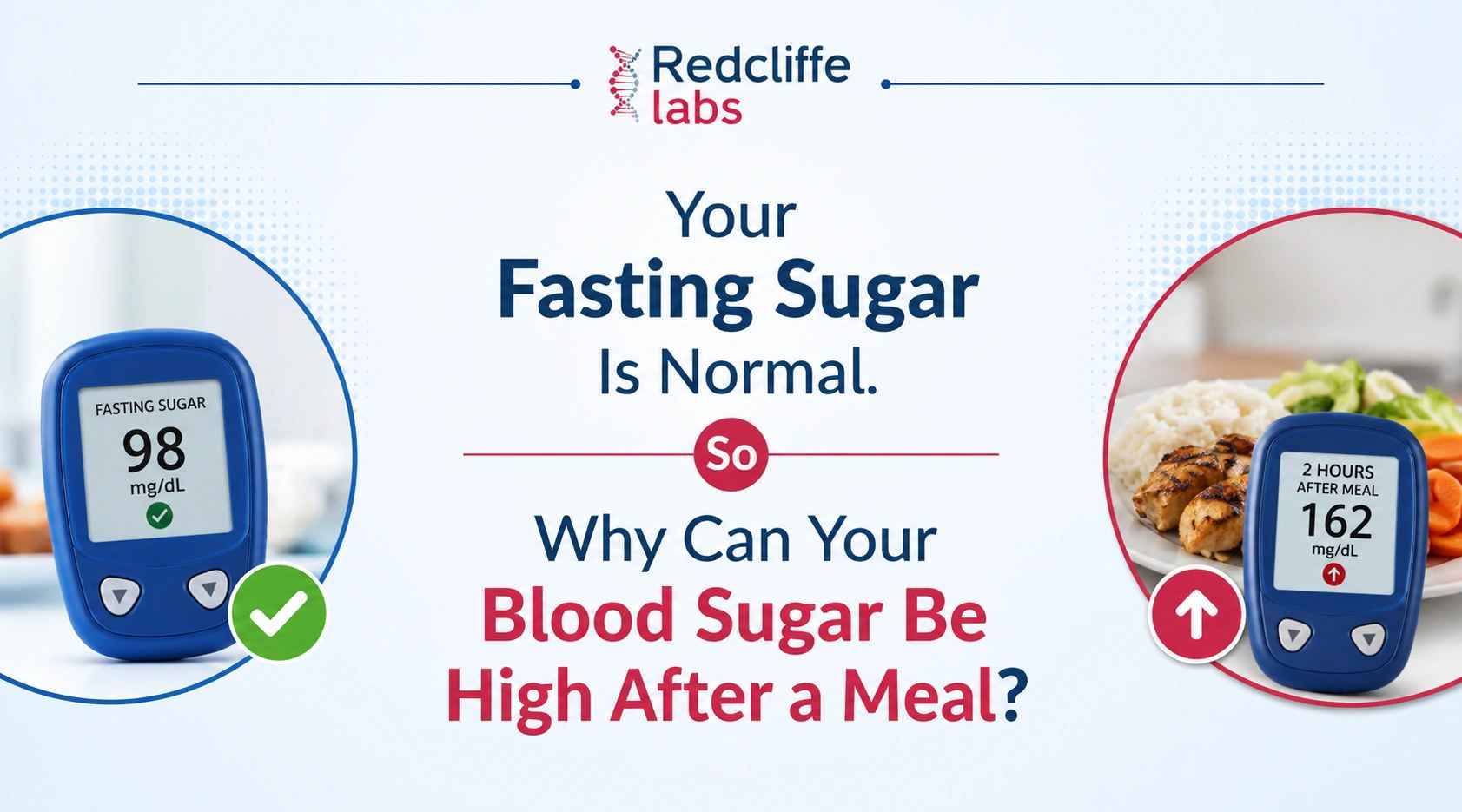
Your Fasting Sugar Is Normal. So Why Can Your Blood Sugar Be High After a Meal?

Overview
- Fasting blood sugar may be normal even when post-meal levels are high.
- A Blood Sugar (PP) Test measures glucose after eating and may reveal issues fasting tests miss.
- Insulin resistance, diet, inactivity, poor sleep, stress, medications, and genetics can raise post-meal glucose.
- Persistently high levels may increase the risk of type 2 diabetes.
- Balanced meals, fewer refined carbohydrates, and a short walk after eating may help.
- Blood Sugar (PP), fasting glucose, HbA1c, and OGTT provide different information.
- One high reading does not confirm diabetes; discuss repeated abnormal results with a healthcare professional.
Your Fasting Sugar Is Normal. So Why Can Your Blood Sugar Be High After a Meal?
Imagine this: your fasting blood sugar is 96 mg/dL, and your HbA1c is 5.5%, both within the usual reference range. But when your blood sugar is checked after a meal, the reading is considerably higher.
This is where the Blood Sugar (PP) Test, also called the Postprandial Blood Sugar (PPBS) test, can provide useful information that a fasting test alone may not show.
Fasting glucose tells you how your body is managing blood sugar when you have not eaten. A post-meal blood sugar test looks at what happens after food, when your body releases insulin and moves glucose from the bloodstream into cells.
What "normal fasting, high after meals" really means
Fasting glucose
Fasting glucose reflects your baseline blood sugar level after 8 or more hours without food. It is influenced mainly by glucose production in the liver and the effectiveness of insulin overnight.
Post-meal glucose
Postprandial, or post-meal, glucose shows how efficiently your body handles the carbohydrates in a meal. This process depends on a rapid insulin response, good insulin sensitivity in the muscles, and timely suppression of glucose production by the liver.
What this pattern may indicate
This does not automatically mean you have diabetes. A single elevated post-meal reading needs to be interpreted in the context of the test type, timing, symptoms, and other results such as FBS and HbA1c.
Key reasons your blood sugar can spike after eating
Several factors, from insulin response and meal composition to lifestyle, hormones, and genetics, can influence how much your blood sugar rises after a meal.
1. Early insulin resistance or impaired glucose tolerance
Post-meal glucose dysregulation can develop before fasting glucose rises. The pancreas may still produce enough insulin to keep fasting glucose within range but may struggle to release enough insulin quickly after a carbohydrate-rich meal.
This can occur with impaired glucose tolerance (IGT), a form of prediabetes.
In India, the risk of glucose intolerance is influenced by factors such as sedentary lifestyles, refined carbohydrate-rich diets and excess abdominal fat.
2. Meal composition and glycemic load
What and how much you eat can significantly affect your post-meal glucose.
Refined carbohydrates such as white rice, maida-based foods, sugary drinks and sweets are digested quickly and can cause a rapid rise in blood glucose.
Large portions can also increase a meal's overall glycemic load.
Meals low in fiber and protein may cause glucose to enter the bloodstream more rapidly.
3. Lifestyle and hormonal factors
Several everyday factors can contribute to higher post-meal glucose:
- Sedentary lifestyle: Sitting still, especially after eating, means your muscles absorb less glucose.
- Poor sleep: Sleep deprivation can affect glucose regulation and insulin sensitivity.
- Stress: Stress hormones such as cortisol can increase blood glucose and result in higher readings.
- Changes in hormones: Hormonal changes in the early morning may increase glucose after breakfast.
- Medications: Some medicines, including corticosteroids and some antipsychotic medications, can affect blood glucose.
4. Genetic predisposition
Genetic factors can also influence how efficiently the body produces and responds to insulin. Variations in key genetic factors such as TCF7L2, MTNR1B and SLC30A8 have been associated with differences in insulin secretion and glucose regulation.
What India's numbers tell us about post-meal blood sugar

These figures do not mean that everyone with normal fasting blood sugar needs a Blood Sugar (PP) Test. However, they highlight why doctors may assess glucose regulation using more than one test, especially when a person has risk factors for diabetes.
Related Link: https://diabetesatlas.org/data-by-location/country/india/
What a Maharashtra study revealed about fasting and post-meal glucose
An urban population study conducted in Dombivli, Maharashtra, found that some participants had normal fasting glucose but elevated 2-hour glucose levels. In particular, 1.3% of participants had normal fasting glucose but 2-hour post-meal glucose levels above 200 mg/dL.
The finding suggests that fasting glucose alone may not identify every case of abnormal glucose regulation. Depending on your symptoms, risk factors, and other test results, your doctor may recommend additional testing, such as a Blood Sugar (PP) Test, HbA1c, or an oral glucose tolerance test.
Why does this matter for long-term health?
Repeatedly elevated post-meal glucose can be associated with metabolic problems and an increased risk of developing type 2 diabetes over time.
It may also contribute to:
- Cardiovascular risk
- Oxidative stress and inflammation
- Declining beta cell function
- Progression from impaired glucose regulation to type 2 diabetes
The pattern matters more than one isolated reading. Persistently elevated post-meal glucose deserves attention even when fasting glucose remains within the normal range.
What you can do to reduce post-meal glucose spikes
1. Rethink your plate
Build meals around fiber, protein and balanced carbohydrates.
- Add vegetables, salads, legumes and whole grains.
- Include protein sources such as dal, paneer, curd, nuts and seeds.
- Choose minimally processed carbohydrate sources more often.
- Limit sugary drinks, sweets and refined flour-based foods.
2. Pay attention to meal order
Eating vegetables and protein before carbohydrate-rich foods may help reduce the post-meal glucose rise.
Rather than eating a large portion of carbohydrates on their own, pair them with fiber and protein.
3. Move after meals
A short walk after eating can help muscles take up glucose and may reduce the post-meal rise.
Even 10 to 15 minutes of light activity can be a practical habit to build into your routine.
4. Prioritize sleep and stress management
Aim for consistent, good-quality sleep. Poor sleep can affect insulin sensitivity and glucose regulation.
Stress management techniques such as breathing exercises, yoga, and mindfulness may also support healthier glucose control.
5. Test at the right time
If you consistently notice higher glucose after meals, discuss it with your doctor.
Depending on your risk factors and symptoms, your doctor may recommend:
- A Blood Sugar (PP) Test / 2-hour postprandial glucose test
- An oral glucose tolerance test (OGTT)
- HbA1c to assess average blood glucose over the previous 2 to 3 months
A PPBS test and an OGTT are not the same test. A PPBS test measures glucose after a regular meal, while an OGTT uses a standardized glucose solution under specific testing conditions.
What can affect your test result?
Your post-meal glucose reading can be influenced by several factors, including:
- What and how much you ate
- The exact timing of the blood sample
- Physical activity after the meal
- Stress, illness or infection
- Certain medications
- Whether the meal was typical for your usual diet
For a meaningful result, follow your laboratory's instructions and avoid deliberately changing your usual meal just to obtain a lower reading.
A single high reading does not necessarily mean you have diabetes. Repeated results should be interpreted in the context of the test, timing, symptoms and your overall health.

Bottom line
Normal fasting blood sugar does not always tell the complete story of how your body handles glucose.
For some people, changes in post-meal glucose can appear before fasting glucose becomes abnormal. Paying attention to meal composition, staying active after eating, getting adequate sleep, and discussing persistent high readings with a healthcare professional can help identify glucose problems earlier.
A Blood Sugar (PP) Test does not replace fasting glucose or HbA1c. Instead, it provides another piece of the glucose-control picture by showing how your body responds after a meal.
Why Redcliffe Labs?
At Redcliffe Labs, you can book a Blood Sugar (PP) Test at home, along with fasting blood sugar and HbA1c for a more complete view of your glucose levels. A single diagnostic fee applies to the entire booking, even when you book tests for multiple family members together.
You also receive 4x Value Benefits:
- Smart reports with health trends and actionable insights
- Expert-led consultation to help explain your results
- AI Health Assistant for everyday health and report-related questions
- Personalized diet and lifestyle recommendations based on your health goals
Test availability, preparation requirements, and report interpretation may vary, so follow the instructions provided at the time of booking and discuss your results with a healthcare professional.
FAQs
What is a Blood Sugar (PP) Test?
A Blood Sugar (PP) Test is also known as the Postprandial Blood Sugar or PPBS test. The test checks the blood glucose after eating, usually 2 hours after the start of a meal. It shows how your body responds to food and helps assess glucose regulation. Doctors may also recommend fasting blood sugar and HbA1c for a complete picture.
Can fasting blood sugar be normal but PP sugar be high?
Yes. Fasting blood sugar and post-meal blood sugar measure different aspects of glucose control. In some people, the body may not be able to handle glucose after a meal before fasting glucose levels become abnormal. A consistently high PP reading doesn't mean you have diabetes, but you should discuss it with a healthcare professional and interpret it along with other test results.
What is the normal range for a PPBS Test?
For a standard 2-hour oral glucose tolerance test in non-pregnant adults, a glucose level below 140 mg/dL is generally considered normal. However, interpreting a routine Postprandial Blood Sugar (PPBS) test can depend on how the test was performed, the meal consumed, and the individual's health status. Your doctor should interpret the result in context.
How should I prepare for the test?
A Postprandial Blood Sugar (PPBS) test is performed after eating rather than while fasting. Usually, you eat a regular meal and have your blood sample collected 2 hours after starting the meal. Follow your laboratory's specific instructions regarding food, medicines, and activity. Avoid deliberately eating an unusually light or heavy meal, as this may affect the result.
Is a PPBS Test better than an FBS or HbA1c test?
No single test is universally better. Fasting blood sugar measures glucose after fasting, while the Blood Sugar (PP) Test shows how your body responds after a meal. HbA1c reflects average blood glucose over approximately three months. Depending on your symptoms, risk factors, and existing results, your doctor may recommend one or a combination of these tests.