What Are the First Signs of Croup?

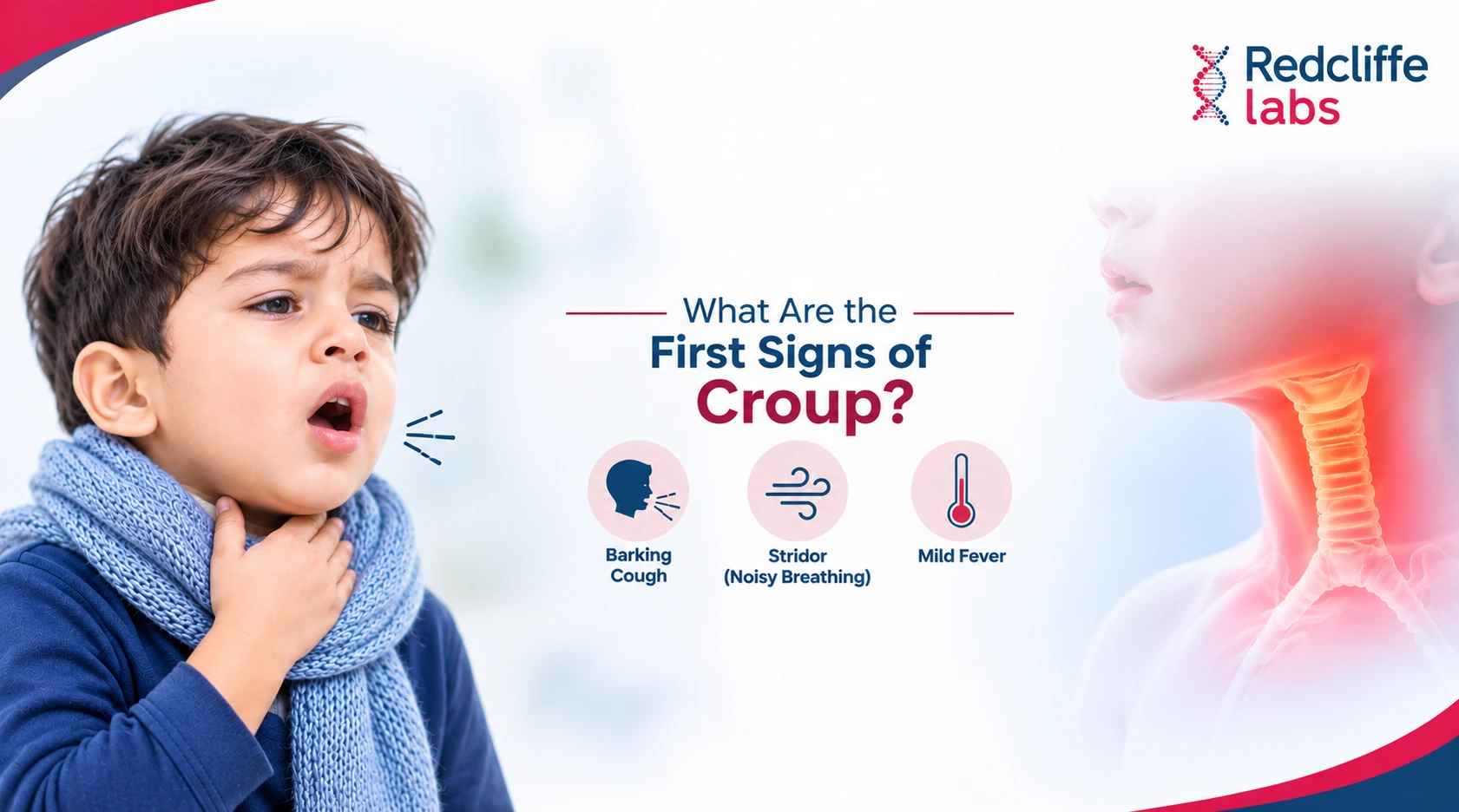
A child's cough can sometimes sound very different from an ordinary cough. Instead of a typical dry or wet cough, you may notice a harsh, barking sound that resembles a seal. Your child may also develop a hoarse voice or make a high-pitched noise while breathing in. These can be the early signs of croup.
Croup syndrome is a viral respiratory infection that causes swelling around the voice box (larynx) and windpipe (trachea), making it harder for air to pass through the upper airway. It commonly affects babies and young children, particularly those between 6 months and 6 years of age.
Although most cases are mild, recognizing the symptoms early can help parents understand when home care may be sufficient and when medical attention is necessary.
Let's look at the first signs of croup, why they develop, how doctors diagnose the condition, and what parents can do to help their children.
What Is Croup Syndrome?
Croup, medically known as laryngotracheitis or laryngotracheobronchitis, is an infection that affects the upper respiratory tract. It causes inflammation and swelling around the larynx, trachea, and the area just below the vocal cords . This swelling narrows the airway, making it difficult for air to move freely. As a result, children may develop a characteristic barking cough, hoarse voice and noisy breathing.
Croup is usually caused by a viral infection, particularly the parainfluenza virus.
Other respiratory viruses, including influenza, respiratory syncytial virus (RSV) and adenovirus, can also cause i t. The condition is most common in young children because their airways are naturally smaller. Even a relatively small amount of swelling can make breathing more difficult.
Croup generally affects children between 6 months and 6 years of age, although it is particularly common in younger toddlers.
What Are the First Signs of Croup in Children?
The first signs of croup often resemble an ordinary cold. A child may initially develop a runny nose, mild fever, or cough. Over the next few days, more characteristic symptoms may appear, including a barking cough, hoarse voice,ce and noisy breathing.
Here are the early symptoms parents should recognize.
1. Runny Nose and Cold-Like Symptoms
Croup often begins with symptoms similar to those of a common cold.
Your child may experience:
- Runny or blocked nose.
- Mild fever.
- Occasional coughing.
- Sneezing.
- Mild throat discomfort.
At this stage, it may be difficult to distinguish croup from an ordinary viral infection. However, the development of a barking cough or noisy breathing can indicate that the infection is affecting the upper airway.
2. Hoarse Voice or Cry
A hoarse voice is another early sign of croup.
Parents may notice that their child's voice sounds rough, weak, or unusually deep. Younger babies may have a different-sounding cry. This happens because inflammation around the larynx affects the vocal cords and surrounding tissues. A hoarse voice may appear before the characteristic barking cough becomes noticeable.
3. A Barking Cough
A barking cough is one of the most recognizable symptoms of croup . Unlike an ordinary cough, it has a harsh, hollow sound that may resemble a seal barking. It can become more noticeable when the child cries, gets excited,ed or becomes restless.
The cough develops because swelling around the upper airway changes the way air moves through the respiratory tract. Parents may find that the cough sounds particularly loud or unusual during the night.
4. Stridor or Noisy Breathing
Stridor is a high-pitched, harsh sound that occurs when a child breathes in.
It develops when air passes through a narrowed upper airway. Parents may notice this sound when their child is crying, coughing, or breathing.
Stridor is different from wheezing:
- Stridor: Usually a high-pitched sound heard while breathing in, caused by narrowing of the upper airway.
- Wheezing: Usually a musical or whistling sound, commonly heard while breathing out, associated with narrowing of the lower airways.
Stridor should not be ignored, particularly when it occurs while the child is calm or resting. It can indicate more significant airway narrowing and requires prompt medical assessment.
Also Read: How to Reduce a 104°F Fever in a Child? Comprehensive Guide for Parents
What Does a Croup Cough Sound Like?
A croup cough typically sounds harsh, dry, and barking, similar to the sound of a seal. It is different from the usual cough associated with a common cold. Instead of sounding like a mild throat-clearing cough, it may produce a hollow, repetitive barking noise.
Parents may also notice:
- A hoarse or croaky voice.
- A high-pitched sound while breathing in.
- Coughing episodes that become more noticeable at night.
- Increased coughing when the child cries or becomes upset.
A barking cough is an important clue, but it does not independently confirm croup. Other respiratory conditions can also cause coughing and breathing difficulties. A doctor should assess the child to establish the likely cause.
Why Does Croup Happen?
Croup usually develops following a viral infection of the respiratory tract.
The parainfluenza virus is one of its most common causes. Other viruses, including influenza viruses, RSV, adenoviruses,s and certain coronavirus variants, can also trigger the condition.
Here is how it develops:
- Viral infection: A respiratory virus enters the child's body and infects the upper respiratory tract.
- Inflammation develops: The infection causes inflammation and swelling around the larynx and trachea.
- Airway becomes narrower: Swelling, particularly below the vocal cords, reduces the space available for air to pass.
- Symptoms appear: The child develops a barking cough, hoarse voice and possibly stridor.
Because young children have smaller airways, inflammation can affect their breathing more noticeably than it would in older children or adults.
Croup can also spread through respiratory droplets and contact with contaminated surfaces, depending on the virus responsible.
Who Is More Likely to Develop Croup?
Croup mainly affects babies and young children. However, certain factors may increase the likelihood of experiencing more severe symptoms.
These include:
- Young age: Children between 6 months and 3 years are particularly affected.
- Previous severe croup: A history of severe episodes may be relevant when assessing future symptoms.
- Existing airway conditions: Children with pre-existing narrowing of the upper airway may be more vulnerable.
- Certain medical conditions: Some neurological or neuromuscular conditions can affect airway function.
Croup is less common in older children and adults because their airways are larger. However, it can occasionally occur outside the typical childhood age group.
Is Croup Worse at Night?
Yes. Croup symptoms often become more noticeable at night.
A child who appears relatively comfortable during the day may suddenly develop a barking cough or noisy breathing after going to sleep.
The exact reason for this night-time pattern is not fully established. However, the natural variation in airway function, inflammation, and other physiological factors may contribute.
Parents should pay attention to changes in breathing rather than judging the condition only by how loud the cough sounds.
If the child develops stridor while resting, visible chest retractions, or difficulty breathing, seek urgent medical attention.
What Is the Difference Between Mild and Severe Croup?
Croup symptoms can range from a mild barking cough to significant breathing difficulty.
Recognizing the difference is important because severe airway narrowing requires immediate medical care.
|
Symptoms |
Mild Croup |
Moderate to Severe Croup |
|
Barking cough |
Usually present |
Usually present; may be frequent |
|
Hoarse voice |
Common |
Common |
|
Stridor (noisy breathing) |
May occur when crying or upset |
May occur even while resting |
|
Breathing effort |
Usually normal |
Increased or visibly difficult |
|
Chest movement |
No significant pulling in |
Chest or ribs may pull inward while breathing |
|
Behaviour |
Generally alert and comfortable |
May become restless, distressed or unusually sleepy |
|
Feeding |
Usually maintained |
May become difficult due to breathing problems |
Important: Stridor at rest, visible chest retractions, bluish lips, or unusual drowsiness are warning signs that require urgent medical attention.
How Is Croup Diagnosed?
Croup is generally diagnosed through a doctor's clinical assessment rather than routine laboratory testing.
The doctor usually considers the child's symptoms, medical history, and breathing pattern.
The assessment may include:
- Listening to the child's cough and breathing.
- Checking for stridor.
- Looking for signs of increased breathing effort.
- Checking the child's general appearance and alertness.
- Assessing whether the child can drink or feed normally.
- Reviewing the duration and progression of symptoms.
Are Blood Tests or X-rays Needed for Croup?
A typical case of croup can generally be diagnosed based on its characteristic symptoms and physical examination. Blood tests, throat swabs, respiratory viral panels, and X-rays are not routinely required.
However, a doctor may recommend further investigations if the symptoms are unusual, severe, prolonged, or suggest another condition.
For example, a sudden onset of breathing difficulty following a choking episode may raise concern about an inhaled foreign object rather than typical viral croup.
The National Health Mission's F-IMNCI guidelines also provide clinical guidance for distinguishing viral croup from other causes of stridor in children.
Also Read: Alarming Impact of Air Pollution on Children’s Health
How Is Croup Treated?
Treatment depends on the severity of symptoms.
Most children experience mild croup and recover without hospital admission. However, medical assessment is important because certain children may require medication to reduce airway swelling.
1. Corticosteroids
Doctors may prescribe corticosteroids such as dexamethasone to reduce inflammation and swelling in the airway. A single dose is commonly used in clinical management. The decision to prescribe medication and the appropriate dose depend on the child's age, weight, symptoms, and clinical assessment. Parents should never administer prescription steroids without medical advice.
2. Nebulised Adrenaline
Children with moderate or severe croup may require nebulized adrenaline (epinephrine).
This medicine helps reduce airway swelling temporarily and can improve breathing. It is administered under medical supervision. Children receiving this treatment generally require observation because the symptoms can return as its effect wears off.
3. Supportive Care
Supportive care helps keep a child comfortable while croup symptoms improve. Offer plenty of fluids to prevent dehydration, use age-appropriate medicine for fever or discomfort only as advised by a doctor, and keep the child calm, as crying can worsen breathing difficulties. Monitor their breathing closely and seek medical help if symptoms worsen. Since croup is usually caused by viruses, antibiotics are not routinely recommended.
How to Care for a Child With Croup at Home?
If a doctor confirms that your child has mild croup and can be managed at home, a few simple measures can help.
1. Keep your child calm
Crying and agitation can increase breathing difficulty. Comfort your child, hold them if they prefer, and maintain a quiet environment.
2. Encourage fluids
Offer breast milk, formula, or age-appropriate fluids regularly to help maintain hydration.
3. Allow a comfortable position
Let your child remain in a position that makes breathing comfortable. Sitting upright while awake may help.
4. Monitor symptoms during the night
Croup symptoms can become worse at night. Check your child's breathing, sleep, and general behaviour regularly.
5. Manage fever and discomfort
If your child has a fever or discomfort, ask your doctor about appropriate paracetamol or ibuprofen dosing based on age and weight.
When Should You Seek Emergency Medical Help?
Although many cases of croup are mild, some children develop significant airway obstruction and need urgent medical care.
Seek immediate emergency medical attention if your child has:
- Stridor or noisy breathing while resting.
- Visible pulling in of the Chest or ribs during breathing.
- Severe difficulty breathing.
- Bluish, grey, or unusually pale lips or skin.
- Drooling or difficulty swallowing saliva.
- Unusual sleepiness, confusion, or difficulty waking.
- Extreme restlessness or an inability to settle because of breathing difficulty.
- Difficulty drinking or feeding because of breathlessness.
Do not wait for all these symptoms to appear. Even one significant warning sign warrants urgent assessment.
How Long Does Croup Last?
Croup symptoms are generally short-lived.
Most children recover within a few days, although the barking cough and other symptoms may take longer to disappear.
A typical course may look like this:
|
Stage |
What parents may notice |
|
Initial stage |
Runny nose, mild feve,r and an ordinary cough. |
|
Symptom progression |
Hoarse voice and a characteristic barking cough develop. |
|
Peak symptoms |
Noisy breathing (stridor) may become noticeable, especially at night. |
|
Recovery |
Breathing gradually improves, and the barking cough begins to settle. |
According to the Canadian Paediatric Society, typical croup symptoms generally last around 3–7 days, while the barking cough disappears within 48 hours in many children. If symptoms persist, become worse, or repeatedly return, consult a doctor for further assessment.
Can Croup Be Prevented?
There is no guaranteed way to prevent every case of croup because several respiratory viruses can cause it.
However, good infection-control practices can reduce exposure to respiratory infections.
Some useful measures include:
- Encourage regular handwashing.
- Avoid close contact with people who have respiratory infections.
- Cover the mouth and nose while coughing or sneezing.
- Clean frequently touched surfaces.
- Avoid exposing children to cigarette smoke and other respiratory irritants.
- Keep routine childhood vaccinations up to date.
Vaccination against influenza and other vaccine-preventable respiratory infections may help protect against some infections that can cause croup-like illness. However, there is no single vaccine that prevents all cases of croup.
Final Thoughts
When a young child has a harsh cough, it can be concerning. Knowing the early signs will help parents stay calm and know when they need to seek medical advice.
Look out for any changes in their voice, cough, and breathing. Although many cases of mild croup improve within a few days, if they are struggling to breathe (noisy breathing when resting), have inward pulling of the chest, or seem unusually sleepy, then you should not ignore these symptoms.
If you think they may have croup, then speak with your pediatrician. They will be able to do the right assessment. Don't try home remedies or self-medicate.
FAQs
Can croup cause vomiting?
Yes, croup can cause your child to vomit due to constant and forceful coughing. The child may vomit due to a strong cough, causing them to bring up their food by triggering their gag reflex. Vomiting isn't one of the key indicators of croup. If your child can't keep any liquids down, it indicates they are becoming dehydrated. If they are vomiting frequently, you should seek advice from your pediatrician to identify what is causing it and whether further treatment is required.
Can allergies cause croup?
Allergies do not directly cause croup. Croup usually happens after an infection has taken place inside the airways. Allergies can produce symptoms that look like croup, for example, coughing, a sore throat, or a blocked nose.
However, if a person has a cough, a hoarse voice, or a wheezing sound called stridor, it shows that they likely have croup. A doctor can help to tell the difference between infections, allergic reactions, and other problems in the airway.
Can cold weather increase the risk of croup?
Cold weather alone does not directly cause croup. Croup starts when a virus infects the part of the breathing system. Viruses that make people cough and sneeze travel more easily in some colder seasons, and this depends on where you live. Kids can get croup any time of the year. The main way the viruses spread is by coming into contact with someone who is already infected, not by breathing cold air.
Can croup affect a child's voice permanently?
Cold weather alone does not directly cause croup. Croup starts when a virus infects the part of the breathing system. Viruses that make people cough and sneeze travel more easily in some colder seasons, and this depends on where you live. Kids can get croup. The main way the viruses spread is by coming into contact with someone who is already infected, not by breathing cold air.
Can breastfeeding help a baby recover from croup?
Breastfeeding does not directly treat croup. It does not take away swelling in the airway, but it helps keep the body hydrated and provides important nutrients while the baby gets better. If the baby is feeling okay and can feed, keep giving breast milk as usual. If the baby has trouble breathing while feeding or if the baby gets very tired during feeding, it is best to get help from a doctor right away instead of trying to make the baby keep feeding.
Is recurrent croup a sign of an underlying medical condition?
Not necessarily. Some children have repeated episodes because they keep getting exposed to respiratory viruses. But if the episodes happen often, are unusually severe, or don't follow the pattern, it could point to something more. This might include asthma, narrowing of the airways, or other medical conditions. A pediatrician will look at the child's age, the pattern of symptoms, past history, and how the child responded to previous treatments. Based on all this, the pediatrician may suggest testing or evaluation.
Can a child with croup go to daycare or school?
A child who is showing signs of illness should usually stay at home when not feeling well. This is especially important if the child has a fever, is coughing often, or is too sick to take part in activities. It is important to follow the infection-control rules set by the daycare or school. A child can go back when they feel better and are able to join in activities. They should also meet any guidelines about fever before returning. Good hand hygiene and proper cough etiquette can help stop the spread of germs.
Can croup cause complications if left untreated?
Yes, croup can cause complications if it is not treated. Mild cases get better on their own without any serious problems. In some cases, the swelling in the airway can become too severe. This can make it hard to breathe. This can lead to low oxygen levels in the body. When this happens, the child may need to go to the hospital. They might need help breathing, like oxygen or a breathing tube. A child who keeps making a pitched sound when breathing, even when resting, or who is pulling in their Chest with every breath,h or whose lips look blue,ue or who is very sleepy and hard to wake up. These are all signs that medical help is needed right away. Getting help early can make a difference. It can help find children who need treatment before their breathing gets worse.