What to Eat in Sargi if You Have Insulin Resistance: Foods to Choose and Avoid

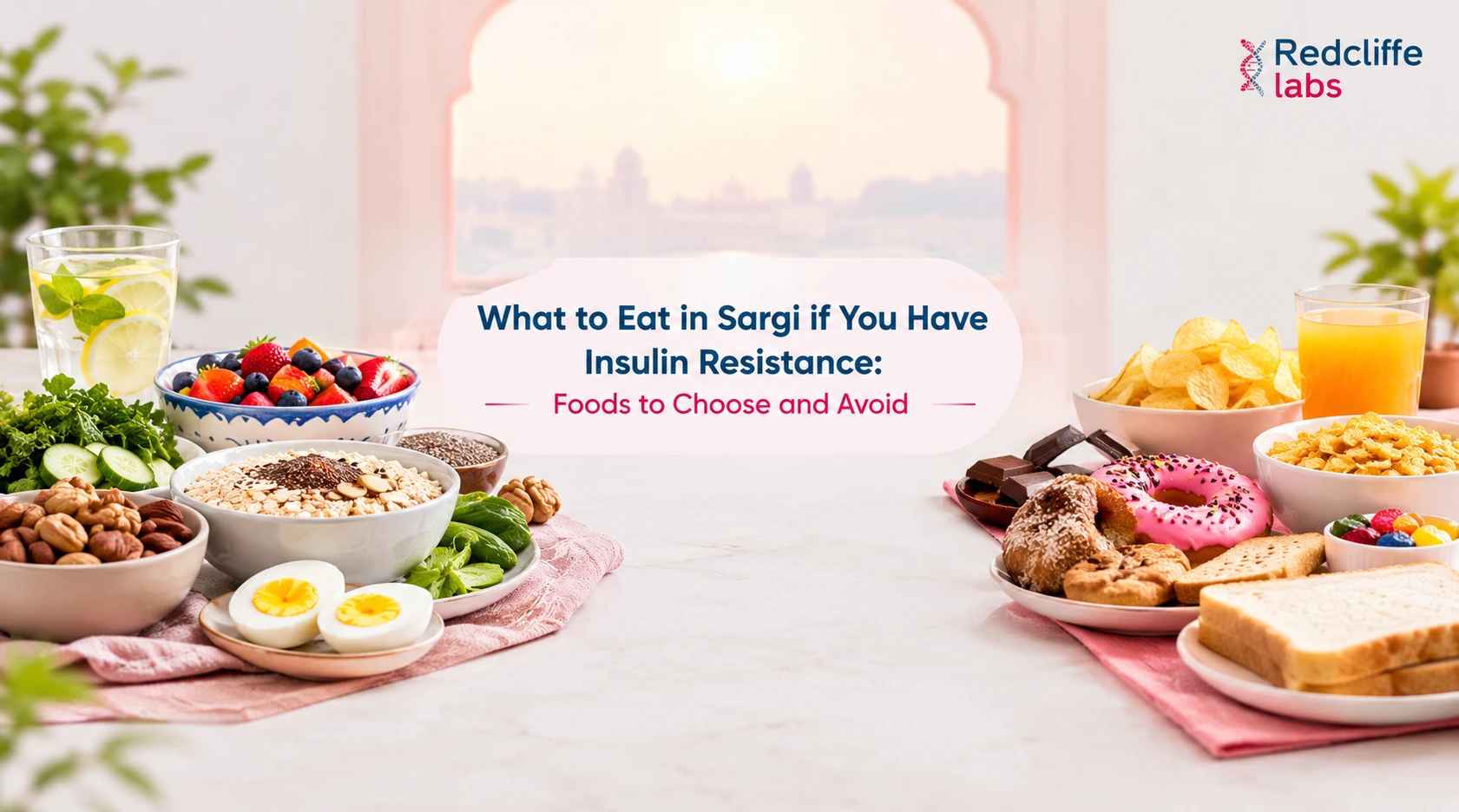
Choosing what to eat in Sargi can feel confusing when you have insulin resistance. Your plate may include pheni, paratha, fruit, and mithai. Which foods should you choose, and how much is enough?
Start with familiar foods, balanced combinations, and portions that suit your usual eating plan.
Overview
- Build a balanced Sargi with foods like moong chilla, plain curd, and vegetables, keeping portions close to your usual meal plan.
- Choose a small serving of whole fruit instead of juice, and remember that fruit also adds to your meal’s carbohydrates.
- Go easy on mithai, sweet pheni, fried mathri, and sweet drinks when putting your Sargi plate together.
- If you have diabetes, ask your doctor whether fasting is suitable and how to manage your medicines that day.
- Fasting blood sugar and HbA1c tests can help your doctor understand your blood sugar, but a normal report alone does not mean fasting is safe.
Quick Answer: What Should You Eat in Sargi With Insulin Resistance?
Choose foods such as vegetable moong chilla, plain curd, tofu or paneer, vegetables, and a small serving of whole fruit. Whole-wheat roti or unsweetened vegetable dalia can also fit. Pairing carbohydrate foods with protein and fibre can slow the rise in blood sugar after eating.
Insulin resistance means your body’s cells respond less well to insulin, the hormone that helps glucose enter cells. It can develop before blood sugar becomes high.
A balanced Sargi cannot guarantee safe fasting. If you have diabetes, get advice about your personal risks before a long fast without food or water
Healthy Sargi Foods: What to Choose and Limit
|
Food Group |
Choices for your Sargi Plate |
What to Limit |
|
Protein foods |
Moong or besan chilla, plain curd, tofu or a modest portion of paneer |
Deep-fried preparations and heavily sweetened dairy foods |
|
Starchy foods |
A suitable portion of whole-wheat roti, unsweetened oats or vegetable dalia |
Large servings of pheni, sweet seviyan or white bread |
|
Vegetables |
Cucumber, cooked beans, palak or vegetables added to chilla |
Making potato the only vegetable on the plate |
|
Fruit |
A small whole fruit, such as an apple, orange or guava |
Juice and large bowls of fruit |
|
Nuts |
A small portion of unsalted almonds or walnuts |
Salty namkeen and frequent handfuls of fried snacks |
|
Drinks |
Plain water; unsweetened milk if it fits your meal plan |
Sweet lassi, soft drinks and sweetened packaged drinks |
These choices follow the broad healthy-eating approach in the ICMR–NIN Dietary Guidelines for Indians.
Milk, curd, dal and fruit also contain carbohydrates. Keep the whole meal in mind instead of adding extra servings simply because each food seems healthy.
Low glycemic index foods generally raise blood sugar more slowly. However, portion size still matters. Milling, cooking, and the food combination can change the response, so every millet dish is not automatically a low-GI choice.
One simple Sargi meal idea
If your doctor considers fasting suitable for you, an example plate could include:
- Two small vegetable moong chillas, cooked with a little oil.
- A small bowl of plain curd, or tofu alongside the chilla.
- Cucumber or another vegetable.
- A small serving of whole fruit.
- Plain water before the fast begins.
This is a meal idea, not a fixed prescription. Adjust portions to your usual meal plan, appetite, and medical advice. Avoid eating an unusually large meal to “store up” food for the day.
Is Karwa Chauth Fasting Safe If You Have Diabetes?
Karwa Chauth fasting may not be safe for everyone with diabetes. Going without food and water for many hours can cause blood sugar levels to drop too low or rise too high. It can also lead to dehydration.
Before fasting, talk to your doctor, especially if you take insulin or certain diabetes medicines, often have low blood sugar, have kidney problems, or are pregnant. Your doctor can help you decide whether fasting is safe for you and explain how to manage your medicines and check your blood sugar.
Never skip or change your medicines on your own. If your blood sugar becomes too low or too high, or you feel unwell or dehydrated, break your fast and follow your diabetes care plan.
Also Read: Karwa Chauth Fasting: A Comprehensive Guide with Pre and Post-Fasting Tips
When Should You End The Fast?
If you have diabetes, end the fast if blood sugar falls below 70 mg/dL or rises above 300 mg/dL. Stop sooner if you feel shaky, dizzy, dehydrated, or otherwise unwell.
These thresholds come from IDF-DAR’s Ramadan guidance. Your doctor should personalise your Karwa Chauth plan and may set earlier stopping points.
For low blood sugar, if you are awake and can swallow, take glucose tablets providing 15 g of carbohydrate, following the label. Recheck after 15 minutes and repeat if still below 70 mg/dL. Once the low is corrected, have a snack or meal.
Get emergency help for fainting, seizures, or inability to swallow. Do not give anything by mouth to someone who cannot swallow safely. Seek prompt medical advice for very high readings.
Which Tests May Help You Understand Your Blood Sugar?
If screening or diabetes monitoring is due, your doctor may recommend the following tests. You do not need a new test simply because Karwa Chauth is approaching.
|
Test |
What it checks |
Preparation |
|
Average blood sugar over roughly three months |
The test itself does not require fasting | |
|
Blood sugar at the time of sampling after an overnight fast |
At least eight hours without calories; plain water is allowed. Follow the laboratory’s specified duration | |
|
Cholesterol and triglycerides, which help assess related heart-health risks |
Follow the laboratory’s fasting instructions |
These tests use a blood sample. Some forms of anaemia, haemoglobin variants and pregnancy can affect HbA1c interpretation. Your doctor should interpret results alongside your health history.
A prediabetes test usually means HbA1c, fasting blood glucose or, sometimes, an oral glucose tolerance test. A lipid profile provides additional information; it does not diagnose insulin resistance.
For Sargi, focus on a balanced plate and manageable portions. For fasting, follow advice based on your health and medicines.
If your doctor recommends testing, view Redcliffe Labs’ Diabetes care package, which includes fasting glucose, HbA1c, a lipid profile, and more. Check the current package details and home collection availability in your area before booking. Test results support medical care; a normal report alone does not make a strict fast safe.
Frequently Asked Questions
Can I eat a banana or mango in Sargi?
Yes, either can fit into a planned meal. Keep the serving modest and count it with the meal’s other carbohydrate foods. A fruit’s sweetness alone does not decide whether you can eat it.
Are dates and raisins the same as almonds and walnuts?
No. Dates and raisins are dried fruit, with concentrated carbohydrates. Almonds and walnuts are nuts, with more fat and protein. Keep dried-fruit portions small instead of treating a mixed bowl of dried fruits as unlimited.
Is jaggery or honey better than sugar for Sargi?
Jaggery and honey still raise blood sugar. Replacing sugar with either does not make pheni, kheer, or tea suitable in unlimited amounts. Reducing the amount of added sweetness is a more useful change.
Can I have coconut water before the fast?
Yes, you may be able to have a small glass of coconut water before the fast, but keep in mind that it contains natural sugar and can affect your blood sugar levels. Plain water is a simpler choice for staying hydrated. If you have kidney problems or have been told to limit potassium or fluids, check with your doctor before drinking coconut water.
Does a normal HbA1c result rule out insulin resistance?
No. HbA1c measures your average blood sugar levels, not how well your cells respond to insulin. Insulin resistance can be present before blood sugar rises. Your doctor considers your health history, risk factors, and any further tests needed.
How should I break my Karwa Chauth fast?
If you feel well and your glucose is within your agreed range, start with water and a moderate meal, such as roti, dal, and vegetables. Eat slowly. Treat low blood sugar immediately instead of waiting for dinner.