Stroke Symptoms: Early Warning Signs and What to Do
Overview
- A stroke happens when blood flow to part of the brain is blocked or a blood vessel bursts, causing bleeding in or around the brain. It needs immediate medical care.
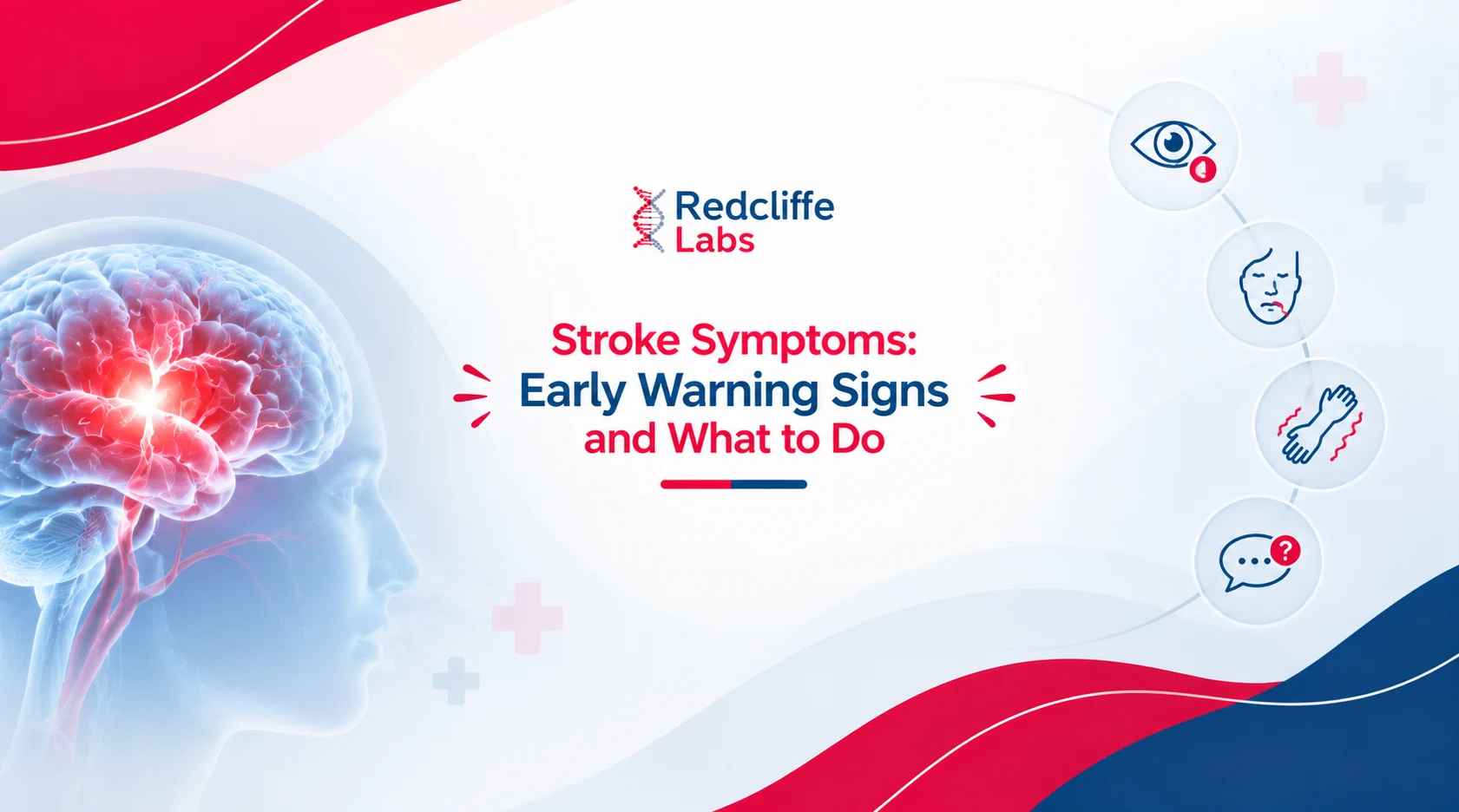
- Warning signs usually appear suddenly. They include an uneven smile, weakness or numbness on one side, trouble speaking, changes in sight, and loss of balance.
- Remember B.E. F.A.S.T.: Balance, Eyes, Face, Arms, Speech and Time. Even one sudden warning sign is enough to call 112 in India for emergency help.
- Symptoms that disappear may be a transient ischaemic attack (TIA). They still need urgent assessment, even if the person feels well again.
- Quick treatment can reduce brain damage. Over time, managing blood pressure, diabetes, cholesterol and heart conditions, and avoiding tobacco can help lower stroke risk.
How To Recognise Stroke Symptoms: B.E. F.A.S.T.
B.E. F.A.S.T. is a simple way to remember common stroke warning signs.
|
Letter |
What It Means |
What You May Notice |
|
B: Balance |
Sudden loss of balance |
The person becomes unsteady, loses coordination, or has trouble walking. |
|
E: Eyes |
Sudden changes in sight |
Blurred vision, double vision, or loss of sight in one or both eyes. |
|
F: Face |
Face drooping |
One side of the face looks uneven or feels numb. Ask the person to smile. |
|
A: Arms |
Arm weakness |
One arm feels weak or numb. When both arms are raised, one may drift down. |
|
S: Speech |
Trouble speaking |
Words sound slurred or unusual, or the person struggles to speak. |
|
T: Time |
Time to get emergency help |
Call immediately if you notice any warning sign. Note when it started. |
You do not need to see every sign before calling. Do not delay the call to finish these checks. The American Stroke Association recommends B.E. F.A.S.T. to help people recognise a possible stroke.
What Other Symptoms Can A Stroke Cause?
Other warning signs include:
- Sudden weakness or numbness on one side: This may affect the face, arm or leg. Someone might drop a cup or find that one leg will not support them.
- Sudden trouble understanding speech: The person may seem confused or struggle to follow a familiar instruction.
- A sudden, severe headache: It may have no clear cause and feel very different from their usual headaches. An extremely painful headache that reaches full strength quickly needs emergency assessment.
- Feeling sick or vomiting: These can occur during a stroke, particularly alongside new problems with balance, sight or movement.
Dizziness and vomiting have many possible causes. They do not confirm a stroke on their own. However, sudden dizziness with double vision, difficulty walking, weakness or speech changes needs urgent attention.
A normal smile or arm check cannot rule out every stroke. Some strokes mainly affect sight or balance.
What Should You Do If Someone May Be Having A Stroke?
Call 112 first. Say, “I think this person may be having a stroke.” Follow the emergency operator’s instructions.
While help is being arranged:
- Record the time. Note when symptoms first appeared. If you are unsure, record when the person was last known to be well.
- Stay with them. Help them rest in a safe, comfortable position. Do not make them walk around to test their strength.
- Do not give food, water, or tablets by mouth. A stroke can affect swallowing, making it unsafe to eat or drink.
- Do not give aspirin on your own. Some strokes involve bleeding, which aspirin can make worse.
- Do not let the affected person drive. Ask the operator for guidance about urgent transport.
- Watch their breathing and responsiveness. Tell the operator immediately if either changes.
Do not delay help while looking for old reports, repeatedly checking blood pressure, or trying home remedies.
If the person becomes unresponsive but is breathing normally, follow the operator’s guidance about placing them on their side in the recovery position. If they are unresponsive and are not breathing normally, or are only gasping, start CPR and follow the operator’s instructions.
What Is A Stroke?
A stroke happens when blood flow to part of the brain is blocked or a blood vessel bursts, causing bleeding in or around the brain. Brain cells can become damaged quickly.
There are two main types:
- Ischaemic stroke: A blockage, usually a blood clot, stops blood from reaching part of the brain.
- Haemorrhagic stroke: A blood vessel bursts and causes bleeding.
Both are medical emergencies. The treatment depends on which type of stroke has occurred.
What If The Symptoms Disappear?
Stroke-like symptoms that go away may be caused by a transient ischaemic attack, or TIA. This happens when blood flow to part of the brain is temporarily interrupted.
A TIA is sometimes called a “mini-stroke”, but that name can make it sound less serious than it is. It can warn of a future stroke.
At home, you cannot safely tell whether the symptoms came from a TIA or a stroke. Get emergency help even if the person feels normal again. Do not cancel an ambulance because the symptoms have stopped.
How Quickly Does Stroke Treatment Need To Start?
As quickly as possible. Earlier treatment can reduce brain damage and improve the chance of recovery.
For a stroke caused by a clot, treatment may include:
- Clot-dissolving medicine: Usually given within 4.5 hours of symptoms starting in eligible patients. Some people may qualify later, depending on specialist assessment and brain scans.
- A clot-removal procedure: Doctors use a thin tube passed through a blood vessel to remove the clot. Selected patients may benefit up to 24 hours after symptoms began or when they were last known to be well.
These are treatment windows for particular patients, not safe waiting periods. Go to hospital immediately, whatever time has passed. People who wake up with symptoms may still have treatment options.
Bleeding strokes need different care, which may include medicines, procedures, or surgery to manage the bleeding and pressure in the brain.
How Do Doctors Diagnose A Stroke?
Doctors assess the symptoms, when they began, medical history, speech, strength and other brain functions.
Tests may include:
- A CT scan or MRI: To look for bleeding and other changes in the brain.
- Blood-vessel scans: To find a blockage or another blood-vessel problem.
- Blood tests: To check blood sugar, blood cell counts, and clotting.
- An ECG or heart monitoring: To look for heart problems that may be linked to the stroke.
A routine blood test cannot confirm or rule out a stroke by itself. Suspected stroke symptoms need urgent hospital assessment.
Who Is At A Higher Risk Of Stroke?
Stroke can happen at any age, although the risk increases as people get older.
Factors that increase the risk include:
- High blood pressure.
- Diabetes.
- High cholesterol.
- Smoking and tobacco use.
- Atrial fibrillation, a type of irregular heartbeat.
- A previous stroke or TIA.
- Low physical activity, excess body weight, and drinking too much alcohol.
Family history also matters. Having no known risk factors does not rule out a stroke.
How Can You Lower Your Risk?
Work with your doctor to manage blood pressure, blood sugar, cholesterol, and any heart conditions. High blood pressure often has no symptoms, so checking it matters even when you feel well.
Everyday steps that can help include:
- Avoiding tobacco.
- Being physically active at a level that suits your health.
- Eating more vegetables, fruit, pulses and whole grains.
- Reducing salt and limiting alcohol.
- Taking prescribed medicines regularly.
- Attending follow-up appointments after a stroke or TIA.
Do not stop or change prescribed medicines without medical advice.
Also Read: Top 10 Foods to Control High Blood Pressure Naturally
Which Routine Checks May Help With Long-Term Care?
Your doctor may recommend checks based on your age, health history, and existing conditions.
|
Check |
How It May Help |
|
Identifies or monitors high blood pressure, a major stroke risk factor. | |
|
Measures cholesterol and other blood fats to guide treatment decisions. | |
|
Helps identify or monitor diabetes. | |
|
Shows average blood sugar over roughly the past three months. | |
|
Helps investigate an irregular heartbeat. |
These checks support a broader medical assessment. They do not detect every stroke risk or diagnose an active stroke.
HbA1c alone does not require fasting. Other tests taken at the same visit may require it, so follow the instructions for your booking.
If your doctor recommends routine testing, you can check the details of Redcliffe Labs’ Lipid Profile Test or Lipid & Diabetes Monitoring package. Confirm the included tests, preparation instructions and collection availability before booking.
Sudden stroke symptoms need emergency hospital care. Do not wait for a routine test or home sample collection.
Frequently Asked Questions
Can you have a stroke without a headache?
Yes. A stroke may cause weakness, speech problems, or changes in sight without a headache. Do not wait for pain before seeking help.
Can younger adults have a stroke?
Yes. Stroke becomes more likely with age, but it can happen in younger adults too. Sudden warning signs need urgent attention at any age.
Are stroke symptoms different in women and men?
The main warning signs apply to everyone: sudden weakness, face drooping, trouble speaking, and changes in sight or balance. Use the same emergency response for women and men.
Are there warning signs days before a stroke?
There is no reliable checklist that predicts a stroke days in advance. Some people have a TIA before a stroke; many do not. New stroke-like symptoms need urgent assessment when they happen, even if they disappear.
What if someone wakes up with stroke symptoms?
Call for emergency help immediately. Tell the medical team when the person was last known to be well, such as before going to sleep. An unclear starting time does not automatically mean treatment is unavailable.
Can low blood sugar look like a stroke?
Yes. Low blood sugar can cause symptoms that resemble a stroke, which is one reason emergency teams check glucose. Do not assume a new speech problem or one-sided weakness is “just low sugar”. Seek urgent medical help.