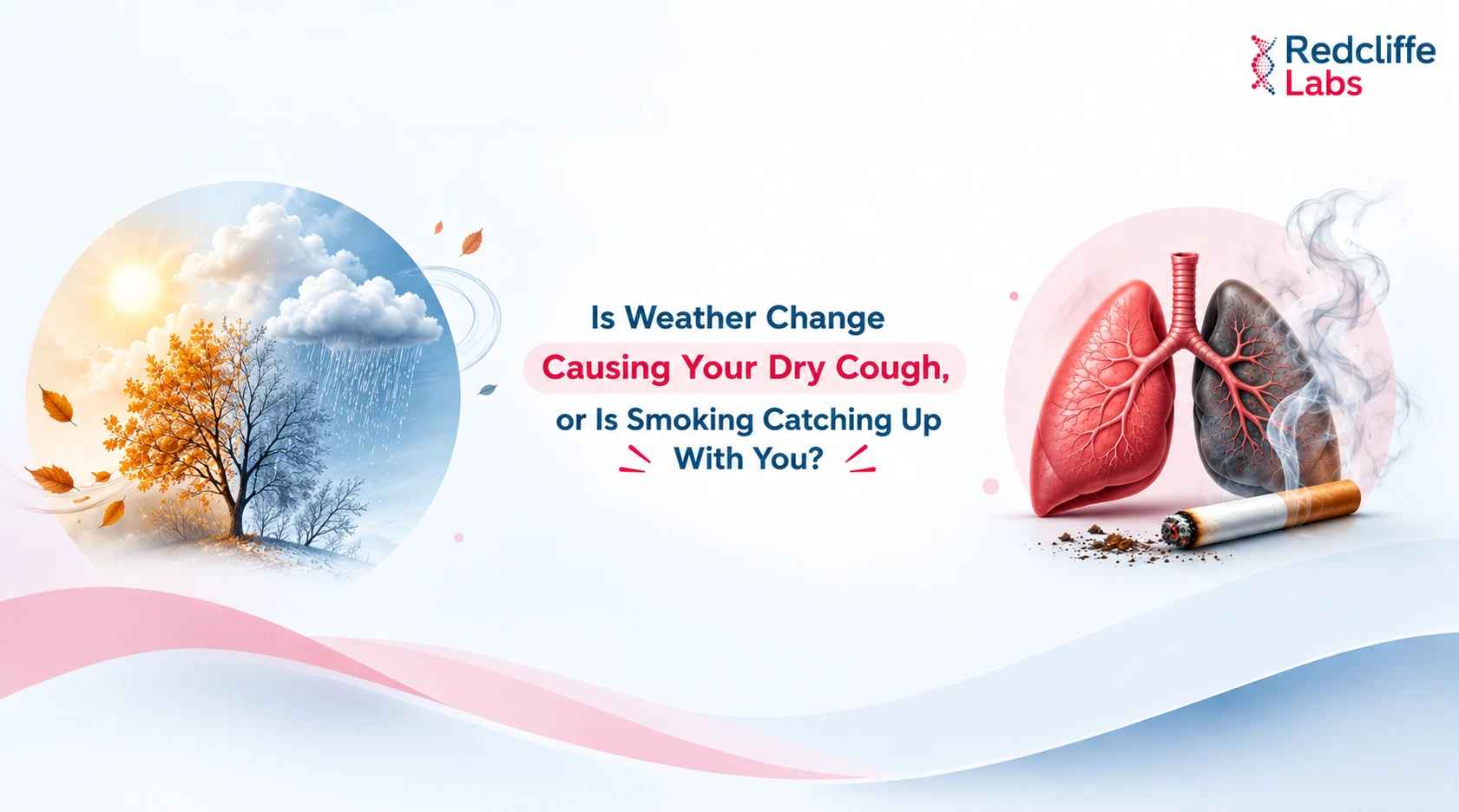
Is Weather Change Causing Your Dry Cough, or Is Smoking Catching Up With You?

Overview
- Weather changes, allergies, respiratory infections and smoke exposure can contribute to a dry cough.
- Tobacco smoke irritates the airways and may worsen coughing and other respiratory symptoms.
- Home remedies may provide temporary relief, but persistent symptoms need proper medical evaluation.
- A cough lasting more than three weeks, or one accompanied by warning signs, should be assessed by a healthcare professional.
- The Smoking Impact Assessment Profile at Redcliffe Labs evaluates selected health markers but cannot diagnose a cough's cause or measure all smoking-related lung damage.
A change in weather, a scratchy throat and repeated coughing can make you wonder whether the season is affecting your health. But if you smoke, there may be another reason worth considering.
A dry cough can develop from cold air, allergies, respiratory infections, smoking, or other medical conditions. While simple home remedies may soothe throat irritation, they may not address the underlying cause. Understanding when to manage symptoms at home and when to seek medical advice is important, especially if you smoke.
Can Weather Changes Cause a Dry Cough?
Yes, weather changes can contribute to coughing in some people. Cold or dry air may irritate sensitive airways, while seasonal changes can coincide with increased exposure to allergens and respiratory infections.
However, weather is not always the cause. If coughing continues after the weather changes or becomes more frequent, other factors should be considered.
Common weather-related triggers include:
- Cold air: Breathing cold air can trigger coughing in people with sensitive airways or asthma.
- Dry air: Low humidity may irritate the nose and throat, especially in people already sensitive to dry conditions.
- Allergens: Seasonal pollen, dust and other airborne particles may trigger allergic symptoms.
- Respiratory infections: Viral infections can cause coughing that continues even after other symptoms improve.
The timing of your symptoms may offer useful clues, but it cannot confirm the cause. A healthcare professional can help distinguish weather-related irritation from an infection, allergy or another condition.
How Can Smoking Make Your Cough Worse?
Tobacco smoke contains harmful chemicals that irritate the airway lining. It can interfere with the normal clearance of mucus and particles from the respiratory tract, contributing to inflammation and coughing.
The relationship between smoking and coughing varies. Some people develop a productive cough, while others experience throat irritation or cough without producing much mucus.
Smoking can also worsen existing respiratory conditions and increase the risk of chronic obstructive pulmonary disease (COPD), lung cancer and other serious illnesses. However, a cough alone does not mean that a person has developed one of these conditions.
If you smoke and notice a change in your usual cough, pay attention to how long it lasts and whether you also experience wheezing, breathlessness or chest discomfort.
Quitting smoking is one of the most important steps you can take to protect your health. If you are finding it difficult to stop, a healthcare professional can advise you about counselling and suitable smoking-cessation treatments.
What Other Conditions Can Cause a Dry Cough?
Weather changes and smoking are not the only possible explanations. Several other conditions can cause a cough without noticeable mucus.
|
Possible cause |
How it may contribute |
|
Respiratory infections |
Colds, flu and other infections may cause coughing that persists after other symptoms improve. |
|
Allergies |
Exposure to pollen, dust or other allergens can irritate the upper airways. |
|
Asthma |
Airway inflammation and sensitivity may trigger coughing, sometimes without obvious wheezing. |
|
Acid reflux |
Stomach contents moving towards the throat may cause irritation and coughing. |
|
Certain medicines |
Some medicines, including ACE inhibitors used for high blood pressure, can cause a persistent cough. |
|
Smoke and air pollution |
Tobacco smoke and other airborne irritants can trigger or aggravate coughing. |
These conditions can have overlapping symptoms. A healthcare professional may review your medical history, current medicines, smoking habits and other symptoms before deciding whether investigations are needed.
Why May Home Remedies Not Be Enough?
Home remedies can sometimes soothe an irritated throat, but they do not treat every underlying cause of coughing.
You can try the following measures for temporary relief:
- Drink warm fluids: Warm water or soup may help soothe throat irritation.
- Try honey: Honey may help relieve coughing in adults and children over one year of age. Never give honey to a child younger than one year.
- Avoid smoke and irritants: Stay away from tobacco smoke, dust and strong fumes wherever possible.
- Keep the air comfortable: Avoid exposure to air that feels excessively dry or irritating.
- Rest and stay hydrated: These measures can support recovery during a minor respiratory infection.
If smoking is contributing to your symptoms, soothing drinks will not remove the ongoing exposure to tobacco smoke. Quitting smoking and avoiding secondhand smoke are more meaningful steps for long-term respiratory health.
Do not rely on home remedies alone if your symptoms persist, worsen or occur alongside warning signs.
When Should You Seek Medical Advice for a Persistent Cough?
Many short-term coughs improve within a few weeks. However, a cough lasting more than three weeks should be assessed by a healthcare professional, particularly if you smoke or have a history of respiratory problems.
Arrange a medical consultation if the cough keeps returning, disturbs your sleep, or affects your daily activities.
Seek prompt medical attention if you experience:
- A severe or rapidly worsening cough
- Difficulty breathing
- Chest pain
- Coughing up blood
- Unexplained weight loss alongside a persistent cough
Severe breathing difficulty or severe chest pain requires emergency medical assessment. Do not delay care while trying home remedies or arranging routine blood tests.
Depending on your symptoms and medical history, a doctor may recommend a physical examination, spirometry to assess lung function, chest imaging or other investigations.
Which Tests May Help Assess Health in Smokers?
There is no single blood test that measures all the health effects of smoking or identifies every cause of coughing. The appropriate investigations depend on your symptoms, medical history and individual risk factors.
A healthcare professional may recommend different tests to assess specific health concerns.
- Complete Blood Count (CBC): Measures red blood cells, white blood cells, haemoglobin and platelets. It can help identify certain blood-related abnormalities but does not diagnose smoking-related lung damage.
- Erythrocyte Sedimentation Rate (ESR): Measures how quickly red blood cells settle and may indicate inflammation. The result is non-specific and cannot identify its cause on its own.
- HbA1c: Estimates average blood glucose over the previous 2 to 3 months.
- Gamma-Glutamyl Transferase (GGT): Measures an enzyme that can help assess liver and bile duct health.
- Vitamin D test: Measures vitamin D levels and can help identify a deficiency.
These investigations provide information about different aspects of health. They do not replace respiratory tests when a cough needs further evaluation, and they cannot independently diagnose COPD or lung cancer.
These blood tests are not routinely used to diagnose the cause of a dry cough. A healthcare professional can determine whether blood tests, lung function tests, chest imaging or other investigations are appropriate based on your symptoms and medical history.
What Is the Smoking Impact Assessment Profile at Redcliffe Labs?
The Smoking Impact Assessment Profile at Redcliffe Labs is a blood-test package designed to assess selected health markers in people concerned about the effects of smoking.
The listed profile includes CBC, ESR, HbA1c, GGT and Vitamin D, covering 31 parameters. These investigations provide information about blood components, a non-specific marker of inflammation, blood sugar control, liver-related health markers and vitamin D status.
It is important to understand the limitations of this assessment. The profile does not establish whether weather changes or smoking caused your cough. It also does not directly measure lung function or diagnose lung cancer or COPD.
If you smoke and want to assess selected aspects of your health, discuss your concerns with a healthcare professional to determine whether this profile is suitable for you and whether additional investigations are needed.
Take an informed step towards understanding your health
Explore the Smoking Impact Assessment Profile at Redcliffe Labs to check the included tests and available home sample collection options.
A health assessment can help you understand selected health markers, but it is not a substitute for medical evaluation when you have a persistent cough or other concerning symptoms.
Conclusion
A dry cough may be linked to weather changes, allergies, infections or smoking, so it is important to understand the possible cause rather than relying only on home remedies. If your cough persists, worsens or comes with warning signs, seek medical advice. If you smoke, quitting is an important step towards protecting your health. The Smoking Impact Assessment Profile at Redcliffe Labs can help assess selected health markers, but it cannot diagnose the cause of your cough or measure all smoking-related lung damage.
Frequently Asked Questions
Can air pollution make a dry cough worse?
Yes. Air pollution, including fine particulate matter and traffic-related pollutants, can irritate the airways and worsen coughing, particularly in people with asthma or other respiratory conditions. Reducing outdoor exposure during poor air quality and avoiding tobacco smoke may help limit irritation. A well-fitting, high-filtration mask, such as an N95, may help reduce exposure to airborne particles.
Why does my cough get worse at night?
A cough may worsen at night because of postnasal drip, acid reflux, asthma or dry indoor air. Smoking can also irritate the airways. If nighttime coughing regularly interrupts sleep or lasts several weeks, see a healthcare professional to identify the cause. Noting whether the cough worsens after meals, when lying down, or with wheezing may help your doctor identify possible triggers.
Can secondhand smoke trigger coughing even if I do not smoke?
Yes. Secondhand smoke contains harmful substances that can irritate the respiratory tract and trigger coughing. Exposure can also aggravate asthma and other respiratory conditions. Avoiding indoor smoking environments can reduce exposure and help protect your respiratory health. Keeping homes and vehicles smoke-free is an important way to protect non-smokers, children and other household members from tobacco smoke.
Can a dry cough be related to acid reflux even without heartburn?
Yes. Acid reflux can sometimes irritate the throat and cause persistent coughing without typical heartburn. Symptoms may be more noticeable after meals or when lying down. A healthcare professional can assess whether reflux or another condition is responsible and recommend appropriate treatment. Avoiding meals close to bedtime and remaining upright after eating may help some people manage reflux symptoms.
Can smoking-related coughing improve after quitting?
Yes. Quitting smoking reduces exposure to airway irritants and supports long-term respiratory health. However, recovery varies from person to person. If a cough persists, worsens or is accompanied by breathlessness or chest pain after quitting, consult a healthcare professional rather than assuming it is part of recovery. Avoiding secondhand smoke and seeking support to maintain smoking cessation can further support respiratory health.