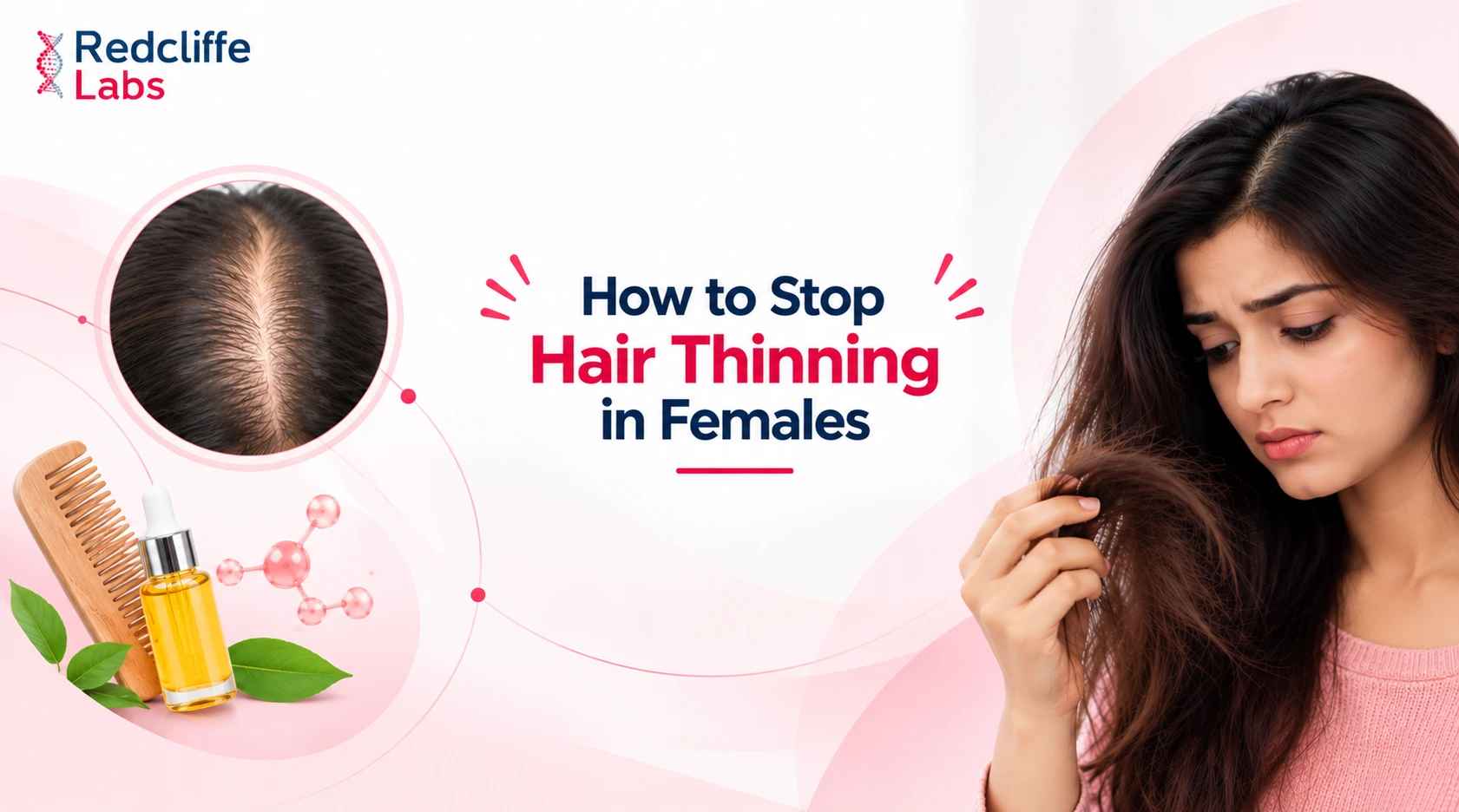
How to Stop Hair Thinning in Females

Overview
Understand Hair Thinning: Learn what hair thinning in women looks like and how changes such as wider parting, reduced volume, and increased shedding may appear.
Explore Common Causes: Discover how genetics, hormonal changes, nutritional deficiencies, stress, thyroid problems, medical conditions, and hair-care practices can contribute to thinning.
- Know What Can Help: Understand evidence-based ways to manage hair thinning, including treating underlying causes, improving nutrition, protecting hair, and considering medical treatments.
- Understand Testing: Learn when blood tests may be useful for identifying possible contributors such as iron deficiency, vitamin deficiencies, thyroid disorders, or other health conditions.
- Know When to Seek Help: Find out which warning signs require medical evaluation and why identifying the specific cause is important for choosing the right treatment.
Hair thinning can be frustrating, especially when you notice a wider parting, a smaller ponytail, or more hair on your pillow and comb. The good news is that hair loss has many possible causes, and some are temporary or treatable. The right approach is not to try every hair-growth product at once. Instead, it is important to understand why the shedding or reduced density is happening and choose the appropriate next step.
This blog explains common causes, warning signs, medical evaluation, treatment options, and safe daily hair-care habits for women in India.
What is hair thinning in females?
Hair thinning means reduced hair density or increased visibility of the scalp. It may develop gradually or appear more suddenly. A widening center part, a thinner ponytail, or increased shedding can be early signs.
Not every episode of shedding means there is a medical problem. Hair naturally goes through cycles of growth and shedding. However, persistent or noticeable changes deserve attention.
Different types of hair loss can look similar. Female pattern hair loss, temporary shedding after physical or emotional stress , traction from tight hairstyles, scalp conditions, nutritional problems, thyroid disorders, hormonal changes, and some medicines can all contribute. Finding the underlying cause is important because treatment depends on the type of hair loss.
Also Read: Yoga for Hair Growth
What causes hair thinning in women?
There is no single cause of hair loss in women. Common possibilities include:
1. Female pattern hair loss
This inherited form of hair loss often causes a gradually widening part and reduced density over the top of the scalp. It can begin earlier or later in life and may become more noticeable around menopause.
2. Telogen effluvium
Telogen effluvium is increased hair shedding that can follow a significant physical or emotional stressor.
Possible triggers include:
- Significant illness or fever
- Surgery
- Childbirth
- Major weight loss
- Severe dietary restriction
- Prolonged psychological stress
The shedding may become noticeable weeks or months after the triggering event rather than immediately.
3. Nutritional deficiencies
Inadequate intake or deficiency of certain nutrients, including iron, may contribute to hair loss in some people.
Restrictive diets and eating too few calories can also affect hair health. However, taking several supplements without knowing whether you have a deficiency is not always helpful.
4. Thyroid and other medical conditions
Thyroid disorders and certain systemic illnesses may be associated with hair loss.
Your medical history, other symptoms, and physical examination help determine whether testing is appropriate.
5. Hormonal changes
Changes around pregnancy, after childbirth, and during menopause can influence the hair-growth cycle. Hair loss accompanied by irregular periods, acne, increased facial hair, or other symptoms of hormonal imbalance should be discussed with a healthcare professional.
6. Hair-care practices
Repeated chemical treatments, excessive heat, rough brushing, and tight hairstyles can contribute to hair breakage or traction-related hair loss. If a hairstyle causes pain, pulling, or scalp discomfort, it is too tight.
7. Scalp disorders and autoimmune conditions
Some scalp infections, inflammatory conditions, and autoimmune disorders such as alopecia areata can cause patchy or sudden hair loss.
These conditions require different approaches, which is why self-treatment may not always be appropriate.
How can you tell if your hair is actually thinning?
Look for changes in your overall hair density rather than counting individual strands.
Possible signs include:
- A widening center part
- A thinner ponytail
- More scalp becoming visible
- A gradually receding hairline
- A bald or noticeably thinner patch
- Persistent increased shedding
- Increased hair breakage
- Scalp itching, scaling, pain, or redness along with hair loss
Taking photographs of your parting and hairline every few months under similar lighting can make gradual changes easier to identify.
Can hair grow back after thinning in a female?
Hair can regrow in some forms of hair loss, but the outcome depends on the cause. Temporary shedding may improve once the underlying trigger is addressed. Inherited female pattern hair loss may require ongoing treatment to maintain improvement. In some scarring forms of hair loss, damaged follicles may not be able to produce hair again. This is why identifying the type of hair loss early is important.
How to stop hair thinning: what actually helps?
The most useful step is to determine the cause rather than relying on one home remedy.
Depending on the pattern and medical history, management may include:
- Treating an underlying medical or scalp condition
- Correcting a documented nutritional deficiency
- Improving dietary adequacy
- Changing damaging hair-care practices
- Reducing repeated chemical or heat exposure
- Using dermatologist-recommended hair-loss treatment when appropriate
For female pattern hair loss, topical minoxidil is a commonly recommended treatment. It is not appropriate for everyone, and pregnancy and breastfeeding require particular caution.
A dermatologist can determine whether this treatment is suitable, explain how it should be used and discuss possible side effects. Prescription medicines may also be considered for selected patients. Treatment usually requires patience because hair grows slowly. If a treatment is helping, stopping it may cause the benefit to gradually disappear.
How to regrow thinning hair in females: what should you expect?
Regrowth depends on the cause of hair loss and whether the affected follicles are still capable of producing hair.
There is no single treatment that works for every type of hair loss.
Depending on the diagnosis, a dermatologist may recommend:
- Observation when temporary shedding is expected to resolve
- Treatment of an underlying condition
- Correction of a documented deficiency
- Topical medication
- Prescription treatment
- Other specialist treatment options when appropriate
Be cautious about products promising rapid or complete regrowth.
Hair oils, shampoos, and supplements may improve hair feel or reduce breakage in some circumstances, but they do not necessarily treat the underlying cause of scalp hair loss.
Can vitamin D regrow hair?
Vitamin D has important roles in the body, and low vitamin D levels have been studied in relation to several hair-loss conditions. However, taking vitamin D does not automatically regrow hair in everyone.
If deficiency is suspected, testing and treatment should be based on clinical advice rather than high-dose self-supplementation. Taking more than the recommended amount does not necessarily produce better hair growth.
Which hormone causes hair loss in females?
There is no single hormone responsible for every woman's hair loss.
Androgens can contribute to female pattern hair loss in genetically susceptible women. Changes in estrogen and other hormones around pregnancy and menopause can also influence the hair-growth cycle.
Hormonal evaluation may be useful when hair loss occurs alongside symptoms such as irregular menstrual cycles, acne, increased facial hair, or other signs suggesting an endocrine or reproductive condition.
How to stop hair thinning at home safely?
Home care can protect fragile hair, but it cannot replace medical evaluation when thinning is persistent or progressive.
Useful habits include:
- Use a gentle shampoo and conditioner.
- Avoid frequent high-heat styling.
- Reduce bleaching, relaxing, perming, and repeated chemical treatments if your hair is breaking.
- Avoid tight ponytails, buns, braids, or extensions that pull on the scalp.
- Detangle gently, especially when hair is wet.
- Avoid aggressive brushing or rubbing.
- Eat a balanced diet containing adequate protein and a variety of nutrient-rich foods.
- Avoid crash diets and severe calorie restriction.
- Do not start several hair supplements without knowing whether you need them.
- Seek appropriate advice for persistent dandruff, scalp inflammation, or other scalp symptoms.
Good hair care can reduce avoidable breakage, but it cannot treat every medical cause of hair loss.
What tests may be useful for hair loss?
There is no single blood test that explains every case of hair loss.
Evaluation generally starts with your medical history and examination. A healthcare professional may ask about:
- Recent illness or fever
- Pregnancy or childbirth
- Menstrual changes
- Diet and weight changes
- Medicines and supplements
- Family history of hair loss
- Stress
- Hair-care practices
- Scalp symptoms
Depending on your symptoms and clinical assessment, testing may be considered for nutritional status, thyroid function, or other possible contributors.
The purpose of testing is to identify factors that may be contributing to hair loss. Test selection should therefore be individualized.
A Hair fall screening package may be considered as a structured starting point when a healthcare professional recommends evaluation for possible contributing factors. Check the exact tests included before booking.
Understanding your test results
A laboratory result should not be interpreted in isolation. A result outside the laboratory reference range does not automatically prove that it is causing hair loss. Similarly, a normal result does not rule out every type of hair disorder.
Share your results, symptoms, medicines, and relevant medical history with your doctor. If a nutritional or medical contributor is identified, treatment should address that contributor rather than simply adding more hair supplements.
When should you see a doctor?
Consider medical evaluation if your hair loss is:
- Persistent
- Rapidly increasing
- Patchy
- Associated with scalp pain or redness
- Associated with scaling or sores
- Accompanied by irregular periods
- Accompanied by new facial hair or significant acne
- Associated with unexplained weight changes
- Accompanied by marked fatigue or other new symptoms
Sudden loss of large amounts of hair or rapidly developing bald patches should be assessed promptly. Early evaluation can help distinguish temporary shedding from conditions requiring specific treatment.
What can women do to protect hair health long-term?
Protecting hair health involves more than choosing the right shampoo.
A sustainable routine includes:
- Eating a balanced diet with adequate protein and essential nutrients.
- Avoiding extreme dieting and unnecessary calorie restriction.
- Limiting repeated chemical processing and excessive heat.
- Avoiding hairstyles that continuously pull on the scalp.
- Treating scalp conditions appropriately.
- Managing known medical conditions with professional guidance.
- Avoiding unnecessary high-dose supplements.
- Seeking medical advice when hair loss continues or worsens.
Avoid comparing your hair with social media before-and-after photographs. Hair density naturally varies between individuals, and a treatment that works for one type of hair loss may not work for another.
If you are concerned about ongoing shedding, record when it started, possible triggers, recent illness, dietary changes, and treatments you have tried. This information can make a medical consultation more useful.
Also Read: 20 Effective DHT Blocker Foods for Healthy Hair Growth
A practical next step
If you are concerned about ongoing shedding or reduced hair density, start by documenting the changes and discussing them with a healthcare professional.
When testing is considered appropriate, a Hair fall screening package may be one possible starting point for evaluating relevant contributing factors. The appropriate tests and interpretation should be based on your symptoms, medical history, and professional advice.
Finding the cause is more useful than repeatedly changing hair products. With the right evaluation and treatment plan, many causes of hair loss can be managed effectively.
Frequently Asked Questions
1. Can stress cause hair thinning in women?
Yes, significant physical or emotional stress can contribute to increased hair shedding. This may happen after illness, surgery, major weight loss, childbirth, or prolonged stress. The shedding may appear several weeks or months after the trigger rather than immediately. Identifying and addressing the underlying stressor can help, but persistent or severe shedding should be evaluated by a healthcare professional.
2. Does washing hair every day cause hair thinning?
Washing your hair regularly does not usually cause hair thinning. However, harsh shampoos, very hot water, vigorous rubbing, or aggressive brushing can contribute to hair breakage and make hair appear less dense. Choose a gentle shampoo, handle wet hair carefully, and avoid excessive heat or chemical treatments if your hair is already fragile.
3. Can tight hairstyles lead to permanent hair loss?
Repeatedly wearing tight ponytails, buns, braids, or extensions can place continuous tension on hair follicles. This condition is called traction alopecia. Early changes may improve after reducing tension, but prolonged traction can sometimes cause permanent follicle damage. Vary hairstyles, avoid excessive pulling, and seek medical advice if you notice thinning around the hairline or areas under constant tension.
4. Does losing weight quickly cause hair thinning?
Rapid or restrictive weight loss can trigger increased hair shedding because the body may receive inadequate calories, protein, iron, or other nutrients. This type of shedding can develop after the weight-loss period rather than immediately. A balanced diet and gradual, medically appropriate weight management are preferable. If significant shedding continues, discuss possible nutritional or medical causes with a healthcare professional.
5. Can dandruff or scalp problems cause increased hair shedding?
Scalp conditions such as dandruff, inflammation, or certain infections can cause itching, irritation, scratching, and increased shedding or breakage. Treating the underlying scalp problem may improve these symptoms. However, not every case of hair loss is caused by dandruff. Persistent patches, redness, scaling, pain, or sudden shedding should be assessed by a dermatologist.
6. Can lack of protein affect women's hair health?
Adequate protein is important because hair is primarily made of a protein called keratin. Very restrictive diets or inadequate protein intake may contribute to increased shedding, particularly when combined with rapid weight loss or nutritional deficiencies. Instead of taking supplements automatically, focus on a balanced diet containing appropriate protein sources and discuss persistent hair loss with a healthcare professional.
7. Can pregnancy and childbirth affect hair growth?
Pregnancy can change the normal hair-growth cycle because of hormonal changes. After delivery, some women experience noticeable shedding as hair follicles gradually return to their usual cycle. This is commonly temporary, although other causes can also contribute to postpartum hair loss. Persistent, severe, or patchy loss should not automatically be attributed to childbirth and may require medical evaluation.
8. Are hair supplements safe for everyone?
Hair supplements are not automatically necessary or suitable for everyone. Their usefulness depends on whether a genuine nutritional deficiency exists. Taking high doses of certain vitamins or minerals without medical advice can be unnecessary and, in some cases, harmful. Before starting supplements for hair concerns, consider discussing your diet, symptoms, medications, and appropriate testing with a healthcare professional.
9. Can colouring or chemical treatments make hair look thinner?
Frequent colouring, bleaching, straightening, perming, or other chemical treatments can weaken the hair shaft and increase breakage. This may make the hair appear thinner even when the follicles themselves are unaffected. Limiting harsh treatments, allowing adequate recovery between procedures, and using gentle hair-care practices can reduce breakage. New or progressive scalp thinning requires separate medical assessment.
10. When should women see a dermatologist for hair thinning?
Consider seeing a dermatologist when hair loss is sudden, rapidly worsening, patchy, associated with scalp inflammation, or accompanied by other symptoms such as significant fatigue or menstrual changes. Medical evaluation can help distinguish between temporary shedding, hair-shaft damage, scalp disorders, and conditions affecting hair follicles. Early assessment is particularly useful when thinning continues despite basic hair-care changes.