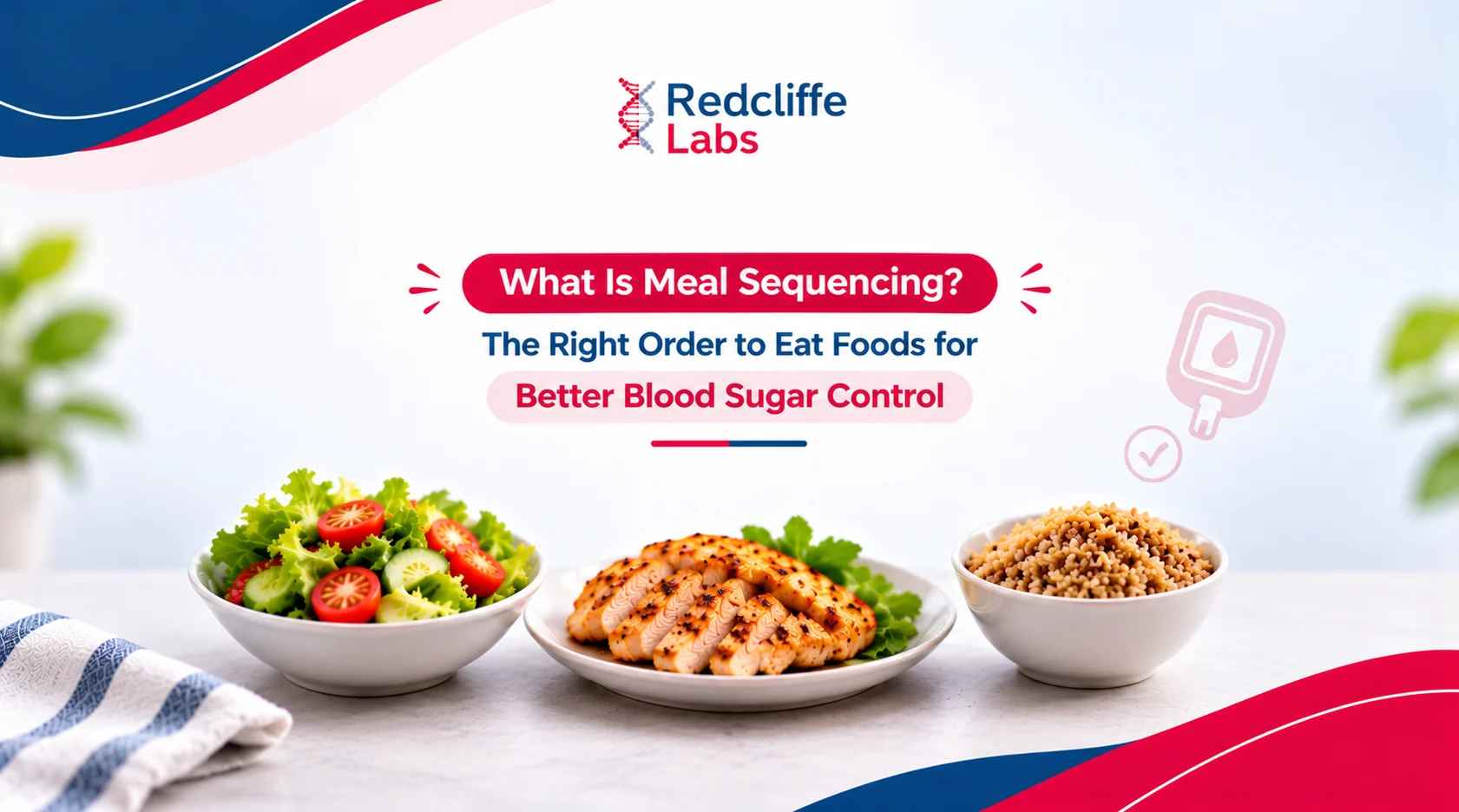
What Is Meal Sequencing? The Right Order to Eat Foods for Better Blood Sugar Control

Overview:
- Meal sequencing is the practice of eating foods in a specific order to potentially influence the rise in blood sugar after a meal.
- The commonly suggested order to eat foods is: fibre-rich, non-starchy vegetables first, protein-rich foods next, and carbohydrate-rich foods such as rice or roti last.
- Meal sequencing may help reduce post-meal blood sugar spikes in some people, including those with type 2 diabetes. However, the effect varies, and research on long-term benefits remains limited.
- For people with insulin resistance, eating vegetables and protein before carbohydrates may help moderate post-meal blood glucose levels. Meal sequencing alone has not been shown to reverse insulin resistance.
- You can practise meal sequencing with Indian meals: start with salad or sabzi, eat dal, paneer, curd, eggs or another protein source next, and have roti or rice with the rest of the meal.
- Meal sequencing does not replace portion control or diabetes treatment. Balanced meals, physical activity, and prescribed medication remain important for blood sugar management.
You may already be choosing healthy foods, but have you ever considered the order in which you eat them? The sequence in which you eat vegetables, protein, and carbohydrates may influence how your blood sugar responds after a meal.
This approach is called meal sequencing or food sequencing. It focuses on eating different food groups in a particular order rather than changing what you eat entirely. It may be especially useful for people trying to manage post-meal blood sugar levels, type 2 diabetes, or insulin resistance.
What Is Meal Sequencing?
Meal sequencing is the practice of eating different food groups in a specific order during a meal. Instead of eating everything in any order, you begin with certain foods and eat others afterwards.
The idea is that the order of foods may influence how quickly carbohydrates are digested and how glucose enters the bloodstream after eating.
For example, consider a meal containing roti, dal and sabzi. Instead of starting with roti, you could eat the sabzi first, followed by dal, and then have the roti with the rest of your meal.
Meal sequencing does not require you to eliminate carbohydrates or prepare separate meals. It is a simple adjustment to how you eat the foods already on your plate.
What Is the Right Order to Eat Foods?
A commonly suggested meal sequence is to eat fibre-rich vegetables first, protein-rich foods next, and carbohydrate-rich foods last.
1. Start With Fibre-Rich Vegetables
Begin your meal with non-starchy vegetables such as cucumber, carrots, broccoli, beans, cabbage, spinach or other leafy greens.
These foods provide fibre, which can slow digestion and influence how quickly glucose enters the bloodstream. Starting with vegetables may also help you include more fibre in your meal.
Indian food examples: Cucumber salad, sautéed beans, bhindi, cabbage sabzi, or cooked leafy greens.
2. Eat Protein-Rich Foods Next
After vegetables, move to protein-rich foods such as dal, beans, chickpeas, paneer, tofu, eggs, fish, chicken, or unsweetened curd.
Protein supports muscle maintenance and overall health. Eating protein before carbohydrate-rich foods may also help moderate the immediate blood sugar response in some people.
Indian food examples: Dal, rajma, chole, paneer, eggs, curd or grilled chicken.
3. Eat Carbohydrate-Rich Foods Last
Eat carbohydrate-rich foods after the vegetables and protein, where practical. These include roti, rice, bread, potatoes and other grain-based foods.
Carbohydrates are broken down into glucose, which enters the bloodstream. Eating them after fibre-rich vegetables and protein may help reduce the immediate rise in blood glucose after a meal.
Indian food examples: Roti, rice, poha, dosa, or other grain-based foods.
Important: This is a flexible eating strategy, not a strict rule. You do not need to finish one food group completely before touching another, and you should not avoid nutritious carbohydrate foods simply because they contain carbohydrates.
How Does Meal Sequencing Affect Blood Sugar?
After you eat, your digestive system breaks down carbohydrates into glucose. This glucose enters your bloodstream, and insulin helps your body's cells use it for energy.
The order in which you eat foods may affect the speed and size of the rise in blood glucose after a meal.
Here is what research suggests:
- Eating carbohydrates last may reduce the immediate glucose rise: Some small controlled studies have found lower post-meal blood glucose responses when vegetables or protein are eaten before carbohydrate-rich foods, compared with eating carbohydrates first.
- Research includes Indian participants: A randomised crossover pilot study involving 31 Indian adults without diabetes found that eating protein before carbohydrates reduced short-term post-meal glucose compared with eating carbohydrates first.
- Reviews suggest potential benefits, but evidence remains limited: Recent systematic reviews have reported promising effects on post-meal glucose responses. However, studies have generally been small or short, and their findings do not establish long-term benefits.
- The effect can vary: The type and amount of carbohydrates, the meal's fibre and protein content, physical activity, medication, and individual metabolism can all influence blood sugar responses.
Meal sequencing may therefore be worth trying as part of a balanced eating routine. However, it should not be viewed as a guaranteed way to prevent blood sugar spikes or improve long-term glucose control.
How to Practise Meal Sequencing With Indian Meals
You do not need to change your entire diet to try meal sequencing. Start by adjusting the order in which you eat familiar foods.
|
Your meal |
How to try meal sequencing |
|
Roti, dal and sabzi |
Start with sabzi, eat dal next, and then have roti with the rest of the meal. |
|
Rice, rajma and salad |
Begin with salad, eat rajma next, and then have rice with the rest of the meal. |
|
Rice, sambar and vegetables |
Start with non-starchy vegetables, have sambar, and eat rice alongside the rest of the meal. |
|
Paneer, roti and vegetables |
Begin with vegetables, eat paneer next, and then have roti with your meal. |
|
Eggs, toast and vegetables |
Eat the vegetables first, followed by eggs, and then toast. |
|
Khichdi and curd |
If possible, start with a side of non-starchy vegetables, then have curd and khichdi as part of the same meal. |
These are practical examples, not rigid prescriptions. Traditional mixed dishes such as khichdi, dal-rice, and sambar-rice contain several food groups together, so separating every component may not be practical. Focus on including vegetables, protein, and appropriate carbohydrate portions rather than following the sequence perfectly.
Also Read: Insulin Resistance Diet: Foods to Eat, Avoid & Meal Planning Tips
Does Meal Sequencing Help With Diabetes or Insulin Resistance?
Meal sequencing may help reduce the rise in blood sugar after a meal, particularly for people with type 2 diabetes or insulin resistance. However, it works as a supportive eating strategy, not a replacement for treatment.
- If you have type 2 diabetes: Try eating non-starchy vegetables first, followed by protein-rich foods and then carbohydrate-rich foods such as roti, rice or bread. This order may help reduce the immediate blood sugar spike after eating.
- If you have insulin resistance: Your body does not respond to insulin as effectively as it should. Eating fibre-rich vegetables and protein before carbohydrate-rich foods may help moderate the post-meal rise in blood glucose. However, meal sequencing alone has not been shown to reverse insulin resistance.
- If your blood sugar rises sharply after meals: Meal order is one factor you can experiment with alongside carbohydrate portions, food choices and regular physical activity. If you monitor your glucose, your readings may help you understand how your usual meals affect you.
- If you eat rice or roti daily: You do not necessarily need to eliminate these foods. Try starting with salad or cooked non-starchy vegetables, eating dal, curd, eggs, paneer, or another protein source next, and having your rice or roti alongside the rest of the meal.
- If you take diabetes medication or insulin: Do not change your medication or insulin dose because you have changed the order of your food. If you use insulin or medicines that can cause low blood sugar, discuss significant changes to your eating routine with your healthcare professional.
Remember: Research suggests that meal sequencing can improve short-term post-meal glucose responses in some people, but the evidence is still limited. Portion sizes, overall diet quality, physical activity, medication, and individual health needs remain important for managing blood sugar.
Also Read: Your Fasting Sugar Is Normal. So Why Can Your Blood Sugar Be High After a Meal?
Common Meal Sequencing Mistakes to Avoid
Meal sequencing can be simple, but a few misconceptions can make it confusing or unnecessarily restrictive.
Mistake 1: Thinking Protein Must Make Up Half Your Plate
There is no universal meal-sequencing rule that requires half your plate to contain protein. Your protein needs depend on your overall diet, health, and individual requirements.
Mistake 2: Avoiding Carbohydrates Completely
Rice, roti, whole grains, pulses and fruit can contribute valuable nutrients. Focus on appropriate portions and balanced meals rather than eliminating carbohydrates without medical advice.
Mistake 3: Assuming Food Order Makes Portion Sizes Irrelevant
Eating vegetables and protein first does not cancel out the effects of very large portions of carbohydrate-rich foods.
Mistake 4: Expecting Meal Sequencing to Reverse Insulin Resistance
Food order may influence short-term blood sugar responses, but it has not been established as a standalone treatment for insulin resistance or diabetes.
Mistake 5: Treating the Order as a Strict Rule
You do not need to eat every food group separately or follow the same order at every meal. Aim for a balanced, sustainable routine.
Want to Understand Your Blood Sugar Levels Better?
Meal sequencing may help manage post-meal blood sugar rises, but it cannot tell you whether your blood sugar is consistently elevated. An HbA1c test measures your average blood sugar levels over approximately the past 2–3 months and can help assess your risk of diabetes or support diabetes monitoring.
Explore the HbA1c Test to learn more about the test and booking options available in your location.
Frequently Asked Questions
1. What is the correct order to eat a meal?
A commonly suggested sequence is non-starchy vegetables first, protein-rich foods next, and carbohydrate-rich foods last. This order may help moderate the rise in blood sugar after eating, although the effect varies from person to person.
2. Does meal sequencing actually work?
Some controlled studies suggest that eating vegetables or protein before carbohydrates can reduce immediate post-meal blood glucose responses. However, studies are generally small or short, and more research is needed to establish long-term benefits.
3. Should you eat fibre before carbohydrates?
Eating fibre-rich vegetables before carbohydrate-rich foods may help moderate post-meal blood glucose responses. The benefit depends on the meal, portion sizes, and individual factors. Include fibre-rich foods regularly rather than relying only on their order.
4. Can meal sequencing lower blood sugar?
Meal sequencing may reduce the immediate rise in blood glucose after a meal in some people. It does not guarantee lower blood sugar throughout the day and should complement, not replace, prescribed diabetes treatment.
5. Do you need to follow meal sequencing at every meal?
No. You can try it when it fits your routine, but it does not need to become a strict rule. Consistent food quality, appropriate portions and a sustainable eating pattern remain important.
6. Is meal sequencing the same as portion control?
No. Meal sequencing focuses on the order in which you eat foods, while portion control focuses on how much you eat. Both can contribute to a balanced eating routine, but meal order does not compensate for consistently oversized portions.
The Bottom Line
Meal sequencing is a simple way to experiment with the order in which you eat vegetables, protein, and carbohydrates. Starting with non-starchy vegetables, followed by protein-rich foods and then carbohydrate-rich foods, may help moderate the immediate rise in blood sugar after a meal.
For people with diabetes or insulin resistance, it can be one part of a broader management plan. It does not replace appropriate portions, physical activity, prescribed medication, or professional medical advice. The goal is to build a balanced eating routine that works for your health needs and daily life.
If you have diabetes, insulin resistance, or concerns about your blood sugar, speak with your healthcare professional about an appropriate plan. Depending on your symptoms and risk factors, they may also advise blood glucose testing or an HbA1c test to assess your blood sugar levels over time.
Medical note: This article is for general educational purposes and does not replace individual medical advice.