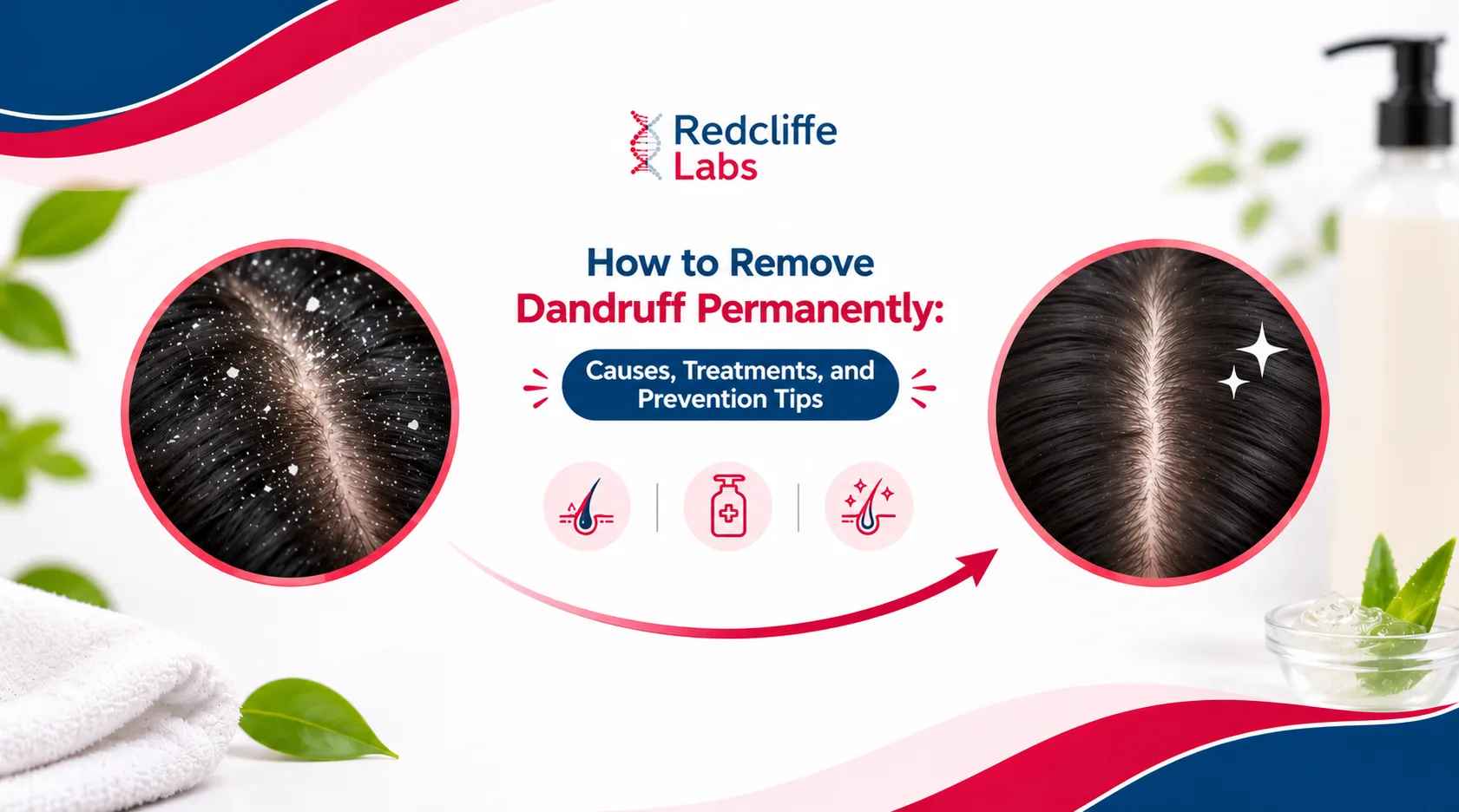
How to Remove Dandruff Permanently: Causes, Treatments, and Prevention Tips

Overview
- Dandruff is a common scalp condition that causes white or yellowish flakes, itchingand scalp irritation. It can develop due to excess oil, skin sensitivity, yeast overgrowth or underlying skin conditions.
- Understanding the causes of dandruff and choosing the right treatment can help control flaking, reduce itching and maintain a healthy scalp.
- Medicated shampoos containing ketoconazole, zinc pyrithione, selenium sulfide or salicylic acid can help manage dandruff, depending on its cause and severity.
- Following a consistent scalp care routine, maintaining good hair hygiene and managing stress are important dandruff prevention tips that can help reduce recurring symptoms.
- In Ayurveda, dandruff-like symptoms are traditionally associated with a scalp condition called Darunaka, which is described in relation to Vata and Kapha imbalance.
- Persistent dandruff may sometimes occur alongside other hair and scalp concerns. Redcliffe Labs' Hair Fall Screening Test helps assess nutritional and other health parameters associated with hair health, including iron status, vitamins and thyroid function, when recommended by a healthcare professional.
Introduction
Noticing white flakes on your shoulders, itching your scalp frequently or feeling uncomfortable wearing dark-coloured clothes can be frustrating. Dandruff is a common scalp concern that affects people across different age groups. Although it is generally harmless, persistent flaking and itching can affect scalp comfort and confidence.
If you are wondering how to remove dandruff, the first step is understanding what is causing it. Dandruff may be associated with excess scalp oil, a naturally occurring yeast called Malassezia, dry skin or conditions such as seborrheic dermatitis. The right treatment depends on the underlying cause, scalp condition and severity of symptoms.
Regular scalp cleansing, suitable anti-dandruff shampoos and dermatologist-recommended treatments can help control dandruff. It is also important to understand that dandruff may return even after successful treatment, so consistent scalp care plays an important role in managing it.
In this blog, we will explore the causes of dandruff, effective treatment options, home care practices and ways to prevent recurring flakes.
What Is Dandruff?
Dandruff is a common scalp condition in which dead skin cells shed more noticeably, appearing as white or yellowish flakes in the hair and on the shoulders. It may also cause itching, dryness or scalp irritation.
It is often associated with mild seborrheic dermatitis, a condition that affects oil-producing areas of the skin. A yeast called Malassezia, which naturally lives on the scalp, can also contribute to inflammation and flaking in susceptible individuals.
Dandruff is not contagious and does not necessarily indicate poor personal hygiene. However, inadequate scalp cleansing may make existing flakes more noticeable.
Also read:
What Are the Common Causes of Dandruff?
Understanding the causes of dandruff can help you choose suitable treatment and prevent recurring scalp problems. Some common factors include:
1. Excess Scalp Oil
The scalp naturally produces sebum, an oily substance that keeps the skin moisturised. However, excess oil can contribute to dandruff by creating an environment that supports Malassezia yeast.
2. Malassezia Yeast
Malassezia is a type of yeast that naturally lives on most adult scalps. In some people, it can contribute to irritation, inflammation and increased skin shedding, resulting in visible flakes.
3. Dry Skin
Dry skin can cause small, loose flakes to appear on the scalp. This may become more noticeable during winter or in environments with low humidity. Unlike oily dandruff, the flakes associated with dry skin are generally smaller and less greasy.
4. Seborrheic Dermatitis
Seborrheic dermatitis is an inflammatory skin condition that commonly affects the scalp, eyebrows, sides of the nose and other oil-rich areas.
Common seborrheic dermatitis symptoms include:
- White or yellowish greasy flakes.
- Redness and irritation of the scalp.
- Persistent itching.
- Greasy or crusty patches on the skin.
- Flaking around the eyebrows and ears.
5. Sensitivity to Hair Care Products
Certain shampoos, conditioners, hair dyes, gels and styling products may irritate the scalp or trigger allergic contact dermatitis. This can cause redness, itching, dryness and flaking that may resemble dandruff.
6. Stress and Weather Changes
Stress may worsen existing dandruff symptoms in some people. Cold and dry weather can also increase scalp dryness and make flaking more noticeable.
What Are the Common Symptoms of Dandruff?
The symptoms of dandruff may differ depending on the underlying scalp condition. Common signs include:
- White or yellowish flakes in the hair and on the shoulders.
- Itchy or irritated scalp.
- Dryness or excessive oiliness.
- Redness and inflammation.
- Scaly patches on the scalp.
- Increased flaking during cold weather or stressful periods.
If these symptoms persist, worsen or occur with pain, swelling or patchy hair loss, seek medical evaluation to identify the underlying cause.
How to Remove Dandruff: 7 Effective Treatment Options
If you are looking for how to remove dandruff, the treatment should focus on controlling excess flaking, reducing scalp irritation and addressing the underlying cause. The following approaches can help manage dandruff.
1. Use a Medicated Anti-Dandruff Shampoo
Using the best anti-dandruff shampoo for your scalp condition is one of the most effective ways to control dandruff. Different active ingredients work in different ways.
|
Shampoo ingredient |
How it helps |
|
Ketoconazole |
Helps control the growth of Malassezia yeast. |
|
Zinc pyrithione |
Helps reduce yeast associated with dandruff and scalp flaking. |
|
Selenium sulfide |
Helps reduce yeast activity and excessive skin shedding. |
|
Salicylic acid |
Helps loosen and remove dead skin cells and scales. |
|
Coal tar |
Helps slow excessive skin cell growth and reduce scaling. |
Choose a shampoo based on your scalp condition and follow the product instructions. Some medicated shampoos need to remain on the scalp for a few minutes before rinsing.
The best anti-dandruff shampoo may differ from person to person. If one formulation does not help, a dermatologist may recommend another active ingredient or a combination treatment.
2. Choose the Right Hair-Washing Routine
Keeping your scalp clean can help remove excess oil, dead skin cells and product buildup that may make dandruff more noticeable.
Consider these practices:
- Wash oily hair, depending on your scalp condition.
- Use a gentle shampoo between medicated washes if needed.
- Avoid excessive scrubbing, which may irritate the scalp.
- Rinse thoroughly to remove shampoo and conditioner residue.
- Apply conditioner mainly to the hair lengths if your scalp is oily.
Knowing how often to wash hair with dandruff depends on your hair texture, scalp oiliness and the shampoo you use.
3. Keep Your Scalp Clean and Avoid Product Buildup
Hair sprays, gels, dry shampoos and styling products can accumulate on the scalp. Excessive buildup may worsen oiliness and irritation.
Maintain a simple scalp care routine by washing your hair regularly, cleaning your hairbrushes and avoiding excessive use of styling products.
4. Try Suitable Home Care Practices
Some people explore home remedies for dandruff to manage mild scalp dryness and irritation. However, home remedies are not a substitute for medicated treatment, especially when dandruff is persistent or related to seborrheic dermatitis.
You can consider the following precautions:
- Aloe vera: A simple, fragrance-free aloe vera product may provide temporary soothing for some people, but evidence that it treats dandruff is limited.
- Coconut oil: It may help soften dry hair and reduce dryness along the hair lengths. However, applying heavy oil directly to an oily or dandruff-prone scalp may worsen symptoms in some people.
- Tea tree oil: Some hair products contain tea tree oil, but evidence supporting its effectiveness for dandruff is limited. Undiluted tea tree oil can cause irritation or allergic reactions.
Caution: These are traditional Ayurvedic practices, not clinically established dandruff treatments. Evidence supporting their effectiveness against dandruff remains limited.
Ayurvedic Approaches to Scalp Care
Ayurveda describes dandruff-like symptoms as Darunaka, traditionally associated with Vata and Kapha imbalance. Some Ayurvedic scalp care approaches include:
- Neem (Azadirachta indica) Paste: Fresh neem leaves are ground into a paste and traditionally applied to the scalp. Neem is valued in Ayurveda for its cleansing, purifying properties.
- Amla (Indian Gooseberry) Pack: Amla powder is mixed with water to form a smooth paste and applied to the scalp and hair. Ayurveda traditionally regards amla as a cooling and rejuvenating herb.
- Bhringraj Oil Massage: Known as the “king of herbs” for hair, Bhringraj oil is gently massaged into the scalp. This is a classic practice for nourishing the scalp and supporting overall hair health.
However, evidence supporting these approaches remains limited. Consult a qualified practitioner before trying them, and do not replace dermatologist-recommended dandruff treatments
5. Manage Stress
Stress may trigger or worsen dandruff symptoms in some individuals. Maintaining a balanced routine can support overall well-being and help manage flare-ups.
Try these habits:
- Practice relaxation techniques or meditation.
- Maintain a consistent sleep schedule.
- Include regular physical activity.
- Take short breaks during stressful workdays.
- Make time for activities that help you relax.
6. Maintain a Balanced Diet
A balanced diet supports healthy skin and hair by providing essential nutrients. Include a variety of foods containing protein, iron, zinc, vitamin B12 and other essential vitamins.
Some nutrients are important for normal hair growth and overall hair health. However, there is no established dandruff diet that can cure dandruff, and dietary changes alone cannot replace appropriate scalp treatment.
7. Consult a Dermatologist for Persistent Dandruff
If regular cleansing and medicated shampoos do not improve your symptoms, consult a dermatologist. Persistent flaking may be associated with seborrheic dermatitis, psoriasis, eczema or a fungal scalp infection that requires a different treatment approach.
A dermatologist may recommend prescription-strength shampoos, antifungal treatments or other medicines depending on the diagnosis.
Also read:
Effective Dandruff Treatment at Home: Natural Remedies & Tips
Dandruff vs Dry Scalp: What Is the Difference?
Dandruff and dry scalp can cause similar symptoms, but they are not the same condition. Understanding dandruff vs dry scalp can help you identify the appropriate scalp care approach.
|
Feature |
Dandruff |
Dry scalp |
|
Main cause |
Often associated with excess oil, yeast and skin inflammation |
Lack of moisture in the scalp |
|
Flakes |
May be white, yellowish or greasy |
Usually small, dry and white |
|
Scalp condition |
Can be oily, irritated or red |
Often feels dry and tight |
|
Itching |
Common |
Common |
|
Treatment |
Medicated anti-dandruff shampoos |
Gentle cleansing and suitable moisturising care |
If you are unsure about dandruff vs dry scalp, consult a dermatologist for an accurate assessment, especially if flaking is accompanied by redness or persistent itching.
How to Prevent Dandruff from Coming Back?
Dandruff can recur even after symptoms improve. Following consistent dandruff prevention tips can help keep the scalp comfortable and reduce flare-ups.
- Maintain scalp hygiene: Wash your hair according to your scalp type and oil production.
- Continue maintenance treatment: Use an anti-dandruff shampoo as recommended, even after symptoms improve, if necessary.
- Avoid harsh hair products: Limit products that irritate your scalp or cause excessive buildup.
- Manage stress: Practise relaxation techniques and maintain healthy daily habits.
- Avoid excessive scratching: Scratching can irritate the scalp and cause skin damage.
- Maintain a balanced diet: Eat a variety of nutrient-rich foods to support overall hair and skin health.
- Monitor scalp changes: Seek medical advice if itching, redness or flaking returns frequently.
These dandruff prevention tips can help manage recurring symptoms, but they cannot guarantee that dandruff will never return.
Can Dandruff Cause Hair Fall?
Dandruff does not usually cause permanent hair loss. However, persistent itching and scratching can irritate the scalp and contribute to hair breakage or temporary hair shedding in some people.
It is important to understand that dandruff and hair fall can occur together without necessarily having the same underlying cause.
Hair fall may also be associated with nutritional deficiencies, hormonal changes, thyroid disorders, stress and other health conditions. If you experience persistent hair shedding along with scalp problems, consult a dermatologist to understand the possible causes.
Can Nutritional Deficiencies Affect Hair Health?
Yes. Certain nutritional deficiencies can affect normal hair growth and contribute to excessive hair shedding. Some important nutrients associated with hair health include:
- Iron: Low iron stores can contribute to hair shedding in some individuals.
- Vitamin B12: It supports red blood cell formation and normal cellular functions.
- Vitamin D: It plays a role in several processes involved in hair follicle function.
- Folate: It supports DNA synthesis and normal cell growth.
- Thyroid hormones: Imbalances can affect the normal hair growth cycle.
However, these deficiencies are not established as direct causes of ordinary dandruff. Therefore, dandruff and hair fall should be evaluated separately when necessary.
How Can Redcliffe Labs' Hair Screening Package Help?
If you are experiencing persistent hair fall or changes in hair health, identifying possible nutritional or thyroid-related concerns may help guide further evaluation.
Redcliffe Labs' Hair Fall Screening Test includes tests related to iron status, ferritin, vitamin B12, folic acid, vitamin D and thyroid function, along with other relevant parameters.
These tests can help identify certain nutritional and health-related factors that may contribute to hair concerns. A healthcare professional can interpret the results alongside your symptoms, medical history and dietary habits and recommend further steps if required.
Remember: The Hair Screening Package is intended to assess factors associated with hair health. It is not a diagnostic test for dandruff or a replacement for dermatological evaluation.
When Should You See a Doctor for Dandruff?
Mild dandruff can often be managed with regular hair washing and suitable anti-dandruff shampoos. However, certain symptoms may indicate an underlying scalp condition that requires medical attention.
Consult a dermatologist if you experience:
- Severe or persistent itching.
- Redness, swelling or pain on the scalp.
- Thick, crusty or inflamed patches.
- Flaking that spreads to the eyebrows, ears or face.
- Patchy hair loss or excessive hair shedding.
- No improvement after using an appropriate anti-dandruff shampoo for a few weeks.
A dermatologist can examine your scalp, identify the underlying condition and recommend suitable treatment.
Conclusion
Dandruff is a common scalp concern that can cause itching, flaking and irritation. Although it may not always be possible to eliminate dandruff permanently, the right treatment and consistent scalp care can help control symptoms and reduce recurring flare-ups.
Understanding how to remove dandruff starts with identifying its cause, choosing suitable medicated shampoos, maintaining scalp hygiene and seeking medical advice when symptoms persist. Additionally, addressing nutritional deficiencies when present can support overall hair health.
If you are experiencing hair fall alongside scalp concerns, consider discussing appropriate nutritional and thyroid assessments with a healthcare professional to understand the possible contributing factors.
FAQs
Why does dandruff increase during winter?
Dandruff may become more noticeable during winter because cold weather and low humidity can dry the scalp. Indoor heating may further reduce moisture levels. Changes in scalp oil production and existing seborrheic dermatitis can also contribute to flare-ups. Using suitable scalp care products may help manage winter-related flaking.
Can oily hair make dandruff worse?
Yes, excess scalp oil can contribute to dandruff in people who are sensitive to Malassezia yeast. Oil can also combine with dead skin cells, making flakes more noticeable. Regular hair washing and using an appropriate anti-dandruff shampoo can help control excess oil and scalp flaking.
Is dandruff contagious?
No, dandruff is not contagious. It cannot spread from one person to another through sharing combs, towels or direct contact. It is generally associated with factors such as scalp oil production, sensitivity to Malassezia yeast and inflammatory skin conditions rather than an infection that spreads between people.
Can washing hair too frequently cause dandruff?
Frequent washing does not directly cause dandruff, but using harsh shampoos or washing excessively may irritate and dry the scalp. On the other hand, infrequent washing can allow oil and product buildup. Choose a washing routine based on your scalp type and use gentle hair care products.
Can stress trigger dandruff flare-ups?
Stress may worsen existing dandruff symptoms, particularly in people prone to seborrheic dermatitis. It can influence inflammatory responses and make itching and flaking more noticeable. Maintaining a regular sleep schedule, practising relaxation techniques and following a consistent scalp care routine may help manage recurring flare-ups.