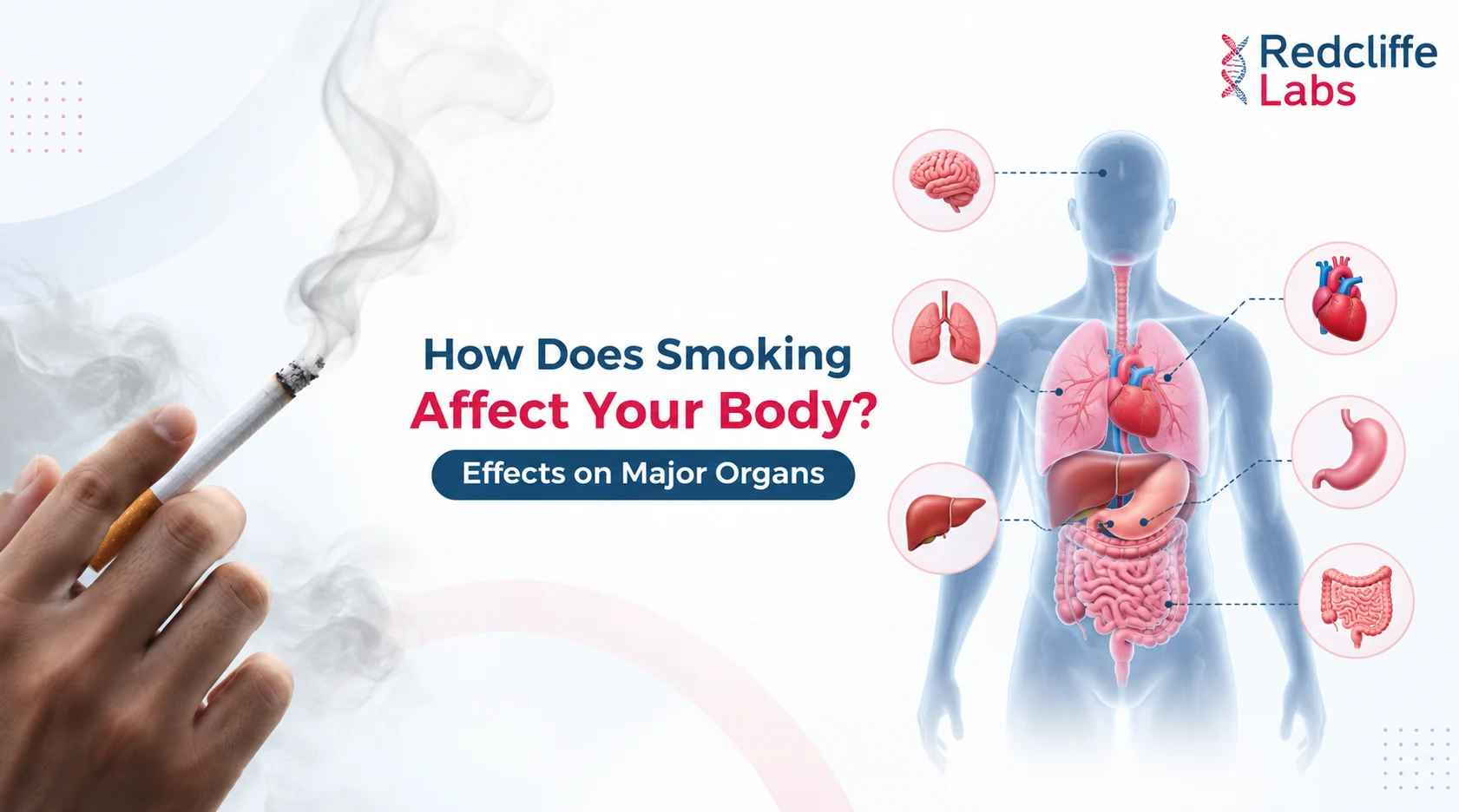
How Does Smoking Affect Your Body? Effects on Major Organs

Overview
- Smoking can harm nearly every organ in your body, not just your lungs.
- It increases the risk of heart disease, stroke, lung disease, and several types of cancer.
- Smoking can affect your health even before you notice any symptoms.
- The health checks you need depend on your smoking history, symptoms, and overall health.
- Redcliffe Labs offers a Smoking Impact Assessment Profile to help you assess specific aspects of your health if you smoke.
Quick Answer: How Does Smoking Affect Your Body?
Smoking damages the lungs, harms blood vessels, and exposes organs to chemicals that can cause cancer. It increases the risk of breathing problems, heart attack, stroke, diabetes, and fertility problems.
Smoking can affect your health before you notice any symptoms. Not only does it damage your lungs, but it does other things too. Over time, smoking can also impact your heart, brain, kidneys, and other organs. Knowing how smoking affects your health can help you understand when to see a doctor and take small steps towards quitting.
How Does Smoking Damage the Body?
When you breathe in tobacco smoke, harmful chemicals enter your lungs. Some then pass into your blood and travel around your body.
Different substances cause different problems:
- Nicotine is the main substance that makes tobacco addictive.
- Carbon monoxide reduces the blood’s ability to carry oxygen.
- Cancer-causing chemicals can damage DNA, the instructions that help cells work normally.
This explains why the harmful effects of smoking reach much further than the mouth and lungs.
Which Major Organs Are Affected by Smoking?
1. Lungs: Ongoing Cough, Breathing Problems and Cancer
Smoking damages the airways and the tiny air sacs that help oxygen enter your blood. It also harms the small hairs that normally help clear mucus and dirt from the lungs.
Over time, this can lead to an ongoing cough, wheezing, and shortness of breath. Smoking is a major cause of chronic obstructive pulmonary disease, or COPD. This is a lasting lung condition that makes it harder to move air in and out. Smoking also causes lung cancer.
For example, if you now need to stop halfway up stairs you once climbed easily, mention that change to a doctor. Avoid dismissing it as simply being unfit.
2. Heart and Blood Vessels: Higher Risk of Heart Attack
Smoking damages the inside of blood vessels, encourages fatty deposits to build up, and makes blood more likely to form clots.
These changes can reduce blood flow to the heart and raise the risk of a heart attack. Smoking can also narrow blood vessels in the legs, sometimes causing pain when walking.
The risk depends on several factors, including how long you have smoked and whether you also have high blood pressure, diabetes, or unhealthy cholesterol levels.
3. Brain: Greater Risk of Stroke
Smoking increases the risk of stroke. A stroke happens when blood flow to part of the brain is blocked or a blood vessel in the brain bursts.
A stroke can affect movement, speech, memory, and the ability to manage everyday tasks. The blood vessel damage caused by smoking helps explain this connection.
4. Mouth and Throat: Gum Disease and Cancer
Smoking raises the risk of gum disease. As gum disease gets worse, the tissues supporting the teeth can break down, and teeth may become loose. Smoking can also make treatment less successful.
Smoking also causes cancers of the mouth, throat, and voice box. A lasting mouth sore or change in your voice deserves attention rather than being put down to smoking alone.
5. Blood Sugar Control: Higher Risk of Type 2 Diabetes
Smoking increases the risk of type 2 diabetes and can make blood sugar harder to manage in people who already have diabetes.
Nicotine can make the body less sensitive to insulin. Insulin is the hormone that helps sugar move from the blood into cells for energy. When it works less well, blood sugar can rise.
This is one reason a doctor may consider your smoking history when assessing your diabetes risk.
6. Kidneys and Bladder: Cancer Risk and Kidney Health
Smoking causes kidney and bladder cancers. It can also contribute to blood vessel problems that affect kidney health. People with existing kidney disease have another reason to seek help to stop smoking.
Blood in the urine should be checked promptly, even if it happens only once or does not hurt.
7. Reproductive Organs: Fertility and Pregnancy Problems
Smoking can reduce fertility, damage sperm, and contribute to difficulty getting or keeping an erection.
During pregnancy, smoking raises the risk of poor growth of the baby, low birth weight, and premature birth. Quitting before pregnancy is helpful, but stopping at any stage of pregnancy can still benefit both the pregnant person and the baby.

Other Parts of the Body Can Be Affected Too
|
Organ or Body Part |
Possible Long-Term Effects of Smoking |
|
Stomach, liver, pancreas, and bowel |
Higher risk of cancers in these organs. |
|
Eyes |
Higher risk of cataracts, which cloud the eye’s lens, and age-related macular degeneration, which damages central vision. |
|
Bones |
Higher risk of osteoporosis, a condition that weakens bones and makes fractures more likely. |
These are increased risks. They do not mean every person who smokes will develop every condition.
Can Smoking Harm People Around You?
Yes. Secondhand smoke, the smoke other people breathe from someone’s smoking, can harm their health too. It can cause heart disease, stroke, and lung cancer in adults who do not smoke.
Keeping your home and car smoke-free helps protect the people around you. Quitting provides further protection by removing this source of smoke exposure.
Which Symptoms Should You Get Checked?
Arrange a medical appointment if you notice:
- A cough that persists or is getting worse.
- New or worsening breathlessness.
- Repeated chest infections.
- Unexplained weight loss.
- A lasting change in your voice.
- A mouth sore or red or white patch that lasts longer than two weeks.
These symptoms can have several causes. They need assessment rather than a guess about what is causing them.
A cough lasting two weeks or more also needs assessment for possible tuberculosis, especially if other symptoms are present.
Get urgent medical advice if you cough up blood. Seek emergency care for severe breathing difficulty, new chest pressure or pain, sudden weakness on one side, or sudden trouble speaking, even if stroke-like symptoms pass. Coughing up blood with chest pain or breathing difficulty also needs emergency care.
What Health Checks May Be Useful If You Smoke?
Start with a doctor’s assessment. Share how much you smoke, how many years you have smoked, any symptoms, and your family health history.
There is no single blood test that measures all the damage caused by smoking. Normal blood results cannot rule out cancer.
Depending on your needs, a doctor may recommend:
|
Check |
What it can help assess |
|
An important part of assessing heart and blood vessel risk. | |
|
A blood test measuring cholesterol and triglycerides, a type of blood fat. It helps assess cardiovascular risk. | |
|
A blood test showing average blood sugar over roughly the past three months. It may help identify or monitor diabetes. | |
|
Spirometry |
A breathing test measuring how much air you can blow out and how quickly. It helps assess possible COPD when symptoms and history suggest it. |
These checks answer different questions and should be chosen accordingly.
People whose age and smoking history put them at high risk may benefit from low-dose CT screening for lung cancer. This needs a discussion about benefits and possible harms, including false alarms and radiation exposure. A routine chest X-ray is not an effective substitute for lung cancer screening.
Taking the Next Step With Redcliffe Labs
If your doctor recommends blood sugar or cholesterol checks, Redcliffe Labs offers an HbA1c test and a lipid profile test.
HbA1c alone does not require fasting. Lipid testing may require fasting, so follow the preparation instructions provided when booking. Some blood conditions, including certain types of anaemia, can affect HbA1c results; your doctor can explain whether further testing is needed.
If your doctor recommends checking blood sugar, cholesterol and kidney function together, the Redcliffe Labs Diabetes Care Package may be an option. You can also choose the Smoking Impact Assessment Profile, Smoking Impact Assessment Profile Advance, and Full Body Check Up With Smoking Impact Assessment Profile, which can help you understand more about your health. Check availability and preparation requirements for your location.
Book the checks recommended for you, and review the results with your doctor. A blood test package cannot replace an examination or rule out every smoking-related illness.
What Happens to Your Body After You Quit Smoking?
Your body starts to benefit soon after you stop. Some changes happen quickly; others build over months and years.
|
Time After Quitting |
Typical Health Benefit |
|
Within minutes |
Heart rate begins to drop. |
|
Over several days |
Carbon monoxide in the blood falls towards the level of someone who does not smoke. |
|
Within 1–12 months |
Coughing and shortness of breath often decrease. |
|
After 1–2 years |
Heart attack risk drops sharply compared with continuing to smoke. |
|
Over the following years |
The risks of several smoking-related cancers continue to fall. |
These are general patterns, not a fixed timetable for every person. Some lung damage can be lasting, but quitting can still slow further loss of lung function.
You Can Get Help to Quit
Choose a quit date, notice situations that trigger smoking, and tell someone you trust about your plan. If smoking goes with your evening tea, for example, plan a different activity for that break.
A doctor can discuss counselling and medicines that help manage cravings. Combining support with suitable treatment can improve your chances of stopping.
For support, you can call the toll-free National Tobacco Quitline on 1800-11-2356. Counselling is available in regional and local languages.
Read Also: How to Quit Smoking Step by Step: A Beginner’s Guide to a Smoke-Free Life
Conclusion
The harm of smoking on the body goes far beyond breathing problems. Your heart, brain, mouth, kidneys, and reproductive health can all be affected, sometimes before clear symptoms appear.
You do not have to wait for a frightening symptom to ask for help. Speak with a doctor about your smoking history, get the checks recommended for you, and begin a quit plan with support.
Frequently Asked Questions
1. Is It Safe to Smoke Only Once in a While?
No amount of smoking is considered safe. Even a few cigarettes can harm the heart and blood vessels. Cutting down can be a step towards quitting, but stopping completely gives greater protection.
2. Are Bidis or Hookah Safer Than Cigarettes?
Neither bidis nor hookah is safe. Bidis contain tobacco, while hookah smoke also contains harmful chemicals that can increase the risk of cancer. Even though the smoke passes through water in a hookah, the water does not remove all the harmful substances.
3. Are “Light” or Filtered Cigarettes Safer?
No. Cigarettes labelled “light” do not lower the health risks of smoking. Filters do not make cigarettes safe, and you can still breathe in harmful amounts of cancer-causing chemicals.
4. Will I Gain Weight After Quitting Smoking?
Some people may gain a little weight after quitting smoking because they feel hungrier than before. However, the health benefits of quitting smoking are far greater than the risks of gaining some weight. Eating balanced meals, staying physically active, and getting support when needed can help you manage your weight while adjusting to life without smoking.
5. Why Does Smoking Seem to Reduce Stress?
Smoking may seem to reduce stress, but the relief is often temporary. When nicotine levels drop, you may feel restless or anxious, and smoking another cigarette can make these feelings go away for a short time. This can create a cycle of dependence. Once you get through the withdrawal phase, you may find that your stress and anxiety levels gradually improve.
6. Can Healthy Food, Exercise or a “Lung Detox” Cancel Out Smoking?
Healthy food and exercise support your health, but they cannot make smoking safe. Commercial “lung detox” products do not have good evidence showing that they reverse smoking damage. Stopping smoking and avoiding smoke are the most useful steps for protecting your lungs.