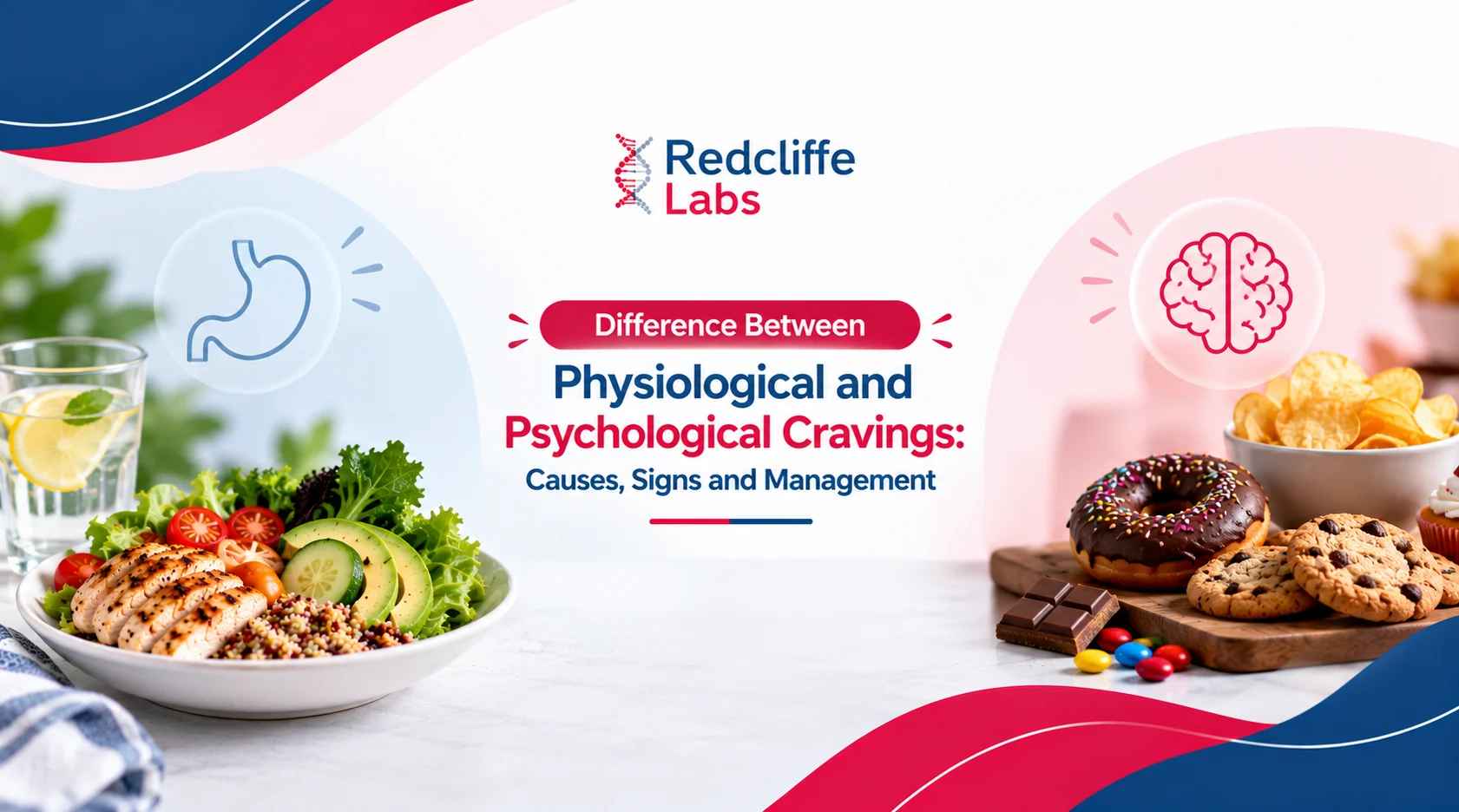
Difference Between Physiological and Psychological Cravings: Causes, Signs and Management

Overview
Food cravings are strong desires to eat, often involving a particular food, while hunger signals the body's need for food. The difference between physiological and psychological cravings lies in the factors that influence the desire to eat. Common causes of food cravings include inadequate food intake, stress, boredom, sleep loss, food cues and learned habits. These influences can overlap, so a craving does not always indicate physical hunger or emotional eating.
Key Takeaways
- Physical hunger is linked to the body's need for food, while cravings involve a strong desire to eat, often a particular food.
- Stress, boredom, memories and environmental cues can trigger the desire to eat even when physical hunger is limited.
- Skipping meals and restrictive eating patterns may contribute to hunger and make certain foods more appealing.
- Food cravings alone cannot establish a vitamin or mineral deficiency. If symptoms or medical history suggest a possible nutritional concern, a healthcare professional may recommend suitable tests. The Vitamins & Mineral Screening Package from Redcliffe Labs includes tests for selected vitamins, minerals and other nutritional markers.
- Regular meals, adequate sleep and awareness of emotional triggers may help manage recurring cravings.
- Persistent changes in appetite or repeated episodes of eating with a loss of control warrant professional advice.
What Are Physiological and Psychological Cravings?
The distinction between physical vs emotional hunger is not always clear-cut. Physical hunger reflects the body's need for food, whereas a food craving is a strong desire for a particular food. Biological signals, emotions, memories, learned habits and environmental cues can all influence eating behaviour. These factors may overlap. For example, a person may be physically hungry while also wanting a particular food because they enjoy its taste or associate it with comfort.
What Are Physiological Cravings?
Physiological factors, such as hunger and inadequate energy intake, can influence the desire to eat. However, physical hunger and a craving for a particular food are not identical: hunger may be satisfied by different foods, whereas a craving may involve a specific taste or texture.
Common signs of physical hunger include:
- A gradually increasing desire to eat.
- An empty or rumbling stomach.
- Reduced energy or difficulty concentrating when hungry.
- Interest in different foods rather than only one specific item.
- A feeling of satisfaction after eating enough food.
These signs are not universal. Physical hunger may occur without stomach rumbling, and a desire for a specific food does not automatically mean that the craving is psychological.
What Are Psychological Cravings?
Psychological cravings are strong desires to eat influenced by emotions, thoughts, memories, learned habits or environmental cues. They may occur even when a person has eaten recently, although they can also accompany physical hunger.
For example, someone may want chocolate after a stressful workday because they associate it with comfort. Another person may crave popcorn whenever they watch a film because eating popcorn has become part of that routine.
Common triggers include:
- Stress and emotional distress: Eating may provide temporary comfort or distraction.
- Boredom: Snacking may become a way to seek stimulation or occupy time.
- Food cues: Seeing, smelling or thinking about a favourite food may trigger the desire to eat.
- Learned habits: A person may automatically reach for a snack at a particular time or during a familiar activity.
- Restrictive eating: Strict food rules may increase preoccupation with avoided foods for some people.
These responses are not signs of weak willpower. They reflect the interaction of emotional responses, learned behaviour and the brain's reward processes.
Also read:
Physical vs Emotional Hunger: How to Tell the Difference
Physical vs emotional hunger can overlap, but they often follow different patterns. Physical hunger usually develops gradually and can be satisfied by a range of foods. Emotional hunger may arise suddenly after stress, boredom, fatigue or exposure to food cues, and it may involve a strong desire for one particular food.
Neither pattern is definitive. A person may feel physically hungry and emotionally drawn to comfort food at the same time.
Physiological vs Psychological Cravings: Key Differences

The main difference lies in what contributes to the desire to eat. Physical hunger is primarily associated with the body's need for food, whereas psychological triggers may create a desire to eat for reasons beyond immediate energy needs.
|
Feature |
Physiological hunger and bodily needs |
Psychological cravings and emotional triggers |
|
Main influence |
Hunger and energy requirements |
Emotions, habits, memories and food cues |
|
Onset |
Often develops gradually |
May arise suddenly after a trigger or build over time |
|
Food preference |
Different foods may be appealing |
A particular food may feel especially desirable |
|
Physical sensations |
May include stomach rumbling or an empty feeling |
May occur without noticeable physical hunger |
|
Response to eating |
Usually eases as sufficient food is consumed |
May persist if the emotional or environmental trigger remains |
|
Example |
Feeling hungry after missing lunch |
Wanting a favourite snack after a stressful meeting |
These are common patterns, not diagnostic criteria. Both types of influence can occur simultaneously.
Causes of Physiological Cravings
The causes of food cravings can include bodily hunger, inadequate food intake and the interaction between appetite and daily activities. Understanding these influences can help distinguish ordinary hunger from other triggers.
1. Going Too Long Without Eating
When a person goes several hours without food, hunger may increase. The timing varies according to the previous meal, physical activity, individual needs and other factors.
For example, someone who skips lunch may feel particularly hungry in the evening. This may reflect inadequate food intake earlier in the day rather than emotional eating.
2. Inadequate Energy Intake
Consistently eating too little to meet the body's needs can increase hunger and the desire for food. This may occur when meals are skipped, portions are insufficient or a restrictive diet makes it difficult to consume enough energy.
Food restriction can also make avoided foods more appealing to some people. However, responses differ, and not everyone who follows a restricted diet experiences stronger cravings.
3. Changes in Daily Needs
Physical activity, sleep, illness and changes in routine can influence appetite. Someone who has been more active than usual, for example, may feel hungrier and need more food.
A craving for sweets, salty snacks or a particular food does not reliably indicate a specific nutritional deficiency. Such a conclusion requires appropriate clinical assessment rather than interpreting a craving in isolation.
Also read:
https://redcliffelabs.com/myhealth/health/harmful-effect-of-stress-over-health
Causes of Psychological Cravings
Psychological factors can influence the desire to eat by connecting food with particular feelings, situations or anticipated rewards.
1. Stress and Emotional Distress
Some people eat in response to stress, sadness, frustration or loneliness. Food may provide temporary comfort, but the underlying emotion may remain.
For example, someone who repeatedly eats a favourite snack after a difficult workday may gradually associate that food with relief. Stress does not affect everyone in the same way; it can increase, decrease or leave appetite unchanged.
2. Boredom and Habit
Eating may become linked with activities rather than hunger alone. Someone might snack while watching television or working at a computer without consciously deciding to eat.
Recognising the situation that triggers the urge can help a person understand whether they want food, a break, stimulation or another form of comfort.
3. Food Cues and Memories
The sight, smell or thought of a favourite food can trigger a desire to eat. Memories of enjoyable meals and familiar situations may also make certain foods more appealing.
For instance, smelling freshly prepared food may prompt a craving even after a meal. This response can reflect learned associations and anticipated pleasure rather than a need for additional energy.
4. Restrictive Eating Patterns
Strictly labelling foods as forbidden may increase attention to them and make them more desirable for some people. Repeated cycles of restriction and overeating can also make eating patterns harder to manage.
A flexible approach that includes a variety of nutritious foods and allows room for enjoyment may be more sustainable than repeatedly imposing rigid food rules.
How to Recognise Whether You Are Hungry or Experiencing a Craving
Paying attention to the circumstances surrounding an urge to eat can help you understand what may be contributing to it. No single sign can reliably distinguish physical hunger from an emotionally or habitually triggered desire to eat.
Ask yourself the following questions:
- When did I last eat? If it has been a long time since your last meal, physical hunger may be contributing.
- Would I consider eating a regular meal? Interest in several foods may suggest hunger, while wanting only one particular food may suggest a specific craving. Neither pattern is conclusive.
- What happened before the urge appeared? Stress, boredom, seeing food or a familiar activity may reveal a trigger.
- How am I feeling emotionally? Consider whether you feel upset, restless, tired or in need of comfort.
- What happens after I eat? Notice whether the desire settles after enough food or remains connected to a particular emotion or cue.
If you are hungry, eating a sufficient meal or snack is appropriate. If you recognise an emotional trigger, you can also explore what you need at that moment. You do not have to ignore hunger or deny yourself a particular food simply because a craving is present.
How to Manage Frequent Food Cravings

Managing recurring cravings begins with understanding their triggers. Recognising the difference between physiological vs psychological cravings can help you respond to physical hunger, emotional triggers and learned eating habits more thoughtfully.
1. Eat Regular, Balanced Meals
Include carbohydrates, protein, healthy fats and fibre-rich foods according to your individual needs. A balanced eating pattern can support adequate energy intake and satisfaction.
Avoid routinely skipping meals if doing so leaves you excessively hungry later. Meal timing and nutritional requirements vary from person to person.
2. Avoid Unnecessarily Restrictive Food Rules
Completely forbidding favourite foods may increase preoccupation with them for some people. A flexible eating pattern that includes a variety of nutritious foods and occasional enjoyable foods may be easier to maintain.
3. Identify Emotional Triggers
Keep a brief record of when cravings occur, what you were doing and how you felt. This may reveal recurring patterns, such as snacking during stressful work periods or eating automatically while watching television.
The purpose is to understand your behaviour, not to judge yourself or label foods as good or bad.
4. Develop Other Ways to Manage Stress
If an urge to eat is linked to stress rather than hunger, consider taking a break, talking to someone you trust, listening to music or going for a walk if appropriate. These activities can complement eating when hungry; they should not become methods of suppressing genuine hunger.
5. Prioritise Sleep and Daily Routines
Insufficient sleep can influence appetite and food choices. Maintaining a regular sleep routine, managing stress and staying physically active according to your abilities can support overall well-being.
6. Practise Mindful Eating
Eat at a comfortable pace when possible and pay attention to the taste of food, hunger and fullness. This can help you become more aware of your eating patterns without requiring you to control every bite.
These strategies may help, but cravings do not always disappear with lifestyle changes alone. Persistent difficulties deserve appropriate support rather than self-blame.
When Should You Seek Professional Advice?
Occasional cravings are common and do not automatically indicate a health problem. Consider speaking with a healthcare professional or registered dietitian if cravings or eating patterns:
- Frequently cause distress or interfere with daily life.
- Involve repeated episodes of eating with a feeling of losing control.
- Lead to significant food restriction, guilt or recurring cycles of restriction and overeating.
- Occur alongside unexplained changes in appetite or weight.
- Make it difficult to maintain adequate and balanced food intake.
A healthcare professional can review your symptoms, eating patterns, medical history and nutritional needs. Depending on the findings, they may recommend nutritional counselling, psychological support or medical evaluation.
Can a Blood Test Help Identify the Cause of Food Cravings?
There is no specific blood test that distinguishes physiological cravings from psychological cravings. Testing is considered when a person's symptoms, medical history or examination suggest a possible underlying health or nutritional issue.
For example, persistent fatigue, a restricted diet or other findings may lead a clinician to consider investigating a nutritional deficiency. The tests selected should depend on the clinical concern rather than the presence of cravings alone.
Relevant Redcliffe Labs Test or Package
If a healthcare professional suspects a nutritional issue and recommends testing, the Vitamins & Mineral Screening Package from Redcliffe Labs may be relevant.
The package lists 10 parameters, including vitamin D, vitamin B12, calcium, iron, magnesium, phosphorus and electrolytes. It may help assess selected nutritional or mineral concerns when clinically appropriate. However, it does not identify the psychological cause of cravings, and its results cannot establish why someone wants a particular food.
Testing should be selected according to individual symptoms and medical advice. Not everyone experiencing frequent food cravings needs a blood test or a screening package.
Conclusion
Understanding physiological vs psychological cravings can help you respond to your eating needs more thoughtfully. Physical hunger is linked to the body's need for food, while emotions, habits, memories and environmental cues can also influence cravings. Both can occur together, so a craving should not automatically be dismissed as emotional or interpreted as a sign of nutrient deficiency.
Regular, balanced meals, adequate sleep and awareness of personal triggers may help manage recurring cravings. If changes in appetite persist or eating becomes distressing, seek professional guidance. A healthcare professional can determine whether nutritional assessment, psychological support or other evaluation is appropriate.
Frequently Asked Questions
1. Can physiological and psychological cravings occur at the same time?
Yes. A person may be physically hungry while also craving a particular food because of its taste, a memory or an emotional association. For example, someone who has missed lunch may feel hungry and specifically want their favourite dessert. Recognising both influences can help meet physical needs without judging the desire for a particular food.
2. Do frequent food cravings mean you have a nutritional deficiency?
No. Food cravings alone cannot establish that you have a vitamin, mineral or other nutrient deficiency. Cravings may be influenced by hunger, restrictive eating, emotions, memories and environmental cues. If you also experience persistent fatigue, unexplained weight changes or other concerning symptoms, a healthcare professional can determine whether nutritional deficiencies or another health issue should be investigated.
3. Can lack of sleep increase food cravings?
Insufficient sleep can influence appetite, food preferences and eating behaviour. Some people may feel hungrier or find highly palatable foods more appealing when they have not slept enough. However, sleep loss does not affect everyone identically and is not the only possible explanation for frequent cravings. Maintaining a consistent sleep routine may support appetite regulation and overall well-being.
4. Can food cravings occur even after eating a full meal?
Yes. A person may want a particular food after a meal because of its taste, a learned association, a memory or the pleasure they expect from eating it. This can happen even when physical hunger has eased. A craving after eating is not necessarily a problem, nor does it automatically indicate emotional eating. Its significance depends on the overall eating pattern and whether it causes distress.
5. Can psychological cravings be managed without completely avoiding favourite foods?
Yes. For many people, understanding triggers and adopting a flexible eating pattern can be more helpful than treating favourite foods as forbidden. Regular meals, awareness of emotional cues and alternative ways to manage stress may reduce the impact of some cravings. Responses vary, however, and persistent distress or repeated loss of control around eating may benefit from professional nutritional or psychological support.