
Calcium Test - Price, Purpose, Results & Home Collection
This test measures total calcium in your blood to help evaluate bone health, kidney function, and parathyroid gland activity.




Blood


Unlock special
discount on
this package
Login to Unlock 🔓
1 Test Parameters

Calcium
1 PARAMETER INCLUDED
1 PARAMETER INCLUDED
- Calcium Calcium
Helps you know your test better
Who all are eligible for this test?
- All age groups
- People with brittle bones, soft bones, bone related injuries, athletes
- People with calcium deficiency, fatigue, dizziness, spasms, muscle cramps, pain in arms, feet, legs
Why take Calcium test ?
- Blood test for calcium is done to monitor and diagnose issues related to bones, kidneys, teeth, low bone mass, hypocalcemia, osteoporosis, hypercalcemia
What are the benefits of this test?
- It helps in maintain bone health and strength in elderly and teeth formation in kids
- Low calcium detection helps to overcome osteoporosis, muscle contraction, and neurotransmitter related problems.
Helps you know your test better
Q. How can I book my test?
Q. In how much time will I get my test report?
Q. Where can I see or get my test results?
Q. Is home sample collection available for Calcium Test?
Table of Content
Introduction to Calcium Test
Calcium is the silent superhero of our body that works tirelessly to keep our bones strong and overall health intact. Starting from bones to muscles, teeth to heart, it protects all and deserves more recognition than we give. As a crucial mineral, it has to be in the body adequately to ensure your muscle & bone strength. When the level of calcium drops in the blood, it may lead to calcium deficiency and other health problems. And getting tested in time is essential to measure, monitor and manage them. Doctors often suggest a Calcium Test to detect the status of the calcium levels and support clinical decisions to improve them. A CA Blood Test can reveal a lot about calcium levels and is highly suggested by doctors to diagnose or monitor health conditions affecting bones, your digestive system, thyroid, kidneys, and more.
Measuring calcium levels and diagnosing health problems can help you improve your quality of life. If you have symptoms indicating abnormal calcium levels, your doctor may suggest a Calcium Blood Test. Redcliffe Labs is the omnichannel Pan India diagnostic service provider you can rely on to book a Calcium Test. We incorporate advanced diagnostic resources and years of experience to serve our clients.
What Is a Calcium Test?
A Calcium Test is a blood test that measures the amount of calcium in your blood. Calcium is one of the most important minerals in the body and plays a vital role in maintaining strong bones and teeth, muscle function, nerve signaling, heart rhythm, and blood clotting. Doctors use a calcium test to assess overall health and diagnose conditions related to the bones, kidneys, parathyroid glands, and thyroid gland. The test may also help identify the cause of symptoms such as muscle cramps, weakness, fatigue, numbness, abnormal heart rhythms, or bone pain.
A calcium test measures total calcium levels, including calcium bound to proteins and free calcium circulating in the blood. This test is helpful in routine health checkups and may be recommended to monitor conditions such as osteoporosis, vitamin D deficiency, kidney disease, hyperparathyroidism, hypoparathyroidism, and certain cancers.
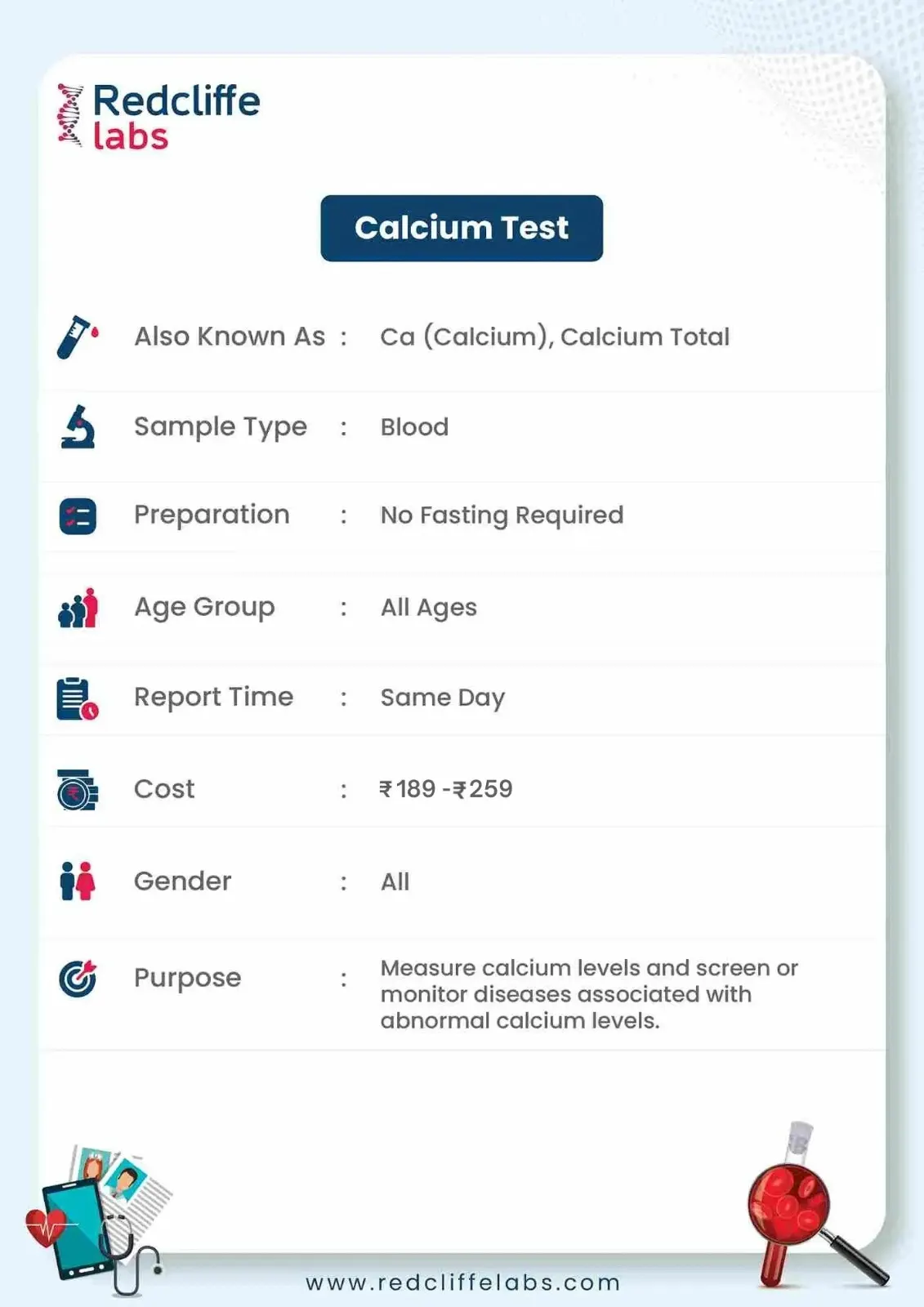
Calcium Test Details In Brief:
| Also Known As | Ca (Calcium), Calcium Total |
| Purpose | Measure calcium levels and screen or monitor diseases associated with abnormal calcium levels |
| Preparation | No Preparations Required |
| Fasting | No Fasting Required |
| Get Reports Within | Same Day |
| Cost | Rs 189 |

What is the purpose of the Calcium test?
The calcium level is often measured as part of routine health screening. The test can be recommended in conjunction with the Comprehensive Metabolic Panel (CMP) and the Basic Metabolic Panel (BMP), which are groups of tests used to diagnose or monitor various conditions. The calcium blood test is essential for multiple physiological processes and identifying abnormal levels that could indicate health issues.
- Assessing Bone Health: This test determines whether calcium levels are adequate for strong bones and teeth. It also helps diagnose bone-related disorders like osteoporosis or osteomalacia.
- A calcium blood test helps to detect and monitor the conditions relating to the bones, heart, nerves, kidneys, and teeth. The test may also be recommended if you have symptoms of parathyroid disorder, malabsorption, or an overactive thyroid.
- Detects Calcium Imbalances: If the calcium level is abnormal, the test measures calcium and PTH together, determining whether the parathyroid glands function appropriately. The calcium test also measures urine calcium and helps to determine whether the kidneys are excreting proper calcium.
The test helps to identify hypercalcemia (high calcium levels), which may indicate cancer, excessive vitamin D, or parathyroid issues. It also helps to detect hypocalcemia (low calcium levels), which means low magnesium or vitamin D deficiency.
Types of Calcium Tests: What’s the Difference?
Calcitonin Test: The Calcitonin Test measures calcitonin levels, a hormone produced by the thyroid gland that helps regulate blood calcium. Doctors commonly use this test to diagnose and monitor medullary thyroid cancer and certain thyroid disorders.
- CT-Calcium Score (Coronary Calcium Score): A CT-Calcium Score uses a specialized CT scan to detect calcium deposits in the coronary arteries. It helps assess the risk of heart disease, heart attack, and coronary artery blockage before symptoms develop.
- Calcium Ionised Serum Test: The Calcium Ionised Serum Test measures the amount of free or active calcium circulating in the blood. Since ionized calcium is the form used by the body's cells, this test provides a more accurate assessment of calcium status than total calcium in certain situations.
- Serum Calcium Test: The Serum Calcium Test measures the total calcium level in the blood, including both protein-bound and free calcium. It is commonly used to evaluate bone health, kidney function, parathyroid disorders, and calcium metabolism.
- 24-Hour Urine Calcium Test: The 24-Hour Urine Calcium Test measures the amount of calcium excreted in urine over a full day. Doctors use it to investigate kidney stones, parathyroid disorders, and abnormalities in calcium absorption or excretion.
- Urine Calcium & Creatinine Ratio Test: The Urine Calcium & Creatinine Ratio Test compares calcium and creatinine levels in a urine sample. It helps assess calcium excretion, detect metabolic disorders, and evaluate the risk of kidney stones, especially in children and adults with suspected calcium imbalance.
Who Should Get a Calcium Test?
You should take a calcium test if you have abnormal calcium levels or you are experiencing symptoms that affect calcium metabolism, bone health, kidney function, or hormonal balance.
You Should Consider a Calcium Test If You:
- Experience muscle cramps, muscle spasms, or muscle weakness.
- Have frequent bone pain or fractures.
- Notice numbness or tingling in the hands, feet, or face.
- Experience fatigue, weakness, or low energy levels.
- Have symptoms of an abnormal heart rhythm (arrhythmia).
- Are being evaluated for osteoporosis or low bone density.
- Have a history of kidney stones.
- Have been diagnosed with kidney disease.
- Have suspected parathyroid gland disorders.
- Have symptoms of hyperparathyroidism or hypoparathyroidism.
- Have a known vitamin D deficiency.
- Need monitoring for thyroid disorders that may affect calcium balance.
- Are being treated for conditions that affect calcium levels.
- There are certain cancers that may cause abnormal calcium levels.
- Are experiencing unexplained digestive symptoms, such as loss of appetite, nausea, or constipation.
Calcium Testing May Also Be Recommended For:
- Older adults are at risk of bone loss and fractures.
- Postmenopausal women concerned about osteoporosis.
- People taking medications that affect calcium metabolism.
- Individuals undergoing routine preventive health checkups.
- Patients with abnormal results on kidney, bone, or hormone-related tests.
What is the calcium Test used for?
The blood calcium test is used to check your general health and the calcium levels in your body. The test is also used to diagnose or monitor many medical conditions, including those that affect your bones, kidneys, digestive system, thyroid, and parathyroid glands. Here are the uses of the Calcium test-
- Evaluating Bone Health: The Ca test detects calcium levels to assess osteoporosis or osteomalacia (soft bones).
- Diagnosing Parathyroid Disorders- The calcium test helps to identify hyperparathyroidism or hypoparathyroidism, as the parathyroid glands regulate calcium levels.
- Monitoring Kidney Function- The Ca test also checks for calcium imbalances caused by kidney disease or kidney stones.
- Identifying Calcium Metabolism Disorders—The test helps diagnose hypercalcemia (high calcium levels) or hypocalcemia (low calcium levels), which may indicate thyroid disorders, cancer, or Vitamin D imbalances.
- Assessing Nutritional Deficiencies- The test evaluates whether you get enough calcium from your diet or supplements.
Calcium is one of the most crucial minerals in your body. Nearly 99% of the calcium in your body is in your bones and teeth. The other 1%
is found in, and 1%od.
A calcium blood test does not show how much calcium is in your bones. Your doctor may recommend a bone density test (DEXA scan) to measure this.
What Are Some Symptoms That Call For Calcium Test?
Abnormal calcium levels are not suitable for health and can cause varied symptoms, depending on whether you have low or high calcium levels. Hence, paying attention to the signs and getting tested in time is crucial to identifying the problem and controlling the condition before things turn ugly. Some common symptoms associated with it are:
Symptoms Of High Calcium Levels:
When your body has too much calcium, it can lead to Hypercalcemia, which causes symptoms like:
- Frequent urge to urinate
- Increased thirst
- Unexplained exhaustion
- Pain in the bones
- Nausea, vomiting & constipation
- Muscle aches & cramping
Symptoms Of Low Calcium Levels:
On the contrary, low calcium levels cause Hypocalcemia or calcium deficiency, which presents visible signs like:
- Irregular heartbeat
- Spasms and muscle cramps
- Seizures
- Tingling feeling in hands & feet
- Dental cavities
- Brittle nails
- Insomnia
- Weak bones
It is essential to understand that symptoms can be different for every individual. Hence, it should never be compared, and getting tested is the only way to measure calcium levels and take charge of the situation. Whether you are calcium deficient or have too much of its levels present in the body, both can lead to many health problems. Therefore, book a Calcium (CA) Test to check your levels and find abnormalities.

What Is The Importance Of Calcium In The Body?
You must be wondering why it is so essential to have calcium levels in balance. Well, we’ve got the right reasons to help you understand that, like:
- Strong Bones: Your body needs calcium to keep your bones healthy and strong. Having it in adequate quantity can promote bone density, reduce your likelihood of developing fractures, and prevent a bone condition called osteoporosis.
- Take Care Of Your Heart: Yes! You read that right. Calcium is equally important for your cardiac health as it is for your bones. It reduces the risks of blood pressure & cardiovascular problems.
- Better Sleep: Abnormal calcium levels can interrupt your sleep, and having it in the right amount, therefore, improves the quality of your sleep.
- Dental Health: Calcium is essential for keeping your teeth shining bright and healthy. In addition, it is crucial to prevent tooth decay and gum problems.
- Muscle Function: Yes, it does play a significant role in keeping your muscle functioning in check and helps prevent muscle cramps & spasms.
Apart from this, calcium is crucial for several other health benefits, like improving digestion, reducing the risk of colon cancer, and improving overall health and life. Hence, ensuring it is present in your blood is essential to avoid such problems. So, if you don’t know the status of your calcium level, book a Calcium Level Test today.
What Are Some Benefits Of Taking Calcium Test?
A Serum Calcium Test serves multiple benefits, including:
- Diagnosing Calcium Imbalance: A Serum Calcium Test is a simple blood test that measures calcium levels in the blood and helps detect Hypocalcemia or Hypercalcemia.
- Aids Assess Bone Health: The test is also essential to determine how likely you are to develop bone-related conditions, like osteoporosis and more.
- Detect Kidney Disease: Yes! Abnormal calcium levels are also associated with kidney problems, and a calcium test helps identify them in their early stage so the treatment can be initiated as soon as possible.
- Help Doctors Plan & Prescribe Treatment: A S Calcium Test can reveal much about your calcium level and overall health and help doctors suggest correct preventive measures and treatment control the damage and restore the balance.
- Support Monitoring: Lastly, a calcium test helps doctors track your calcium levels after the treatment. It helps find how effectively the treatment is working and if there is a need for adjusting the dose.
In short, a calcium test is crucial for diagnosing, monitoring, and screening your condition and helps doctors make informed decisions to treat abnormalities and improve health. So, keep excuses aside and book a Calcium Blood Test today.
Get A Calcium Test At A Reasonable Cost With Redcliffe Labs.
As the best diagnostic center, we aim to provide calcium testing at cost-effective prices so everyone can have access to the best diagnostic experience within their budget. Not just our calcium test price low, but all the diagnostic tests are competitively priced, keeping customers' budgets in mind. We ensure that our diagnostic services are accessible to everyone nationwide at the most affordable rates. Hence, you can book Calcium Test at just Rs 189 with free home sample collection convenience.
Preparation Before a Calcium Test (Fasting & Guidelines)
Since it is a simple blood test, it requires no special preparations. However, there are some things that everyone, while undergoing a blood test, should keep in mind, such as:
- Sleep well before your test to ensure your hormones are balanced so it doesn’t disrupt your test results.
- In addition, your healthcare professional may ask you to avoid certain medicines that can interfere with the test results. However, it is vital to note that only take or stop the medicine with their advice.
- If you are pregnant or have any known underlying health condition, it is advisable to inform your healthcare professional beforehand, so they can provide special instructions (if any).
- Lastly, relax and do not fear anything, as fear can cause stress, influencing your test results.
- Follow all instructions of healthcare professionals to ensure that your results are accurate.
Calcium Test Procedure (Step-by-Step Process)
- It is a simple blood test that takes only 5-10 minutes.
- The procedure is simple and only includes blood withdrawal.
- A phlebotomist will a band around the arm and withdraw blood for testing.
- The collected blood then be transferred to a vial and sent to the lab for processing.
- Afterward, the phlebotomist will put on a bandage to stop bleeding from the punctured site.

Calcium Test Normal Range:
The calcium test normal range is between 8.5 mg/dl to 10.2 mg/dl. However, it may vary from lab to lab due to several factors. It is advisable to discuss your reports with professionals to obtain correct interpretations. An abnormal calcium range doesn’t always indicate a health condition. Sometimes, it could also be interrupted because of diet, supplements (if any), or lifestyle choices. Get your queries resolved by a trained and authorized professional.
Calcium Test Normal Range
| Age Group | Total Serum Calcium (mg/dL) | Ionized Calcium (mg/dL) |
| Infants (0-1 year) | 9.0 - 10.7 | 4.4 - 5.3 |
| Children (1-18 years) | 8.8 - 10.8 | 4.5 - 5.5 |
| Adults (19+ years) | 8.6 - 10.2 | 4.6 - 5.3 |
| Pregnant Women | 8.6 - 10.2 | 4.4 - 5.3 |
| Older Adults (50+ years) | 8.5 - 10.0 | 4.4 - 5.2 |
What Affects Calcium Test Results?
Several factors can influence calcium levels in the blood or urine and affect your test results.
Common Factors That May Affect Calcium Test Results
- Vitamin D Levels: Vitamin D helps the body absorb calcium from food. Low vitamin D levels may lead to reduced calcium absorption and abnormal test results.
- Parathyroid Gland Disorders: The parathyroid glands regulate calcium balance in the body. Conditions such as hyperparathyroidism or hypoparathyroidism can significantly affect calcium levels.
- Kidney Disease: Kidney dysfunction can cause calcium levels to become too high or too low.
- Certain Medications: Medications such as calcium supplements, vitamin D supplements, diuretics, lithium, corticosteroids, and antacids may influence calcium levels.
- Dietary Calcium Intake: Consuming very high or very low amounts of calcium-rich foods can sometimes affect test results.
- Dehydration: Severe dehydration may temporarily increase blood calcium concentration.
- Protein Levels in the Blood: Since a portion of calcium binds to proteins such as albumin, abnormal protein levels can affect total calcium measurements.
- Thyroid Disorders: Certain thyroid conditions may influence calcium metabolism and bone health.
- Bone Disorders: Conditions such as osteoporosis, Paget's disease, or bone cancers can alter calcium levels.
- Pregnancy and Breastfeeding: Hormonal changes during pregnancy and lactation may affect calcium metabolism.
Tips for Accurate Calcium Testing
- Inform your doctor about all medications, vitamins, and supplements you take.
- Follow any fasting instructions provided by the laboratory.
- Stay adequately hydrated before testing unless instructed otherwise.
- Mention any history of kidney disease, thyroid disorders, or parathyroid conditions.
What does a high blood calcium level mean?
If your results indicate that your calcium levels are higher than normal levels of calcium, it means you have-
- Hyperparathyroidism
- Lung diseases like sarcoidosis and tuberculosis
- Kidney failure
- Lung cancer
- Breast Cancer
- Certain Blood cancers
- Hyperthyroidism
- Paget's disease of the bone
- Multiple myeloma
What does a low blood calcium level mean?
- If your results indicate that you have lower than normal levels of calcium in your body, it means-
- Hypomagnesemia
- Pancreatitis
- Hypoparathyroidism
- Vitamin D Deficiency
- Kidney Failure
- Celiac Disease or other conditions that cause Malabsorption
What Conditions Can Be Diagnosed With a Calcium Test?
A Calcium Test helps doctors evaluate calcium balance in the body and identify conditions affecting the bones, kidneys, parathyroid glands, thyroid gland, and overall mineral metabolism. Abnormal calcium levels may indicate a wide range of health problems.
Conditions Commonly Diagnosed or Evaluated with a Calcium Test
- Hypocalcemia (Low Calcium Levels): Occurs when calcium levels in the blood are lower than normal. May cause muscle cramps, tingling, numbness, fatigue, and abnormal heart rhythms.
- Hypercalcemia (high calcium levels): It occurs when calcium levels become too high. Can lead to excessive thirst, frequent urination, constipation, kidney stones, and confusion.
- Hyperparathyroidism: A condition in which the parathyroid glands produce too much parathyroid hormone (PTH). Often causes elevated calcium levels and bone loss.
- Hypoparathyroidism: Occurs when the parathyroid glands produce insufficient PTH. Commonly results in low blood calcium levels.
- Osteoporosis: A condition characterised by weak and fragile bones. Calcium testing helps assess bone health and monitor treatment.
- Vitamin D Deficiency: Low vitamin D levels can impair calcium absorption and contribute to weak bones and muscle problems.
- Kidney Disease: Chronic kidney disease can disrupt calcium and phosphorus balance, leading to abnormal calcium levels.
- Kidney Stones: High calcium levels in urine may increase the risk of calcium-based kidney stones.
- Paget’s Disease of Bone: A disorder that affects normal bone remodeling and may alter calcium metabolism.
- Thyroid Disorders: Certain thyroid conditions can indirectly affect calcium regulation and bone health.
- Malabsorption Disorders: Conditions such as celiac disease and inflammatory bowel disease may reduce calcium absorption from food.
Why Doctors Order a Calcium Test
A calcium test may be recommended if you have:
- Bone pain or frequent fractures
- Muscle cramps or muscle weakness
- Tingling or numbness in the hands, feet, or face
- Abnormal heart rhythms
- Kidney stones
- Symptoms of parathyroid or thyroid disorders
- Fatigue or weakness
- Abnormal findings on routine blood tests
Other Calcium-Related Tests/Packages That You Can Book Redcliffe Labs
| Tests/Packages | Parameters | Price in INR |
| Urine Calcium & Creatinine Ratio Test | 3 | ₹275 |
| Calcium 24 Hrs Urine Test | 1 | ₹599 |
| Vital Screening Package - Lite | 68 | ₹599 |
| Frequent Pain Assessment Package | 5 | ₹1199 |
| Smart Full Body Checkup | 89 | ₹997 |
| Smart Plus Full Body Checkup | 90 | ₹1399 |
| Vitamins & Mineral Screening Package | 10 | ₹1299 |
| Fitness Package Essential | 39 | ₹1899 |
| Advance Plus Full Body Checkup | 100 | ₹2499 |
When Should You Take the Calcium Blood Test?
Your doctor may recommend the test in case you have:
- Kidney disease is caused by low calcium, which is especially common in those with kidney failure.
- If you are noticing high calcium levels, such as vomiting, constipation, weakness, loss of appetite, nausea, abdominal pain, urinary frequency, and increased thirst,
- Symptoms of very low calcium include abdominal cramps, muscle cramps, or tingling fingers.
- You should take the blood calcium test to see if you have bone-related conditions like osteoporosis or osteomalacia.
- The test is recommended if you are suspected to have hyperparathyroidism or hypoparathyroidism.
- Your doctor may recommend the test to ensure proper calcium levels for fetal bone development and maternal health.
- To assess the Vitamin D deficiency.
- Always consult your doctor if you notice any symptoms or conditions that might impact your calcium levels.
Calcium Test vs Vitamin D Test: What’s the Difference?
Both the Calcium Test and Vitamin D Test play an important role in assessing bone health, but they measure different substances and provide different information about your health.
Calcium Test
- Measures the amount of calcium in the blood or urine.
- Helps evaluate bone health, kidney function, parathyroid gland disorders, and calcium metabolism.
- Used to diagnose conditions such as hypercalcemia, hypocalcemia, kidney stones, and parathyroid disorders.
- Abnormal calcium levels may indicate problems with the bones, kidneys, thyroid, or parathyroid glands.
Vitamin D Test
- Measures the level of 25-hydroxyvitamin D [25(OH)D] in the blood.
- Helps determine whether the body has enough vitamin D to absorb and utilize calcium effectively.
- Used to diagnose vitamin D deficiency or insufficiency.
- Low vitamin D levels can lead to weak bones, muscle weakness, osteoporosis, and an increased risk of fractures.
- Often recommended for people with limited sun exposure, bone disorders, or symptoms of deficiency.
Which Test Is Better?
A Calcium Test measures calcium levels, while a Vitamin D Test measures vitamin D levels.
Calcium is a mineral essential for bone, muscle, nerve, and heart function; vitamin D is a nutrient that helps the body absorb calcium.
You can have normal calcium levels but still be vitamin D deficient.
A Vitamin D Test helps identify the cause of calcium absorption problems, whereas a Calcium Test helps detect abnormalities in calcium balance.
Doctors often order both tests together when evaluating bone health, osteoporosis, muscle weakness, or calcium metabolism disorders.
Complete Your Calcium Assessment With A Calcium Test!
It is significant to measure your calcium levels to know where your health stands and take charge to improve it. The more you push the screening, the more hurdles it will create for your health. Consider getting tested in time to check calcium levels and diseases linked to it. In addition, it will help your doctor suggest treatment based on your condition. Do not delay any longer and book a Calcium Test Near Me with Redcliffe Labs today.