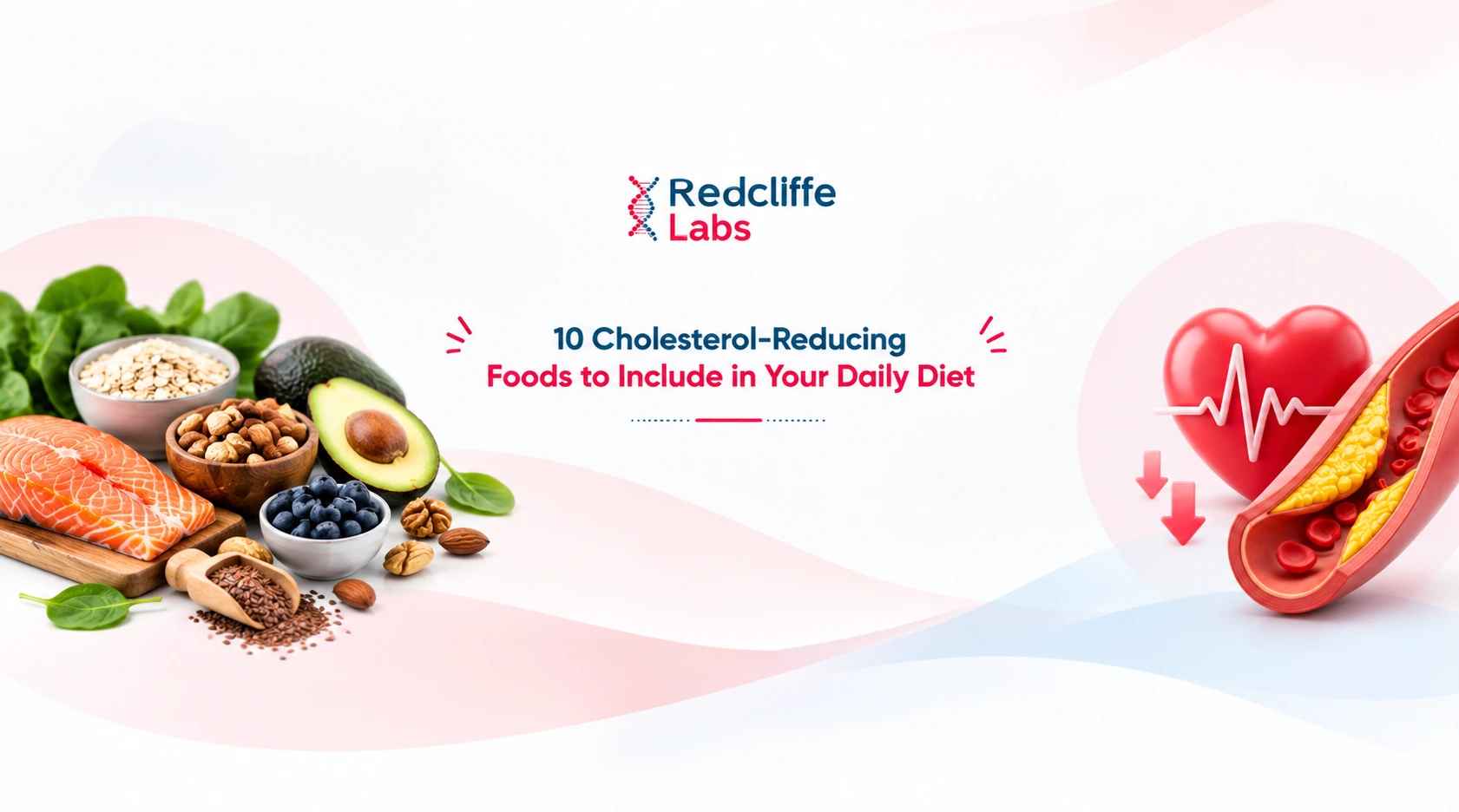
10 Cholesterol-Reducing Foods to Include in Your Daily Diet

Overview:
- Certain foods can help lower LDL (“bad”) cholesterol naturally, particularly oats, barley, dal, rajma, chana, nuts, seeds and fibre-rich fruits and vegetables.
- Soluble fibre and healthier fat choices are key. Oats, barley and pulses provide soluble fibre, while replacing some saturated fats with unsaturated fats can help reduce LDL cholesterol.
- Foods such as oats, beans, apples, pears, nuts and vegetables can be included in everyday Indian meals to support healthier cholesterol levels.
- Reducing foods high in saturated and trans fats and limiting frequent deep-fried foods can support cholesterol management. The overall dietary pattern matters more than any single food.
- No food or drink can flush cholesterol out of your body or guarantee an immediate reduction. Consistent dietary changes, regular physical activity, appropriate lipid profile testing and doctor-recommended treatment can help manage high cholesterol.
If your cholesterol report shows a high LDL level, you may be wondering whether changing your diet can help bring it down. The good news is that what you eat regularly can make a difference. You do not necessarily need expensive health foods or a completely different meal plan to get started.
Everyday foods such as oats, dal, rajma, fruits, nuts and vegetables can help support healthier cholesterol levels. The key is knowing which foods provide useful nutrients, what you should replace, and how to make these changes consistently.
In this guide, we explain 10 foods to reduce cholesterol naturally, how to include them in an Indian diet, which foods to limit, and what to know about popular cholesterol-lowering drinks.
Which Foods Help Reduce Cholesterol Naturally?
Foods that can help lower LDL cholesterol include oats, barley, beans, lentils, apples, pears and other fibre-rich plant foods. Nuts, seeds and unsaturated vegetable oils can also support cholesterol management when they replace foods rich in saturated fat. These foods work best as part of a consistent, heart-healthy eating pattern rather than as isolated remedies.
Which Foods Can Help Lower Cholesterol Naturally?
Not every so-called heart-healthy food works in the same way. Some provide soluble fibre that helps reduce cholesterol absorption, while others supply healthier fats or help replace foods that are high in saturated fat.
Here are 10 practical options to consider.
1. Oats and Barley
If you want to make one simple breakfast change, consider replacing a refined breakfast option with oats.
Oats and barley contain beta-glucan, a type of soluble fibre that forms a gel-like substance in the digestive tract. This helps reduce the absorption of cholesterol and supports the removal of bile acids, prompting the body to use cholesterol to make more bile acids.
How to include them:
- Prepare oats with low fat milk or water, depending on your dietary needs.
- Add chopped apple, pear or a few nuts instead of relying on added sugar.
- Use barley in soups, khichdi or other grain-based dishes.
You do not need to eat plain oatmeal every morning. The goal is to include these fibre-rich grains regularly in meals you enjoy.
2. Dal, Rajma, Chana and Other Pulses
Dal, rajma, chana and other beans are useful staples for a cholesterol-friendly diet. They provide plant protein and fibre, and they can replace some meals based on fatty meat or other foods high in saturated fat.
Their benefits depend partly on what they replace. Adding rajma to a meal while continuing to eat large amounts of saturated fat may not produce the same benefit as using rajma in place of a higher-saturated-fat protein source.
How to include them:
- Have dal with vegetables and whole-wheat roti.
- Add rajma or chana to lunch with a suitable portion of rice.
- Try chana salad or roasted chana as a snack.
- Include different pulses throughout the week rather than relying on just one variety.
A familiar Indian meal can already provide a good starting point. You may only need to adjust the balance of foods on your plate.
3. Nuts Such as Almonds and Walnuts
Nuts provide unsaturated fats, fibre and other nutrients that can support heart health. Replacing some snacks high in saturated fat with a modest portion of unsalted nuts can be a useful dietary change.
Almonds and walnuts are practical options, but neither should be treated as a standalone cholesterol treatment.
How to include them:
- Eat a small handful of unsalted nuts as a snack.
- Add chopped nuts to oats or plain curd.
- Use nuts to replace, rather than simply add to, frequent fried or packaged snacks.
Nuts are energy-dense, so portions still matter, especially if you are also working on weight management.
4. Seeds Such as Flaxseed
Flaxseed contains fibre and alpha-linolenic acid (ALA), a plant-based omega-3 fatty acid. Chia seeds also provide fibre and ALA.
These seeds can contribute to a heart-healthy eating pattern, but the evidence for lowering LDL cholesterol is not identical across all seeds or preparations.
How to include them:
- Add a small amount of ground flaxseed to oats or curd.
- Mix chia seeds into an unsweetened breakfast bowl.
- Use seeds as an addition to meals rather than relying on seed water or seed drinks to treat high cholesterol.
There is no need to consume large quantities. Start with a modest amount and increase fibre gradually if your current intake is low.
5. Whole Fruits Such as Apples and Pears
Whole fruits provide fibre, vitamins and other beneficial plant compounds. Apples and pears are particularly useful examples because they contain soluble fibre.
Choose whole fruit more often than juice. Juicing removes much of the fibre found in the whole fruit and can make it easier to consume a large amount of sugar quickly.
Easy choices include:
- An apple or pear as a mid-morning snack.
- Orange segments with breakfast.
- Whole fruit alongside a handful of unsalted nuts.
You do not need a special fruit combination to lower cholesterol. Variety and consistency are more useful than searching for one perfect fruit.
6. Vegetables Such as Bhindi and Brinjal
Bhindi, brinjal, carrots, leafy greens and other vegetables help increase fibre intake and make meals more balanced.
Bhindi and brinjal are useful additions to an Indian diet, but avoid claims that either vegetable independently removes cholesterol from the bloodstream or treats high cholesterol.
Try these changes:
- Prepare bhindi with a moderate amount of oil instead of deep-frying it.
- Include brinjal in a sabzi or roasted preparation.
- Add vegetables to dal, khichdi and other everyday meals.
- Aim for variety rather than eating the same vegetable every day.
The cooking method matters, too. A vegetable dish prepared with excessive ghee or oil may not offer the same dietary advantage as one made with a more moderate amount of fat.
7. Soy Foods Such as Tofu and Soybeans
Soybeans and foods made from them provide plant protein. Tofu and other minimally processed soy foods can be useful alternatives to some animal-based foods, particularly when the replacement reduces saturated fat.
Soy foods should be viewed as part of the overall diet, not as a guaranteed way to lower cholesterol on their own.
How to include them:
- Add tofu to a vegetable stir-fry.
- Use soybeans in a mixed-bean salad.
- Choose a suitable soy-based dish in place of a meal that is frequently high in saturated fat.
If you prefer traditional Indian foods, there is no need to force yourself to eat tofu. Pulses, beans and other suitable plant proteins can also help diversify your diet.
8. Whole Grains Such as Whole-Wheat Atta and Millets
Whole grains provide fibre and other nutrients. Choosing them more often than refined grains can improve the overall quality of your diet.
Options include whole-wheat atta, oats, barley and millets such as bajra and jowar. The amount and type of fibre differ across grains, so they should not all be described as equally effective for lowering LDL cholesterol.
Practical swaps:
- Choose whole-wheat roti more often than refined-flour alternatives.
- Try bajra or jowar as part of a varied diet.
- Replace some refined-grain meals with oats or barley, which have more specific evidence for LDL reduction.
You do not have to eliminate rice or roti. The aim is to improve the overall balance and quality of your meals.
9. Unsaturated Vegetable Oils
The type of fat you use matters. Replacing some saturated fats with unsaturated fats can help lower LDL cholesterol.
Depending on your dietary needs and cooking practices, suitable options may include mustard, groundnut, soybean, canola or olive oil. No single oil is necessary for everyone.
What matters most is the substitution:
- Use a measured amount of vegetable oil instead of routinely adding large amounts of ghee or butter.
- Avoid repeatedly reusing frying oil.
- Reduce the frequency of deep-fried foods.
- Remember that all cooking oils are calorie-dense, so more oil is not automatically healthier.
You do not need to stop eating every traditional food. Small, sustainable changes in cooking methods and fat choices can be more practical than an unnecessarily restrictive diet.
10. Fish as Part of a Heart-Healthy Diet
Fish, particularly oily fish, provides omega-3 fatty acids. These can help lower triglycerides, another type of fat measured in a lipid profile.
However, omega-3 fats should not be presented as a reliable way to lower LDL cholesterol. Some fish-oil products may affect LDL differently, and supplements are not a substitute for an appropriate cholesterol-management plan.
If you eat fish, grilled, baked or steamed preparations can be useful alternatives to deep-fried versions. If you do not eat fish, you can still follow a heart-healthy eating pattern with pulses, nuts, seeds, whole grains, fruits and vegetables.
What Should You Eat in a Typical Indian Diet?
You do not need to follow an imported meal plan to make cholesterol-friendly choices. Start with the meals you already eat and look for practical improvements.
|
Meal |
Practical food choices (with portion guidance) |
|
Breakfast |
Oats or dalia: ½ cup dry oats/dalia cooked with milk or water, plus 1 small apple or pear and 5–6 almonds. Alternative: Vegetable poha (about 1 cup) with peas and a small bowl of plain curd. |
|
Lunch |
Dal, rajma or chana: 1 medium bowl, with 1–2 medium whole-wheat rotis or about ¾–1 cup cooked rice, plus 1 cup vegetables and salad. This combines carbohydrates, fibre and plant protein. |
|
Snack |
1 medium whole fruit with roasted chana (about ¼ cup), or a small handful of unsalted nuts (about 20–30 g). Choose one combination based on your hunger and daily needs. |
|
Dinner |
1 medium bowl of dal or beans, or a suitable portion of tofu/paneer, with 1–2 rotis or about ¾ cup cooked rice and 1–2 cups of vegetables. Prefer lower-fat cooking methods and moderate amounts of oil. |
A simple plate rule: At lunch and dinner, aim for roughly ½ the plate vegetables, ¼ protein-rich foods and ¼ grains or other carbohydrate foods. Dal and beans provide both protein and carbohydrates, so the proportions can be adjusted to suit the meal.
A useful way to start: choose one meal you can improve this week. For example, replace a frequent fried snack with fruit and unsalted nuts, or add a serving of dal or beans to a meal that usually contains very little fibre.
Portions are general examples, not a personalised prescription. Individual needs vary with age, activity, body size, diabetes, kidney health and other medical conditions. For cholesterol management, prioritise fibre-rich carbohydrates and replace some saturated fats with unsaturated fats rather than simply reducing all carbohydrates or fats.
Which Foods Should You Cut Back on If Your Cholesterol Is High?
Reducing saturated fat is an important part of lowering LDL cholesterol. Rather than focusing only on the amount of cholesterol in a food, pay attention to the type of fat in your overall diet and what you eat in its place.
1. Foods High in Saturated Fat
Foods such as butter, ghee, cream, fatty meat and some full-fat dairy products can contribute substantial saturated fat when consumed frequently or in large amounts.
You do not necessarily need to remove every one of these foods from your diet. Consider how often you eat them and whether you can replace some of them with foods containing unsaturated fats.
For example, using a measured amount of suitable vegetable oil instead of routinely using generous amounts of ghee may help reduce saturated fat intake.
2. Trans Fats and Frequently Deep-Fried Foods
Industrial trans fats raise cardiovascular risk and should be avoided. Frequently eating deep-fried foods can also make it harder to maintain a balanced diet, especially when these foods are prepared with large amounts of fat.
Limit frequent intake of fried snacks and check packaged-food labels where available. Food preparation methods and ingredients vary, so not every fried food has the same nutritional profile.
3. Packaged Snacks, Bakery Products and Processed Foods
Some biscuits, cakes, pastries, packaged snacks and processed meats can contain substantial amounts of saturated fat, salt or added sugar.
These foods do not all have identical nutritional values. Check the ingredient list and nutrition information instead of assuming that a product is healthy simply because it is labelled baked, multigrain or made with vegetable oil.
4. What Can You Eat Instead?
The most useful changes are often replacements:
- Replace some fried snacks with fruit or unsalted nuts.
- Choose pulses or other suitable proteins more often instead of fatty or processed meat.
- Use whole grains more frequently in place of refined-grain options.
- Cook vegetables with a moderate amount of suitable oil.
- Choose water or unsweetened drinks more often than sugary beverages.
The goal is not to make every meal perfect. It is to make your usual eating pattern more supportive of heart health.
How Quickly Can You Lower Cholesterol Through Diet?
If your cholesterol is high, it is natural to want results quickly. However, no particular food guarantees a specific reduction in a few days.
The effect of dietary changes depends on your starting cholesterol levels, the changes you make, how consistently you follow them, genetics, other health conditions and whether you take cholesterol-lowering medication.
Some people see measurable changes over several weeks, but the amount of improvement varies. A healthcare professional can advise when to repeat your lipid profile to assess the response.
If your LDL cholesterol is substantially elevated, you have diabetes or cardiovascular disease, or you have a strong family history of early heart disease, do not rely on diet alone without medical advice. Some people need medication alongside lifestyle changes.
The takeaway: start making practical changes now, but use appropriate testing and medical guidance to assess whether they are working.
Can Any Drink Help Lower Cholesterol?
You may have seen claims that lemon water, green tea, apple cider vinegar or a particular seed drink can lower cholesterol quickly. These claims need to be treated carefully.
1. Water and Unsweetened Drinks
Water is a sensible everyday drink. Unsweetened tea or other drinks without added sugar can also fit into a balanced diet.
However, drinking more water does not directly flush LDL cholesterol out of the bloodstream. These beverages should not be presented as treatments for high cholesterol.
2. What About Green Tea, Lemon Water and Apple Cider Vinegar?
Some studies have examined these drinks or their ingredients, but evidence does not establish them as reliable substitutes for proven dietary changes or prescribed treatment.
Lemon water can be an enjoyable drink, but adding lemon to water does not make it a cholesterol-cleansing remedy. Similarly, apple cider vinegar should not be promoted as a proven treatment for high cholesterol.
Avoid detox drinks or cleanses that promise to remove cholesterol from your arteries. If you enjoy a particular unsweetened drink, you can include it as part of your routine without expecting it to replace a cholesterol-management plan.
3. Which Drinks Should You Limit?
Sugary soft drinks, sweetened beverages and drinks with substantial added sugar can contribute excess calories and may worsen triglyceride levels in some people.
Choosing water more often is a sensible starting point, particularly if sugary drinks are a regular part of your day.
What Should You Eat If You Have Both High Cholesterol and High Blood Pressure?
High cholesterol and high blood pressure are different cardiovascular risk factors, but both need attention. A diet rich in vegetables, fruits, whole grains, pulses and suitable sources of protein can support heart health. The DASH (Dietary Approaches to Stop Hypertension) diet is an eating pattern designed to help manage blood pressure. It emphasises vegetables, fruits, whole grains, low-fat dairy, pulses, nuts and seeds while limiting sodium, saturated fat and added sugars.
If you have both conditions, combining DASH principles with foods that provide soluble fibre and healthier unsaturated fats can help support blood pressure and cholesterol management.
1. How to Follow DASH Diet Principles in an Indian Diet
You do not need to switch to unfamiliar foods. Start by building balanced meals using everyday ingredients.
- Choose fibre-rich carbohydrates: Include oats, dalia, whole-wheat roti, brown rice and other whole grains. Dal, rajma, chana and other pulses provide fibre along with protein.
- Eat more vegetables and whole fruits: Include vegetables such as bhindi, lauki, beans and leafy greens, along with whole fruits such as apples, pears and oranges.
- Include suitable protein sources: Choose dal, beans, unsalted nuts, seeds, tofu and low-fat curd or milk. Fish can also be included if you eat it.
- Choose healthier fats: Use moderate amounts of unsaturated oils, such as mustard, groundnut or olive oil, in place of butter, ghee and other sources of saturated fat where practical.
- Watch your sodium intake: Pickles, papad, namkeen, instant foods, packaged snacks and restaurant meals can contribute substantial sodium. Check food labels where available and limit portions of salty foods.
- Limit foods high in saturated fat and added sugar: Reduce frequent intake of deep-fried foods, fatty or processed meats, bakery products high in saturated fat, and sugary drinks or desserts.
2. How Can You Control Portions?
A simple starting point is to fill about half your plate with vegetables, one-quarter with protein-rich foods and one-quarter with whole grains or other high-fibre carbohydrates. For example, you could have vegetables, dal or rajma, and a portion of whole-wheat roti or rice.
This plate method is a practical guide, not a strict DASH diet prescription. Dal and beans provide both protein and carbohydrates, so the proportions do not need to be exact. Your appropriate portions depend on your energy needs, activity level and other health conditions.
3. Why Salt and Fat Both Matter
Reducing sodium can help manage blood pressure, while replacing saturated fats with unsaturated fats and eating more soluble fibre can help lower LDL (“bad”) cholesterol. These changes work best as part of a consistent eating pattern rather than relying on one food or drink.
Diet can help manage both conditions, but it may not be enough on its own. Continue recommended monitoring and medication, and speak with your healthcare professional about changes suited to your results and overall risk. If you have kidney disease or another condition that affects dietary requirements, seek individual advice before making major changes to potassium, protein or other nutrients.
How to Start a Cholesterol-Friendly Diet Without Changing Everything at Once
Trying to change every meal overnight can become overwhelming. A more manageable approach is to make a few changes that you can maintain.
Here is a simple starting checklist:
- Include oats, barley or another suitable fibre-rich food regularly.
- Add dal, beans or other pulses to meals more often.
- Eat a variety of whole fruits and vegetables.
- Replace some saturated fats with suitable unsaturated fats.
- Choose whole grains more frequently.
- Reduce frequent deep-fried snacks and foods high in saturated fat.
- Choose water or unsweetened drinks more often than sugary beverages.
- Stay physically active and follow advice about weight management if relevant.
- Discuss your cholesterol results and cardiovascular risk with a healthcare professional.
You do not need to tick every box on day one. Choose two changes you can start this week, build consistency, and then review what else may be helpful.
Check Your Cholesterol Levels With a Lipid Profile Test
Food choices can support cholesterol management, but you need to know your lipid levels to understand your starting point and monitor progress. A lipid profile measures blood fats, including total cholesterol, LDL cholesterol, HDL cholesterol and triglycerides.
If you need to check your levels, explore the Redcliffe Labs Lipid Profile Test. Check the current price, preparation instructions and service availability for your location before booking.
Discuss your results with a healthcare professional to understand what they mean for your individual cardiovascular risk and whether lifestyle changes alone are appropriate.
Frequently Asked Questions
What Foods Help Lower Cholesterol Quickly?
Oats, barley, beans, lentils and other sources of soluble fibre can help lower LDL cholesterol when included regularly in a balanced diet. Replacing saturated fats with unsaturated fats can also help. However, no food guarantees an immediate result, and the degree of improvement varies from person to person.
What Flushes Cholesterol Out of Your Body?
No ordinary drink or detox cleanse has been established as a way to flush cholesterol out of your bloodstream. Soluble fibre can help reduce cholesterol absorption in the digestive tract, while the liver uses cholesterol to make bile acids. A fibre-rich diet and appropriate medical care are more useful than relying on cleansing remedies.
Can You Lower Cholesterol Naturally Without Medication?
Some people can improve their cholesterol levels through dietary changes, physical activity and other lifestyle measures. However, others need medication because of their LDL level, family history or cardiovascular risk. Do not stop or change prescribed cholesterol medication without speaking with your healthcare professional.
Conclusion
Lowering cholesterol naturally is less about finding one miracle food and more about making everyday meals work in your favour. Oats, barley, dal, rajma, fruits, vegetables, nuts and seeds can all contribute to a heart-healthy eating pattern, while replacing some saturated fats with unsaturated fats can help lower LDL cholesterol.
Start with changes you can sustain, be cautious about drinks that promise instant results, and remember that dietary changes do not replace medical treatment when it is needed.