
Platelet Count Test Online: Price, Home Sample & Results
This test measures the number of platelets in your blood to help evaluate blood clotting ability and detect bleeding or clotting disorders.




Blood


Unlock special
discount on
this package
Login to Unlock 🔓
1 Test Parameters

Platelet Count
1 PARAMETER INCLUDED
1 PARAMETER INCLUDED
- Platelet Count
Helps you know your test better
Who all are eligible for Platelet Count test?
- Individuals who exhibit the following signs and symptoms: bruises, bleeding nose or gums, reddish urine, menorrhagia, blood in the vomiting, muscle pain, dizziness, frequent infections, fever, leg swellings, and severe headaches.
- In the case of some cancers, enlarged spleen, damaged bone marrow, strokes, and chemotherapy.
Why take Platelet Count Test?
- Platelets count help to diagnose the reason of excessive bleeding (thrombocytopania) and clotting (thrombosis) respectively.
- Helps monitor the platelets count during severe dengue
What are the benefits of Platelet Count test?
- It is a useful test that is performed along with a complete blood count, as part of a routine health checkup.
- It helps to diagnose platelet-related disorders and certain types of cancer.
Helps you know your test better
Q. How can I book my test?
Q. In how much time will I get my test report?
Q. Where can I see or get my test results?
Q. Is home sample collection available for this test?
Table of Content
Introduction to Platelet Count Test
Platelets are tiny, colorless cell fragments in the blood that help clot formation and wound healing when you get an injury or cut. Made in the bone marrow and freed into the blood, they help prevent excessive bleeding after an injury or surgery. While having enough Platelets in the blood is essential for your health, too much may result in abnormal clotting, increasing the risk of stroke or heart attack. Thus, maintaining an appropriate Platelet Count is critical to support overall wellness and prevent life-threatening bleeding or clotting disorders. And when it comes to checking whether you have a normal Platelet Count, a Platelet Count Test comes to the rescue. Also called a Thrombocyte Count Test, Platelet Count Test helps measure the number of Platelets in an individual’s blood.
Besides assessing the number of Platelets in the blood, a Platelet Count Test also helps diagnose various health conditions, monitor certain treatments, and evaluate a person’s overall wellness. Book your Platelet Count Test with Redcliffe Labs. We are Health India Ki Trusted Lab that you can count on to book a comprehensive range of health tests and checkups at highly competitive rates and get tested comfortably from home.
What Is a Platelet Count Blood Test?
A platelet count blood test measures the number of platelets in your blood. Platelets, also called thrombocytes, are tiny blood cells that help your blood clot and stop bleeding when you get a cut or injury. Doctors usually suggest this test as part of a Complete Blood Count (CBC). It helps check whether your platelet level is normal, low, or high. A low platelet count may increase the risk of easy bruising or bleeding, while a high platelet count may increase the risk of unwanted blood clots in some cases.
Platelet Count Test Details: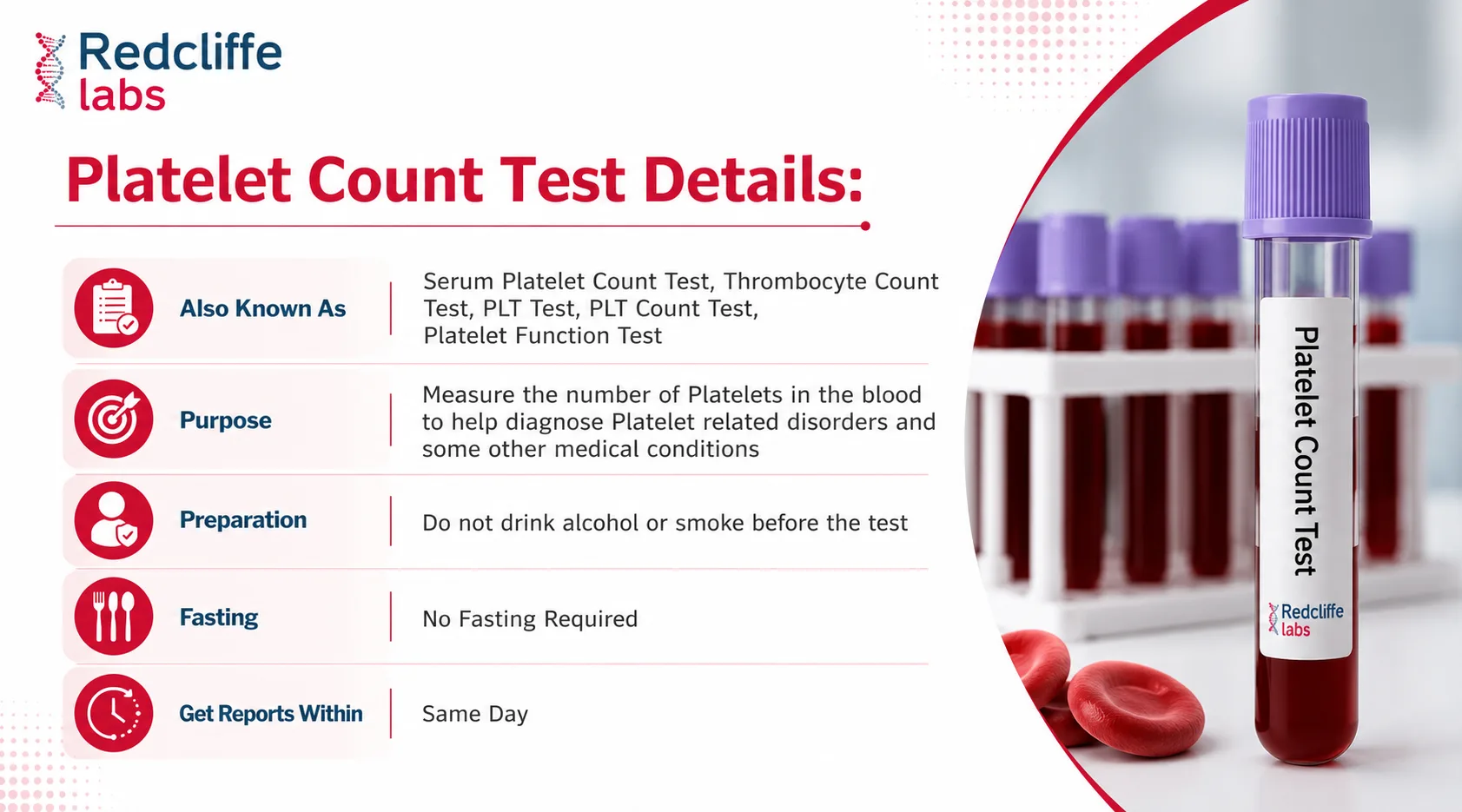
| Also Known As | Serum Platelet Count Test, Thrombocyte Count Test, PLT Test, PLT Count Test, Platelet Function Test |
| Purpose | Measure the number of Platelets in the blood to help diagnose Platelet related disorders and some other medical conditions |
| Preparation | Do not drink alcohol or smoke before the test |
| Fasting | No Fasting Required |
| Get Reports Within | Same Day |
| Cost | Rs 99 |
What is the purpose of the Platelet Count Test?
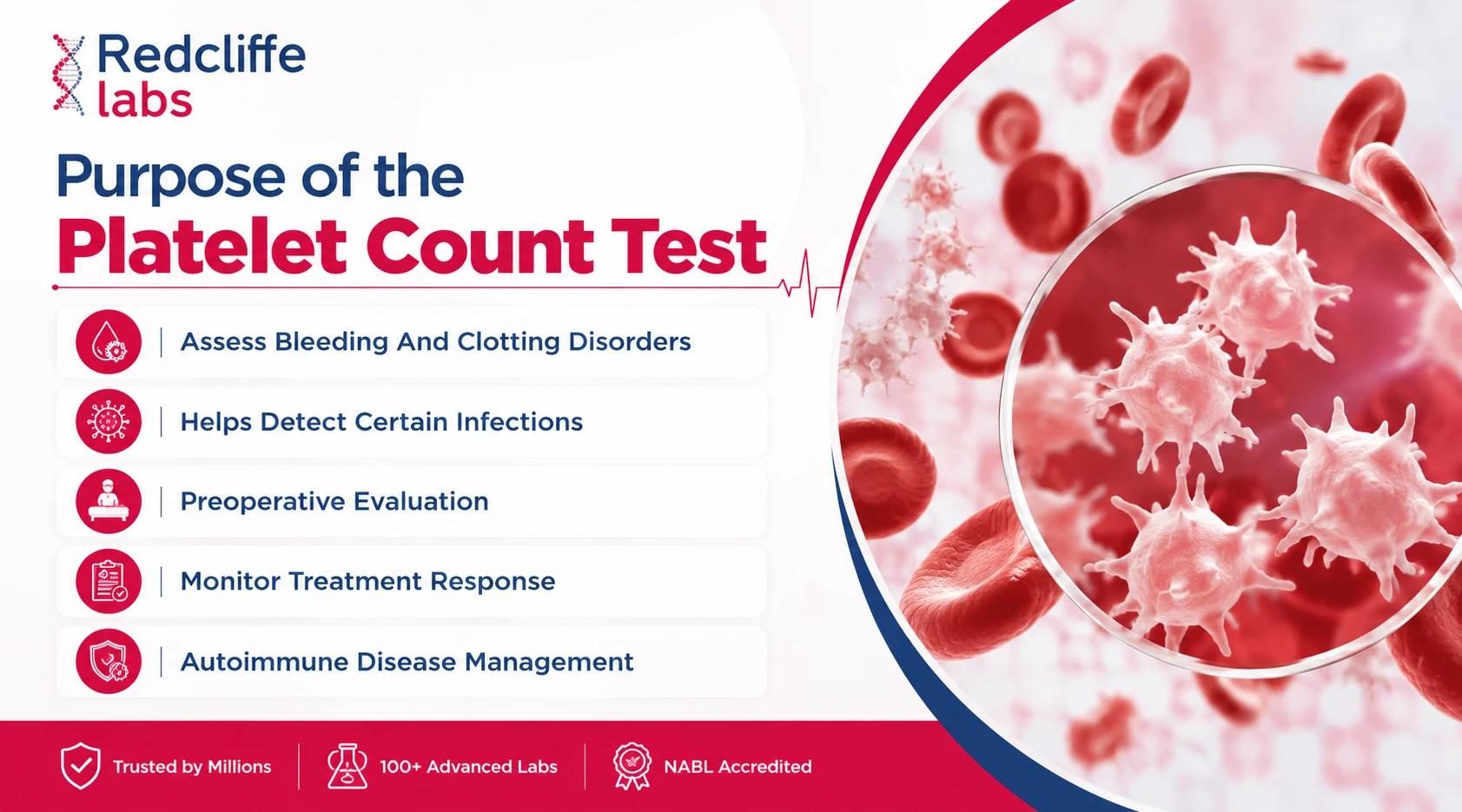
The primary purpose of the Platelet Count Test also called the PLT Test, is to measure the number of Platelets in the blood. But this is not the case; the test serves many other purposes, like:
- Assess Bleeding And Clotting Disorders: Platelet Count is the key component that helps find if you have any bleeding disorders, like Hemophilia, or a clotting disorder, like deep vein thrombosis (DVT).
- Helps Detect Certain Infections: A Platelet Count Blood Test may also help identify certain infections, such as Dengue Fever, Viral Hepatitis, or more such problems that can cause changes in Platelet Count. Besides detecting certain infections, it also helps assess the severity of the infection.
- Preoperative Evaluation: Before certain surgeries or operative treatments, a PLT Blood Test helps assess a patient’s clotting ability to determine the risk of bleeding before surgery.
- Monitor Treatment Response: Besides diagnosing certain medical conditions, a Platelet Count Test helps monitor the effectiveness of ongoing treatment in individuals with known Platelet Disorders. While monitoring, it helps doctors make necessary adjustments in the treatments.
- Autoimmune Disease Management: Platelet Counts also helps evaluate and manage autoimmune disease like SLS and Rheumatoid Arthritis.
While it helps assess the Platelet Count status, the Platelet Count Test helps healthcare practitioners make informed decisions about their health.
When Do I Need A Platelet Count Blood Test?
- Family History: If you have a family history of Platelet disorders, you may need a Platelet Function Test to determine your risks and take appropriate preventive measures accordingly.
- Routine Health Screening: Often suggested as a part of routine blood tests and other parameters, like CBC. The test helps establish a baseline for an individual’s Platelet levels.
- Have Symptoms: Individuals with symptoms suggestive of Platelet disorders or abnormalities may need a PLT Lab Test for further evaluation. It helps find what’s causing these abnormalities so doctors can adjust treatment plans accordingly.
- Pre-Surgery Evaluation: To assess clotting ability and overall health, you may also need a Platelet Count Test before certain surgeries or operative procedures, especially those with a potential for heavy bleeding.
- Recent Infections or Illnesses: If you have been recently diagnosed with dengue or have other infection that influences or drops the Platelet counts, you may need to get tested for proper evaluation.
- Monitor Medicines: Besides helping diagnose certain conditions, a Platelet Count Test may also help evaluate your response to an ongoing Platelet-related treatment.
No matter why your healthcare provider may have suggested a Platelet Count Test, getting tested in time is essential for accurate and appropriate diagnosis and better management of a certain condition before things turn ugly.
Types of Platelet Count Tests: What's the Difference?
A platelet count test checks how many platelets are present in your blood. Platelets are tiny blood cells that help stop bleeding by forming clots. This test is usually done as part of a Complete Blood Count (CBC) and is also called PLT on many blood test reports.
Types of Platelet Count Tests: What's the Difference?
There are various platelet-related tests. Each test provides different information about your platelets and how well they function.
- CBC Test: A CBC with platelet count is one of the most common blood tests. It checks red blood cells, white blood cells, hemoglobin, and platelets. Doctors use this test to assess your overall blood health and detect problems such as infections, anemia, bleeding disorders, or low platelet count.
- Peripheral Blood Smear Test: A peripheral blood smear is performed when doctors want to examine platelets under a microscope. It helps check platelet size, shape, number, or clumping more clearly.
What Conditions Can Be Diagnosed With a Platelet Count Test?
- Low Platelet Count- Thrombocytopenia: A platelet count test can help detect thrombocytopenia, which means your platelet count is lower than normal. A low platelet count may increase the risk of easy bruising, nosebleeds, bleeding gums, tiny red or purple spots on the skin, or prolonged bleeding after a cut.
- High Platelet Count/ Thrombocytosis: A platelet count test can also help detect thrombocytosis, which means the platelet count is higher than normal. A high platelet count may occur when the body responds to infection, inflammation, bleeding, iron deficiency, surgery, or other health conditions. In some cases, very high platelet levels may increase the risk of unwanted blood clots.
- Dengue, Malaria, and Viral Infections: Doctors may suggest a platelet count test or a CBC to check platelet levels during fever, especially when they suspect dengue, malaria, or a viral infection. These infections can lower platelet levels in some people.
- Bleeding Disorders: A platelet count test may help doctors evaluate bleeding-related problems. If you bruise easily, bleed for a long time after small cuts, get frequent nosebleeds, or notice bleeding gums, your doctor may check your platelet count.
- Bone Marrow Disorders: Platelets are produced in the bone marrow. So, an abnormal platelet count may point toward a problem with platelet production. Bone marrow disorders can cause low, high, or abnormal platelet counts depending on the condition.
- Iron Deficiency Anemia: Iron deficiency can sometimes affect platelet levels. In some people, iron deficiency may cause a high platelet count.
- Autoimmune Conditions: Some autoimmune conditions can make the immune system attack and destroy platelets. This can reduce platelet count and increase the risk of bruising or bleeding.
- Cancer or Cancer Treatment Effects: Some cancers and cancer treatments can affect platelet count. Chemotherapy and radiation therapy may reduce platelet production by affecting the bone marrow.
- Inflammation and Long-Term Health Conditions: Long-term inflammation in the body may raise platelet count in some people. This can happen with chronic infections, inflammatory diseases, or other ongoing health problems.
Who Should Get a Platelet Count Test?
A platelet count test is frequently used to diagnose or monitor conditions that cause too much bleeding or clotting. Additionally, it is a part of a regular health check-up and is often included in a CBC test. You may need a platelet count test:
- If you have a family history of bleeding disorders.
- If you have bleeding disorders
- If you take blood-thinning medicines, undergo chemotherapy treatment, or undergo a platelet transfusion procedure,
- In case of prolonged bleeding, easy bruising, or any other symptoms of bleeding disorders.
What Levels Are Checked in a Platelet Count Test?
The platelet count test uses a blood sample to measure the number of platelets. Platelets are tiny cells produced from bone marrow cells called megakaryocytes. They circulate in your blood.
Additionally, the average lifespan of platelets is 7 to 10 days.
What are the symptoms of Platelet Abnormalities or Platelet Disorders?
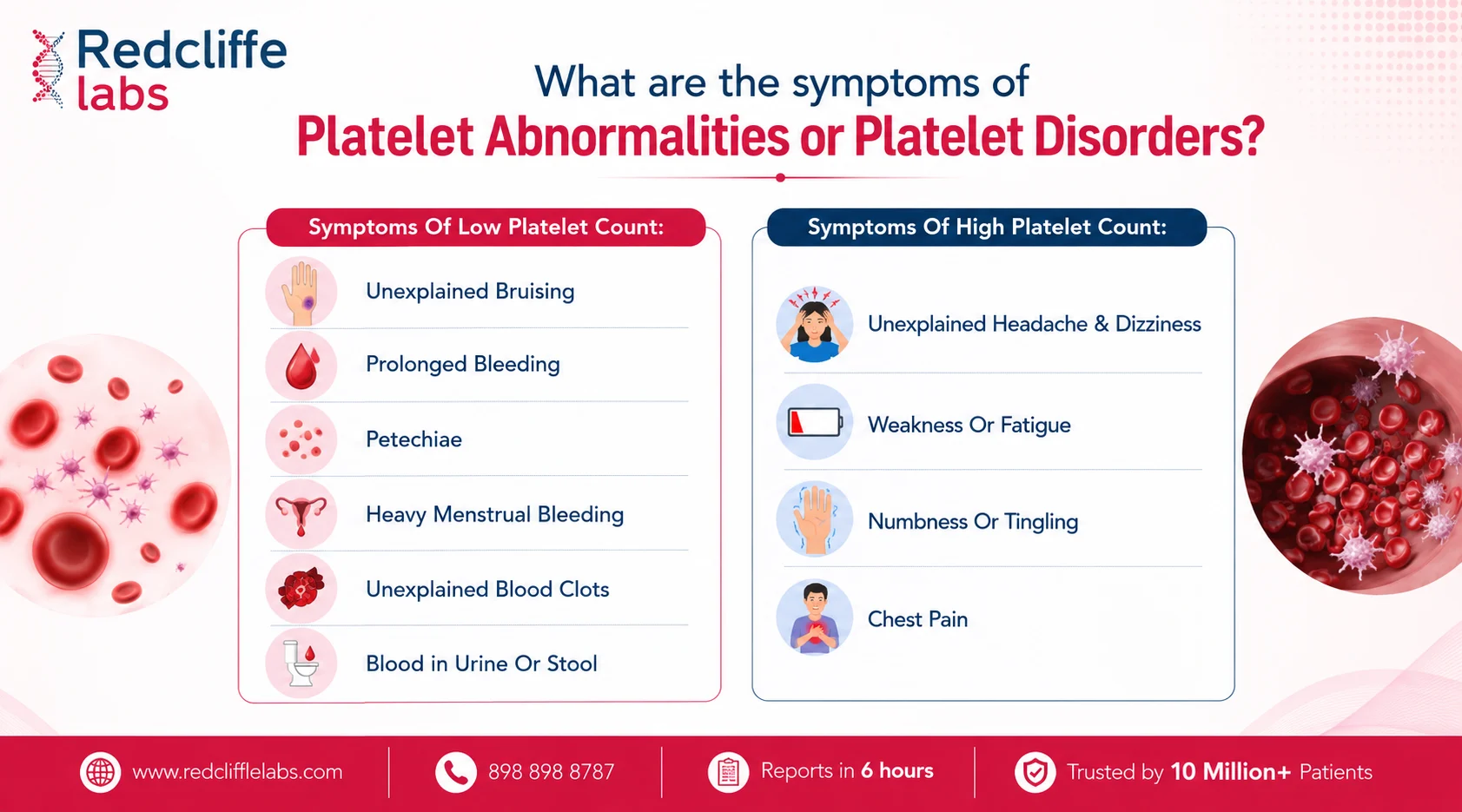
While the symptoms or signs an individual may exhibit may vary, depending on their age, gender, medical history, and more, certain signs that may prompt the need for a Platelet Count Test are:
Symptoms Of Low Platelet Count:
Low Platelet Count, also called Thrombocytopenia, influences the body’s ability to form blood clots, leading to certain symptoms or complications, such as:
- Unexplained Bruising: Frequent or unexplained bruising, especially when no known injuries, can indicate low Platelet counts or Platelet dysfunction.
- Prolonged Bleeding: Heavy and long bleeding for even a minor cut or scratch could indicate Platelet abnormalities.
- Petechiae: Petechiae is called tiny red or purple spots that emerge on the skin, mucous membranes, or the whites of the eyes, usually indicating Thrombocytopenia that may call for further evaluation and timely diagnosis.
- Heavy Menstrual Bleeding: If you often complain of heavy period flow, you need to get tested, as it could be related to certain platelet-related issues, and a proper diagnosis is essential to confirm the cause.
- Unexplained Blood Clots: Blood clots without an unknown cause could also suggest some problem that may prompt the need for PLT Blood Test.
- Blood in Urine Or Stool: If you suspect the blood in the stool or urine, you may need to get tested, as it is also abnormal and usually indicates certain Platelet abnormalities.
Symptoms Of High Platelet Count:
Also called a situation thrombocytosis, High Platelet Count may not cause noticeable symptoms. However, when symptoms do occur, they include the following:
- Unexplained Headache & Dizziness: Individuals with high Platelet counts often complain of unusual headaches, which may or may not be accompanied by dizziness.
- Weakness Or Fatigue: If you have been feeling tired or lethargic so far, even after resting properly, it could be a sign of Elevated Platelet Levels.
- Numbness Or Tingling: The sensation of numbness or tingling is also associated with high Platelet counts, as it generally influences the blood flow.
- Chest Pain: In rare cases, one may experience issues with blood flow and blood clot formation within the blood vessels, leading to high Platelet levels.
Remember, these symptoms are linked with Platelet Disorders and could indicate other medical conditions. Getting tested in time is critical to identify the cause and act while there is still time. Even a minor sign can indicate something major, so delay no more and book your Platelet Count Screening with Redcliffe Labs today.
Preparation Before a Platelet Count Test (Fasting & Guidelines)
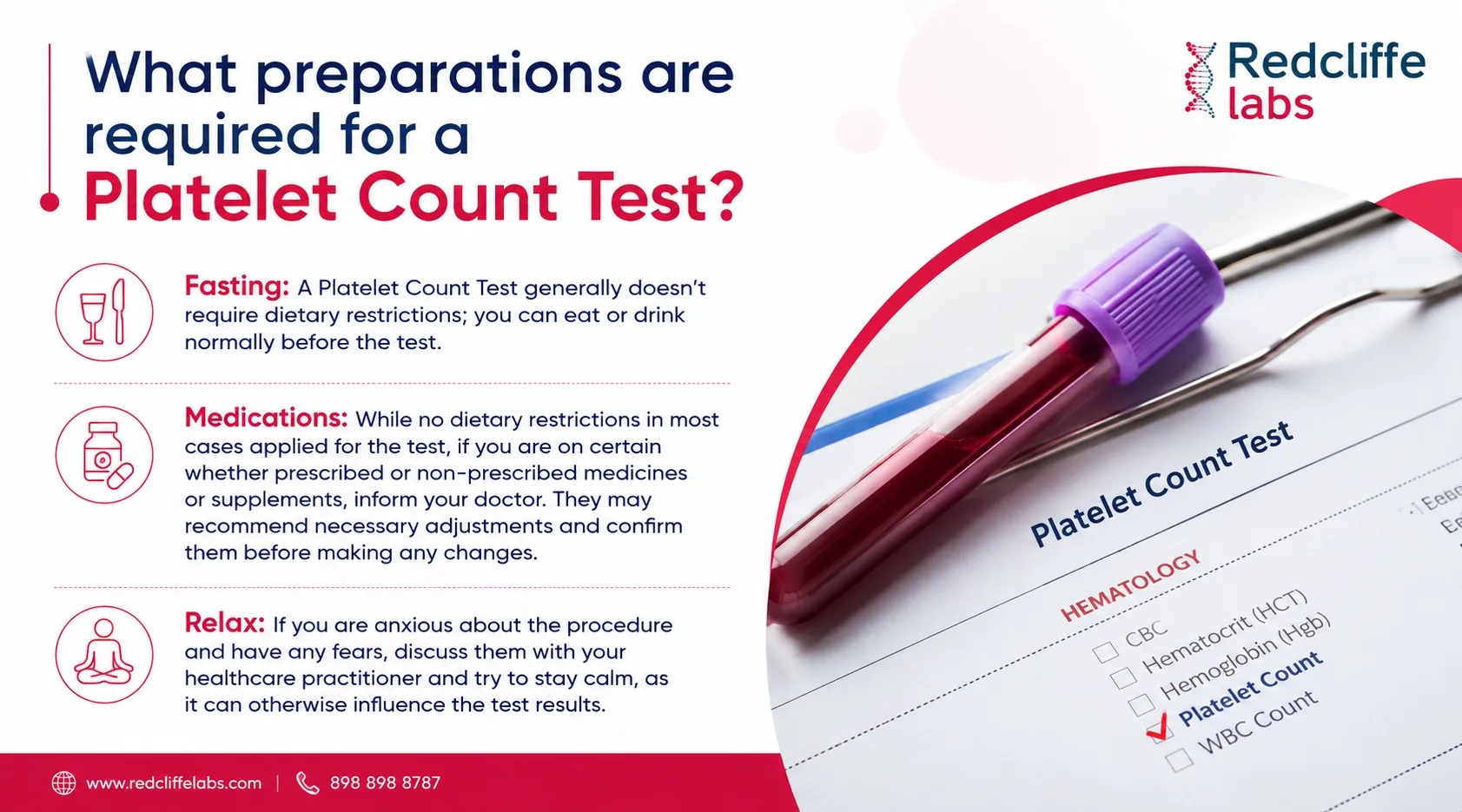
Usually, a Platelet Count Test doesn’t require special preparations like dietary or lifestyle restrictions. However, you may and should consider the following guidelines for accurate results.
- Fasting: A Platelet Count Test generally doesn’t require dietary restrictions; you can eat or drink normally before the test.
- Medications: While no dietary restrictions in most cases applied for the test, if you are on certain whether prescribed or non-prescribed medicines or supplements, inform your doctor. They may recommend necessary adjustments and confirm them before making any changes.
- Relax: If you are anxious about the procedure and have any fears, discuss them with your healthcare practitioner and try to stay calm, as it can otherwise influence the test results.
These are general guidelines, and depending on your condition, if your doctor has given some other instructions, always follow them to ensure accuracy in the test results.
Platelet Count Test Procedure (Step-by-Step Process)
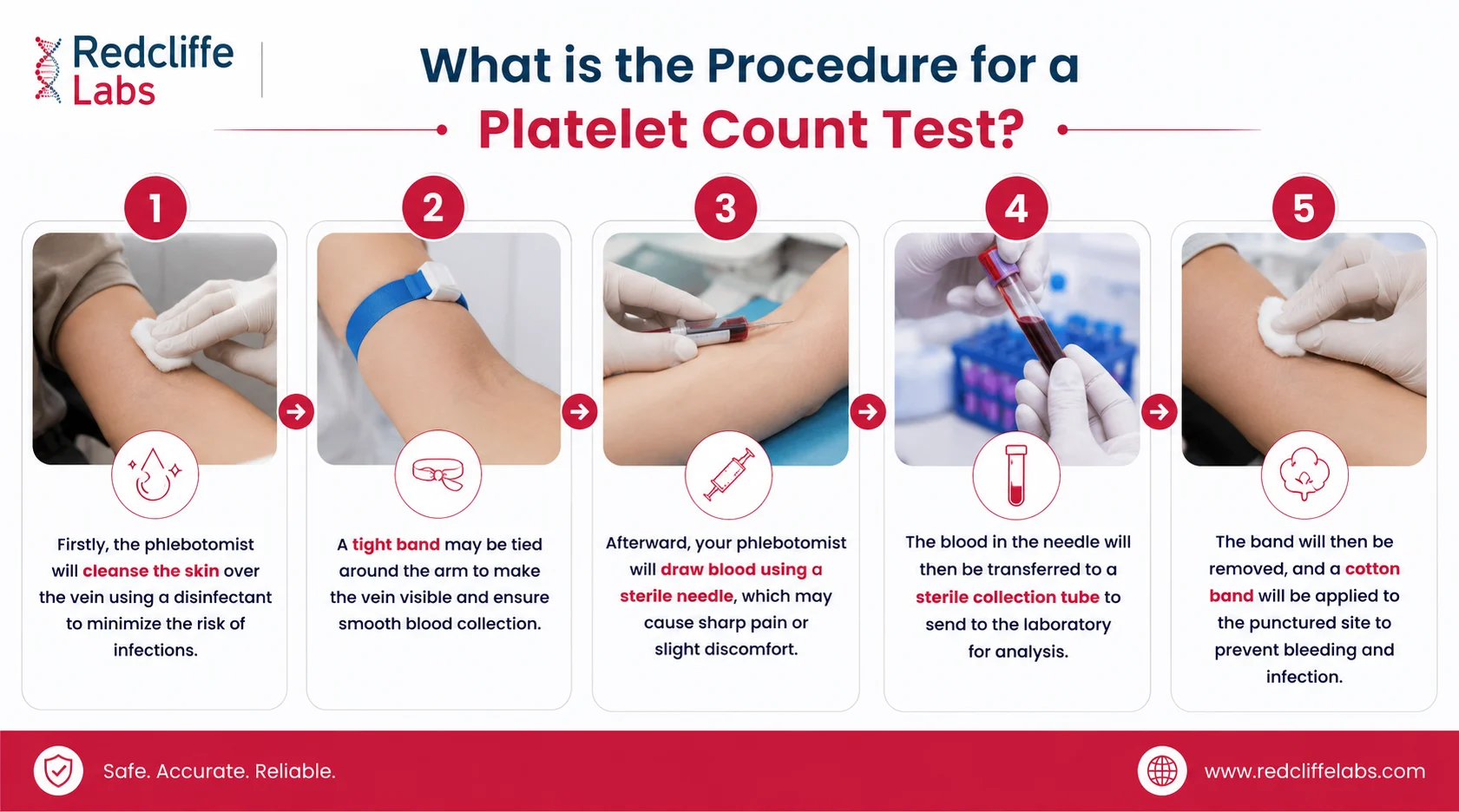
A platelet count test is a simple blood test. A trained phlebotomist collects a small blood sample, usually from a vein in your arm. The sample is then sent to the laboratory for platelet count testing.
- Step 1: You will sit comfortably. The phlebotomist will ask you to relax your arm before collecting the blood sample.
- Step 2: The skin will be cleaned: The phlebotomist will clean the skin over the vein using a disinfectant or alcohol swab. This helps reduce the risk of infection.
- Step 3: A band may be tied around your arm: A tight elastic band may be tied around your upper arm. This makes the vein easier to see and helps with smooth blood collection.
- Step 4: Blood will be drawn using a sterile needle: The phlebotomist will insert a sterile needle into the vein and collect a small amount of blood. You may feel a slight pinch, sharp pain, or mild discomfort for a few seconds.
- Step 5: The sample will be collected in a tube: The collected blood will be transferred into a sterile collection tube. The sample will then be sent to the laboratory for testing.
- Step 6: A cotton pad or bandage will be applied: After removing the needle, the phlebotomist will press a cotton pad on the puncture site. A small bandage may be applied to stop bleeding and protect the area.
The platelet count test only takes a few minutes. If you feel nervous, dizzy, or have any concerns about the test, inform your doctor.
Normal Platelet Count Range by Age & Gender
| Age / Gender | Normal Platelet Count Range |
| Newborns | 150,000–450,000 |
| Infants | 150,000–450,000 |
| Children | 150,000–450,000 |
| Teenagers | 150,000–450,000 |
| Adult Men | 150,000–450,000 |
| Adult Women | 150,000–450,000 |
| Pregnant Women | May be slightly lower in some cases |
| Older Adults | 150,000–450,000 |
What Affects Platelet Count Test Results?
Several factors can affect your platelet count test results. A platelet count may become low or high due to infections, medicines, health conditions, recent bleeding, inflammation, or problems with platelet production in the bone marrow.
Common factors that may affect platelet count include:
- Infections: Viral or bacterial infections may temporarily increase or decrease platelet levels.
- Dengue, malaria, or other fever-related illnesses: These infections can lower platelet count in some people.
- Medicines: Some antibiotics, blood thinners, chemotherapy medicines, and painkillers may affect platelet levels.
- Iron deficiency anemia: Low iron levels may sometimes increase platelet count.
- Inflammation: Long-term inflammatory conditions may raise platelet count.
- Bleeding or recent surgery: The body may produce more platelets in response to blood loss.
- Pregnancy: Platelet levels may become slightly lower in some pregnant women.
- Alcohol use: Heavy alcohol intake may affect platelet production.
- Bone marrow disorders: Platelets form in the bone marrow, so disorders of the bone marrow may affect platelet count.
- Autoimmune conditions: Some conditions may cause the immune system to destroy platelets faster than normal.
- Spleen problems: The spleen may trap or remove more platelets from the blood in certain conditions.
- Cancer or cancer treatment: Some cancers and treatments, such as chemotherapy, may affect platelet production.
How to Read Platelet Count Test Results? (High & Low Platelet Levels Explained)
- Normal Platelet Levels: If your Platelet Count falls within the Normal Range, it indicates normal blood clotting functioning and no problem detected. However, if you still have certain symptoms, your doctor may suggest additional tests as required.
- High Platelet Count: If your Platelet Count is above the normal range, it indicates certain conditions, like inflammation, iron-deficiency anemia, certain infections, or bone marrow disorders.
- Low Platelet Count: Lastly, if your Platelet Count is lesser than normal, it implies bone marrow disorders, certain medications, autoimmune conditions, and infections.
However, accurate diagnosis depends on age, gender, symptoms, test results, and other clinical evaluations. Therefore, we provide a free doctor consultation to discuss the reports so that you can understand your health better and make informed decisions accordingly.
Are there any risks associated with a platelet count test?
There is very little risk associated with a platelet count test. Inserting a needle into your vein may cause slight pain or bruising at the puncture site. However, these symptoms will go away quickly.
Most people feel dizzy, lightheaded, or faint after a blood test due to a temporary lowering of blood pressure. If you have experienced this before, explain this to the person taking blood. He will be more attentive, ensuring painless blood draws.
Platelet Count Test vs CBC Test: What's the Difference?
A platelet count test and a CBC test are related but not identical. A platelet count test only checks the number of platelets in your blood. A CBC test, also called a Complete Blood Count, checks platelets along with other important blood cells.
A platelet count test measures platelets, also called thrombocytes. Platelets help your blood clot and stop bleeding after a cut or injury. Doctors may suggest a platelet test if you have easy bruising, frequent nosebleeds, bleeding gums, heavy bleeding, or tiny red spots on the skin.
A CBC test gives a broader picture of your blood health. It checks red blood cells, white blood cells, hemoglobin, hematocrit, and platelets. Doctors may recommend a CBC test to monitor conditions such as anemia, infections, inflammation, bleeding problems, and certain blood-related diseases.
Is there anything else you need to know about a platelet count test?
Platelet count tests or platelet tests are recommended along with other blood tests, such as:
- Mean platelet volume (MPV) blood test: It measures the size of your platelets.
- Partial thromboplastin time (PTT) test: It helps measure the time your blood takes to clot.
- Prothrombin time and INR test: This test helps measure how many seconds it takes for clots to form in a blood sample.
Platelet Count Test Price @ Redcliffe Labs
The Platelet Count Test Price with Redcliffe Labs is Rs 99. You can book the test online in just 1 minute and get tested comfortably from home. We offer a comprehensive range of tests under one roof at highly competitive rates. So, delay no more and book your Platelet Count Test with Redcliffe Labs today.
Other Lab Tests/Packages That You Can Book With Redcliffe Labs
| Tests/Packages Name | Price in INR |
| CBC Test | ₹349 |
| Haemogram (CBC+ESR) | ₹449 |
| Vital Screening Package | ₹799 |
| Fever Package- Essential | ₹799 |
| Smart Full Body Checkup | ₹997 |
| Dengue Fever Panel | ₹1399 |
| Advance Plus Full Body Checkup | ₹2499 |
| Super Advance Full Body Checkup Male | ₹3199 |
Book Platelet Count Test With Redcliffe Labs Today!
Checking the Platelet Count is essential to know the status to detect abnormalities early (if any) and take charge of the health before it’s too late. So, why wait, and what for? Book your Platelet Count Blood Test at home with us today. With us, you can benefit from express slots, ensuring the sample gets picked up within 45 minutes from your home. In addition, you’ll get accurate test results within a stipulated time frame. Do you still have doubts? Book your test now!
Platelet Count Test Sample Report - Redcliffe Labs
