Why Indian Home Remedies for Dry Cough Won’t Work If You Keep Smoking

Overview
Home remedies for dry cough may provide temporary symptom relief, but they do not remove ongoing exposure to tobacco smoke.
- Smoking can irritate the respiratory system and is associated with a range of respiratory symptoms and diseases.
- Don't simply label a persistent cough a “smoker’s cough” and ignore it.
- If you smoke and experience recurring respiratory symptoms, understanding your smoking-related health risk can help you take appropriate action.
- Seek medical advice for a cough lasting more than 3 weeks or sooner if it is accompanied by breathing difficulty, chest pain, coughing up blood, or worsening symptoms.
- The Smoking Impact Assessment Profile From Redcliffe Labs can help you monitor selected health parameters associated with your overall health.
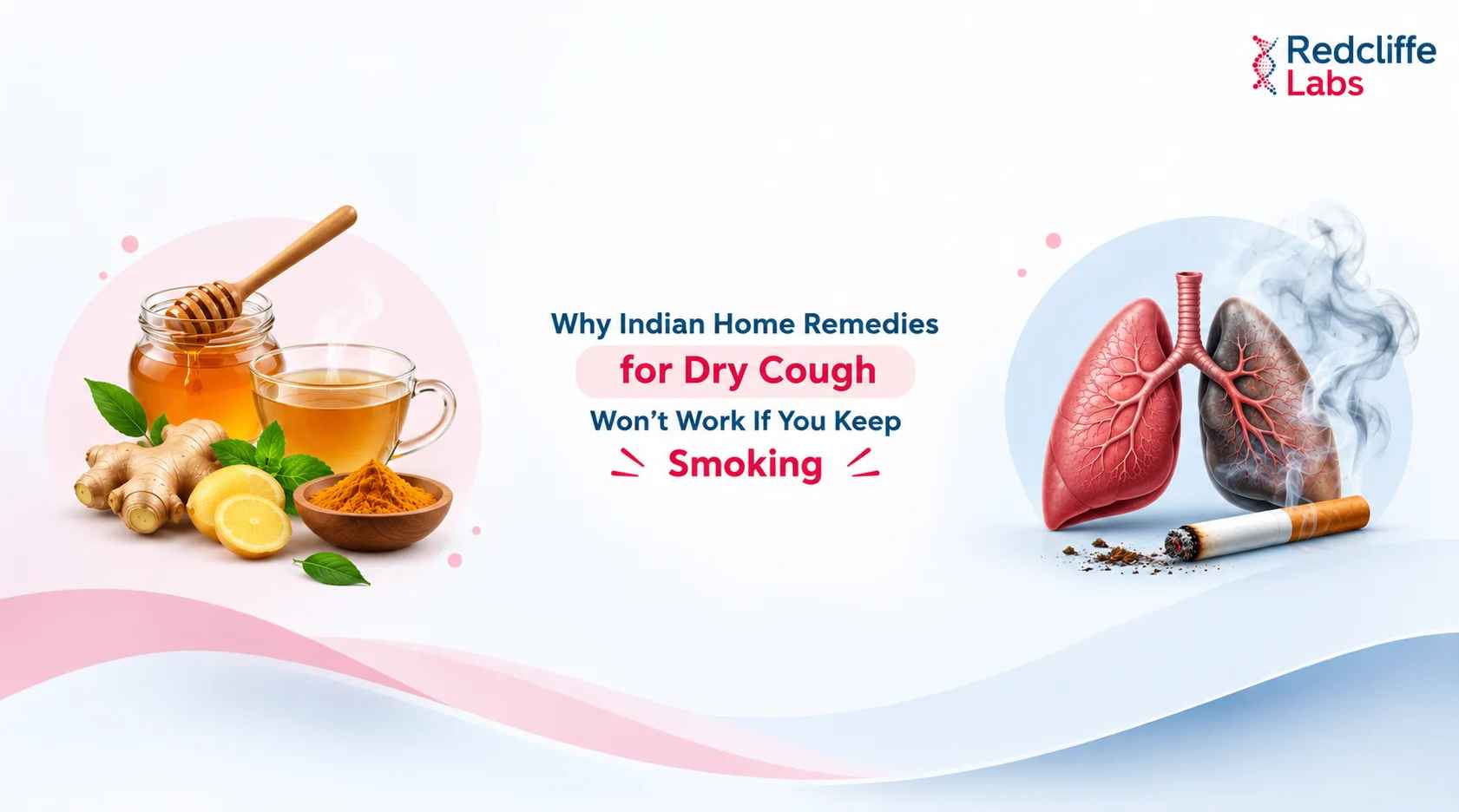
A spoonful of honey, warm turmeric milk, ginger tea, or a salt-water gargle may be among the first remedies you turn to when a dry cough strikes. These familiar home remedies may help soothe an irritated throat, but what happens when the cough keeps returning because you continue to smoke?
Smoking repeatedly exposes your respiratory system to harmful substances that can irritate the airways. As a result, home remedies may offer temporary comfort without addressing an important underlying trigger.
If your dry cough persists despite trying traditional remedies, it may be time to look beyond symptom relief and understand the possible impact of smoking on your health.
Why Does Smoking Cause or Worsen a Dry Cough?
A cough is a protective reflex that helps the body respond to airway irritation. Cigarette smoke repeatedly exposes the respiratory tract to harmful substances and can contribute to respiratory symptoms, including coughing, wheezing, phlegm, and breathlessness.
This means that while a home remedy may soothe your throat temporarily, continued smoking can expose your airways to these irritants repeatedly.
Think of it this way: soothing an irritated throat while continuing to smoke may relieve the symptom temporarily without addressing an important trigger.
Over time, tobacco smoking is also associated with serious respiratory conditions, including chronic obstructive pulmonary disease (COPD) and lung cancer.
Why May Home Remedies for Dry Cough Not Be Enough for Smokers?
Many traditional Indian households turn to honey, ginger, tulsi, turmeric milk, warm water, or other remedies when a cough begins.
Some simple measures can be comforting. For example, honey and warm drinks may help soothe cough symptoms. However, evidence for many self-care cough treatments is limited, and symptom relief should not be confused with treating the underlying cause.
If smoking is continually irritating your respiratory system, dry cough home remedies cannot undo the harmful effects of tobacco exposure.
That is why a recurring cough in a smoker deserves attention, not repeated cycles of home remedies alone.
Honey, Haldi or Ginger: Do You Need to Stop Using Them?
Not necessarily.
The important distinction is between symptom relief and addressing the cause.
Warm fluids or honey may soothe throat irritation. Staying hydrated may also make you feel more comfortable. But these measures should complement -not replace - appropriate medical evaluation when a cough persists.
For smokers, reducing and ultimately stopping tobacco exposure is particularly important for respiratory health.
Is a Persistent Dry Cough a Sign That Smoking Is Affecting Your Lungs?
A persistent dry cough can be a sign of airway irritation, but it does not necessarily mean smoking has caused lung damage.
Smoking is one recognised cause of coughing, but other possible causes include respiratory infections, allergies, asthma, acid reflux, post-nasal drip, and certain medicines.
What matters is recognising when the cough needs further evaluation.
What Other Symptoms Should Smokers Watch For?
A cough may be accompanied by other respiratory symptoms, such as:
- Wheezing
- Shortness of breath
- Increased mucus or phlegm
- Chest discomfort
- Reduced exercise tolerance
- Frequent respiratory infections
These symptoms don't automatically mean you have a serious lung condition, but persistent or worsening symptoms should be evaluated by a doctor.
Also read: https://redcliffelabs.com/myhealth/health/smoking-withdrawal-symptoms-what-to-expect-after-quitting
When Should You Stop Relying on Home Remedies for Dry Cough?
Most short-term coughs improve on their own. However, medical evaluation becomes important when the cough persists, or warning signs develop.
Consult a healthcare professional if your cough lasts more than 3 weeks. Seek prompt medical attention if you experience:
- A severe or rapidly worsening cough
- Difficulty breathing
- Chest pain
- Coughing up blood
This is particularly important for people who smoke because tobacco use is a major risk factor for respiratory disease.
Are You Underestimating the Impact of Smoking on Your Health?
It is easy to measure smoking only in terms of how many cigarettes you smoke each day. But smoking-related health risks can involve more than a daily cigarette count.
Your smoking history, symptoms, and relevant health parameters can provide useful context when discussing your health with a healthcare professional.
Understanding how smoking affects the lungs, throat, and the rest of the body is important because some effects may not be immediately noticeable. This is why looking beyond temporary cough relief can be important, especially if you smoke regularly.
Should You Consider a Smoking Impact Assessment?
If you smoke and frequently experience symptoms such as coughing or breathlessness, understanding your overall health status can be a useful step towards better-informed health decisions.
The Smoking Impact Assessment Profile from Redcliffe Labs evaluates selected health parameters to provide insights into your overall health. It can help you monitor relevant health markers, but it cannot diagnose the cause of a cough or determine whether smoking has caused lung damage.
If your cough persists, changes, or is accompanied by breathlessness, chest pain, or coughing up blood, consult a healthcare professional for appropriate evaluation.
Take a proactive step towards understanding your health. Book the Smoking Impact Assessment Profile to monitor selected health parameters and stay informed about your health.
Home Remedies Can Soothe a Cough - But Address the Trigger Too
Honey, ginger, haldi, and warm fluids may temporarily ease a dry cough. But if you continue smoking, your airways continue to be exposed to tobacco smoke.
So, instead of repeatedly relying only on home remedies for a dry cough, consider the bigger picture: reduce your exposure to tobacco smoke, seek medical advice for persistent symptoms, and keep track of your overall health.
Conclusion
Indian home remedies for dry cough may provide temporary relief, but they cannot address continued exposure to cigarette smoke. If you smoke and your cough keeps returning, don't simply keep changing the remedy—pay attention to the possible trigger.
Quitting smoking, seeking medical advice for persistent symptoms, and monitoring your health can help you make more informed decisions.
Don’t just soothe the cough. Take a closer look at your health.
Frequently Asked Questions
Why is a dry cough often worse at night in smokers?
A dry cough may feel worse at night for several reasons, including airway irritation, acid reflux, postnasal drip, or dry indoor air. For smokers, repeated exposure to cigarette smoke can further irritate the respiratory tract and contribute to coughing. If nighttime coughing regularly disturbs your sleep, lasts several weeks, or is accompanied by breathing difficulties, see a healthcare professional to identify the cause.
Can passive smoking cause a dry cough even if you don't smoke?
Yes. Secondhand smoke contains harmful chemicals that can irritate the nose, throat, and respiratory tract. Regular exposure may contribute to coughing and other respiratory symptoms even in people who have never smoked themselves. Children, older adults, and people with existing respiratory problems may be particularly affected. Reducing exposure to cigarette smoke and maintaining a smoke-free home and workplace can help protect respiratory health.
Why can coughing temporarily increase after quitting smoking?
Some people notice increased coughing or mucus production after they stop smoking. One possible reason is that the tiny hair-like structures in the airways, called cilia, begin recovering and become better able to move mucus and trapped particles out of the respiratory tract. However, not every cough after quitting is related to recovery. A persistent, worsening, or unusual cough should be discussed with a healthcare professional.
Can smoking make an allergy-related dry cough worse?
Yes. Allergies and cigarette smoke can affect the respiratory system in different ways. Allergens such as pollen, dust, or pet dander may trigger respiratory symptoms in susceptible people, while tobacco smoke acts as an airway irritant. Exposure to cigarette smoke may therefore aggravate coughing or other respiratory symptoms in someone who already has allergies. Identifying and avoiding individual triggers can help manage recurrent cough.
Can air pollution and smoking together make a dry cough worse?
Both tobacco smoke and outdoor air pollution contain substances that can irritate the respiratory tract. Someone who smokes and is also frequently exposed to polluted air may experience multiple sources of respiratory irritation. This can contribute to symptoms such as coughing, throat irritation, or breathing discomfort. Limiting tobacco smoke exposure and checking local air-quality conditions before prolonged outdoor activity may help reduce exposure to respiratory irritants.