Tobacco Side Effects: How Tobacco Use Affects Your Body and Health

Overview
- Tobacco use can affect nearly every organ in the body, increasing the risk of cancer, heart disease and lung conditions.
- Cigarettes, bidis, hookah, and smokeless tobacco products can all harm health.
- Nicotine causes dependence, making it difficult to stop using tobacco.
- Tobacco can affect brain function, skin health, oral health, fertility and immunity.
- Secondhand smoke can also harm people who do not use tobacco.
- Quitting tobacco and getting appropriate medical advice can help reduce future health risks.
Introduction
Smoking may begin as an occasional habit, a way to manage stress or a social activity. Over time, however, regular tobacco use can affect breathing, heart health, energy levels, and overall well-being. The effects may develop gradually, so a person might not notice a problem until symptoms become more noticeable. Tobacco use is not limited to cigarettes. Bidis, hookah, and smokeless products such as gutkha, khaini, and chewing tobacco can also cause serious health problems. Understanding the risks can help current users, former smokers, and their families make informed decisions about health and quitting.
Common tobacco side effects include damage to the lungs and blood vessels, an increased risk of cancer, nicotine dependence, and changes in oral and skin health.
Did you Know?
Tobacco smoke contains more than 7,000 chemicals, and at least 70 of them are known to cause cancer. The main ones are:
- Nicotine: the addictive substance that keeps you coming back.
- Tar: a sticky residue that coats the lungs.
- Carbon monoxide: a gas that reduces the oxygen your blood can carry.
- Heavy metals and toxins: such as arsenic, lead, and formaldehyde.
Smokeless tobacco (gutka, khaini, and chewing tobacco) avoids the lungs but is closely linked to mouth, throat, and food-pipe cancers.
Also read: https://redcliffelabs.com/myhealth/health/harmful-effects-of-smoking-and-tobacco-on-health
10 Harmful effects of tobacco
How tobacco affects different Tobacco contains nicotine and other harmful substances that can damage tissues, affect organ function, and increase the risk of long-term diseases. The extent of harm depends on factors such as the product used, frequency of use, duration of exposure, and individual health.
Here are 10 important ways tobacco can affect the body.
1. Increases the risk of cancer
Tobacco use is linked to several cancers, including lung, mouth, throat, oesophageal, pancreatic and bladder cancer. Smokeless tobacco can also cause cancers of the mouth, esophagus and pancreas. Cancer risk is influenced by the type and duration of exposure, and not everyone develops cancer. However, avoiding tobacco is one of the most effective ways to reduce tobacco-related cancer risk.
2. Damages the lungs and breathing system
Smoking exposes the lungs to chemicals that irritate and damage the airways. It can cause persistent coughing, wheezing, breathlessness, and reduced lung function. Long-term smoking increases the risk of chronic obstructive pulmonary disease (COPD), which includes chronic bronchitis and emphysema. It can also increase susceptibility to respiratory infections and make existing breathing conditions harder to manage.
3. Raises the risk of heart disease and stroke
Nicotine can increase heart rate and blood pressure, while chemicals in tobacco smoke damage blood vessels and contribute to the buildup of fatty deposits in arteries. These changes can increase the risk of heart attacks, strokes and other cardiovascular problems. Smoking also reduces the blood's ability to carry oxygen efficiently because carbon monoxide binds to hemoglobin.
4. Causes nicotine dependence
Nicotine acts on the brain's reward system, reinforcing the urge to use tobacco again. Over time, a person may feel irritable, restless or anxious when they go without it. These withdrawal symptoms can make quitting difficult, even when the person understands the health risks. Dependence isn't simply a lack of willpower; counseling, structured quit plans, and appropriate treatment can help.
5. Affects oral and dental health
Tobacco can stain teeth, contribute to bad breath, irritate the gums, and increase the risk of gum disease and tooth loss. Smokeless tobacco can change the lining of the mouth, including white patches known as leukoplakia, which require professional evaluation. Tobacco use also increases the risk of oral cancer. Persistent mouth ulcers, unexplained bleeding, or patches that do not heal should be assessed by a dentist or doctor.
6. Weakens the body's defenses
Tobacco smoke can interfere with immune function and the body's response to infections. It can also impair tissue repair and wound healing. People who smoke may be more vulnerable to certain respiratory infections and may take longer to recover from some injuries or surgical procedures.
7. Affects fertility and reproductive health
Tobacco use can affect reproductive health in both men and women. In men, smoking is associated with erectile dysfunction and can adversely affect sperm quality. In women, it can reduce fertility and increase the risk of pregnancy complications. Tobacco exposure during pregnancy is linked to poor fetal growth, premature birth, and other serious outcomes. Quitting can benefit reproductive health at different life stages.
8. Increases the risk of metabolic problems
Smoking is associated with a higher risk of type 2 diabetes. It may also make blood sugar management more difficult for people who already have diabetes. The risk is influenced by several factors, including tobacco exposure, lifestyle, and existing health conditions. People who use tobacco and have additional risk factors may benefit from discussing blood sugar testing with a healthcare professional.
9. Affects skin health and aging
Tobacco smoke reduces oxygen delivery and affects blood circulation, which can contribute to dull-looking skin, premature wrinkles and slower wound healing. Long-term exposure can also affect skin quality. These visible changes are only one part of the problem; tobacco-related damage to blood vessels and other organs can be much more serious than changes in appearance.
10. Harms people exposed to secondhand smoke
Tobacco use can affect people nearby, even if they do not smoke themselves. Secondhand smoke increases the risk of heart disease, stroke, and lung cancer in adults. Children exposed to tobacco smoke have a higher risk of respiratory infections, ear infections, and asthma-related problems. Keeping homes and vehicles smoke-free helps protect family members and others from exposure.
How tobacco affects different parts of the body
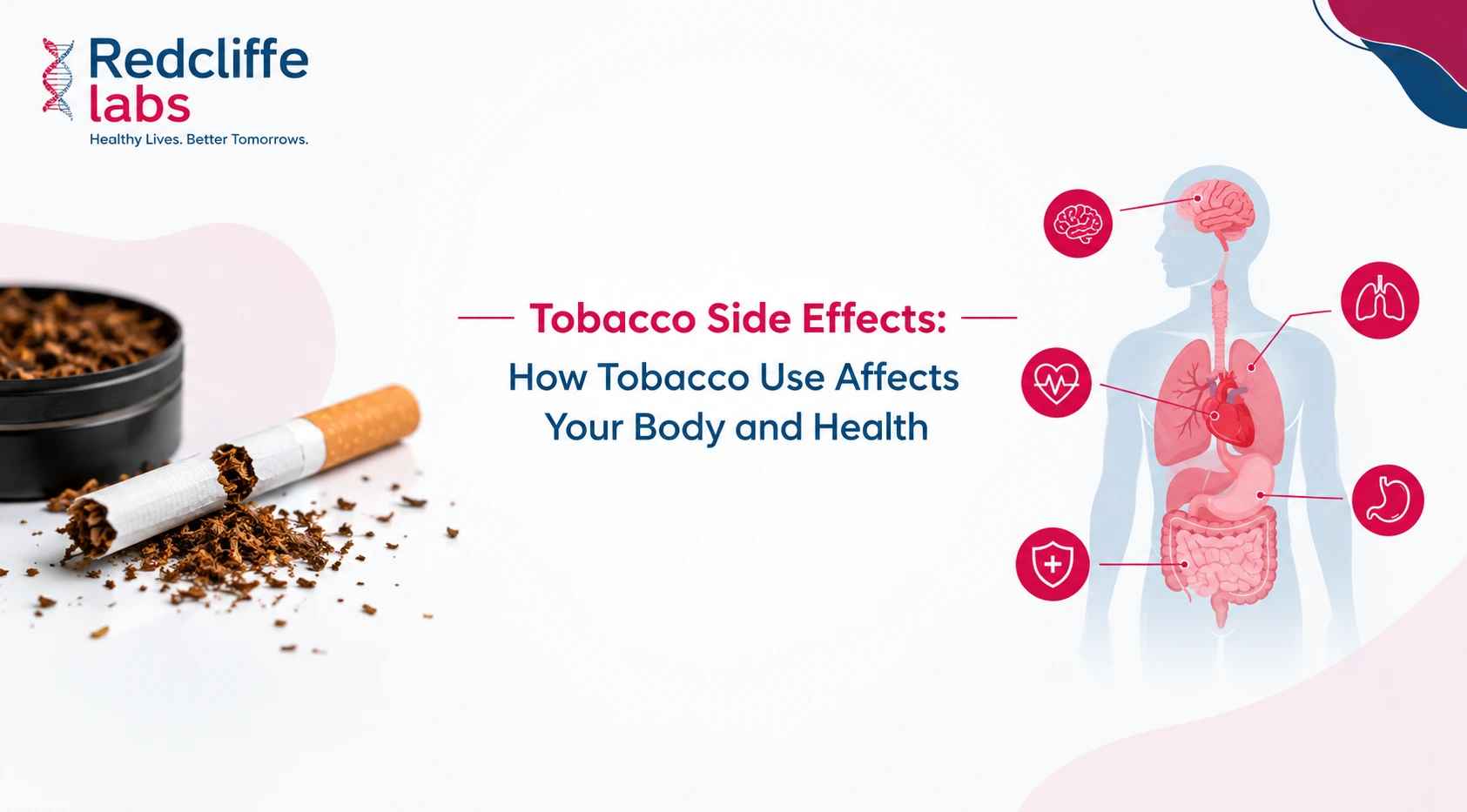
Tobacco-related harm is not limited to the lungs. Chemicals from tobacco can enter the bloodstream, affect blood vessels and reach different organs. Some effects develop quickly, while others build up over months or years.
Tobacco side effects on brain
Nicotine affects brain pathways involved in reward, attention, and dependence. Repeated exposure can reinforce cravings and make it harder to stop using tobacco. Withdrawal may cause irritability, difficulty concentrating, restlessness, and mood changes. Tobacco use is also associated with an increased risk of stroke and cognitive decline over time.
Tobacco side effects on skin
Smoking can restrict blood flow and reduce the oxygen available to skin tissues. Over time, this may contribute to premature wrinkles, uneven skin appearance, and slower healing of cuts or wounds. Tobacco exposure can also affect the body’s ability to repair damaged tissue.
Effects on the heart, blood and circulation
Tobacco use can damage blood vessels, raise cardiovascular risk and reduce oxygen delivery. People may experience reduced exercise tolerance or breathlessness, although these symptoms can have many causes. Chest pain, sudden weakness, facial drooping or difficulty speaking require urgent medical attention rather than a routine health check.
Effects on the mouth, throat and digestive system
Tobacco can irritate the mouth and throat, increase gum disease risk and damage tissues throughout the digestive tract. Smokeless products are not a safe alternative to cigarettes because they can cause dependence and serious oral health problems. Persistent hoarseness, difficulty swallowing or a mouth lesion that does not heal should be assessed by a healthcare professional.
Are tobacco side effects different in men and women?
Many major tobacco-related risks, including cancer, heart disease and lung disease, affect both men and women. However, some effects relate specifically to reproductive health.
In men: Tobacco use is associated with erectile dysfunction and poorer sperm quality. It can also contribute to cardiovascular and respiratory disease.
In women: Tobacco use can affect fertility and is associated with pregnancy complications. Exposure during pregnancy can harm fetal development and increase the risk of premature birth and low birth weight.
In both men and women: Tobacco increases the risk of cancer, stroke, lung disease and nicotine dependence. The level of risk varies with tobacco type, exposure and individual health.
What happens to your body after quitting tobacco?
Quitting is beneficial even if you have smoked for many years. The body begins responding to the absence of tobacco exposure soon after the last cigarette, although recovery differs between individuals.
- Within 20 minutes: Heart rate begins to decrease.
- Within about 12 hours: Carbon monoxide levels in the blood can return to normal after cigarette smoking.
- Within 2–12 weeks: Circulation and lung function can improve.
- Within 1–9 months: Coughing and shortness of breath may decrease.
- Over the following years: The risks of heart disease, stroke and several cancers decline over time.
These are general milestones, not a guarantee of recovery on an exact schedule. The benefits depend on previous exposure and other health factors. People who have already developed a tobacco-related condition can still benefit from quitting.
Can a smoking test show the effects of tobacco use?
A smoking test can mean different things depending on what needs to be assessed. Some tests look for evidence of recent nicotine exposure, while other investigations evaluate health conditions that may be associated with tobacco use.
Nicotine and cotinine testing
Nicotine is the substance responsible for much of tobacco's addictive effect. Cotinine is a substance produced when the body breaks down nicotine and is commonly measured to assess recent nicotine exposure. Testing may use urine, blood or saliva, depending on the purpose and the laboratory's method.
These tests can help identify recent exposure to nicotine from sources such as cigarettes, smokeless tobacco and certain nicotine-containing products. Results depend on the sample type, the amount used, the time since last exposure and the test's detection limits.
Important: A nicotine or cotinine test does not measure all the damage tobacco may have caused. It cannot, by itself, diagnose lung disease, cancer or cardiovascular disease. A negative result also does not rule out previous tobacco-related harm.
What is the Smoking Impact Assessment Profile?
The Smoking Impact Assessment Profile is a health assessment package listed by Redcliffe Labs. Its listed investigations include:
- Complete Blood Count (CBC): Assesses blood components such as red blood cells, white blood cells, hemoglobin, and platelets.
- Erythrocyte Sedimentation Rate (ESR): Measures a general marker of inflammation.
- Gamma-glutamyl transferase (GGT): Measures an enzyme that can help assess liver and bile duct health.
- HbA1c: Reflects average blood glucose over the previous 2 to 3 months.
- Vitamin D: Measures vitamin D status.
The listed package includes 31 parameters across these investigations. It uses a blood sample, and the listing states that fasting is not required. Availability, price and reporting time may vary by location, so check the current package details before booking.
These investigations assess selected aspects of health. For example, HbA1c helps evaluate blood sugar, while CBC provides information about blood cells. None of these markers can independently confirm that tobacco has caused a particular health problem. They also do not directly measure lung damage, diagnose cancer or establish nicotine dependence.
If you are looking for a smoking test because you currently smoke, have recently quit or are concerned about past exposure, discuss your tobacco history and health concerns with a doctor. They can help determine whether nicotine or cotinine testing, a general health assessment, lung function testing or another investigation is appropriate.
When should you consider a tobacco-related health assessment?
Consider speaking to a healthcare professional if you use tobacco regularly, have a long history of smoking, have recently quit and want to review your health, or have concerns about secondhand smoke exposure.
The tests you need depend on your symptoms, age, tobacco history and other risk factors. A doctor may recommend blood tests for specific concerns, lung function testing for breathing symptoms, or further evaluation based on your examination. Cancer screening is recommended according to established eligibility criteria; a general blood test is not a substitute for appropriate screening.
Seek urgent medical care for severe or sudden breathlessness, chest pain, coughing up blood or symptoms suggestive of a stroke.
How can you reduce tobacco-related health risks?
Quitting tobacco is the most effective step you can take to stop further exposure. These measures can help you get started:
- Set a quit date: Choose a realistic date and prepare for situations that trigger tobacco use.
- Identify your triggers: Notice whether cravings occur during stress, after meals, while traveling, or in social situations.
- Seek professional support: Counseling and appropriate cessation medicines can improve the chances of quitting successfully.
- Protect people around you: Keep your home and vehicle smoke-free and avoid exposing family members to tobacco smoke.
- Plan for withdrawal: Cravings, irritability, and difficulty concentrating can occur after quitting. A healthcare professional can help you manage these symptoms.
- Follow up on health concerns: Discuss persistent symptoms and appropriate tests with your doctor rather than relying on a single test result.
Switching from cigarettes to smokeless tobacco does not remove the health risks. If you use gutkha, khaini, or tobacco side effects hewing tobacco, quitting these products is also important.
Conclusion
Tobacco use can affect the lungs, heart, brain, skin, mouth, and reproductive system, while also increasing the risk of several long-term diseases. The effects may not always be obvious, but quitting can improve health and reduce future risks at any age. If you currently use tobacco or have concerns about past exposure, speak with a healthcare professional about quitting support and an appropriate health assessment. The right tests depend on your symptoms and medical history, and no single blood test can measure every effect of tobacco.
FAQs
1. Can tobacco harm your body even if you smoke only occasionally?
Yes. Tobacco smoke contains harmful chemicals, and even occasional smoking exposes the body to them. The risk generally increases with greater exposure, but occasional use is not risk-free. Avoiding tobacco completely is the safest option.
2. Is smokeless tobacco safer than smoking cigarettes?
No form of tobacco is safe. Smokeless products can cause nicotine dependence, oral disease, and cancers, including cancers of the mouth, esophagus, and pancreas. Not inhaling smoke does not eliminate the health risks associated with tobacco.
3. Can a blood test detect whether someone smokes?
A nicotine or cotinine test may detect recent nicotine exposure, depending on the sample type and testing method. However, a routine blood test such as a CBC cannot reliably establish whether someone smokes. Test selection depends on the purpose of testing and the person's exposure history.
4. Does the Smoking Impact Assessment Profile detect lung damage?
No. The listed package assesses selected blood, metabolic, inflammatory, liver-enzyme, and vitamin markers. It does not directly measure lung function or diagnose tobacco-related lung disease. A doctor may recommend spirometry or other investigations if lung disease is suspected.
5. How long does it take to recover after quitting tobacco?
Recovery begins soon after quitting, and some benefits occur within hours or weeks. Coughing and breathlessness may decrease over the following months, while cardiovascular and cancer risks decline over longer periods. The extent of recovery depends on previous tobacco exposure and existing health conditions.
6. Can former smokers still develop tobacco-related diseases?
Yes. Some risks remain elevated after quitting, particularly after prolonged exposure, although they generally decrease over time. Former smokers should discuss persistent symptoms and appropriate screening with a healthcare professional. Quitting remains beneficial even after many years of tobacco use.
7. Can tobacco affect people who do not smoke?
Yes. Secondhand smoke exposes non-smokers to harmful chemicals and increases the risk of heart disease, stroke, and lung cancer. Children exposed to smoke may also face a higher risk of respiratory infections and asthma-related problems. Smoke-free homes and vehicles help reduce exposure.