Sore Throat That Won't Go Away? It Could Be Strep Throat


Not every sore throat is harmless. Often, it starts as a mild scratch or discomfort and is mistaken for a cold, a change in weather, or irritation from pollution or cold foods. Many people try tea or lozenges in hopes of relief.
But what if your sore throat doesn't get better?
What if swallowing gets hard, you have a high fever, or even talking starts to hurt?
Sometimes, a sore throat is more than just a common viral infection. It could be strep throat, a bacterial infection that requires the right diagnosis and treatment. If you don't treat it, strep throat can cause serious problems with your ears, kidneys, or even your heart. In this blog, you'll learn what strep throat is, its main symptoms and causes, how doctors diagnose it, what treatments are available, and when you should see a doctor rather than waiting for it to go away.
Also Read: Throat Infection: Symptoms, Causes, Treatment & Prevention
Viral vs. Bacterial Sore Throat: What's the Difference?
A sore throat happens when your throat gets inflamed, which can make swallowing or talking uncomfortable. Most of the time, a virus like the common cold or flu is to blame. Viral sore throats are usually mild and often come with a runny nose, cough, sneezing, watery eyes, or a blocked nose. They usually get better on their own in a few days with rest, fluids, and home care.
A bacterial sore throat is less common but usually more painful. Strep throat is one of the most common bacterial infections. It can cause severe throat pain, trouble swallowing, high fever, swollen tonsils, and swollen neck glands. Unlike viral infections, bacterial infections often require medical treatment with antibiotics to prevent complications.
It's important to know if your sore throat is viral or bacterial because the right treatment depends on the cause. If your symptoms are severe or last longer than usual, you should see a doctor.
What Is Strep Throat?
Strep throat is a bacterial infection of the throat and tonsils caused by Group A Streptococcus (Streptococcus pyogenes). It spreads easily from person to person through tiny droplets when someone coughs, sneezes, or talks. You can also catch it by touching contaminated surfaces and then touching your mouth or nose.
After the bacteria enter your body, they settle in your throat and tonsils, multiply, and cause inflammation. This leads to symptoms such as a severe sore throat, difficulty swallowing, swollen tonsils, fever, and swollen neck glands.
Unlike a viral sore throat, strep throat usually doesn't resolve on its own within a few days. Because bacteria cause it, it often needs a proper diagnosis and antibiotics to clear the infection and prevent problems. Treating it early also helps stop the spread and helps you recover faster.
What symptoms point towards strep throat?
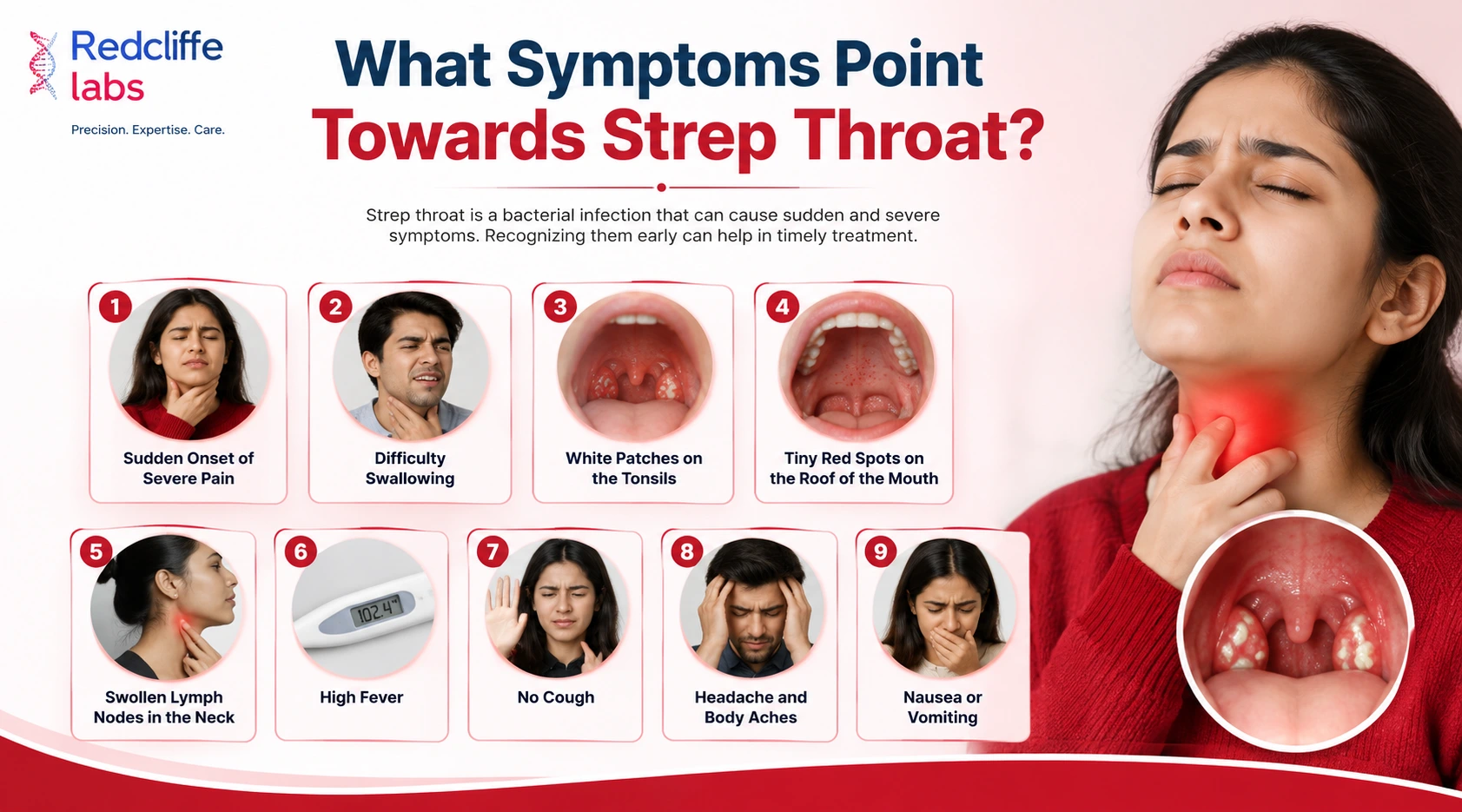
How can you tell if your lingering sore throat is actually strep? Only a doctor can say for sure, but strep throat has some clear signs. If you're checking your symptoms at home, watch for these warning signs that make strep different from a regular cold:
Sudden Onset of Severe Pain
Strep throat often comes on suddenly. You might feel fine in the morning but develop severe throat pain within a few hours. Unlike a cold, the symptoms show up fast and get intense, making it hard to swallow or talk.
Difficulty Swallowing
A strep infection makes your throat and tonsils swollen and sore. Swallowing food, drinks, or even saliva can hurt. If eating or drinking is hard because of throat pain, it might be strep throat.
White Patches on the Tonsils
Strep throat can cause white or yellow patches on your tonsils. These patches are made of bacteria, dead cells, and immune cells fighting the infection. They are a common sign of a bacterial throat infection.
Tiny Red Spots on the Roof of the Mouth
Small red spots can show up on the roof of your mouth during a strep infection. These spots appear because the infection affects tiny blood vessels. They usually don't hurt, but they can help doctors spot strep throat.
Swollen Lymph Nodes in the Neck
The lymph nodes in your neck help fight infections. With strep throat, the tonsils often become swollen, tender, and sore to the touch as they work to remove the bacteria.
High Fever
A high fever is common with strep throat and often comes on suddenly. Your body temperature rises as it fights the infection. Unlike a mild cold, strep fever usually has a higher fever and can make you feel weak and tired.
No Cough
One sign of strep throat is not having a cough. Most viral infections cause coughing, but strep throat mainly affects your throat and tonsils. If you have bad throat pain but no cough, strep throat is more likely.
Headache and Body Aches
Many people with strep throat also get headaches and body aches. This is because your immune system is fighting the infection. You might feel tired, sore, and unwell even before other symptoms get worse.
Nausea or Vomiting
Some people, especially children, may feel sick to their stomach or vomit during a strep infection. The body's response to the bacteria and high fever can upset the stomach. This is less common in adults but often happens in younger kids.
Also Read: 5 Effective Home Remedies for Sore Throat
The Timeline: How Long is Too Long for a Sore Throat?
When you're sick, each day can feel very long. Still, keeping track of your symptoms helps you know when it's time to stop home remedies and see a doctor.
|
Days Since Onset |
Typical Viral Progression |
Suspicious Strep Progression |
Action Required |
|
Days 1–2 |
Scratchy throat, mild sniffles, and a light cough begin. |
Sudden, intense throat pain; high fever; painful swallowing. |
Monitor closely; rest and hydrate. |
|
Days 3–5 |
Symptoms peak; mucus changes color, and cough persists, but throat pain softens. |
Pain remains severe or worsens, white spots appear on the tonsils, and no cough is present. |
Schedule a doctor's visit if strep signs are present. |
|
Days 6–7 |
Energy returns, throat pain fades, and a lingering, mild cough or congestion remains. |
Unrelenting throat pain, fatigue, and difficulty drinking liquids. |
Seek medical evaluation immediately. |
What Happens If Strep Throat Is Left Untreated?
It can be tempting to ignore a sore throat and hope it goes away. But if it's strep throat, waiting too long can cause serious health problems. Unlike a viral sore throat, strep is caused by bacteria that keep growing if not treated. The infection can spread to nearby areas, causing painful problems like ear infections, sinus infections, or a peritonsillar abscess, which is a pocket of pus near the tonsils that can make swallowing and breathing hard.
Sometimes, the body's immune system overreacts to the infection. This can cause rheumatic fever, which may damage the heart, joints, and nervous system. Untreated strep throat can also lead to post-streptococcal glomerulonephritis, a kidney problem that affects how your body filters waste. Getting diagnosed early and starting antibiotics helps you recover faster, prevents complications, and stops the infection from spreading.
How Can You Manage Strep Throat and Recover Safely?
Once you know you have strep throat, the treatment is clear and effective. Since bacteria cause it, the best way to get rid of it is with the right medication.
- Antibiotics are the main treatment for strep throat because they kill the bacteria causing the infection. They help reduce symptoms, prevent problems, and stop the infection from spreading. Your doctor will choose the best antibiotic for you, so be sure to take it exactly as directed.
- Even if you feel better after a day or two, don't stop taking your antibiotics early. The infection might not be gone yet. Finishing the full course of treatment kills all the bacteria, prevents the infection from returning, and reduces the risk of antibiotic resistance.
- While antibiotics treat the infection, you can ease the pain with simple home care. Drink warm fluids, gargle with warm salt water, and get plenty of rest. Your doctor might also suggest pain medicine to help with throat pain, fever, and discomfort.
- It's important to drink enough fluids when you have strep throat. Water, warm soups, and herbal teas keep your throat moist and make swallowing less painful. Staying hydrated also helps your body heal and prevents dehydration, especially if you have a fever.
What are the Smart Home Remedies to soothe the pain?
Home remedies can't cure strep throat, but they can help you feel more comfortable while your antibiotics take effect. Here are some simple ways to ease your symptoms:
Warm Saltwater Gargles: Gargling with warm salt water can help reduce throat pain and swelling. Mix 1/2 teaspoon of salt into a glass of warm water, then gargle for a few seconds several times a day. It also helps keep the throat clean and makes swallowing a little more comfortable.
Honey and Warm Fluids: Warm tea, soup, or warm water with honey can help soothe a sore throat. Honey coats the throat, reduces irritation, and makes swallowing easier. It may also have natural antibacterial effects. Don't give honey to children under one year old.
Cold Therapy: If your throat is very sore, cold foods like popsicles or ice chips can help quickly. The cold numbs your throat, reducing pain and discomfort. It can also help reduce swelling and make swallowing easier.
Use a Cool-Mist Humidifier: Dry air can worsen a sore throat. A cool-mist humidifier adds moisture to the air and helps keep your throat from drying out. This can reduce irritation, especially at night, and make breathing and swallowing easier while you recover.
Conclusion
Strep throat is more than a regular sore throat. It might start with mild discomfort, but ignoring the symptoms can lead to serious health problems if left untreated. Spotting the warning signs, getting tested early, and starting treatment can help you recover faster and protect others from getting sick. Along with your doctor's advice, good hygiene and simple precautions can help stop the spread.
If you or someone you care about has a sore throat that won't go away, a high fever, or trouble swallowing, don't wait to get tested. Redcliffe Labs makes it easy with AI-assisted healthcare, free home sample collection, accurate tests, and fast results. Book your test today and take the first step toward a quick diagnosis, faster recovery, and better health, all from home.
FAQs
What is strep throat, and how is it different from a regular sore throat?
Strep throat is a bacterial infection caused by Group A Streptococcus bacteria. Unlike a regular sore throat, which is usually caused by viruses, strep throat often leads to severe throat pain, fever, swollen tonsils, and difficulty swallowing. It usually requires antibiotics, while most viral sore throats improve with rest and home care.
How do I know if my sore throat is caused by strep throat?
Strep throat often causes sudden, severe throat pain, pain while swallowing, fever, swollen lymph nodes, and white patches on the tonsils. Unlike a viral sore throat, it usually does not come with a cough or runny nose. A throat swab or rapid strep test is the best way to confirm the infection.
How long should a sore throat last before I see a doctor?
A mild sore throat caused by a viral infection usually improves within 3–5 days. If your sore throat lasts longer than a few days, becomes more painful, is accompanied by a high fever, or makes swallowing difficult, you should consult a doctor for proper evaluation and treatment.
What are the common symptoms of strep throat?
Common symptoms include a sudden sore throat, pain when swallowing, fever, swollen, red tonsils, white patches on the tonsils, swollen lymph nodes in the neck, headache, and body aches. Some children may also experience nausea, vomiting, or stomach pain along with throat discomfort.
Can strep throat go away without antibiotics?
Some cases may improve on their own, but antibiotics are strongly recommended. They help clear the infection faster, reduce the risk of complications such as rheumatic fever and kidney inflammation, and prevent the infection from spreading to others. Always consult a doctor if you suspect strep throat.
Is strep throat contagious, and how does it spread?
Yes, strep throat is highly contagious. It spreads through tiny droplets released when an infected person coughs, sneezes, or talks. You can also become infected by touching contaminated surfaces and then touching your mouth or nose. Good hand hygiene helps reduce the risk of transmission.
What causes strep throat?
Strep throat is caused by Group A Streptococcus (GAS) bacteria. The infection spreads through close contact with an infected person or by touching contaminated objects. It is more common in schools, workplaces, and crowded places where people are in close contact with one another.
Can adults get strep throat, or is it only common in children?
Yes, adults can also develop strep throat, although it is more common in children between 5 and 15 years of age. Adults who live with children, work in schools, or are frequently exposed to infected individuals may be at higher risk of infection.