What Is a Chocolate Cyst? Everything You Need to Know

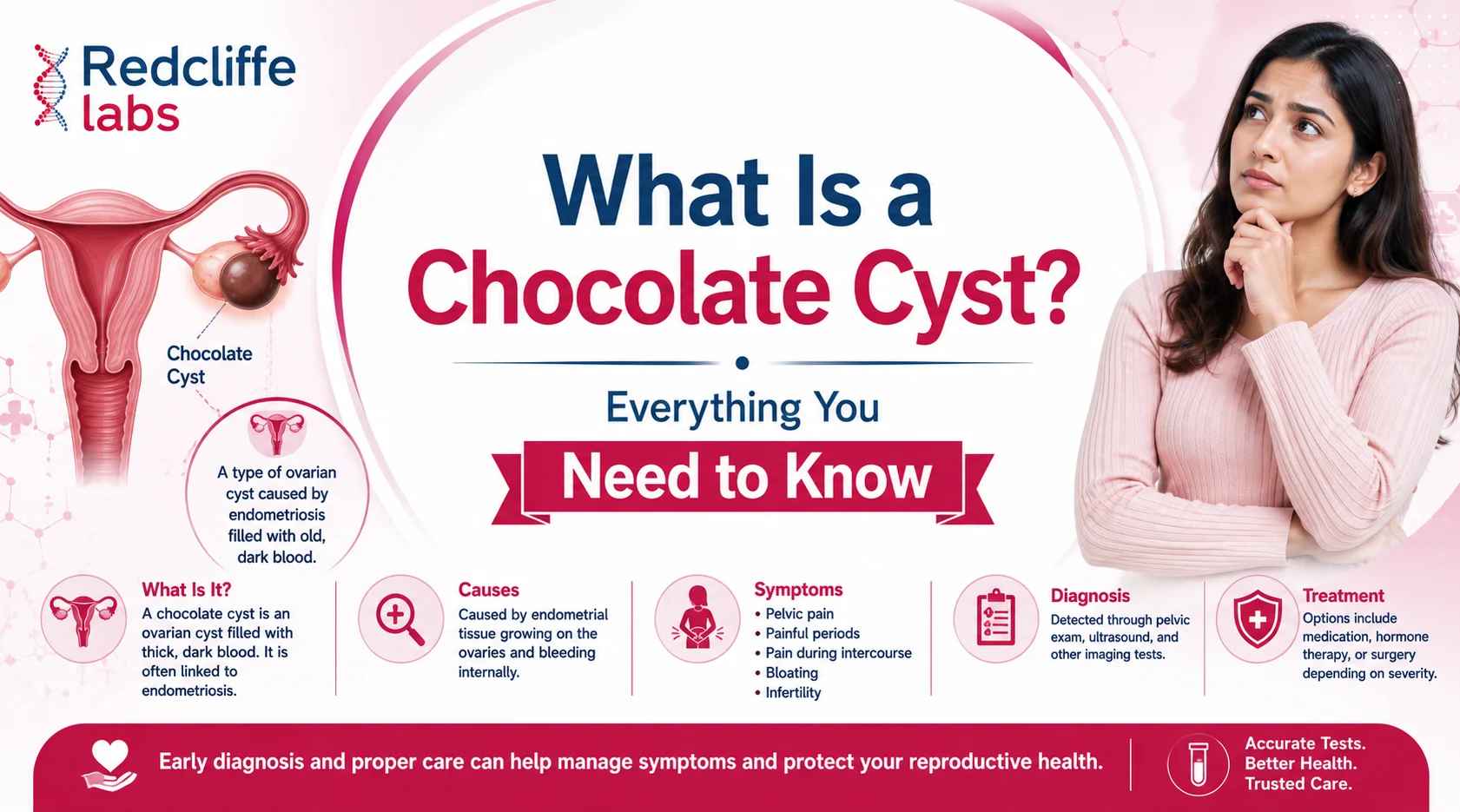
When you talk about women's reproductive health, it has always been challenging and complicated. Many factors, including hormonal and gynecological issues, medical conditions, lifestyle habits, and environmental factors, influence it. One condition that deserves more attention is the chocolate cyst, which is among the most common. The term chocolate cyst often causes concern when women first hear it. Despite the unusual name, it refers to a specific type of ovarian cyst associated with endometriosis.
They are usually not life-threatening but can cause pain, inflammation, and fertility problems. Symptoms often resemble those of other gynecological conditions, making diagnosis difficult. Some women may not notice any symptoms until they struggle to get pregnant. Understanding this health condition is essential, and by the end of this blog, you will learn everything about chocolate cysts, from causes and symptoms to lifestyle tips to manage them.
Defining the Condition: What Exactly Is a Chocolate Cyst?
Before we talk about this health issue, let's first explain what an endometrioma is. This is a non-cancerous cyst that usually forms inside the ovaries. The term "chocolate cyst" comes from its appearance.
Chocolate cysts are different from regular ovarian cysts, which have clear fluid inside. Instead, chocolate cysts are filled with old, thick, dark blood. This happens when tissue, like the lining of the uterus, grows inside the ovary. Each month, this tissue builds up and bleeds, just like during a period. Because the blood can't leave the ovary, it collects and turns dark brown, making the cyst look like chocolate. These cysts can vary in size and may affect one or both ovaries.
How Do Chocolate Cysts Form?
Chocolate cysts often develop because of endometriosis. In this condition, tissue like the lining of the uterus starts to grow outside the uterus instead of staying inside. Over time, this tissue can appear on or within the ovaries and form a cyst filled with old, dark blood. That's why it's called a "chocolate cyst."
One possible reason is that during a period, some menstrual blood flows backward through the fallopian tubes instead of leaving the body. This blood can carry endometrial cells, which may stick to the ovaries and continue to grow. Sometimes, normal cells outside the uterus change and begin to act like uterine lining cells. Hormonal changes or inflammation can also start this process.
Endometrial cells can sometimes travel through the bloodstream or lymphatic system and reach the ovaries, where they settle and grow. Certain surgeries, such as a C-section or laparoscopy, might also inadvertently move these cells into nearby tissues. Over time, these cells can grow and form a chocolate cyst. While the exact cause is still being studied, experts think these factors help explain how chocolate cysts develop. This is why chocolate cysts are closely linked to endometriosis.
What Causes Chocolate Cysts?
The exact cause is still unknown, but experts think several factors may play a part.
- Endometriosis: the most common cause of chocolate cysts. In this condition, tissue similar to the uterine lining grows outside the uterus and may attach to the ovaries. Over time, it can form blood-filled cysts known as chocolate cysts.
- Retrograde Menstruation: Retrograde menstruation happens when some menstrual blood flows backward through the fallopian tubes instead of leaving the body. This blood may carry endometrial cells that attach to the ovaries and continue growing, increasing the risk of chocolate cysts.
- Genetic Factors: Having a family history of endometriosis can increase the risk of developing chocolate cysts. Women whose mother or sister has endometriosis are often at higher risk, which suggests that genetics may be involved.
- Hormonal Influences: The hormone estrogen helps endometrial tissue grow. Higher levels of estrogen may encourage tissue to grow outside the uterus, which can lead to endometriosis and the formation of chocolate cysts in the ovaries.
- Immune System Dysfunction: Normally, a healthy immune system removes abnormal cells from the body. If the immune system does not work properly, endometrial-like tissue can survive and grow outside the uterus, which may lead to chocolate cysts.
What are the symptoms associated with a chocolate cyst?
Not every woman has symptoms. But when symptoms do appear, they can have a big impact on daily life.
- Pelvic pain is one of the most common signs of a chocolate cyst. It may feel like a dull ache or a sharp pain in the lower abdomen and often worsens before or during periods.
- Women with chocolate cysts may have very painful menstrual cramps. The pain can be worse than normal period pain and might affect daily activities, work, or sleep.
- Some women feel discomfort or deep pain during sex. This is because the cyst and nearby tissues can become inflamed and sensitive.
- Periods might be heavier than usual, last longer, or become irregular. Some women also notice spotting between periods because of changes in hormones and the reproductive system.
- A chocolate cyst can make your abdomen feel swollen, heavy, or full. Many women say it feels like constant bloating, especially around their period.
- Chocolate cysts can affect how the ovaries work. For some women, they make it harder to get pregnant by interfering with normal egg release and reproductive function.
- Pain from a chocolate cyst can sometimes spread to the lower back. It's often more noticeable during periods and may feel like a constant ache.
How Common Are Chocolate Cysts?
Chocolate cysts are fairly common in women with endometriosis. Studies show that about 17% to 44% of women with endometriosis may develop these cysts in their ovaries. They are most often found during the reproductive years, especially between the ages of 25 and 40. However, not every woman with endometriosis gets a chocolate cyst. Since symptoms can vary from person to person, some women may not know they have one until it is detected during a medical exam or imaging test.
Comparison between a chocolate cyst and other ovarian cysts
|
Cyst Type |
Primary Composition |
Origin & Underlying Cause |
Long-Term Behavior & Resolution |
|
Functional Cysts |
Clear, thin fluid |
Normal menstrual cycle (follicles that fail to rupture or release an egg) |
Harmless; usually disappear completely on their own within a few weeks or 1–3 cycles. |
|
Dermoid Cysts |
Embryonic tissue (can strangely contain hair, teeth, skin, or sweat glands) |
Present from birth; develops from pluripotent embryonic germ cells |
Benign tumors that do not go away on their own typically require surgical removal if they grow large. |
|
Cystadenomas |
Watery fluid or thick, mucus-like fluid |
Develops from cells on the outer, epithelial surface of the ovary |
Can grow quite large and cause discomfort; they require medical evaluation or surgery, as they do not resolve on their own. |
|
Chocolate Cysts (Endometriomas) |
Thick, dark, old menstrual blood |
Systemic endometriosis (endometrial tissue growing and bleeding inside the ovary) |
Chronic and highly inflammatory, they rarely resolve without targeted medical intervention. |
What are the Stages of Endometriosis Associated With Chocolate Cysts?
Endometriosis is generally classified into four stages.
Stage 1: Minimal
This is the earliest stage of endometriosis. Small patches of endometrial-like tissue are found outside the uterus, but there is very little scar tissue or inflammation. Symptoms may be mild or not noticeable at all.
Stage 2: Mild
At this stage, the endometrial tissue spreads more. Mild inflammation can develop, and the tissue may start to grow deeper. Some women begin to have symptoms like pelvic pain or discomfort during their periods.
Stage 3: Moderate
As the condition worsens, the tissue deepens and inflammation increases. Scar tissue may form, and small chocolate cysts can appear on the ovaries. Symptoms often become more noticeable and can affect daily life.
Stage 4: Severe
This is the most advanced stage of endometriosis. Large chocolate cysts, lots of scar tissue, and pelvic adhesions may be present. These changes can cause severe pain, affect nearby organs, and sometimes lead to fertility problems.
Also Read: What Size of Ovarian Cyst Impacts Fertility?
What are the Lifestyle Tips for Managing Chocolate Cysts?
Medical treatment is important for managing chocolate cysts, but healthy lifestyle habits can also help. Eating well, staying active, managing stress, and getting good sleep all support your overall well-being and can help you feel better physically and emotionally.
- Eating a healthy, balanced diet rich in fruits, vegetables, whole grains, and lean proteins can help regulate hormones and reduce inflammation. Good nutrition also supports your overall health and may help manage some symptoms of chocolate cysts.
- Regular physical activity can improve blood flow, boost your energy, and help reduce pain and discomfort. Activities like walking, stretching, swimming, or light workouts can also support your physical and emotional well-being.
- Living with a chronic condition can be stressful. Practices like yoga, meditation, deep breathing, and mindfulness can help lower stress, improve your mood, and make it easier to handle symptoms and daily challenges.
- Getting enough good sleep is important for your health. Rest helps regulate hormones, supports healing, boosts energy, and may help your body manage inflammation better.
- Regular doctor visits help keep track of the cyst's size and condition. Routine check-ups can catch changes early, guide treatment, and lower the risk of complications or the cyst coming back.
Key takeaway
A chocolate cyst might sound harmless because of its name, but it can seriously affect a woman's reproductive health, comfort, and fertility. These cysts are closely linked to endometriosis and form when blood-filled endometrial tissue builds up in the ovaries over time. Some women have no symptoms, while others deal with severe pelvic pain, painful periods, and fertility problems.
With early diagnosis and the right treatment, chocolate cyst symptoms can be managed effectively, and complications reduced. If you have ongoing pelvic pain, very painful periods, or trouble getting pregnant, don't ignore these signs. Seeing a doctor at the right time can make a big difference in your reproductive health and quality of life. Knowing your body is the first step to taking care of it.
FAQs
What is a chocolate cyst?
A chocolate cyst is a type of ovarian cyst linked to endometriosis. It forms when tissue similar to the lining of the uterus grows on the ovaries and collects old blood over time. The trapped blood thickens and turns dark brown, giving it a chocolate-like appearance. These cysts can cause pain, discomfort, and sometimes fertility problems.
What causes a chocolate cyst?
Chocolate cysts are mainly caused by endometriosis. In this condition, tissue similar to the uterine lining grows outside the uterus, including on the ovaries. This tissue bleeds during menstrual cycles, but the blood cannot leave the body. Over time, the trapped blood builds up and forms a cyst. Hormonal, genetic, and immune factors may also contribute.
What are the symptoms of a chocolate cyst?
Some women may have no symptoms, while others experience pelvic pain, painful periods, bloating, heavy menstrual bleeding, pain during intercourse, and lower back pain. Symptoms often become worse during menstruation. In some cases, a chocolate cyst may only be discovered when a woman seeks medical help for fertility difficulties.
Can a chocolate cyst affect fertility?
Yes, a chocolate cyst can sometimes affect fertility. It may damage healthy ovarian tissue, reduce egg reserve, or create inflammation that affects conception. Large cysts can also interfere with the normal function of reproductive organs. However, many women with chocolate cysts are still able to become pregnant naturally or with medical assistance.
How is a chocolate cyst diagnosed?
Doctors usually diagnose a chocolate cyst through a combination of medical history, pelvic examination, and imaging tests. Ultrasound is commonly used to detect ovarian cysts, while MRI may provide more detailed images. In some cases, laparoscopy, a minimally invasive surgical procedure, is performed to confirm the diagnosis and assess endometriosis.
Can a chocolate cyst go away on its own?
Chocolate cysts usually do not disappear completely on their own. Small cysts may remain stable and cause few symptoms, but larger ones often require medical monitoring or treatment. Because they are linked to endometriosis, the underlying condition may continue to cause cysts to grow. Regular follow-ups help doctors monitor any changes over time.
What are the treatment options for a chocolate cyst?
Treatment depends on the size of the cyst, symptoms, and fertility goals. Options may include pain-relieving medicines, hormonal therapies, and regular monitoring. Hormonal treatments can help slow the growth of endometriosis. In cases where symptoms are severe, or the cyst is large, surgery may be recommended to remove the cyst.
Is surgery always necessary for a chocolate cyst?
No, surgery is not always necessary. Small cysts with mild or no symptoms may only require observation and regular check-ups. Surgery is generally considered when the cyst is large, causes severe pain, affects fertility, or raises concerns about complications. The treatment plan depends on each woman's symptoms, age, and reproductive goals.
Can chocolate cysts recur after treatment?
Yes, chocolate cysts can return even after successful treatment. This happens because the underlying endometriosis may still be present. The risk of recurrence varies depending on factors such as age, severity of endometriosis, and treatment type. Regular medical follow-ups and ongoing management can help detect and address recurrence at an early stage.
When should I see a doctor for a chocolate cyst?
You should see a doctor if you experience severe menstrual pain, persistent pelvic discomfort, unusually heavy periods, pain during intercourse, or difficulty becoming pregnant. Sudden, severe pelvic pain should also be evaluated immediately, as it may indicate complications. Early diagnosis and treatment can help prevent complications and support better reproductive health.