Which Mosquito Causes Dengue? Identification, Symptoms & Prevention Tips

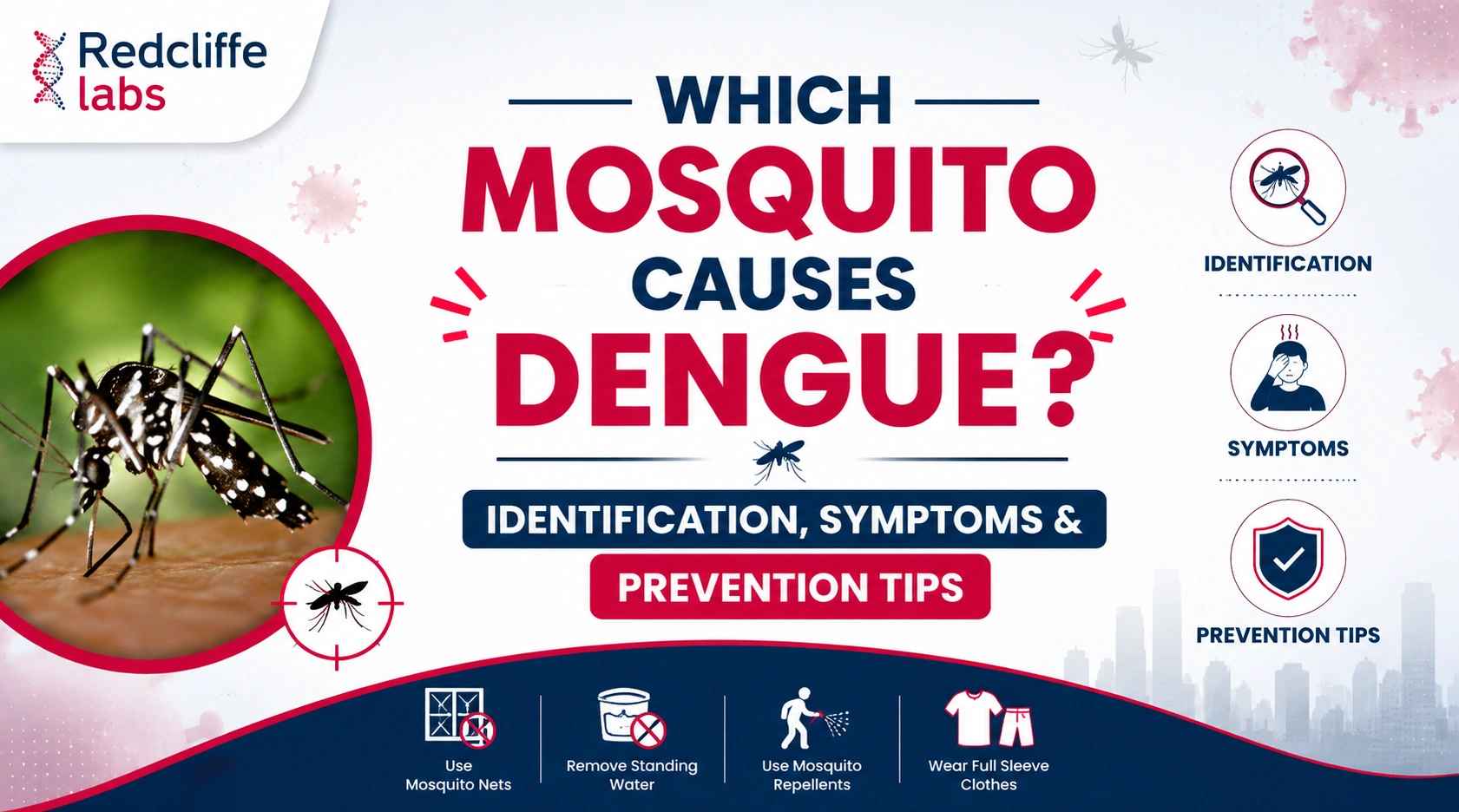
Every monsoon, many Indian families face the same fear. A sudden high fever, severe body pain, headache, or weakness can quickly raise one question: "Could this be dengue?" The answer often starts with a tiny mosquito that looks harmless but can spread a serious infection.
The dengue virus causes dengue, but it spreads through the bite of an infected female Aedes mosquito, mainly Aedes aegypti. This mosquito often breeds near homes in clean, stagnant water collected in buckets, coolers, flowerpots, tires, and open containers. That is why dengue prevention starts inside and around your home.
Dengue is now a major public health problem in India and worldwide. In 2024, India reported over 2,33,000 dengue cases and nearly 300 deaths, according to the National Center for Vector-Borne Diseases Control. In fact, India accounts for about one-third of the world's dengue burden.
What makes dengue more worrying today is that it no longer stays limited to the rainy season. Many cities now report cases before and after the monsoon too. Climate change, rapid urban growth, water storage habits, and mosquito adaptation have made dengue a year-round concern in many areas.
In this blog, let's understand exactly which mosquito causes dengue, how to recognize it, the warning signs of dengue you must never ignore, which tests confirm the disease, and the easy steps you can take to protect your family. Let us get to know this enemy up close.
Which Mosquito Causes Dengue?
The mosquito that causes dengue is called Aedes aegypti. This is the main carrier, or "vector," of the dengue virus. A closely related mosquito, Aedes albopictus, can also spread dengue, but less often. So when people talk about the "dengue mosquito," they usually mean Aedes aegypti.
Dengue does not pass directly from one person to another. Instead, the mosquito acts like a courier. When an Aedes mosquito bites a person who already carries the dengue virus, it picks up the virus along with the blood. After a few days, that same mosquito bites a healthy person and passes the virus into their blood.
The dengue virus itself comes in four types, called DENV-1, DENV-2, DENV-3, and DENV-4. This matters because you can catch dengue more than once in your life, with a different type each time. But the mosquito remains the key link in every single case.
How to Identify a Dengue Mosquito
You can easily spot the dengue mosquito because the Aedes aegypti has a few clear features that set it apart from the ordinary house mosquito. Look closely, and you can recognize it.
- Black body with white markings. The dengue mosquito is small and dark, almost black, with bright white stripes on its legs. These white bands give it a striped, spotted look.
- A lyre-shaped pattern on its back. It carries a special marking made of white scales on its upper back, shaped like a small harp or lyre. This is its signature feature.
- Small size and fast movement. It is smaller than many common mosquitoes and moves quickly, which makes it hard to swat.
- Low flying. It often flies low to the ground and tends to bite your ankles, feet, and elbows.
So the next time you see a small, dark, white-striped mosquito hovering near your feet in the daytime, stay alert. You may be looking at Aedes aegypti.
When and Where Does the Dengue Mosquito Bite?
Unlike the common mosquito that troubles you at night, the dengue mosquito is a daytime biter. It feeds most actively just after sunrise and again in the late afternoon, before sunset. So you can get bitten even while the sun is up and you feel wide awake.
This mosquito also loves to live indoors, close to people. It rests in dark, cool, shaded corners of your home, like under beds and tables, behind curtains, and inside cupboards. Because it prefers human blood to animal blood, it tends to stay near places where people live, work, and study.
A few more habits make it dangerous:
- It bites many times. A single mosquito can bite multiple people in a short time, thereby spreading the virus faster.
- It thrives in cities. Crowded towns and cities, with their stored water and containers, provide plenty of breeding sites.
- It loves the monsoon. Warm, humid weather with rain creates the perfect setting, which is why dengue cases climb during and after the rainy season.
When you understand these habits, you can plan your protection for the right times and the right places.
Where Does the Dengue Mosquito Breed?
The dengue mosquito does not breed in dirty drains or gutters. It breeds in clean, still water. And it needs only a tiny amount, even a bottle cap full, to lay its eggs.
The female mosquito lays her eggs just above the waterline in containers. These eggs are tough and can survive for months in dry conditions. The moment they touch water, they hatch. This is why standing water around your home is the real danger.
Common breeding spots hide in plain sight:
- Water that collects in flower pots and the trays beneath them.
- Open buckets, drums, and water-storage tanks.
- Old tires, broken bottles, and discarded containers in the yard.
- Coolers, especially desert coolers, are left filled for days.
- Pet water bowls and bird baths.
- Blocked drains and clogged roof gutters where rainwater pools.
- Money plants and decorative vases that hold water.
If you clear these spots regularly, you cut the mosquito's life cycle right at the start. No standing water means no breeding, and no breeding means far fewer mosquitoes.
The Life Cycle of the Dengue Mosquito
To beat the dengue mosquito, it helps to understand how it grows. Aedes aegypti passes through four stages, and water plays a part in three of them. Once you know these stages, you can break the cycle at the easiest point.
- Egg. The female lays her eggs on the inner walls of containers, just above the water. These eggs are tough survivors and can stay dry for months. When rain or fresh water reaches them, they hatch.
- Larva. Hatched larvae live in water and feed on tiny bits of food. You may have seen them as small, wriggling threads in still water. They grow fast over a few days.
- Pupa. Next, the larva turns into a pupa. It still floats in water but stops eating. Inside this stage, the mosquito changes into its adult form.
- Adult. Finally, a grown mosquito flies out. The female then seeks a blood meal to produce her next batch of eggs, and the cycle repeats.
The whole journey from egg to adult can take just over a week in warm weather. This is why doctors and health workers stress one simple habit: empty and scrub water containers at least once a week. If you do this, you remove the eggs and larvae before they ever become biting adults.
Warning Signs and Symptoms of Dengue
A dengue mosquito bite does not always make you sick right away. Symptoms usually appear four to ten days after the bite. Many people get only mild signs, and some get none at all. But when symptoms do show up, they can hit hard. Doctors sometimes call dengue "breakbone fever" because the body pain can feel so severe.
Watch for these common signs of dengue:
- A sudden high fever, often up to 104°F (40°C).
- Strong headache, usually with pain behind the eyes.
- Severe muscle, bone, and joint pain.
- Nausea and vomiting.
- Tiredness and weakness.
- Swollen glands.
- A skin rash, which often appears a few days after the fever starts.
Most people recover within a week or two with rest and fluids. But in some cases, dengue can become severe and a medical emergency. This is the stage you must never ignore.
Danger Signs of Severe Dengue
Severe dengue often begins right after the fever drops, usually between days 3 and 7. So stay alert even when the patient seems to be getting better. Rush to a hospital at once if you notice any of these warning signs:
- Severe stomach pain.
- Repeated vomiting, three or more times in a day.
- Bleeding from the gums or nose.
- Blood in the vomit, urine, or stool.
- Bleeding under the skin, which can look like small red spots or bruises.
- Fast or difficult breathing.
- Extreme tiredness, restlessness, or irritability.
These signs can turn life-threatening quickly. Quick medical care saves lives, so never wait and watch at home.
Who Faces a Higher Risk?
Anyone can catch dengue, but some people are at greater risk of a severe attack. You should stay extra careful if any of these points fit you or your family:
- You have had dengue before. A repeat infection with a different type of the virus often becomes more serious than the first.
- You live in or visit a high-risk area. Most parts of India see heavy dengue spread, especially during and after the monsoon.
- You are pregnant. A pregnant woman can pass dengue to her baby around the time of birth, so she needs careful monitoring.
- You are a young child or an older adult. These age groups often fare worse with severe dengue and need closer monitoring.
If you fall into any of these groups, take prevention and early testing even more seriously. A quick test at the first sign of fever can make a real difference.
Which Tests Confirm Dengue?
A high fever alone cannot confirm dengue, because malaria, typhoid, and viral fevers can look very similar. The right blood tests give you a clear answer fast, so your doctor can start the correct care. If you have a fever after a mosquito bite, your doctor may suggest these tests.
- Dengue NS1 Antigen Test: This test is most effective in the early stage, from day one to day five of fever. It finds a protein from the dengue virus called NS1. An early result helps you act quickly.
- Dengue IgM and IgG Antibody Tests: These tests look for the antibodies your body makes to fight dengue. The IgM test usually becomes positive after day 4 or 5 and indicates a recent infection. The IgG test can indicate a past or recurrent infection.
- Complete Blood Count (CBC): This is one of the most important tests in dengue. It tracks your platelet and white blood cell counts. In dengue, platelet counts often fall, and a declining count alerts your doctor to a higher risk of bleeding. Doctors usually repeat this test daily to watch the trend.
- Hematocrit (PCV): This test checks how thick your blood is. A rising level can warn that your blood vessels are leaking fluid, a sign that the dengue may be turning severe.
At Redcliffe Labs, you can book all these dengue tests, including the NS1 antigen test, dengue antibody tests, and a complete blood count, with easy home sample collection. Early and accurate testing turns worry into clear answers, and clear answers help your doctor protect you better.
How to Prevent Dengue Mosquito Bites
The best way to fight dengue is to stop the mosquito before it bites. You do not need costly tools, just steady, simple habits. Your plan has two parts: stop the bites, and stop the breeding.
Tips to Stop the Bites
- Use mosquito repellent. Apply a good repellent to your skin, especially in the early morning and late afternoon.
- Wear full-sleeved clothes. Light-coloured, long-sleeved shirts and full-length pants cover your skin and reduce bites. This matters most for children.
- Fit screens on doors and windows. Mesh screens keep mosquitoes out of your living spaces.
- Use mosquito nets. Sleep under a net, even during daytime naps, especially for babies and older adults.
- Switch on a fan. Moving air makes it hard for these light mosquitoes to fly and land on you.
Tips to Stop the Breeding
- Empty standing water weekly. Clean coolers, buckets, pots, and trays at least once a week.
- Cover water storage. Keep tanks, drums, and buckets tightly closed.
- Clear the clutter. Remove old tires, bottles, and containers where rainwater can collect.
- Unclog drains and gutters. Keep them clean so water cannot pool.
- Change pet bowls and vase water daily. Fresh water stops larvae from growing.
When your whole family follows these steps and your neighbors join in, the entire area becomes safer. Dengue control works best when the community acts together.
The Bottom Line
So, now you know which mosquito causes dengue! Once you can recognize this mosquito and understand its habits, you hold real power to stop it. The smartest steps are simple. Clear standing water every week, protect your family from bites during the day, and stay alert for the warning signs of dengue. And if a fever strikes after a mosquito bite, do not guess. Get tested early, so your doctor can guide you the right way. Get tested early, so your doctor can act fast and keep a mild case from turning serious. Book your dengue tests with Redcliffe Labs at the first sign of fever.
FAQ's
Which mosquito causes dengue?
The Aedes aegypti mosquito is the main carrier of the dengue virus. The Aedes albopictus mosquito can also spread it, but less often.
What are 7 warning signs of dengue?
Watch for high fever, severe headache, pain behind the eyes, muscle and joint pain, nausea or vomiting, tiredness, and a skin rash. If these appear, please get tested soon.
How to prevent dengue mosquitoes?
Empty standing water around your home every week, since that's where they breed. Use repellents, wear full sleeves, fit window screens, and sleep under a net, even during daytime naps.
Where does the dengue mosquito breed?
It breeds in clean, still water in containers like flower pots, buckets, coolers, tyres, and water tanks, often right inside or around your home.
Which test confirms dengue early?
The NS1 antigen test works best in the first five days of fever. After that, the IgM antibody test becomes more useful. A complete blood count helps track your platelets.