Prolactinoma Symptoms in Women: How It Affects Periods, Fertility, and Pregnancy

Overview
- Prolactinoma is a usually benign tumour of the pituitary gland that produces excess prolactin, a hormone involved in breast milk production.
- Prolactinoma symptoms in women may include irregular or missed periods, unexpected milky nipple discharge, reduced sexual desire, and difficulty conceiving.
- High prolactin levels can interfere with ovulation and affect fertility, although elevated prolactin does not always indicate a prolactinoma.
- PCOS, thyroid disorders, certain medicines, and other conditions can cause similar symptoms or affect prolactin levels.
- A prolactin blood test and, when indicated, pituitary MRI can help investigate the cause.
- Appropriate treatment and specialist monitoring can help many women manage the condition and plan a pregnancy.
What Is a Prolactinoma?
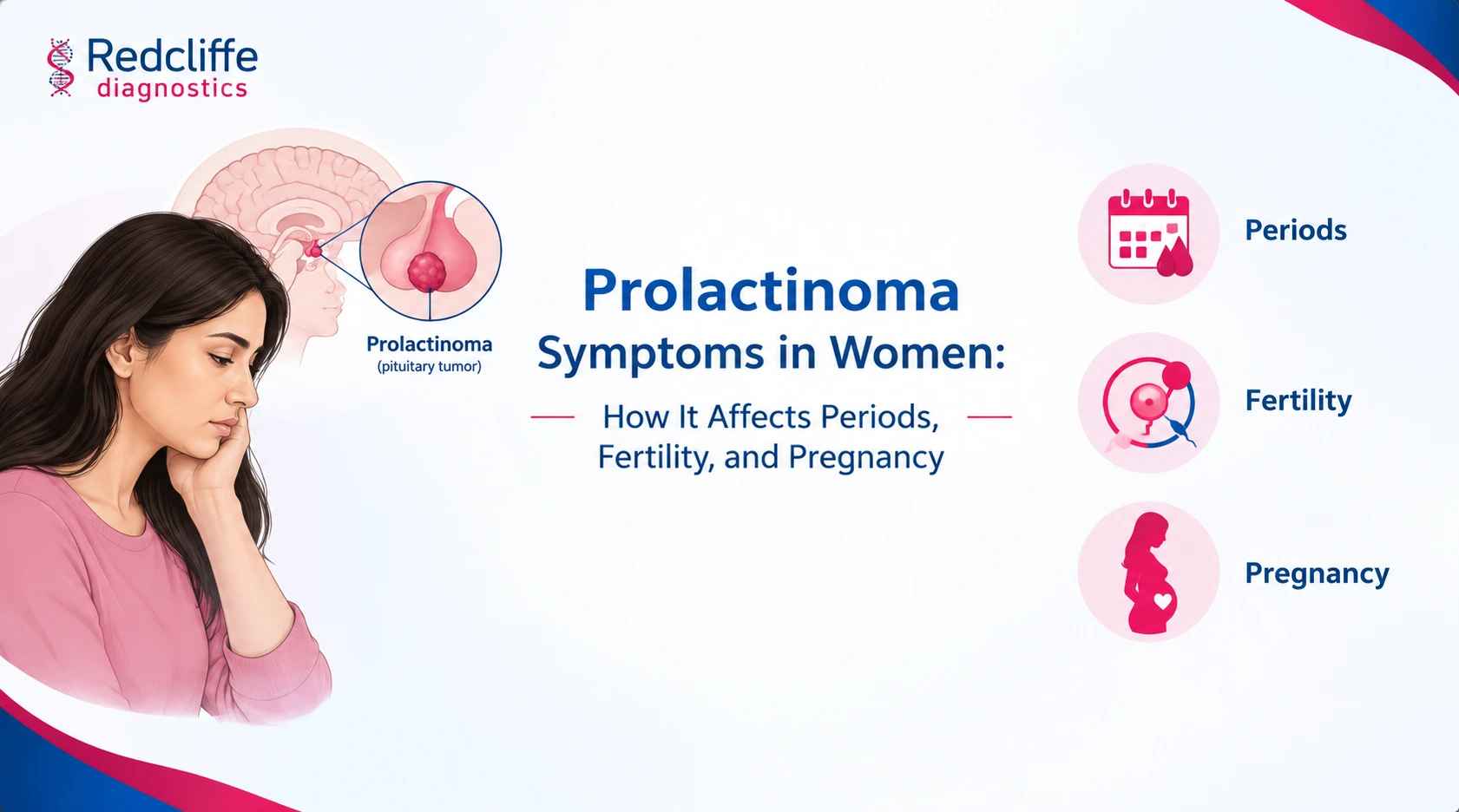
A prolactinoma is a noncancerous tumour that develops in the pituitary gland, a small gland at the base of the brain that regulates several hormones. It produces excess prolactin, which normally supports breast milk production during pregnancy and breastfeeding.
When prolactin levels remain elevated outside these situations, they can interfere with the hormones responsible for menstrual cycles and ovulation. This may lead to missed periods, unexpected nipple discharge, or difficulty conceiving.
Prolactinomas are classified according to their size:
- Microprolactinoma: A tumour smaller than 10 mm.
- Macroprolactinoma: A tumour measuring 10 mm or more.
Smaller tumours may cause hormonal symptoms, while larger tumours may press on nearby structures and cause persistent headaches or vision changes.
It is also important to distinguish a prolactinoma from hyperprolactinaemia. Hyperprolactinaemia means that prolactin levels in the blood are higher than expected. A prolactinoma is one possible cause, but pregnancy, certain medicines, an underactive thyroid, and other conditions can also raise prolactin levels.
What Causes a Prolactinoma and High Prolactin Levels?
A prolactinoma develops when prolactin-producing cells in the pituitary gland grow and release excess prolactin. The exact reason most of these tumours develop is unknown, although certain inherited conditions can increase the risk.
Changes in Pituitary Cells
Prolactinomas arise from prolactin-producing cells in the pituitary gland. As these cells multiply, they can form a tumour that releases excess prolactin.
The hormonal changes may interfere with menstrual regularity, ovulation, and fertility. Larger tumours may also affect nearby structures or other pituitary functions.
Other Reasons for High Prolactin Levels
Not every woman with elevated prolactin has a prolactinoma. Other possible causes include:
- Certain medicines: Some antipsychotic medicines and medicines used to treat nausea can raise prolactin levels.
- An underactive thyroid: Hypothyroidism can contribute to elevated prolactin levels.
- Pregnancy and breastfeeding: Prolactin naturally increases during these periods.
- Temporary changes: Stress, exercise, and nipple stimulation can sometimes cause short-term increases.
- Other health conditions: Certain kidney and pituitary disorders may also affect prolactin levels.
A healthcare professional will assess your symptoms, medicines, and relevant test results to identify the likely cause. Prescribed medicines should not be stopped or changed without medical advice.
What Are the Prolactinoma Symptoms in Women?
Prolactinoma symptoms in women depend on prolactin levels, tumour size, and whether other pituitary hormones are affected.
Common symptoms include:
- Irregular menstrual cycles or missed periods.
- Milky nipple discharge when not pregnant or breastfeeding, known as galactorrhoea.
- Difficulty conceiving.
- Reduced sexual desire.
- Vaginal dryness or discomfort during sexual activity.
- Persistent headaches.
- Changes in peripheral vision, particularly with larger tumours.
Some women may experience only one or two symptoms. Others may notice several changes together. Women using hormonal contraception or those who have reached menopause may not experience obvious menstrual changes.
These symptoms can also occur with other conditions, including PCOS and thyroid disorders. Their presence alone does not confirm a prolactinoma.
How Does a Prolactinoma Affect Periods?
A prolactinoma can disrupt the hormonal signals that regulate the menstrual cycle. Excess prolactin may reduce the release of gonadotropin-releasing hormone (GnRH), which helps control the hormones involved in ovulation.
This can lead to:
- Irregular periods: Menstrual cycles may become unpredictable.
- Missed periods: Periods may stop temporarily or for longer periods.
- Changes in menstrual flow: Some women may experience lighter or less frequent bleeding.
- Reduced ovulation: Ovulation may become irregular or stop, making conception more difficult.
The effects vary between women and depend on hormonal changes and other health factors.
If your periods become irregular or stop unexpectedly, particularly alongside nipple discharge or difficulty conceiving, a healthcare professional may recommend checking prolactin levels and investigating other possible causes.
Prolactinoma and Fertility
A prolactinoma can affect fertility by interfering with ovulation. When prolactin levels remain elevated, the hormonal signals between the brain and ovaries may become disrupted. This can prevent an egg from being released regularly.
As a result, some women may experience irregular menstrual cycles or difficulty conceiving. However, a prolactinoma does not automatically mean infertility is permanent. When prolactin levels are brought under control, ovulation may return and the chances of conception may improve.
Women planning a pregnancy should consult their healthcare professional to review their hormone levels, tumour status, and individual care plan.
Can You Get Pregnant With a Prolactinoma?
Yes, many women with a prolactinoma can become pregnant, particularly when the condition is appropriately treated and monitored.
Medicines are commonly used to lower prolactin levels and shrink the tumour. Treatment may restore ovulation and make conception possible.
Before planning pregnancy, discuss the tumour's size, its location, and your treatment plan with your specialist. Once pregnancy is confirmed, medication and monitoring requirements may change according to individual risk.
Do not start, stop, or adjust prescribed medication without medical advice.
Prolactinoma and Pregnancy
Pregnancy naturally increases prolactin levels and causes the pituitary gland to enlarge. For women with a small, stable prolactinoma, pregnancy often progresses without significant tumour-related complications. However, a larger tumour may carry a greater risk of growth, particularly if it is close to the nerves involved in vision.
Your healthcare professional may consider:
- The tumour's size and location before pregnancy.
- Whether it is close to the optic nerves.
- Previous treatment and response to medication.
- Symptoms such as persistent headaches or vision changes.
Prolactin levels naturally rise during pregnancy, so routine prolactin measurements are generally not useful for monitoring tumour growth during this period. Monitoring is guided by symptoms and individual risk.
Women with a known prolactinoma should contact their treating specialist after confirming pregnancy to review their individual care and monitoring plan. Treatment and follow-up needs may change during pregnancy, depending on the tumour's size, location, and associated risks.
Which Tests Help Diagnose a Prolactinoma or Investigate High Prolactin?
Testing depends on symptoms, medical history, and the suspected cause. A prolactin blood test is central to evaluating elevated prolactin, while other hormonal tests may help identify conditions with similar symptoms.
Prolactin Blood Test
This test measures the amount of prolactin in the blood. It is commonly recommended when symptoms such as irregular periods, unexpected milky nipple discharge, or difficulty conceiving suggest elevated prolactin.
A high result does not automatically confirm a prolactinoma. Prolactin levels can rise temporarily or because of pregnancy, certain medicines, thyroid disorders, and other conditions. Your healthcare professional may recommend repeating the test or investigating other possible causes.
PCOS Evaluation
PCOS can cause irregular periods, difficulty conceiving, acne, and excessive facial or body hair. Because some of these symptoms overlap with those of elevated prolactin, a healthcare professional may evaluate both conditions when appropriate.
There is no single blood test that confirms PCOS. Diagnosis involves assessing symptoms, menstrual patterns, androgen levels where indicated, and other relevant findings while excluding conditions that can cause similar symptoms.
Thyroid Function Tests
Thyroid function tests, including thyroid-stimulating hormone (TSH), may be recommended to investigate an underactive thyroid. Hypothyroidism can contribute to elevated prolactin levels and menstrual irregularities.
Pituitary MRI
If elevated prolactin is confirmed and other possible causes have been assessed, a pituitary MRI may be recommended. It helps identify a tumour and determine its size and location.
Additional pituitary hormone tests or a visual field examination may be needed depending on the findings.
No single symptom or blood test should be used in isolation to confirm a prolactinoma.
How Is a Prolactinoma Treated?
Prolactinoma treatment aims to lower prolactin levels, reduce tumour size when appropriate, restore hormonal function, and relieve symptoms.
Medicines
Dopamine agonists, including cabergoline and bromocriptine, are commonly used to treat prolactinomas. They reduce prolactin production and can shrink the tumour.
Treatment may help improve menstrual regularity, restore ovulation, and support fertility. The medicine, dose, and duration depend on the individual situation.
Surgery and Monitoring
Surgery may be considered when medication is ineffective, causes significant side effects, or is unsuitable. It may also be needed in selected cases involving larger tumours or pressure-related complications.
Follow-up may include prolactin measurements, symptom reviews, and repeat imaging when appropriate. Radiation therapy is used much less commonly and is generally reserved for selected cases that do not respond adequately to other treatments.
Treatment and follow-up should be guided by an endocrinologist or another qualified healthcare professional.
When Should You See a Doctor?
Seek medical evaluation if you notice persistent changes in your menstrual cycle, unexplained milky nipple discharge, difficulty conceiving, or other symptoms that may indicate a hormonal imbalance.
Arrange prompt assessment if you experience:
- New or persistent headaches.
- Changes in peripheral vision.
- Increasing headaches accompanied by visual symptoms.
- New hormonal symptoms alongside a known pituitary tumour.
Seek urgent medical care for a sudden, severe headache, sudden vision loss, or other sudden neurological symptoms.
Early evaluation can help identify the cause of symptoms and guide appropriate treatment.
Hormonal Testing for Women With Related Symptoms
Women experiencing excessive facial or body hair, persistent acne, or other signs of androgen excess may need a hormonal evaluation, depending on their symptoms and medical history.
At Redcliffe Labs, the Hirsutism Panel – Essential includes three parameters: DHEA-S, free testosterone, and total testosterone. These tests help assess androgen levels and may support the evaluation of hormonal concerns associated with excessive hair growth.
However, this panel is not a diagnostic test for prolactinoma. If you experience irregular periods, unexpected milky nipple discharge, or difficulty conceiving, your healthcare professional may recommend prolactin testing and other investigations, depending on your symptoms. A pituitary MRI may also be required when a prolactinoma is suspected.
The appropriate tests depend on the underlying concern, so consult your healthcare professional before choosing a hormonal test or package.
Conclusion
Prolactinoma is a usually benign pituitary tumour that can disrupt menstrual cycles, ovulation, and fertility by increasing prolactin levels. Although its symptoms can overlap with those of PCOS and thyroid disorders, appropriate testing can help identify the underlying cause.
With suitable treatment and specialist monitoring, many women can manage the condition and plan a pregnancy. If you experience persistent menstrual changes, fertility concerns, headaches, or vision changes, consult a healthcare professional for appropriate evaluation and care.
Frequently Asked Questions
1. Can you have a prolactinoma without irregular periods?
Yes, some women with a prolactinoma may not notice irregular periods. Symptoms vary depending on hormone levels, tumour size, age, and individual hormonal circumstances. Women using hormonal contraception or those who have reached menopause may not experience obvious menstrual changes. Other symptoms, such as unexpected milky nipple discharge, headaches, or vision changes, may prompt further evaluation.
2. Can a prolactinoma come back after treatment?
Yes, a prolactinoma can recur or prolactin levels can rise again after treatment is reduced or stopped. The likelihood depends on factors such as tumour size, treatment response, and whether prolactin levels remain controlled. Some people need longer-term medication and monitoring. Do not stop treatment without consulting your specialist, who can advise on follow-up blood tests and imaging when appropriate.
3. Can a prolactinoma affect breastfeeding after delivery?
A prolactinoma does not automatically prevent breastfeeding. However, breastfeeding and treatment need to be discussed with the treating specialist because prolactin supports milk production, while medicines used to treat prolactinomas can suppress it. The appropriate plan depends on tumour size, symptoms, and the mother's treatment needs. Women with larger tumours may require closer monitoring after delivery.
4. Can medicines cause high prolactin levels without a prolactinoma?
Yes, certain medicines can raise prolactin levels without a pituitary tumour. Some antipsychotic medicines and drugs used to treat nausea or vomiting are examples. An underactive thyroid and other health conditions may also contribute. A healthcare professional will review your medicines, medical history, and test results to identify the likely cause. Never stop a prescribed medicine without medical advice.
5. Does a high prolactin test result always mean you have a prolactinoma?
No, a high prolactin result does not automatically mean you have a prolactinoma. Prolactin levels may rise during pregnancy and breastfeeding, because of certain medicines, or due to thyroid dysfunction and other factors. Temporary increases can also occur. Your healthcare professional may repeat the test, investigate other causes, and recommend a pituitary MRI if the findings indicate that further evaluation is necessary