Hyperprolactinemia: Causes, Symptoms, Diagnosis and Treatment Explained

Overview
- Hyperprolactinemia means the prolactin hormone level in your blood is higher than expected.
- Pregnancy, breastfeeding, some medicines, and certain health problems can raise prolactin.
- Symptoms may include missed periods, milky nipple discharge, low sex drive, or fertility problems.
- A blood test measures prolactin. Further tests may help your doctor find the cause.
- Treatment depends on the cause. Some people need medicines, while others need regular checks.
Quick Answer: What Is Hyperprolactinemia?
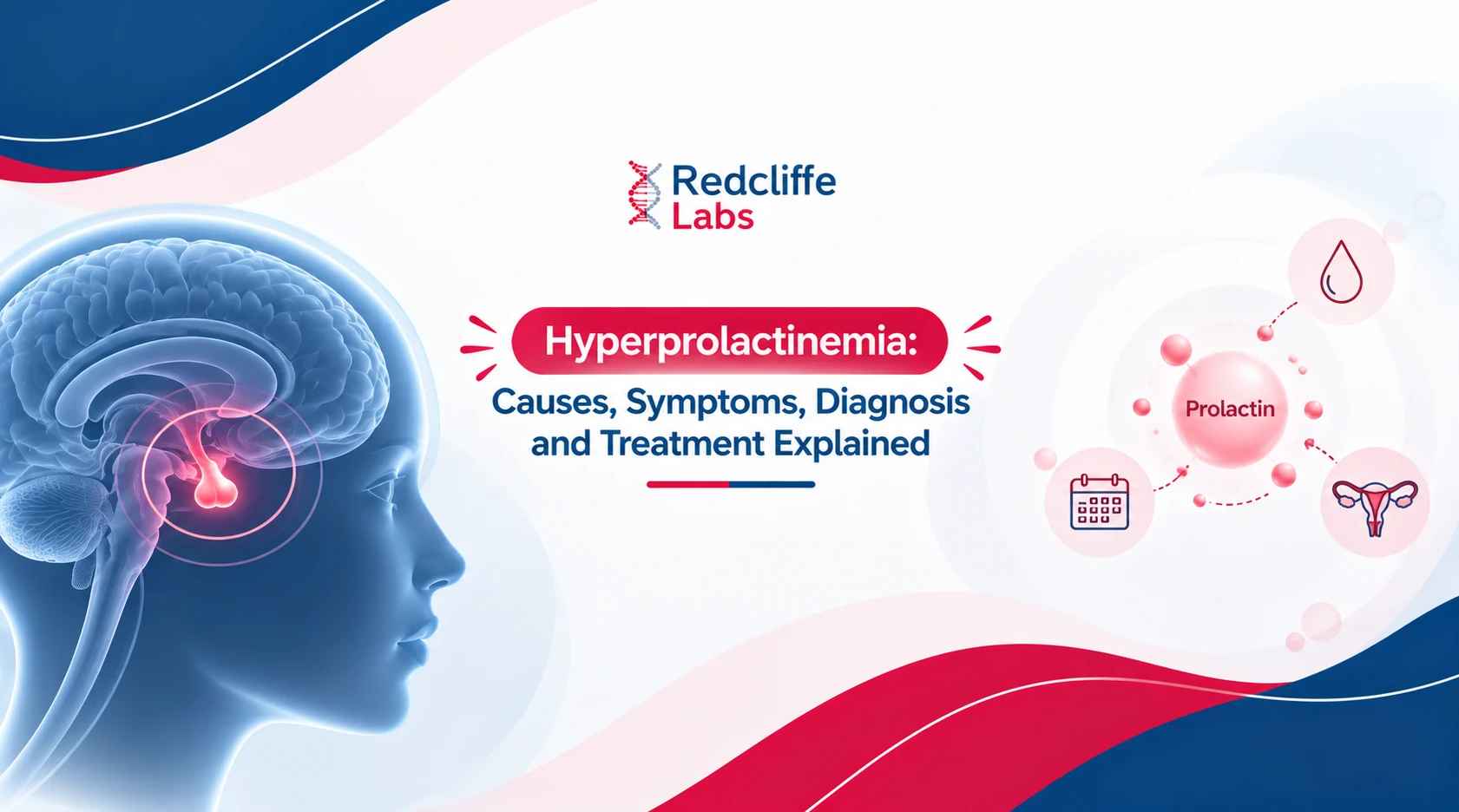
Hyperprolactinemia means a higher-than-expected level of prolactin in your blood. Prolactin is a hormone, a chemical messenger, made by the pituitary gland at the base of your brain. It helps the breasts make milk. Levels normally rise during pregnancy and breastfeeding. Outside these situations, a high result may need checking.
If your report shows high prolactin, the next step is to find out why. One raised result does not identify the cause or automatically mean you have a tumour.
What Causes High Prolactin Levels?

Prolactin can rise for several reasons. Some increases are expected or temporary; others need medical assessment.
- Pregnancy and breastfeeding: Higher prolactin helps support milk production.
- Temporary changes: Stress, strenuous exercise, sex, and nipple stimulation can raise prolactin for a short time.
- Certain medicines: Some medicines for mental health conditions, nausea, and stomach problems can increase prolactin.
- Other health conditions: An underactive thyroid or kidney disease may cause higher levels.
- Pituitary problems: A prolactinoma is a non-cancerous growth in the pituitary gland that makes extra prolactin. Other growths near the gland can also affect prolactin control.
Sometimes, no clear cause is found. Doctors call this idiopathic hyperprolactinemia.
Remember to mention your acidity medicines. Domperidone and levosulpiride, used for certain stomach problems, may be included in combination acidity medicines. Both can raise prolactin. Bring your medicine strips or photographs to your appointment, including medicines you take occasionally. Do not stop a prescribed medicine yourself.
What Are The Symptoms Of Hyperprolactinemia?
Symptoms vary, and some people have no noticeable symptoms.
|
In Women |
In Men |
|
Reduced sex drive |
Reduced interest in sex |
|
Difficulty getting pregnant |
Difficulty getting or keeping an erection |
|
Irregular or missed periods |
— |
|
Vaginal dryness or discomfort during sex |
Fertility problems |
Milky nipple discharge outside pregnancy or breastfeeding can occur in women and, less commonly, in men. These symptoms can have other causes, so they need assessment rather than self-diagnosis.
A larger pituitary growth may also cause headaches or changes in vision by pressing on nearby structures.
How Is Hyperprolactinemia Diagnosed?
A prolactin blood test, also called a PRL test, measures prolactin in a small blood sample taken from a vein in your arm.
Read the result alongside the reference range printed on your report. Laboratories may use different methods and units. Pregnancy and breastfeeding also change how results should be interpreted.
Does a high result need repeating?
A mildly raised result often needs confirmation. Even stress during blood collection can affect the reading. Your doctor will review your symptoms, medicines, and pregnancy or breastfeeding status before deciding what comes next.
Depending on your situation, further checks may include:
|
Test |
Why Your Doctor May Request It |
|
Pregnancy test, such as beta-hCG |
To check for pregnancy when it is possible |
|
Thyroid tests, including TSH |
To look for an underactive thyroid |
|
Creatinine or kidney function tests |
To investigate a possible kidney-related cause |
|
Macroprolactin testing |
To check for a larger, less active form of prolactin, especially when the result and symptoms do not match |
Macroprolactin can raise the test reading without causing the usual symptoms. Identifying it can help avoid unnecessary treatment.
If prolactin remains high without another explanation, your doctor may recommend a pituitary MRI scan. A scan is not automatically the first step after every mildly raised result. Persistent, unexplained elevation still needs follow-up.
How Should You Prepare For A Prolactin Test?
Your sample may be scheduled a few hours after waking. Rest quietly before collection and follow instructions about exercise or breast stimulation beforehand.
Fasting is not always needed, but your doctor or laboratory may request it, particularly for a repeat test or when other tests are included. Tell them about all medicines, vitamins and supplements you take.
If your doctor is also investigating irregular periods or fertility concerns, Redcliffe Labs offers a Female Hormones Screening package with LH, FSH and prolactin. Choose a combined package only when those tests match your doctor’s advice.
How Is Hyperprolactinemia Treated?
Hyperprolactinemia treatment depends on the cause. A raised reading alone does not mean everyone needs prolactin-lowering medicine.
- Underactive thyroid: Thyroid hormone treatment can bring prolactin down when the thyroid problem is the cause.
- Medicine-related elevation: The prescribing doctor may adjust or replace the medicine when appropriate.
- Prolactinoma: Cabergoline is commonly the preferred medicine. Bromocriptine is another option. These medicines can lower prolactin and shrink the growth. Possible side effects include nausea and dizziness.
- Selected cases without troublesome symptoms: Monitoring may be appropriate.
For some prolactinomas, surgery is an option. The decision depends on the growth, symptoms, response to medicines and discussion with a specialist.
Follow-up may involve blood tests and, when needed, scans. Do not start, change or stop prolactin medicines yourself.
If you are planning pregnancy, discuss it with your endocrinologist, a doctor who treats hormone conditions. Contact them promptly after a positive pregnancy test because your medicine and monitoring plan may need to change.
When Should You Seek Medical Help?
Arrange a medical appointment for unexplained missed periods, milky nipple discharge, ongoing sexual or fertility problems, or a repeatedly high prolactin result.
Get emergency medical help for a sudden, severe headache, new loss of vision or double vision, particularly if these happen together or with vomiting, fainting, or confusion. These can be signs of a rare pituitary emergency or another serious condition. Do not wait for a routine blood test.
Hyperprolactinemia can often be managed once the cause is known. If your doctor recommends a prolactin test, you can book a prolactin blood test at Redcliffe Labs and check if home sample collection is available in your area. Once you receive your report, share it with your doctor to understand what the results mean and whether you need any further tests or treatment.
FAQs
1. Can I get pregnant if my prolactin is high?
Often, yes. High prolactin can interfere with the release of an egg, but treatment can restore fertility. Discuss pregnancy plans with your endocrinologist before trying. Fertility may return quickly during treatment, so discuss contraception if you do not want to become pregnant.
2. Is high prolactin the same as PCOS?
No. PCOS and hyperprolactinemia are different conditions, although both can cause irregular periods. A high prolactin result does not diagnose PCOS. If prolactin stays raised, your doctor should investigate it rather than assume that an existing PCOS diagnosis explains the result.
3. Can food changes or home remedies replace treatment?
Do not rely on food changes or home remedies in place of recommended treatment. Medical care focuses on the cause, such as a thyroid problem, medicine effect or prolactinoma. Discuss herbal products and supplements with your doctor, including anything sold as a “hormone-balancing” remedy.
4. Will I need prolactin medicine for life?
Not necessarily. Some people need long-term treatment. In selected people with a prolactinoma, a specialist may consider reducing or stopping medicine after a sustained response. Follow-up remains necessary because prolactin can rise again. A normal result alone is not a reason to stop tablets.
5. Can high prolactin affect bone health?
Yes, it can weaken your bones over time. This happens because high prolactin can lower oestrogen or testosterone levels, which help keep bones strong. If your prolactin levels stay high for a long time, your doctor may recommend a bone density test to check your bone strength.
6. Can I breastfeed if I have a prolactinoma?
Breastfeeding is often possible even if you have a prolactinoma, but it depends on the size of the tumour and whether you need treatment after delivery. Talk to your endocrinologist before delivery to plan for breastfeeding and discuss when you should have a follow-up check.