How to Prepare for a Full Body Checkup: A Complete Step-by-Step Guide

Medically Reviewed By
Dr. Mayanka Lodha Seth
Written By Sheena Mehta
on Mar 6, 2026
Last Edit Made By Sheena Mehta
on Apr 9, 2026
Many people plan a full-body checkup to understand their health status clearly, and therefore, they get stressed when the test results show unexpected abnormal values. These results are most often caused by everyday habits, such as eating late, skipping water, or taking certain medications.
So the question is: how can you make sure your test results accurately reflect your good health, not just temporary lifestyle changes? This article clearly explains what you should do in the days leading up to and on the day of your checkup to get precise and trustworthy results and be confident about your health.
What is a Full Body Checkup?
A full-body checkup, also known as a complete health checkup or preventive health screening, is a medical examination that assesses the vital organs and systems. It usually checks blood sugar, cholesterol, liver and kidney function, thyroid, urine, and key vitamins.
These tests can find lifestyle diseases, nutritional deficiencies, hormonal imbalances, and early signs of long-term health conditions. A full-body checkup provides a baseline assessment of your health and helps identify risks before symptoms appear.
Why Preparation Matters Before a Full Body Checkup?
Proper preparation before a full-body checkup is essential to ensure a more reliable and accurate test report. Even small lifestyle factors can influence lab values and lead to misleading reports.
Key Purposes to Prepare:
- Improves test accuracy: Your blood sugar and lipid levels will be more stable, and therefore the levels measured will be more accurate, if you fast for 8 to 12 hours before the test. If you have a meal before the sample is taken, it can temporarily raise your glucose, cholesterol, and triglyceride levels, potentially affecting the accuracy of the results.
- Prevents False Abnormal Results: Within the 24 hours before your test, if you have consumed alcohol, smoked, or done heavy physical activity, these actions can change your liver enzymes, blood counts, and hormone levels. As a result, your report may show abnormal values unrelated to any disease.
- Accounts for medication effects: Tell your doctor or the laboratory expert about all the medicines, supplements, or vitamins that you are using. Some medicines may alter test results, giving the impression that you have certain diseases.
- Provides Better Clinical Interpretation: Sharing your previous test results, medical background, and current symptoms with your doctor enables them to compare trends, spot early signs of illness, and better understand your test results.
- Maintaining Hormonal Consistency: Generally, morning appointments are preferred, as hormones such as cortisol and thyroid hormones follow a circadian rhythm and are more stable in the early hours of the day.Note: Even small mistakes, such as eating before a fasting test, can affect sugar, lipid, and hormone levels.
Common Preparation Mistakes and Their Effects
| Mistakes | Effect on Test Results |
| Eating before fasting tests | Temporary rise in blood sugar, cholesterol, and triglycerides |
| Alcohol consumption | Alterations in both liver enzymes and lipid levels |
| Smoking before tests | Significant changes in blood pressure and oxygen levels |
| Heavy exercise | Elevated muscle enzymes and hormone fluctuations |
| Poor sleep or stress | Imbalanced hormone and blood sugar levels |
Preparation Checklist for a Full Body Checkup
A simple step-by-step checklist before your complete health checkup.
24-48 Hours Before the Full Body Checkup
-
Avoid alcohol and smoking: This helps keep your liver enzymes, lipids, and blood pressure readings from going abnormal.
-
Skip heavy exercise: Muscle enzymes, hormones, and blood sugar levels can be temporarily altered by an intense workout.
-
Inform about drugs and supplements: Includes blood pressure, diabetes, thyroid meds, or vitamins. Don't discontinue medication without consulting your doctor.
Night Before the Full Body Checkup
- Follow fasting instructions: Fast 8-12 hours, water only. No tea, coffee, milk, alcohol, or sugar-containing drinks allowed.
- Hydrate sufficiently: Plain water aids kidney function. It also prevents dizziness and makes blood collection easier.
- Sleep well: A good sleep of 7-8 hours stabilizes blood sugar, hormones, and stress markers.
Morning of the Full Body Checkup
- Wear loose, comfortable clothing: For blood tests and other vital checks, loose or short sleeves are most convenient.
- Carry documents. Doctors can better understand your results if you bring your old medical records, prescriptions, and a medication list.
At the Diagnostic Center / During Home Collection
- Inform medical staff of any allergy, pregnancy, or dizziness tendencies
- Follow the specific test instructions: For ultrasound or urine tests, complete the necessary preparations. This helps your doctor monitor your health and catch any problems early.
Complete Full Body Checkup Tests List
A full body checkup includes essential tests that assess overall health, detect early disease, and monitor vital organs. Test coverage may vary by age and health needs, but typically includes:
- Complete Blood Count (CBC)
- Erythrocyte Sedimentation Rate (ESR)
- Glucose Fasting
- HbA1C
- Iron Test
- Kidney Function Test (KFT)
- Lipid Profile Test
- Liver Function Test (LFT)
- Thyroid Profile Total
- Urine Routine & Microscopic Examination
Each test listed above provides different insights into your health. For a better understanding of normal ranges, preparation, and report interpretation, click on individual test links to learn more.
Benefits of a Full Body Checkup
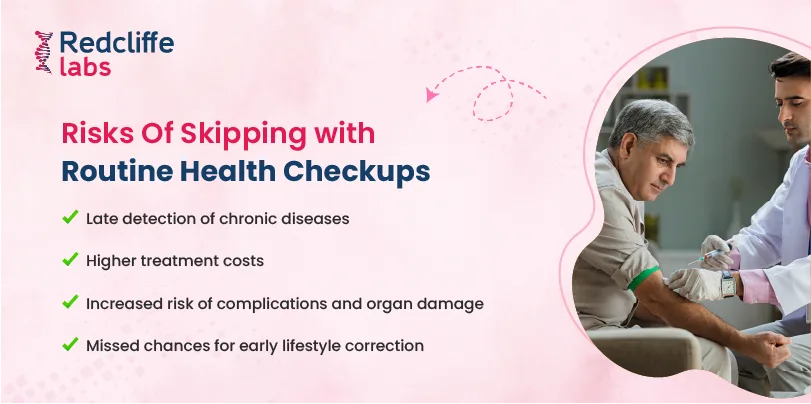
A preventive health screening helps you take charge of your health by identifying potential problems early, often before you notice any symptoms.
Key Benefits of a Complete Health Checkup
1. Early Disease Detection
A full body checkup can find health problems like diabetes, high blood pressure, high cholesterol, heart disease, and some cancers before they cause symptoms.
2. Prevention and Risk Assessment
By comparing your test results with standard health ranges and past reports, doctors can recommend lifestyle changes, dietary improvements, or preventive treatments before a condition worsens.
3. Comprehensive Health Overview
A full body checkup gives you a clear overview of your health, including how well your vital organs are working, such as:
- Heart
- Liver
- Kidneys
- Thyroid
- Blood and metabolic health
4. Better Treatment and Recovery Outcomes
When health issues are found early through regular checkups, they are usually easier to treat and manage. Early diagnosis can help you recover faster and make it easier to handle long-term or inherited conditions.
5. Cost-Effective Healthcare
Taking action early often avoids expensive emergency care, reducing your healthcare costs over time.
6. Peace of Mind
Knowing your health status can give you peace of mind and confidence. It also helps ease worries about symptoms or unknown health problems.
Who Should Get a Full Body Checkup and How Often?
Recommended Groups:
- Adults aged 30 to 35 and older
After age 30, the chances of developing conditions like diabetes, high blood pressure, and high cholesterol increase. Getting regular health checkups can catch these problems early and help prevent complications.
- Adults over 50 years old
It's a good idea to get a full body checkup every year to monitor age-related health issues, spot early signs of chronic illness, and stay healthy in the long run.
- People with high-risk lifestyles
If you often feel stressed, smoke, drink alcohol regularly, eat an unhealthy diet, or have a mostly inactive lifestyle, you have a higher risk of metabolic and heart problems.
- People with a family history of disease
If close family members have conditions like diabetes, heart disease, cancer, or neurological disorders, regular checkups can help find genetic or inherited risks early.
- Anyone Experiencing Ongoing Symptoms: Unexplained weight changes, frequent headaches, fatigue, or stomach issues.
Suggested Frequency
| Age/ Condition | Frequency |
| Every 2-3 years |
| 1 to 2 years. |
| Once a year |
| Every 3-6 months, or as advised by a doctor. |
Conclusion: Take Charge of Your Health Today
A full-body checkup essentially serves as a preventive tool that can save lives through early detection of problems, risk management, and reassurance. Your results will truly mirror your current health condition if you have adequately prepared. Hence, you can make informed decisions about your lifestyle, diet, and, if needed, treatment.
Why Choose Redcliffe Labs for a Full Body Checkup?
- Certified and background-verified phlebotomists for safe home collection
- Pre-barcoded samples with 2–8°C cold-chain handling
- NABL-standard testing with AI-assisted quality checks and senior pathologist verification
Book a Full Body Checkup with Redcliffe Labs
Redcliffe Labs offers full-body checkups across India, making quality diagnostics accessible to all. You can easily book a full-body checkup in Delhi, Noida, Gurgaon, Mumbai, Bengaluru, and across 220+ cities nationwide.
With home blood collection, NABL-standard processes for all tests, AI-assisted QC for higher report accuracy, and double-verified results before you receive your report, we make preventive healthcare simple, reliable, and accessible from the comfort of your home.
How to Book a Home Checkup:
Step 1: Visit the website or mobile app, or call 898 898 87 87
Step 2: Select your full-body checkup package.
Step 3: Choose a convenient date and time for home sample collection.
Step 4: Enter your complete home address and contact details.
Step 5: Confirm your booking
Step 6: Receive reports & insights for better health management.
FAQs:
-
Can I drink water before a full-body checkup?
Yes, you can drink water, and it is even advised before a full body checkup, including when fasting. Being well-hydrated supports blood collection and helps prevent fainting. Do not take tea, coffee, fruit juice, sugar, milk, or flavored drinks, as they might give inaccurate results for blood sugar, lipid, and hormone tests.
-
How many hours should I fast before a full-body checkup?
Most full-body checkups, including tests that measure blood sugar, cholesterol, triglycerides, and iron levels, include fasting for 8 to 12 hours.
During this time, do not eat or drink anything except water. Make sure to follow the specific fasting instructions provided at the time of booking to obtain accurate, reliable test results.
-
Can I take medicines before my full body checkup?
Unless your doctor has told you to do so, do not discontinue or alter your regular medicines. Most of the time, necessary medicines can be taken with water only. Make sure to tell the lab technician or phlebotomist about all the medicines and supplements you are taking, since some medications may alter your test results and thus affect the interpretation of your report.
-
Is morning the best time for a full-body checkup?
Yes, especially between 7:00 AM and 10:00 AM, is the best time for a full body checkup. Testing in the morning allows for accurate fasting results and the measurement of hormone levels, such as cortisol and thyroid hormones, at their natural levels. Additionally, it supports timely sample processing, thus reports can be delivered faster and more accurately.
5. How long does home sample collection take?
A home sample collection typically takes 10 to 15 minutes. At the prearranged time, a skilled phlebotomist comes to your home, strictly adheres to hygiene and safety measures, and collects the blood sample efficiently and minimally invasively. This service is great for senior citizens, busy people, and those who like doing tests at home.
-
When will I receive my full body checkup reports?
The majority of full-body checkup reports are ready within 24 to 48 hours; the exact time depends on the tests included in your package. Reports are usually shared digitally via email or WhatsApp, making it easy to review results, store records, and share them with your doctor for further medical advice.
-
Is home blood collection safe and reliable?
Yes, when performed by licensed, qualified professionals, home blood collections are safe. Professional phlebotomists are trained to use sterile, single-use kits and to follow strict safety guidelines.
Your sample is sent to a certified laboratory, ensuring accurate results comparable to in-lab testing.