Can You Have Insulin Resistance With Normal Blood Sugar?

Overview:
- Insulin resistance can develop without noticeable symptoms, particularly in its early stages.
- Dark, velvety patches around the neck and underarms can be a visible sign. Skin tags and increased waist circumference may also be associated with it.
- Normal fasting blood sugar and HbA1c levels do not always rule out insulin resistance.
- Fasting insulin and HOMA-IR tests may provide additional information when assessing insulin resistance.
- Regular exercise, balanced meals, and adequate sleep can help improve insulin sensitivity.
Quick Answer:
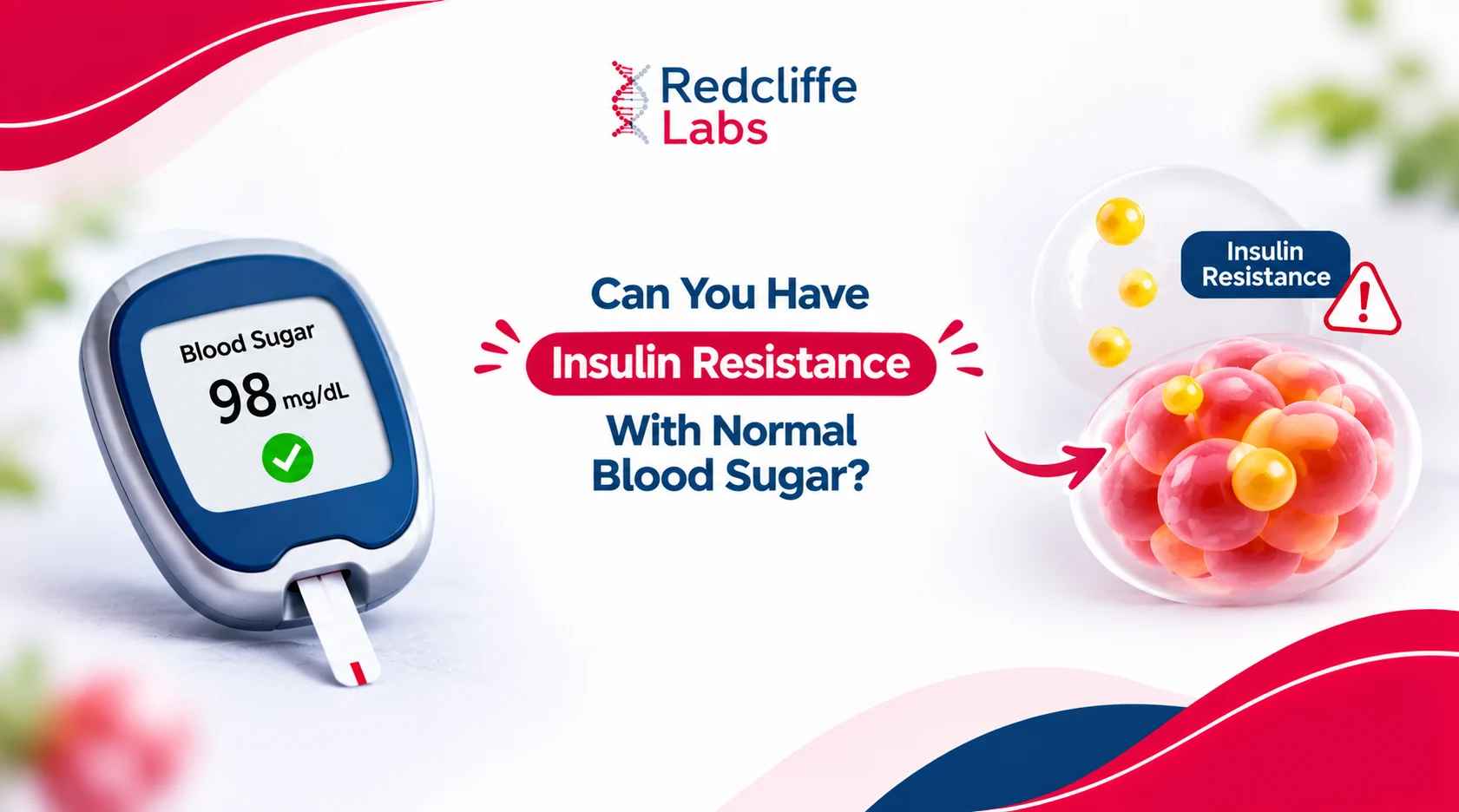
Yes, insulin resistance can be present even when fasting blood sugar and HbA1c are normal. This happens when the body's cells respond less effectively to insulin, and the pancreas compensates by producing more of it. As a result, blood glucose may remain within the normal range even though the body needs more insulin to regulate it.
A normal fasting blood sugar or HbA1c result does not always mean your body is responding to insulin effectively. In some people, blood glucose stays within the normal range because the pancreas is producing more insulin to compensate for the body's reduced insulin sensitivity.
This makes insulin resistance difficult to recognise through routine glucose testing alone. The difference matters because insulin resistance is associated with a higher risk of prediabetes and type 2 diabetes, although progression is not inevitable.
Understanding how this process works, which risk factors to look out for, and what different tests can tell you can help you make more informed decisions about your metabolic health.
How Can Insulin Resistance Exist When Blood Sugar Is Normal?
Insulin resistance develops when the body's cells, particularly in the muscles, liver, and fat tissue, do not respond effectively to insulin.
Insulin is a hormone produced by the pancreas. Its main role is to help glucose move from the bloodstream into cells, where it can be used for energy. It also helps the liver regulate glucose storage and release.
When cells become less responsive to insulin, the body needs more of this hormone to maintain normal blood glucose levels.
This is where the pancreas plays an important role:
It may release additional insulin to compensate for the reduced response from cells. This extra insulin can help keep blood sugar within the normal range, even when insulin resistance is present.
This stage is sometimes described as compensatory hyperinsulinaemia, meaning the body produces more insulin to maintain glucose regulation.
Why can blood sugar remain normal?
Consider the following sequence:
- Normal insulin response: Insulin helps cells take up glucose from the bloodstream.
- Reduced insulin sensitivity: Cells gradually become less responsive to insulin.
- Increased insulin production: The pancreas releases more insulin to compensate.
- Blood sugar remains controlled: The additional insulin helps maintain glucose levels within the normal range.
- Compensation may become insufficient: If the pancreas cannot meet the body's increased insulin demand, blood glucose levels may begin to rise.
This explains why insulin resistance can exist before prediabetes or diabetes develops. However, the progression is not inevitable, and not everyone with insulin resistance will develop these conditions.
What Are the Warning Signs and Risk Factors of Insulin Resistance?
Insulin resistance often develops without noticeable symptoms. Some people may not realise they have it until routine blood tests or other health assessments reveal associated metabolic changes.
However, certain physical signs and risk factors may indicate a higher likelihood of insulin resistance.
1. Possible physical signs
Some findings associated with insulin resistance include:
- Darkened skin around the neck, armpits, or groin: This may be acanthosis nigricans, a condition in which the skin becomes darker, thicker, and velvety.
- Skin tags: Small, soft skin growths may occur more frequently in people with insulin resistance, although they are not a diagnostic sign.
- Increased waist circumference: Abdominal fat accumulation is associated with a higher risk of insulin resistance.
- Changes associated with PCOS: Some women with polycystic ovary syndrome (PCOS) also have insulin resistance, although the two conditions are not the same.
These signs do not confirm insulin resistance on their own. A medical assessment is needed to understand their possible causes.
2. Common risk factors
Your likelihood of developing insulin resistance may increase with:
- Being overweight or having excess abdominal fat.
- Having a family history of type 2 diabetes.
- Spending long periods sitting or having low physical activity.
- Having PCOS or a history of gestational diabetes.
- Having high triglycerides, low HDL cholesterol, or high blood pressure.
- Having sleep-related conditions such as obstructive sleep apnoea.
- Taking certain medicines over an extended period, including some corticosteroids.
It is also important to remember that insulin resistance can occur in people who are not overweight. Body weight alone cannot determine whether someone has the condition.
How Is Insulin Resistance Different From Prediabetes and Diabetes?
Insulin resistance, prediabetes, and type 2 diabetes are related, but they do not mean the same thing.
Insulin resistance describes a reduced response of the body's cells to insulin. Prediabetes and diabetes are identified using blood glucose or HbA1c criteria.
|
Feature |
Insulin resistance |
Prediabetes |
Type 2 diabetes |
|
What happens? |
Cells respond less effectively to insulin |
Blood glucose rises above normal but remains below the diabetes range |
Blood glucose reaches the diabetes range |
|
Insulin response |
The body may produce more insulin to compensate |
Insulin resistance is common, but insulin production may vary |
The body may not produce enough insulin to meet its needs |
|
Blood glucose |
Can remain normal |
Higher than normal |
Higher than the diagnostic threshold |
|
Can it be present without obvious symptoms? |
Yes |
Yes |
Yes, particularly in the early stages |
What are the blood sugar ranges for prediabetes and diabetes?
The following commonly used criteria apply to non-pregnant adults. Individual interpretation may vary depending on the clinical situation.
|
Test |
Normal range |
Prediabetes |
Diabetes |
|
Fasting blood glucose |
Below 100 mg/dL |
100–125 mg/dL |
126 mg/dL or higher |
|
HbA1c |
Below 5.7% |
5.7–6.4% |
6.5% or higher |
|
2-hour oral glucose tolerance test |
Below 140 mg/dL |
140–199 mg/dL |
200 mg/dL or higher |
These are diagnostic thresholds for blood glucose abnormalities, not insulin resistance. A normal result does not directly measure how sensitive your cells are to insulin.
In the absence of unequivocal hyperglycaemia, an abnormal diabetes result generally requires confirmation through repeat or additional testing.
How Is Insulin Resistance Assessed?
There is no single routine blood test that universally confirms insulin resistance in every individual. Healthcare professionals consider a person's medical history, risk factors, and relevant blood test results to assess metabolic health.
Some tests that may be considered include:
1. Fasting Blood Glucose Test
This test measures the amount of glucose in your blood after an overnight fast, usually of at least 8 hours.
It helps identify elevated fasting glucose and can be used to screen for prediabetes and diabetes. However, it does not measure how much insulin your body needs to maintain that glucose level.
2. HbA1c Test
The HbA1c test measures the percentage of haemoglobin attached to glucose in red blood cells. It provides an estimate of average blood glucose over approximately the previous 2–3 months.
It is commonly used to screen for and diagnose prediabetes and diabetes. However, it does not directly measure insulin levels or insulin sensitivity.
3. Fasting Insulin Test
A fasting insulin test measures the amount of insulin circulating in your blood after a period of fasting.
When fasting insulin is elevated despite normal or near-normal blood glucose, it may suggest that the pancreas is producing extra insulin to compensate for reduced insulin sensitivity.
However, insulin levels can vary between individuals and laboratories. A fasting insulin result should be interpreted alongside glucose levels, medical history, and other relevant findings rather than used alone to diagnose insulin resistance.
4. HOMA-IR Test
HOMA-IR stands for Homeostatic Model Assessment of Insulin Resistance. It is a calculated estimate that uses fasting blood glucose and fasting insulin levels to assess insulin resistance.
The formula is:
HOMA-IR = (Fasting insulin × Fasting glucose) ÷ 405
This formula is used when glucose is measured in mg/dL and insulin in µIU/mL.
If glucose is measured in mmol/L, the formula is:
HOMA-IR = (Fasting insulin × Fasting glucose) ÷ 22.5
A higher HOMA-IR value may indicate reduced insulin sensitivity. However, there is no universally accepted cutoff that applies to every individual. Results can vary with age, population, laboratory methods, and other clinical factors.
HOMA-IR is an estimate, not a standalone diagnostic test. Its interpretation should be guided by a healthcare professional.
5. Lipid Profile
A lipid profile measures different types of fats in your blood, including total cholesterol, LDL cholesterol, HDL cholesterol, and triglycerides.
Higher triglycerides and lower HDL cholesterol may occur alongside insulin resistance and other metabolic changes. These results can help a healthcare professional assess overall metabolic and cardiovascular risk, but they cannot independently confirm insulin resistance.
Can Insulin Resistance Be Reversed or Improved?
In many people, insulin sensitivity can improve with consistent lifestyle changes. The aim is to help the body's cells respond more effectively to insulin and support healthy blood glucose regulation.
Here are some practical steps that may help:
1. Include Regular Physical Activity
Physical activity helps muscles use glucose more effectively and can improve insulin sensitivity.
You can start with manageable changes such as:
- Walking regularly, including a short walk after meals.
- Taking movement breaks during long periods of sitting.
- Including strength-training exercises in your weekly routine.
- Choosing activities such as cycling, swimming, or dancing that you enjoy.
Aim for at least 150 minutes of moderate-intensity physical activity each week, along with muscle-strengthening activity on two or more days, if appropriate for your health and fitness level.
2. Choose Balanced Meals
The quality and overall composition of your meals can influence blood glucose regulation and metabolic health.
Consider including:
- High-fibre foods: Vegetables, fruits, whole grains, beans and lentils.
- Protein sources: Eggs, fish, lean meat, paneer, tofu and pulses.
- Healthy fats: Nuts, seeds and unsaturated vegetable oils.
- Balanced carbohydrates: Choose whole grains and fibre-rich carbohydrate sources more often than refined grains and highly processed foods.
You do not necessarily need to eliminate carbohydrates. Paying attention to portion sizes, food quality, and the overall balance of your meals is more useful than following extreme dietary restrictions.
3. Manage Weight, If Needed
If you are overweight or obese, gradual and sustainable weight loss may help improve insulin sensitivity.
Even modest weight reduction can support metabolic health. However, weight loss is not necessary or appropriate for everyone with insulin resistance.
4. Get Adequate Sleep
Poor sleep and irregular sleep schedules can affect hormones involved in appetite and glucose regulation.
Try to maintain a consistent sleep routine and aim for around 7–9 hours of sleep each night as an adult. If you regularly snore heavily, experience disturbed sleep, or feel excessively sleepy during the day, discuss it with a healthcare professional.
5. Manage Stress
Long-term stress can affect hormones that influence blood glucose regulation and everyday health habits.
Simple practices such as walking, relaxation exercises, meditation, and maintaining a manageable daily routine may help support overall well-being.
6. Follow Medical Advice
Lifestyle changes are important, but they may not be sufficient for everyone. If you have PCOS, prediabetes, obesity, or other metabolic conditions, a healthcare professional may recommend additional evaluation or treatment.
Do not start or stop medicines or supplements for insulin resistance without medical guidance.
When Should You Consider Getting Tested?
You may consider discussing metabolic screening with a healthcare professional if you:
- Have a family history of type 2 diabetes.
- Have PCOS or a history of gestational diabetes.
- Notice dark, thickened skin around your neck or armpits.
- Have high triglycerides, low HDL cholesterol, or elevated blood pressure.
- Have excess abdominal fat or other risk factors for metabolic conditions.
- Have previously been diagnosed with prediabetes or have concerns about your blood glucose results.
Even if your fasting blood sugar and HbA1c are normal, your healthcare professional may consider additional assessment based on your overall risk profile.
Regular monitoring can help identify changes in metabolic health and guide appropriate preventive steps.
Take a Step Towards Better Metabolic Health
Normal blood sugar levels do not always rule out insulin resistance. If you have risk factors for insulin resistance or type 2 diabetes, a broader metabolic assessment may help you understand your health better.
Redcliffe Labs' Diabetes Preventive Care package includes 20 parameters, covering HbA1c, fasting glucose, fasting insulin, HOMA-IR, lipid profile, and liver enzymes.
Explore the Diabetes Preventive Care Package and take a proactive step towards understanding your metabolic health.
Frequently Asked Questions
1. Can I have insulin resistance but not be diabetic?
Yes. Insulin resistance can develop before prediabetes or type 2 diabetes. In the early stages, the pancreas may produce extra insulin to maintain normal blood glucose levels. Not everyone with insulin resistance develops diabetes.
2. Is insulin resistance the same as diabetes?
No. Insulin resistance means the body's cells do not respond effectively to insulin. Diabetes is a condition in which blood glucose levels reach a diagnostic range because the body cannot maintain normal glucose regulation. Insulin resistance is commonly associated with type 2 diabetes but is not the same condition.
3. What are the symptoms of insulin resistance in females?
Insulin resistance may not cause noticeable symptoms in women. However, some women may have associated signs such as darkened skin around the neck or armpits, increased abdominal fat, or PCOS-related symptoms, including irregular menstrual cycles. These signs are not specific to insulin resistance and require appropriate medical evaluation.
4. What are the 12 signs of insulin resistance?
There is no medically established list of exactly 12 signs of insulin resistance. Some associated findings include acanthosis nigricans, skin tags, increased waist circumference, high triglycerides, low HDL cholesterol, and elevated blood pressure. However, many people have no noticeable symptoms, and these findings do not confirm the condition.
5. Can insulin resistance be reversed completely?
Insulin sensitivity can improve significantly with consistent lifestyle changes, and some people may no longer show the same degree of insulin resistance. However, the extent of improvement depends on individual health factors, underlying conditions, and long-term habits. Regular medical follow-up may still be important.
6. What is the best diet for insulin resistance?
There is no single diet that works for everyone. A balanced eating pattern that includes vegetables, fruits, whole grains, pulses, adequate protein, and healthy fats can support metabolic health. Limiting highly processed foods and sugary drinks may also help. Individual dietary needs should be considered when planning meals.
7. Can you have normal HbA1c but high fasting insulin?
Yes. HbA1c measures average blood glucose, whereas a fasting insulin test measures the amount of insulin in the blood after fasting. A person may have normal HbA1c but elevated fasting insulin if the pancreas is producing more insulin to compensate for reduced insulin sensitivity. The results should be interpreted together by a healthcare professional.
Conclusion
Yes, insulin resistance can exist even when blood sugar levels are normal. This is because the pancreas may initially produce more insulin to compensate for the body's reduced response to the hormone.
Therefore, a normal fasting glucose or HbA1c result does not directly rule out reduced insulin sensitivity. Understanding your risk factors, discussing appropriate tests with a healthcare professional, and making sustainable lifestyle changes can help support better metabolic health.
If you have concerns about insulin resistance, consider discussing your testing options with a healthcare professional rather than relying on a single blood test or symptom.