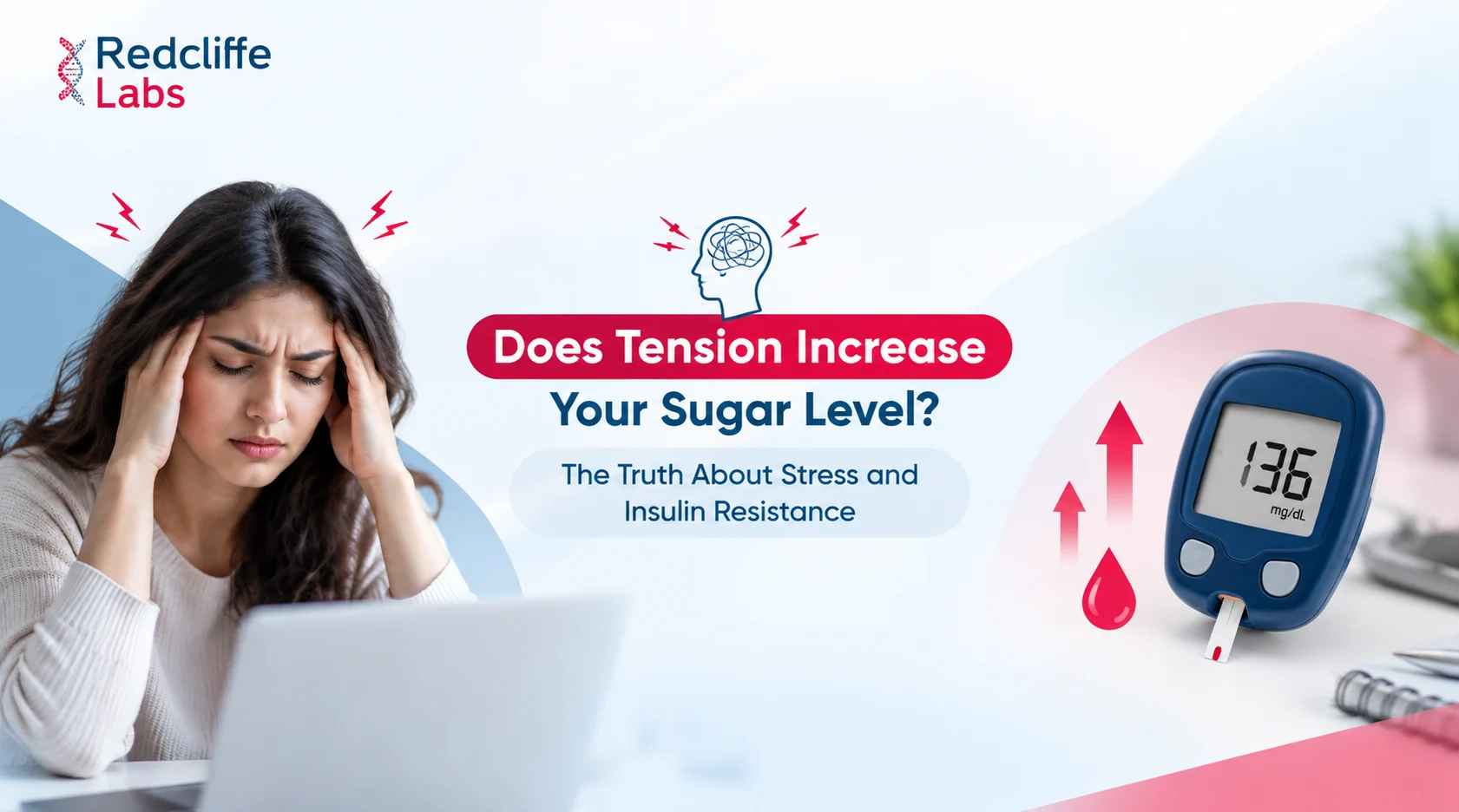
Does Tension Increase Your Sugar Level? The Truth About Stress and Insulin Resistance

Overview
- Stress can raise blood sugar, but the effect varies.
- Stress hormones can make insulin work less well for a time.
- Feeling tense does not mean you have diabetes or insulin resistance.
- Small changes to your routine and the right support can help.
- Your doctor can recommend tests such as a fasting blood sugar or an HbA1c test.
Quick Answer: Does Stress Increase Blood Sugar?
Yes, stress can raise your blood sugar levels, especially if you have diabetes.
When you are stressed, your body releases hormones that signal your liver to release more sugar into your blood for energy. These hormones can also make it harder for insulin to work properly, which may cause your blood sugar levels to rise.
However, stress does not affect everyone in the same way, and your blood sugar may not rise every time you feel stressed.
If you notice a higher-than-usual blood sugar reading after a stressful day, stress could be one reason. However, food, illness, physical activity, and medicines can also affect your levels. Do not assume stress is the only cause of a high reading. If your blood sugar stays high or is repeatedly outside your target range, speak with your healthcare professional.
How Are Cortisol and Blood Sugar Linked?
During stress, your body prepares to act quickly. This is often called the “fight or flight” response. It can happen during an argument, a work deadline, or an illness.
Hormones are chemical messengers. Insulin is a hormone that helps sugar move from your blood into your cells for energy. Glucose is another word for blood sugar.
Two changes help explain the connection between stress hormones and blood sugar:
- Extra sugar becomes available. Adrenaline, a stress hormone, helps your liver release glucose for quick energy.
- Insulin may work less well. Cortisol, another stress hormone, can make your cells less responsive to insulin, leaving more sugar in your blood.
Stress may also disrupt sleep, meals, exercise, or medicine routines. Together, these changes can make diabetes harder to manage.
An everyday example: a family wedding and changing blood sugar
Imagine someone with diabetes preparing for a family wedding. Between shopping, travel, and family duties, they feel tense, sleep less, and eat at different times. Their blood sugar readings may change during these busy days.
Stress could play a part. Changes in food, sleep, activity, or medicine routines could also affect the readings.
If this sounds familiar, write down your readings along with what was happening that day. Share these notes with your doctor, especially if your sugar stays above your usual target.
Stress and Insulin Resistance: What Is the Connection?
Insulin resistance means your cells do not respond to insulin as well as they should. Your body may need more insulin to help manage blood sugar.
Stress hormones can reduce insulin’s effect for a time. Ongoing stress can also make healthy routines harder to follow. But feeling tense, or seeing one high reading, cannot tell you whether you have lasting insulin resistance.
Insulin resistance and prediabetes often have no clear symptoms. Prediabetes means blood sugar is above normal but below the diabetes range. A doctor looks at your health history, risk factors, and suitable tests to assess your health.
Does Stress Cause High Blood Sugar or Diabetes?
Stress can contribute to high blood sugar. That is different from saying stress alone causes diabetes. Type 2 diabetes develops through several factors, including family history, body weight, and physical activity.
A review published in 2022 found a link between job stress and a higher chance of developing type 2 diabetes. These studies looked for patterns over time. They could show a link, but could not prove that stress caused diabetes.
Repeated high readings deserve medical advice, even during a stressful period.
Does Anxiety Increase Blood Sugar?
Anxiety can raise blood sugar by activating the body’s stress response, but the effect varies. Anxiety means feeling worried, fearful, or on edge.
In people with diabetes, stress can make blood sugar rise or fall unpredictably. Meals, medicines, activity, and illness can also affect what happens.
How anxious you feel cannot tell you your blood sugar level. If you already have a monitoring plan, keep following it.
How Can You Manage Stress and Blood Sugar?
You do not have to change everything at once. Start with one manageable step.
- Take a short pause. Try a few slow, comfortable breaths, quiet music, or a brief break from what is upsetting you.
- Keep your care routine steady. Follow your usual meal plan and take medicines as prescribed. Only change doses according to your diabetes team’s advice or the adjustment plan they have given you.
- Move gently when you feel well. A short walk may help you unwind. Choose activity that fits your health and diabetes care plan.
- Make room for sleep. Keep a regular bedtime where possible and give yourself time to settle before bed.
- Ask for support. Talk to someone you trust. If stress keeps affecting your sleep, work, or diabetes care, speak with your doctor or a mental health professional.
These steps can support your wellbeing. Relaxation cannot replace treatment for high blood sugar.
How Can You Spot a Pattern In Your Readings?
If you already monitor blood sugar, follow the schedule agreed with your diabetes team. Alongside your readings, briefly note:
- Stressful events and how you felt.
- Sleep, meals and activity.
- Illness and medicines taken.
For example, a note saying “poor sleep, busy shift, late lunch” gives your doctor useful context for an unusual reading. It cannot prove what caused it.
Bring these notes to your appointment. Your checking schedule should suit your medicines and health needs.

Which Blood Tests Might Your Doctor Recommend?
Your doctor may suggest testing because of symptoms, diabetes risk factors, or a need to monitor known diabetes. Feeling stressed by itself does not automatically mean you need a test.
|
Test |
What it tells you |
Preparation |
|
Your blood sugar level at the time of the test |
An overnight fast is needed. Follow your doctor’s and lab’s instructions; plain water is allowed. | |
|
Your average blood sugar over about three months |
No fasting is needed for this test alone. |
These tests help assess blood sugar. Neither can prove stress caused a high result or directly diagnose insulin resistance. Doctors usually need a second abnormal result to confirm diabetes unless the symptoms and findings make the diagnosis clear.
Some blood conditions can affect HbA1c results. Tell your doctor about any known blood condition. If you take diabetes medicines, ask how to prepare safely before fasting.
Also Read: Different Types of Blood Sugar Tests: Check the List
When Should You Seek Medical Help?
Speak with your doctor if readings stay above your agreed range, or you notice unusual thirst, frequent urination, blurred vision, or unexplained weight loss.
Seek urgent hospital care if you suspect high blood sugar and have vomiting, stomach pain, fast breathing, fruity-smelling breath, confusion, or unusual drowsiness. These can signal a medical emergency. Do not wait for a routine lab appointment.
The Next Step For Your Blood Sugar Health
Understanding stress and blood sugar can help you make sense of changing readings. Keep following your care plan, find small ways to ease daily pressure, and ask for support when you need it.
Has your doctor recommended a blood sugar test? Book your fasting blood glucose test or HbA1c test with Redcliffe Labs. Check home sample collection availability in your area, follow the preparation instructions and discuss your results with your doctor.
Frequently asked questions
How much can stress raise blood sugar?
There is no fixed increase that applies to everyone. Your response depends on factors such as diabetes, medicines, food, and activity. A glucose reading cannot measure how stressed you are.
How long does blood sugar stay high after stress?
Stress affects everyone differently, so there is no fixed time for blood sugar levels to return to normal. If your blood sugar stays higher than your target, follow your diabetes care plan and speak with your doctor for proper guidance.
Can stress raise blood sugar even if you have not eaten?
Yes. Your liver can release stored glucose during the stress response. Food is not the only reason blood sugar may rise.
Can stress cause a high HbA1c result?
A single stressful event is unlikely to cause a high HbA1c result. HbA1c shows your average blood sugar levels over the past 2–3 months, so it is not greatly affected by a brief rise in blood sugar. If your result is higher than expected, talk to your doctor to understand what it means.
How can you tell anxiety from low blood sugar?
Both can cause shaking, sweating, or a racing heart. If you have diabetes and are at risk of low blood sugar, check your glucose if possible. If it is low, follow your low blood sugar treatment plan. If you cannot check, follow your care team’s advice for suspected low blood sugar.
Can yoga or meditation lower blood sugar?
Yoga and meditation can help you feel calmer and manage stress, but can't guarantee to lower your blood sugar. It’s best to use them alongside a balanced diet, regular physical activity, prescribed medicines, and regular follow-ups with your doctor.
Should you check blood sugar every day if you feel stressed?
You don’t need to check your blood sugar every day just because you feel stressed. If you have diabetes or take medicines that affect blood sugar, follow the testing schedule recommended by your doctor. If you’re unsure whether you need to check it, talk to your doctor about what’s right for you.