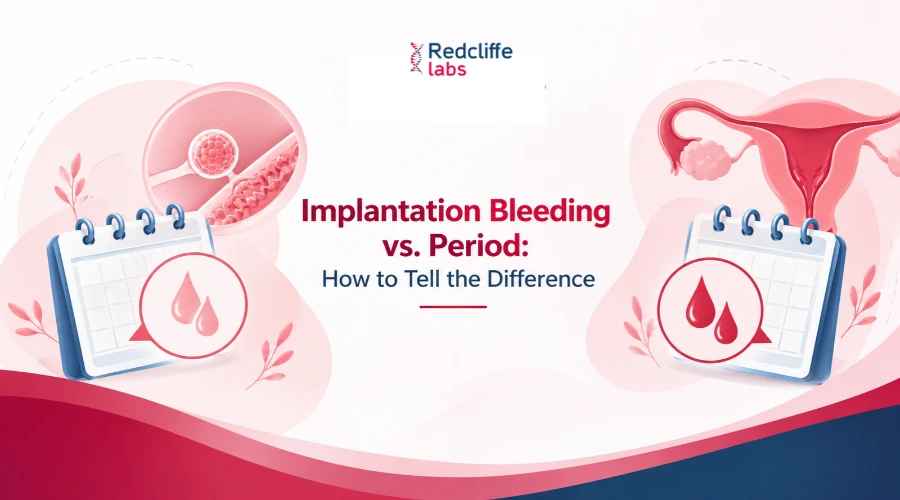
Implantation Bleeding vs. Period: How to Tell the Difference

Overview:
- Implantation bleeding is commonly described as light spotting around the time a period is expected. However, bleeding in early pregnancy cannot reliably be attributed to implantation based on timing alone.
- A menstrual period typically develops into a more sustained flow, while implantation bleeding is usually described as light and brief. These patterns can overlap, so neither can confirm pregnancy.
- Blood colour, cramps and bleeding duration cannot reliably distinguish implantation bleeding from a period. Pink, brown or red spotting can have several causes.
- A pregnancy test is the next step if pregnancy is possible. Take a home test from the first day of a missed period, or at least 21 days after unprotected sex if you do not know when your period is due. A Beta hCG blood test can also detect pregnancy, although the timing of testing matters.
- Heavy bleeding, severe abdominal or pelvic pain, shoulder pain, dizziness, or fainting require urgent medical assessment, particularly if pregnancy is possible.
Quick Answer: Implantation Bleeding vs. Period
Implantation bleeding is commonly described as light spotting around the time a period is expected, whereas a menstrual period usually develops into a more sustained flow. Implantation-related spotting may be pink, brown, or red, but colour alone cannot identify its cause. Cramps, duration, and bleeding amount can also overlap. You cannot confirm pregnancy by looking at the bleeding. If pregnancy is possible, take a home pregnancy test from the first day of a missed period or at least 21 days after unprotected sex if you do not know when your next period is due.
What Is Implantation Bleeding?
Implantation bleeding is a term commonly used to describe light spotting that may occur in very early pregnancy, often around the time a menstrual period is expected. It is traditionally attributed to the fertilised egg attaching to the lining of the uterus.
However, spotting during early pregnancy does not automatically mean implantation has caused it. Early pregnancy bleeding can have several explanations, and its cause cannot be established by colour or timing alone.
Implantation bleeding is generally described as:
- Light spotting: A few spots or a small amount of blood rather than a steadily increasing menstrual flow.
- Short-lived: It may stop on its own rather than developing into a typical period.
- Around the expected period: Its timing can make it difficult to distinguish from the beginning of menstruation.
- With or without mild cramps: Some people report mild discomfort, while others notice no cramps.
These are commonly reported patterns, not a checklist for diagnosing pregnancy. Some pregnant people experience no spotting, and spotting can occur for reasons unrelated to pregnancy.
Implantation Bleeding vs. Period: Key Differences
The most noticeable difference is often how the bleeding develops over time. Implantation bleeding is usually described as light spotting, whereas a period typically follows a person's usual menstrual pattern.
|
Feature |
Implantation bleeding |
Menstrual period |
|
Timing |
Often described around the time a period is expected |
Usually occurs according to the person's menstrual cycle, although cycles can vary |
|
Amount of blood |
Commonly described as a few spots or light bleeding |
Usually develops into the person's typical menstrual flow |
|
Colour |
May appear pink, brown or red |
May range from bright red to dark red or brown |
|
Duration |
Often described as brief or short-lived |
Usually lasts several days, depending on the person's normal pattern |
|
Clots |
Clots are not a typical feature of the commonly described pattern |
Small clots may occur during menstruation |
|
Cramps |
May occur, but some people have no cramps |
Menstrual cramps are common, though their intensity varies |
These are general patterns, not diagnostic rules. Early pregnancy bleeding and menstrual bleeding can look alike, and the appearance of blood cannot confirm the cause.
How to Differentiate Between Implantation Bleeding and Periods
Rather than judging by one symptom, pay attention to how the bleeding compares with your usual cycle.
- Check whether the flow changes. If you notice a few spots that stop, the bleeding may fit the commonly described pattern of implantation bleeding. If it gradually develops into your usual menstrual flow, it may be your period. Neither pattern confirms the cause.
- Consider your usual menstrual pattern. Think about when your period normally starts, how heavy it is, and how long it lasts. A change from your usual pattern can be worth noting, but an unusual period does not necessarily mean pregnancy.
- Do not rely on colour or cramps. Brown blood can occur during menstruation, and pink or red spotting can have several causes. Mild cramps also occur with both premenstrual symptoms and early pregnancy.
- Use a pregnancy test if pregnancy is possible. A test provides more useful information than trying to interpret the appearance of the bleeding. Testing too early, however, can produce a negative result even when pregnancy has occurred.
If you are still unsure, you do not need to keep comparing symptoms or searching for pictures to reach a conclusion. The next step is to test at the appropriate time and seek medical advice if the bleeding is unusual or concerning.
What Implantation Bleeding May Look Like
Implantation bleeding is commonly described as light spotting that may appear pink, brown, or red. It may be noticeable when wiping or as a small mark on underwear.
However, there is no single appearance that identifies implantation bleeding.
- Pink spotting: A small amount of blood mixed with vaginal fluid may look pink.
- Brown spotting: Blood that has taken longer to leave the body may appear brown. This can also happen at the beginning or end of a period.
- Red spotting: Fresh blood may look red, but red spotting does not automatically mean that a period has started.
Can Pictures Tell You Whether It Is Implantation Bleeding or a Period?
No. Pictures can show what light spotting or menstrual bleeding may look like, but they cannot establish why the bleeding occurred or whether you are pregnant.
Even if your bleeding looks similar to a picture labelled “implantation bleeding,” it could have another cause. The amount and colour of blood are not reliable pregnancy tests.
If pregnancy is possible, use an appropriately timed pregnancy test instead of relying on photographs or symptom comparisons.
Timing and Duration of Implantation Bleeding
Implantation bleeding is commonly described as occurring around 10–14 days after conception, often close to the expected start of a period. The exact timing of ovulation and conception can vary, so calendar estimates are not always accurate.
There is also an important limitation to this explanation. Research examining bleeding in very early pregnancy has questioned whether bleeding can reliably be attributed to the exact day of implantation. In other words, spotting around the expected period does not establish that implantation has occurred.
How Long Does Implantation Bleeding Last?
It is commonly described as brief or short-lived, sometimes lasting only a short time. However, there is no fixed duration that can confirm implantation bleeding.
If spotting continues, becomes heavier, returns repeatedly, or differs significantly from your usual menstrual pattern, consider seeking medical advice rather than assuming it is implantation-related.
A period can also begin with a day of light spotting before the flow becomes heavier. This is why the first few hours of bleeding may not tell you much on their own.
Cramps and Other Early Pregnancy Symptoms
Some people report mild cramps alongside early pregnancy spotting, while others experience no noticeable symptoms. Unfortunately, cramps are not a reliable way to distinguish implantation bleeding from a period.
You may also notice breast tenderness, fatigue, bloating,g or changes in how you feel. These symptoms can occur before menstruation as well as during early pregnancy, so they cannot confirm that conception has occurred.
A missed period, when your cycles are usually regular, can be a more useful reason to take a pregnancy test than symptoms alone.
Also Read: 10 Early Implantation Symptoms You Should Know About
Remember that symptoms vary, and none can independently confirm pregnancy.
Pregnancy Testing After Unexpected Bleeding
If you are trying to work out whether bleeding could be related to pregnancy, the timing of your test matters more than the appearance of the blood.
1. If Your Period Is Due or Already Late
Take a home pregnancy test from the first day of your missed period. This is when most home pregnancy tests are considered most reliable.
If you test before your expected period, pregnancy hormone levels may not yet be high enough for the test to detect.
2. If You Do Not Know When Your Period Is Due
The NHS recommends taking a pregnancy test at least 21 days after your last unprotected sex if you do not know when your next period is expected.
3. If Your Test Is Negative but Your Period Does Not Arrive
An early negative result does not always rule out pregnancy. If your period still has not arrived, repeat the test after a few days and follow the instructions supplied with the kit.
If you continue to get negative results but your period remains absent, consult a healthcare professional.
4. Should You Get a Blood Test for Pregnancy?
A blood hCG test measures human chorionic gonadotropin, a hormone associated with pregnancy. A healthcare professional may recommend it when earlier assessment, clarification of a result, or follow-up is needed.
However, a blood test taken too early may also be inconclusive. Depending on your symptoms and medical history, a clinician may recommend repeat testing or other investigations.
Remember: Neither a home pregnancy test nor a blood hCG result should be used to dismiss concerning bleeding or severe pain. Seek medical care if you have warning signs, even if your pregnancy test is negative.
Warning Signs That Need Medical Attention
Light spotting may not always indicate a serious problem, but bleeding during a possible or confirmed pregnancy should not automatically be labelled implantation bleeding.
Seek urgent medical assessment if you experience:
- Heavy bleeding, particularly if you are soaking pads quickly.
- Severe or worsening abdominal or pelvic pain.
- Pain mainly on one side of the lower abdomen.
- Shoulder-tip pain.
- Dizziness, fainting, or marked weakness.
These symptoms can occur with conditions that need prompt treatment, including an ectopic pregnancy. Do not wait for a pregnancy test to become positive before seeking urgent care if you have concerning symptoms.
Contact a healthcare professional if bleeding keeps returning, lasts longer than expected, occurs after sex, or is accompanied by unusual discharge, fever, or persistent pain. They can assess your symptoms and decide whether you need a pregnancy test, examination, blood tests, or an ultrasound.
Frequently Asked Questions
1. Can You Have Implantation Bleeding and Your Period at the Same Time?
A menstrual period does not occur during an ongoing pregnancy, but bleeding can occur in early pregnancy around the time a period is expected. This can be mistaken for menstruation. If pregnancy is possible, take a pregnancy test at the appropriate time rather than assuming the bleeding is your period.
2. Can Implantation Bleeding Be as Heavy as a Period?
Implantation bleeding is generally described as light spotting, not a flow as heavy as a typical period. Heavy bleeding should not be assumed to be implantation bleeding. If you could be pregnant and experience heavy bleeding, severe pain, dizziness, or fainting, seek urgent medical assessment.
3. Can You Bleed Like You're on Your Period and Still Be Pregnant?
Yes, bleeding during early pregnancy can sometimes be mistaken for a period. However, bleeding that resembles your usual menstrual flow cannot confirm or rule out pregnancy. Take a pregnancy test if pregnancy is possible, and seek medical advice if the bleeding is unusual or concerning.
4. Will a Pregnancy Test Be Positive During Implantation Bleeding?
It depends on when you test. Pregnancy tests detect hCG, which rises after implantation begins, but hormone levels may be too low for a test to detect very early on. A negative result during spotting does not necessarily rule out pregnancy. Test from the first day of a missed period or follow the 21-day guidance if your period date is unknown.
5. Can Implantation Bleeding Be Mistaken for a Regular Period?
Yes. Light bleeding in early pregnancy may occur around the expected time of a period and can be mistaken for a light menstrual period. However, there is no reliable way to identify implantation bleeding by appearance alone. A pregnancy test and, when needed, clinical assessment are more useful for determining what is happening.
Planning a Pregnancy? Explore Fertility Tests for Women and Men
Understanding reproductive health can be an important step when you are planning a pregnancy. Hormonal imbalances can affect reproductive function, and selected blood tests can help assess some of the factors involved. Redcliffe Labs offers fertility test packages for women and men, making it easier to explore relevant hormone markers through a structured blood-test panel.
Female Fertility Test Advance
The Female Fertility Test Advance measures seven parameters, including AMH, FSH, LH, estradiol, prolactin, total testosterone, and TSH. These markers help assess ovarian reserve and selected hormonal factors associated with reproductive health.
Considering a fertility evaluation? Explore the Female Fertility Test Advance to review the included parameters and check the available booking options.
Male Fertility Test Basic
Fertility assessment involves male reproductive health, too. The Male Fertility Test Basic measures seven parameters, including FSH, LH, prolactin, total testosterone,e and thyroid hormones. These tests help assess selected hormonal factors that may be relevant to reproductive health.
Planning a pregnancy as a couple? Explore the Male Fertility Test Basic to see which parameters are included and whether the panel suits your testing needs.
Please note: These packages assess selected hormonal markers; they do not confirm pregnancy, establish the cause of vaginal bleeding, or assess every aspect of fertility. The male panel is not a substitute for semen analysis. If you are experiencing difficulty conceiving, a healthcare professional can help determine which tests are appropriate. If you are trying to confirm pregnancy after spotting, an appropriately timed pregnancy test is the relevant next step.
Final Thoughts
Implantation bleeding and a menstrual period can look similar, particularly when spotting occurs around the time your period is expected. Although light bleeding, colour and mild cramps may offer clues, none can reliably confirm whether you are pregnant.
If pregnancy is possible, take a home pregnancy test at the appropriate time rather than relying on symptoms or pictures. If the result is negative but your period does not arrive, repeat the test after a few days. Seek urgent medical attention if you experience heavy bleeding, severe abdominal or pelvic pain, shoulder pain, dizziness, or fainting.
If you are planning a pregnancy and have concerns about your reproductive health, a healthcare professional can guide you on whether fertility testing may be appropriate for you or your partner.