How to Lower Resting Heart Rate Naturally: Causes, Tips & Treatment

Your heart beats about 100,000 times a day, but is it working harder than necessary? Most people only notice their heartbeat when exercising, climbing stairs, or feeling nervous. Your resting heart rate, the number of beats per minute when you're fully relaxed, can reveal a lot about your heart health.
If your resting heart rate stays high, it could mean your heart is working too hard even when you're at rest. Stress, poor sleep, dehydration, not being active, smoking, and some health problems can all raise your heart rate.
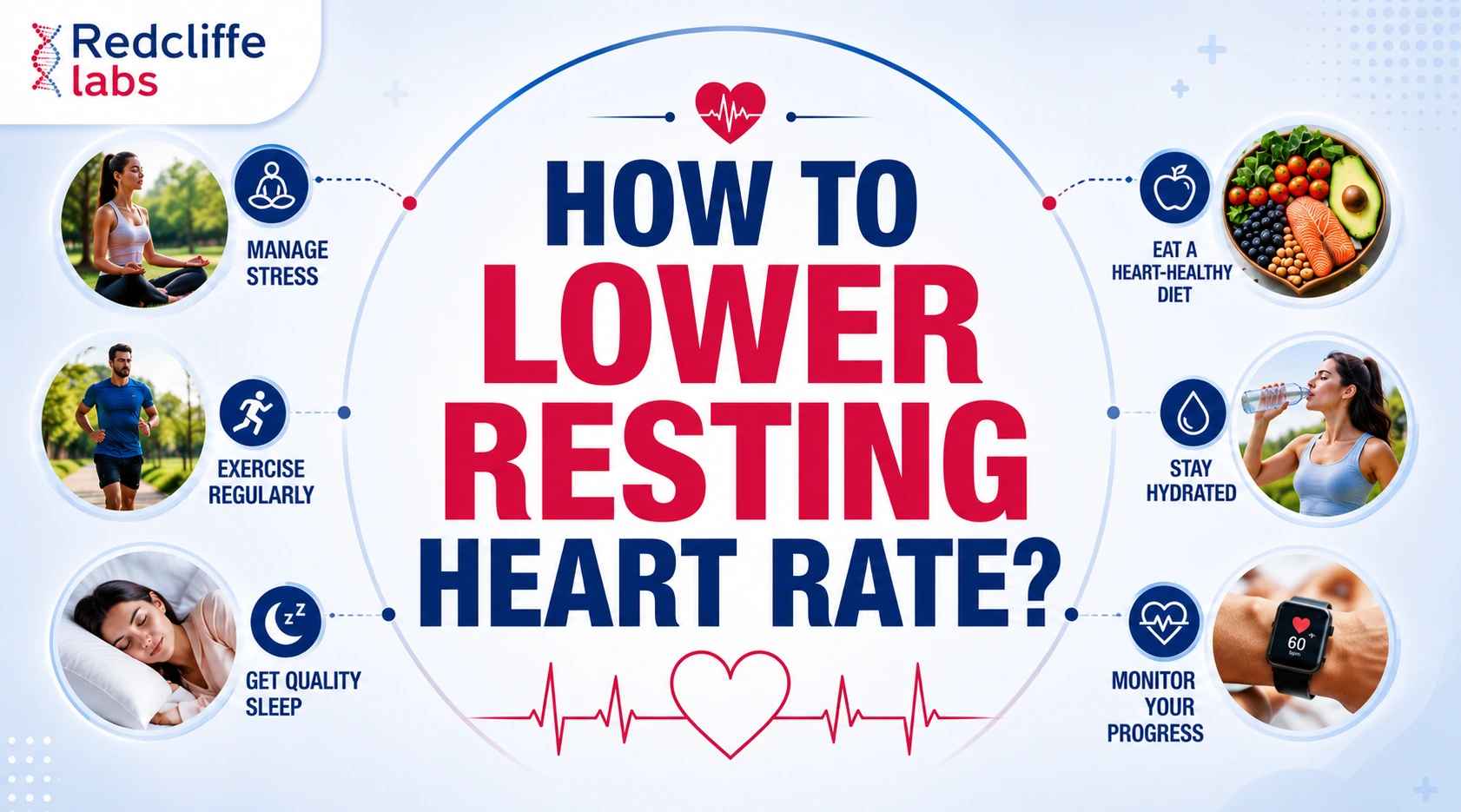
You can lower your resting heart rate naturally by making simple lifestyle changes and eating well, staying active, getting enough sleep, managing stress, and drinking enough water. In this blog, you'll find out what resting heart rate means, why it's important, what can raise it, and easy, proven ways to keep your heart healthy.
Also Read: The Difference Between Heart Rate and Pulse Rate!
What Is Resting Heart Rate?
Your resting heart rate (RHR) is how many times your heart beats in one minute when you're totally relaxed. It shows how hard your heart works when you're not moving or stressed. The best time to check it is right after you wake up, before getting out of bed. That's when your body is calm, and the reading is most accurate.
Usually, a lower resting heart rate means your heart is stronger and doesn't need to beat as often to move blood through your body. But there isn't one perfect number for everyone. Your age, fitness, health, and some medicines can all affect your resting heart rate.
Now that you know what resting heart rate means, you might wonder what's considered normal. Here's what most experts say is a healthy range.
What Is a Normal Resting Heart Rate?
For most healthy adults, a normal resting heart rate is between 60 and 100 beats per minute (BPM). But this range isn't the whole story, since your usual pulse can change depending on your lifestyle, habits, and fitness.
| Category | Typical Resting Heart Rate Range |
| Well-Trained Athletes | 40 to 60 BPM |
| Physically Active Adults | 50 to 70 BPM |
| Average Healthy Adults | 60 to 100 BPM |
| Elevated Baseline | Consistently above 100 BPM |
What Influences Your Resting Heart Rate?
The following factors influence the resting heart rate:
Age and Genetics: Your resting heart rate changes as you get older. Age affects how your heart works, and your genes also help decide your normal heart rate. That's why two healthy people of the same age can have different resting heart rates.
Stress and Your Nervous System: When you're stressed, anxious, scared, or under pressure, your body releases hormones that make your heart beat faster. When you're calm, relaxed, or asleep, your heart slows down. Managing stress helps keep your resting heart rate healthy.
Fitness Level and Heart Strength: Regular exercise strengthens your heart. A strong heart pumps more blood with each beat, so it doesn't have to beat as often. That's why people who are active, like athletes, usually have a lower resting heart rate than those who aren't as active.
Surroundings: Your surroundings can also affect your heart rate. Hot and humid weather makes your heart work harder to cool your body, which can raise your pulse. At high altitudes, where oxygen levels are lower, your heart beats faster to deliver enough oxygen to your body's organs and muscles.
How to Know If Your Resting Heart Rate Is Too High?
It's normal for your heart rate to go up after exercise, stress, or drinking coffee. But if your resting heart rate stays high for a long time, especially over 100 beats per minute, your heart could be under extra strain. Watch out if you often feel your heart racing while resting, get short of breath during daily activities, feel tired or dizzy, or have heart palpitations. Some people may also feel chest pain or pressure, which should always be taken seriously. These symptoms don't always mean a serious heart problem, but they do need medical attention. If they happen often or are severe, see a doctor to find out the cause and get the right treatment.
Step-by-Step Exercise Strategies to Lower Resting Heart Rate
If you want your heart to beat more slowly and efficiently, moving your body is the best way to do so. You don't need to push yourself to exhaustion. It's about picking the right kind of exercise at the right intensity.
1. Zone 2 Aerobic Exercise
Zone 2 exercise means doing activities at a pace where you can talk without getting out of breath. Brisk walking, cycling, swimming, or light jogging are all good options. Try to do this for 30 to 40 minutes, 4 or 5 days a week. This helps your heart get stronger so it can pump more blood with fewer beats.
2. High-Intensity Interval Training (HIIT)
HIIT involves short rest periods. HIIT means doing short bursts of fast, intense exercise, then resting or moving slowly. For example, sprint for 20 seconds, then walk for 40 seconds. Repeat this for 15 to 20 minutes, once or twice a week. HIIT helps your heart get stronger, boosts stamina, and improves overall fitness.
3. Strength Training
Strength training is when you work your muscles using weights, resistance bands, or your own body weight. Simple moves like squats, lunges, push-ups, and planks are great choices. Try to do strength training 2 or 3 times a week. Strong muscles help your heart by making its job easier and improving your fitness.
4. Stay Active Throughout the Day (NEAT)
You don't need to spend hours at the gym to help your heart. Small movements during the day matter too. Take the stairs, walk while on the phone, stand up every hour, stretch often, or do chores. These simple habits keep you active and support your heart.
What Nutritional and dietary adjustments do you have to make?
What you eat sends signals to your heart. A diet that lowers inflammation and supports your blood vessels can help keep your resting heart rate steady and calm.
Eat More Magnesium- and Potassium-Rich Foods: Magnesium and potassium help your heart keep a steady rhythm. If you don't get enough of these minerals, your heart might have to work harder. Eat foods like spinach, bananas, avocados, almonds, pumpkin seeds, and salmon to support your heart health.
Add Omega-3 Fatty Acids to Your Diet: Omega-3 fats are good for your heart. They lower inflammation, help blood flow, and support heart health. Try to eat fatty fish like salmon, sardines, or mackerel twice a week. If you're vegetarian, walnuts, flaxseeds, and chia seeds are good options.
Stay Well Hydrated: When you're dehydrated, your heart works harder to pump blood. Drinking enough water helps your heart work better. Try to drink water throughout the day, especially if it's hot or you've been active.
Don't Overdo Caffeine: Too much caffeine can make your heart beat faster for a while. Coffee, tea, energy drinks, and some soft drinks all contain caffeine. Enjoy them in moderation, avoid energy drinks, and try not to have caffeine late in the evening to help you sleep well.
Also Read: Calculate maximum target heart rate and estimated maximum heart rate to plan intense exercises.
When Should You See a Doctor About Your Heart Rate?
Lifestyle changes can help your resting heart rate, but sometimes you need to see a doctor. If your resting heart rate is always above 100 beats per minute when you're relaxed or below 60, and you're not an athlete, talk to a doctor. Don't ignore symptoms like dizziness, tiredness, shortness of breath, fainting, chest pain, or a racing or irregular heartbeat. These could be signs of a health problem like a heart rhythm issue, thyroid disorder, or anemia. A doctor might suggest simple tests, like an ECG or blood tests, to find the cause. Getting help early can protect your heart and prevent serious problems.
Conclusion
Lowering your resting heart rate takes time, but every small step helps your heart get healthier. Simple habits like staying active, eating well, sleeping enough, managing stress, and drinking water can make a big difference. The most important thing is to be consistent and patient with yourself.
Your heart works for you every day, so it deserves good care. Remember, you don't have to do this alone. At Redcliffe Labs, we're here to support your heart health with full checkups, accurate tests, free doctor visits, and free diet advice to help you make healthy choices. Book your checkup today and start your journey to a stronger heart and a healthier future.
FAQs
1. What is a healthy resting heart rate for adults?
For most healthy adults, a normal resting heart rate is between 60 and 100 beats per minute (bpm). People who exercise regularly often have a lower resting heart rate, sometimes between 40 and 60 bpm. A lower heart rate usually means your heart is working more efficiently, but what's normal can vary depending on your age, fitness level, and overall health.
2. How can I lower my resting heart rate naturally?
You can lower your resting heart rate by exercising regularly, eating a heart-healthy diet, staying hydrated, getting enough sleep, managing stress, and avoiding smoking. Limiting alcohol and excess caffeine can also help. Small, consistent lifestyle changes strengthen your heart over time, allowing it to pump blood more efficiently with fewer beats.
3. Does regular exercise reduce resting heart rate?
Yes. Regular exercise, especially activities like brisk walking, cycling, swimming, or jogging, helps strengthen your heart muscle. As your heart becomes stronger, it pumps more blood with each beat, so it doesn't need to beat as often. Over time, this can lead to a lower resting heart rate and better overall heart health.
4. Can drinking more water lower your resting heart rate?
Yes, staying well-hydrated can help maintain a healthy resting heart rate. When you're dehydrated, your heart has to work harder to pump blood throughout your body. Drinking enough water supports healthy blood circulation and reduces the extra strain on your heart, especially during hot weather or after physical activity.
5. Which foods help lower resting heart rate?
Heart-friendly foods rich in magnesium, potassium, and omega-3 fatty acids may help support a healthy resting heart rate. Include leafy greens, bananas, avocados, nuts, seeds, beans, and fatty fish like salmon in your diet. Eating a balanced diet while reducing processed foods and excess salt also benefits your heart.
7. Does losing weight decrease resting heart rate?
Yes, losing excess weight can reduce the workload on your heart. As your body becomes healthier, your heart doesn't have to pump as hard to circulate blood. Combined with regular exercise and a balanced diet, maintaining a healthy weight can gradually lower your resting heart rate and improve cardiovascular health.
8. Can stress cause a high resting heart rate?
Yes. Stress, anxiety, and emotional tension trigger the release of stress hormones like adrenaline, which make your heart beat faster. If stress becomes long-term, your resting heart rate may stay higher than normal. Relaxation techniques, deep breathing, meditation, and good sleep can help reduce stress and support heart health.
9. How long does it take to lower your resting heart rate?
The time varies from person to person. With regular exercise, healthy eating, better sleep, and stress management, many people notice improvements within a few weeks to a few months. The key is consistency. Healthy lifestyle habits gradually strengthen your heart, leading to long-term improvements in resting heart rate.
10. Is a resting heart rate above 100 bpm dangerous?
A resting heart rate above 100 bpm is known as tachycardia. It isn't always dangerous, but if it stays high while you're resting or is accompanied by symptoms like chest pain, dizziness, fainting, or shortness of breath, you should consult a doctor. A medical evaluation can help identify and treat any underlying health condition.