
Dengue Test Online: Price, Procedure & Fast Reports
Book Dengue NS1 Antigen Test by ELISA for ₹588 in a few simple steps. Enjoy home sample collection across Delhi and the convenience of online booking. Receive digital reports within 12 hours of sample pickup.
This test detects the dengue virus protein in early infection to help confirm acute dengue fever.




Blood


Unlock special
discount on
this package
Login to Unlock 🔓
Also Known As
Dengue NS1, NS1 Antigen ELISA, Dengue Antigen Test, Dengue Early Detection Test, Dengue NS1 Ag, Dengue ELISA TestVerified by Medical Expert


WRITTEN BY
Anjali Dubey
Health Content Writer
Exp - 10 Years
Includes 1 Test Parameter
Dengue Ns1 Antigen Test, EIA
Detects the NS1 antigen of the dengue virus, which appears early during infection, useful for diagnosing dengue in its acute phase.
 1 PARAMETER INCLUDED
- Dengue Ns1 Antigen Test, EIA
- It is a sophisticated and extremely useful diagnostic tool for patients with a history of travel and compatible clinical signs of dengue fever.
- Dengue fever mostly doesn't show any symptoms, except mild fever with or without rashes.
- Individuals with flue-like symptoms and high fever, symptoms which was appeared at the start of the infection, followed by severe headaches, pain behind the eyes, skin rashes, muscle and joint pain, nausea, vomiting, and swollen glands.
- Dengue virus non-structural protein 1 (NS1) has been identified as an early marker for acute dengue, and is typically present between days 1 and 9 post-onset of illness.
- It is an early marker for acute dengue infection and a highly sensitive quantitative test to detect dengue virus in the blood, plasma, or serum.
- It is performed within the first week of the onset of symptoms or fever to detect acute dengue infection. Dengue virus NS1 exists in the early stages of dengue fever (1st to 9th days after the onset of symptoms).
- The test diagnoses dengue in the early stages before progressing to the lethal stage.
- Due to this test, it became easier for the doctors to manage and treat the dengue fever before the symptoms worsened.
Helps you know your test better
Q. What Is Dengue NS1 Antigen Test?
Q. What Do Results Mean?
Q. How To Recover From Dengue Fever?
Q. Can Dengue Transmit From Person To Person?
Introduction to Dengue NS1 Test
According to the WHO, almost half the world’s population is at risk of dengue infection. Dengue, also known as break bone fever, is a viral infection that the Aedes mosquito spreads. It can be fatal if it’s not taken care of. People living in areas with pooled water have very high chances of getting infected. Before, dengue infections were mostly seen in tropical and subtropical regions, but they have become prevalent worldwide as time has passed. The dengue cases have become so prominent that, every year, there are about 300 million dengue cases worldwide.
The Dengue infection spreads from mosquitoes to humans; it is not contagious, so you’re not at risk of getting it from other people. It is spread when the virus-containing mosquito bites your body. Dengue does not have many symptoms, so it makes it difficult to diagnose. If you think there is a chance you have contracted the infection somewhere, you can take the Dengue NS1 Antigen Test. The test will diagnose or rule out the condition, and you can proceed according to the results.
The earlier the condition is diagnosed, the better the chances of controlling it. If your doctor has suggested or you have been experiencing any symptoms of the dengue infection, book your NS1 test at Redcliffe Labs. You can collect your blood sample hassle-free from the comfort of your home.
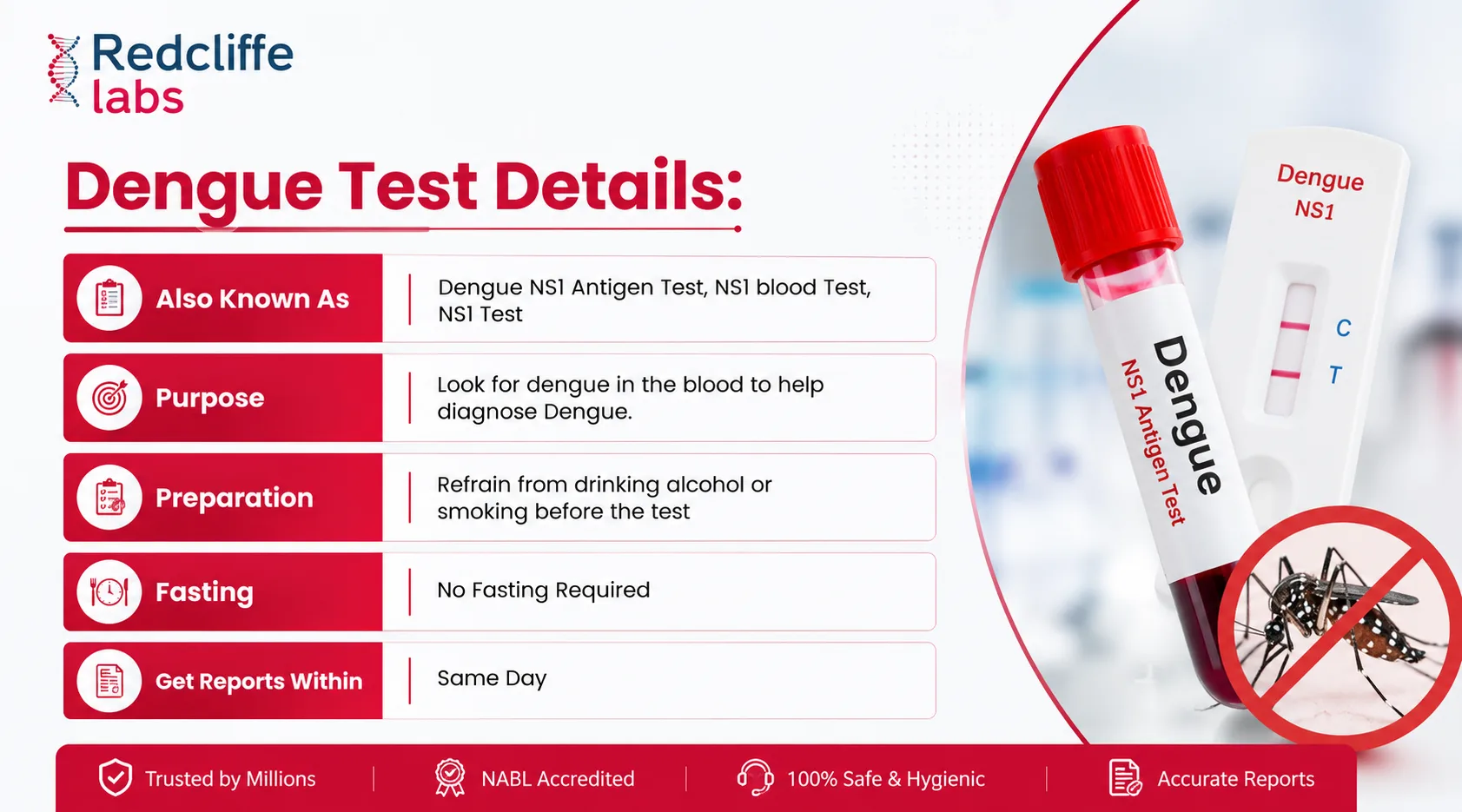
Test Details:
| Also Known As | Dengue NS1 Antigen Test, NS1 blood Test, NS1 Test |
| Purpose | Look for dengue in the blood to help diagnose Dengue. |
| Preparation | Refrain from drinking alcohol or smoking before the test |
| Fasting | No Fasting Required |
| Get Reports Within | Same Day |
| Cost | INR 588 |
What Is a Dengue Test?
A Dengue NS1 Antigen Test by ELISA is a blood test used to detect NS1 protein, a dengue virus marker present during the early phase of infection. It helps identify dengue before antibodies become fully detectable.
ELISA stands for Enzyme-Linked Immunosorbent Assay. It is a laboratory method that detects dengue NS1 antigen in the blood sample with better controlled processing than many rapid card tests. This test is commonly useful during the first 7 days of fever. A positive NS1 result supports current or recent dengue infection, but it does not identify the dengue virus serotype.
Types of Dengue Tests: What’s the Difference?
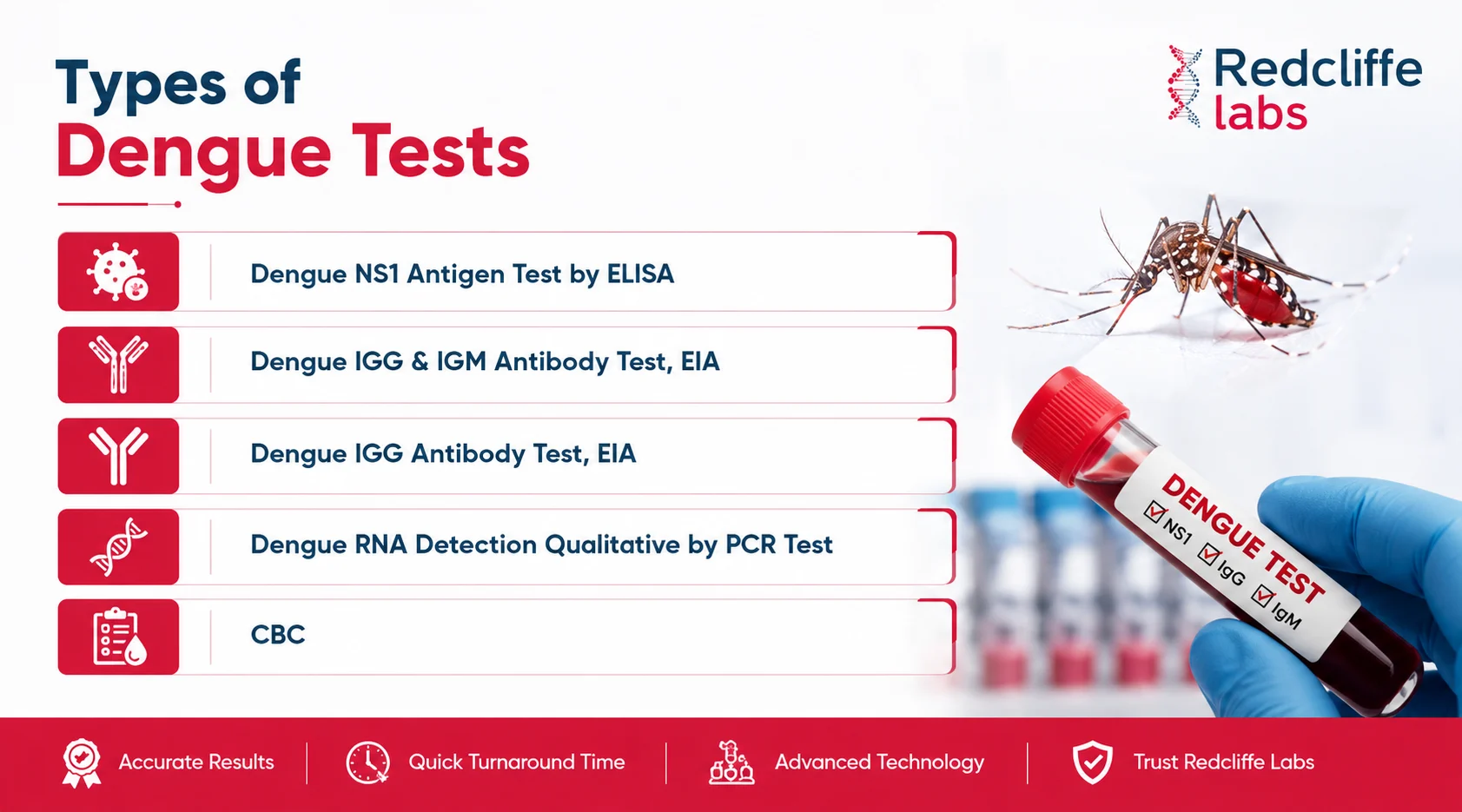
Different dengue tests detect different infection markers.
- Dengue NS1 Antigen Test by ELISA: NS1 antigen test is commonly advised in the first few days of fever because it detects a dengue virus protein.
- Dengue IGG & IGM Antibody Test, EIA: Dengue IgG & IgM Antibody Test, EIA is a blood test that detects antibodies made by the body against dengue virus. IgM suggests recent dengue infection, while IgG may indicate past infection or secondary dengue exposure.
- Dengue IGG Antibody Test, EIA: IgG test may suggest previous dengue exposure or secondary infection. It is not usually enough alone to confirm a fresh infection.
- Dengue RNA Detection Qualitative by PCR Test: RT-PCR or NAAT test detects dengue viral RNA and can confirm current dengue infection, especially in the first 7 days of illness.
- CBC: CBC or platelet count does not diagnose dengue directly, but it helps monitor low platelets, white blood cell count, and blood concentration changes during dengue fever.
Symptoms that may prompt the NS1 antigen test:
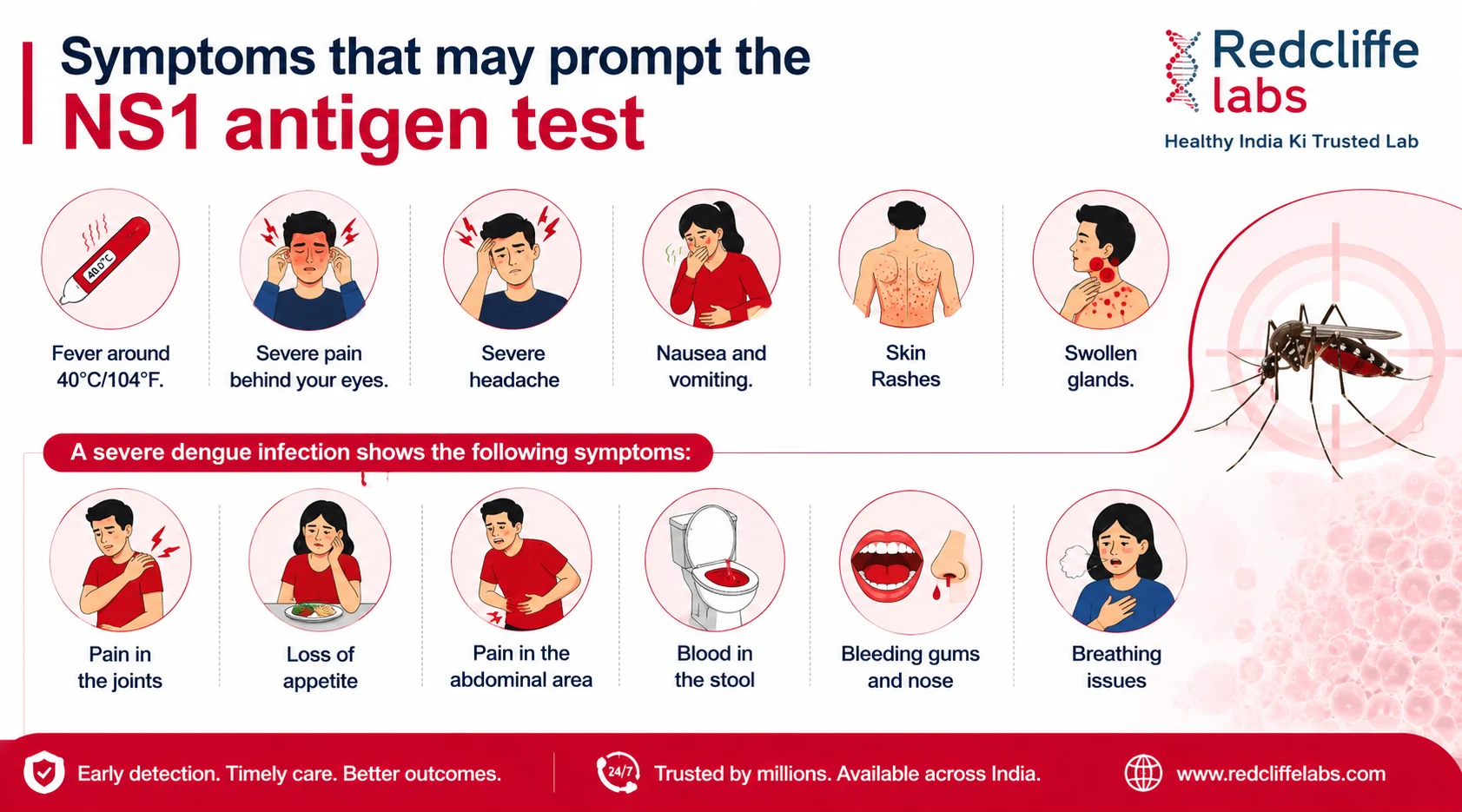
The NS1 blood test determines whether or not you are infected with the dengue virus. Dengue does not show many symptoms; most start showing after 4–10 days of the infection. The symptoms to look out for if you think you have dengue are:
- Fever around 40°C/104°F.
- Severe pain behind your eyes.
- Severe headache
- Nausea and vomiting.
- Skin Rashes
- Swollen glands.
A severe dengue infection shows the following symptoms:
- Pain in the joints
- Loss of appetite
- Pain in the abdominal area
- Blood in the stool
- Bleeding gums and nose
- Breathing issues
Purpose of the NS1 antigen test
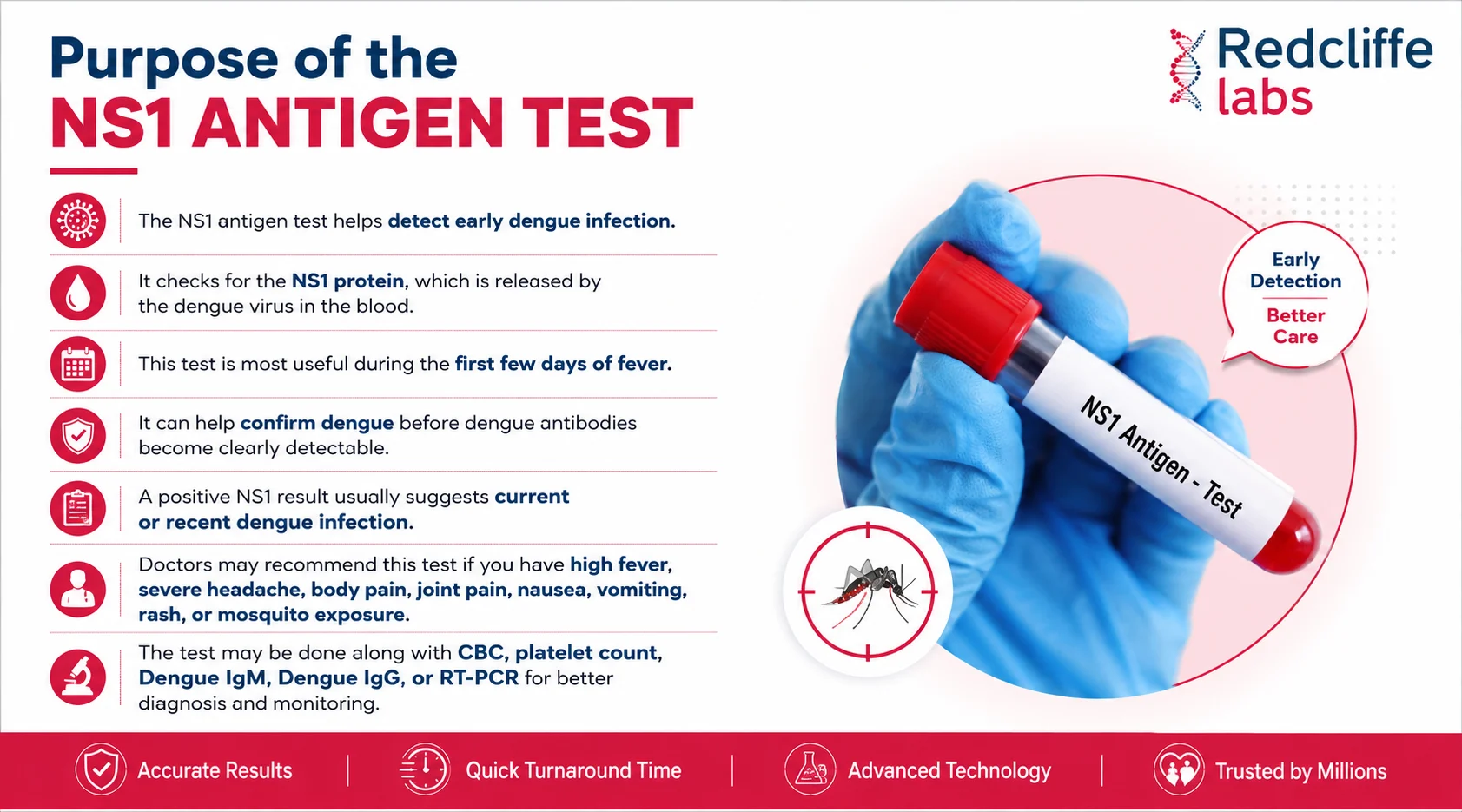
- The NS1 antigen test helps detect early dengue infection.
- It checks for the NS1 protein, which is released by the dengue virus in the blood.
- This test is most useful during the first few days of fever.
- It can help confirm dengue before dengue antibodies become clearly detectable.
- A positive NS1 result usually suggests current or recent dengue infection.
- Doctors may recommend this test if you have high fever, severe headache, body pain, joint pain, nausea, vomiting, rash, or mosquito exposure.
- The test may be done along with CBC, platelet count, Dengue IgM, Dengue IgG, or RT-PCR for better diagnosis and monitoring.
What preparations are required before the NS1 blood test?
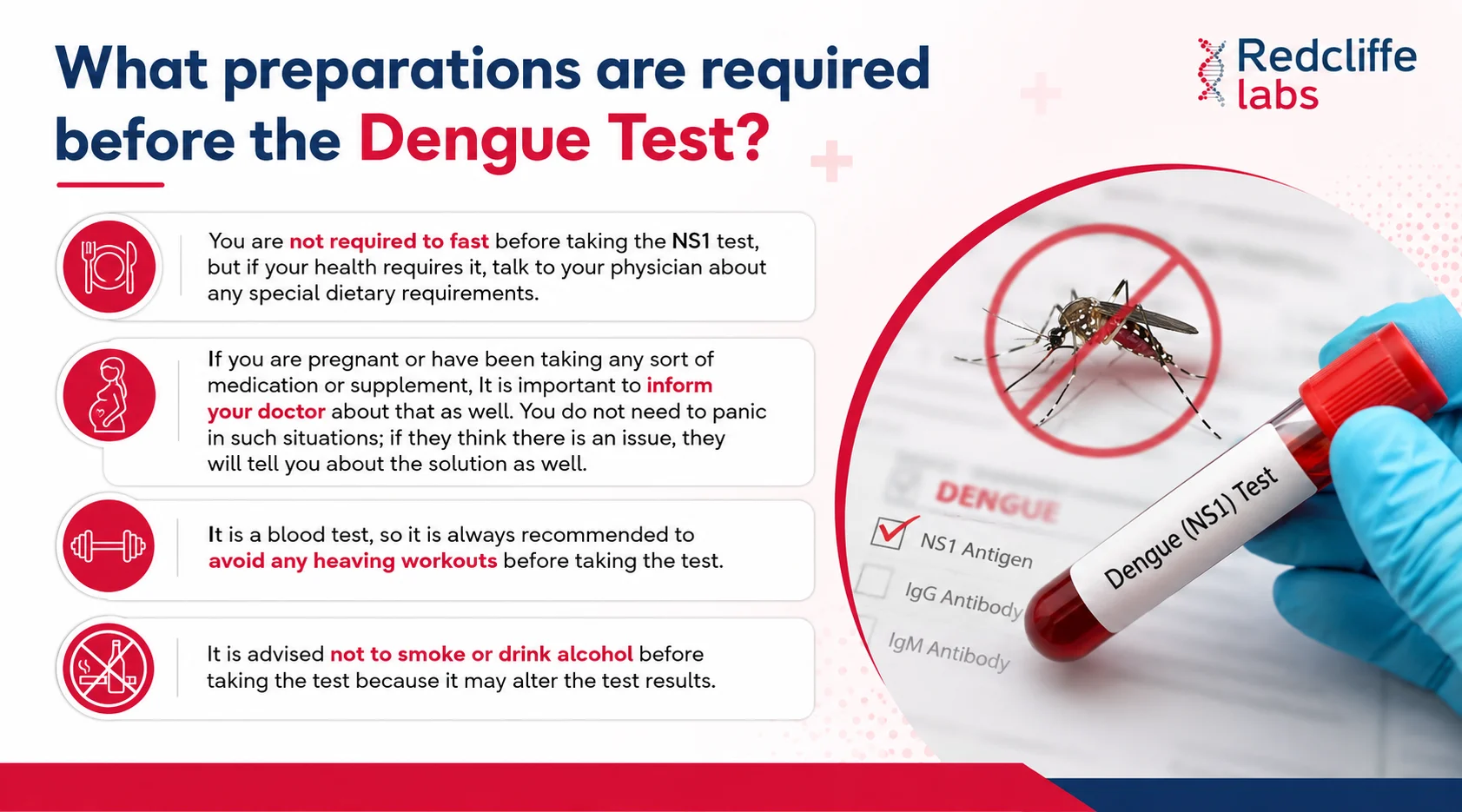
There is no special set of rules that are to be followed before taking the NS1 antigen test. However, these are some basic guidelines to be followed:
- You are not required to fast before taking the NS1 test, but if your health requires it, talk to your physician about any special dietary requirements.
- If you are pregnant or have been taking any sort of medication or supplement, It is important to inform your doctor about that as well. You do not need to panic in such situations; if they think there is an issue, they will tell you about the solution as well.
- It is a blood test, so it is always recommended to avoid any heaving workouts before taking the test.
- It is advised not to smoke or drink alcohol before taking the test because it may alter the test results.
If you follow these basic guidelines before taking the test and keep your physician in the loop, you are ready.
What is the procedure for the NS1 antigen ELISA test?
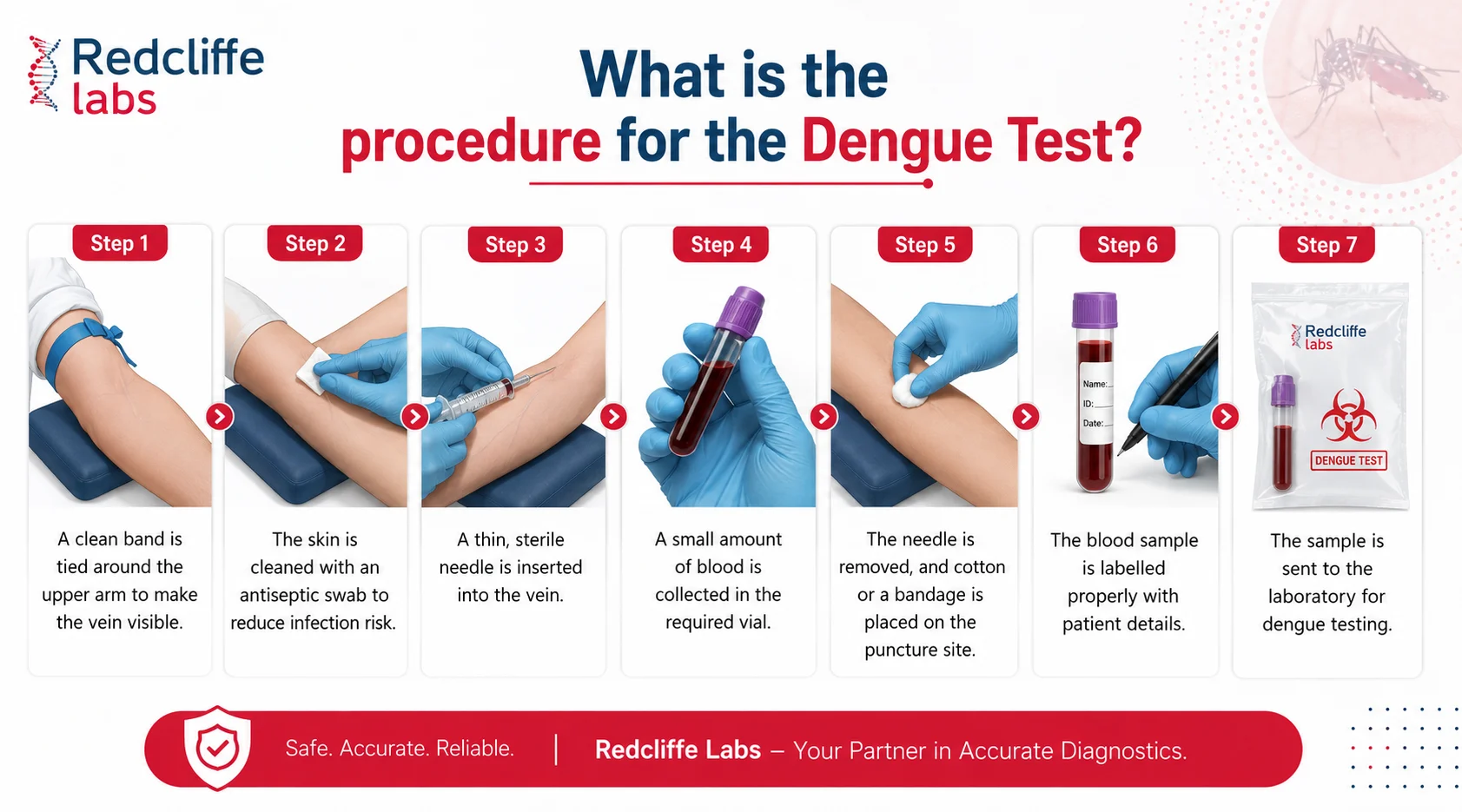
This NS1 test is like any other blood test, so the procedure followed is the same.
- Step 1: A clean band is tied around the upper arm to make the vein visible.
- Step 2: The skin is cleaned with an antiseptic swab to reduce infection risk.
- Step 3: A thin, sterile needle is inserted into the vein.
- Step 4: A small amount of blood is collected in the required vial.
- Step 5: The needle is removed, and cotton or a bandage is placed on the puncture site.
- Step 6: The blood sample is labelled properly with patient details.
- Step 7: The sample is sent to the laboratory for dengue testing.
The report is shared after testing, and the doctor reads it with symptoms, fever duration, and other parameters.
What Conditions Can Be Diagnosed With a Dengue Test?
A dengue test is primarily used to diagnose dengue virus infection. Conditions that can be diagnosed or supported by a dengue test include:
- Acute Dengue Fever: NS1 antigen and RT-PCR tests can help detect active dengue infection during the early stage of illness.
- Recent Dengue Infection: A positive Dengue IgM antibody test may indicate a recent dengue infection.
- Past Dengue Infection: Dengue IgG antibodies may suggest previous exposure to the dengue virus.
- Secondary Dengue Infection: Dengue IgG and IgM patterns can help doctors identify repeat dengue infections, which may carry a higher risk of complications.
- Dengue Hemorrhagic Fever (DHF): Dengue testing, along with platelet count and clinical findings, can support the diagnosis of severe dengue-related complications.
- Severe Dengue (Dengue Shock Syndrome): Confirmed dengue infection combined with symptoms such as severe bleeding, low blood pressure, organ involvement, or shock may indicate severe dengue.
Doctors often interpret dengue test results together with CBC, platelet count, hematocrit, symptoms, fever duration, and medical history for accurate diagnosis and monitoring.
Dengue Test vs Malaria Test: What’s the Difference?
Both dengue and malaria are mosquito-borne diseases that can cause fever, chills, body pain, and weakness.
| Point | Dengue Test | Malaria Test |
| Cause | Dengue virus | Plasmodium parasite |
| Spread by | Aedes mosquito | Anopheles mosquito |
| What the test detects | NS1 antigen, IgM, IgG antibodies, or dengue viral RNA | Malaria parasite or malaria antigens |
| Common tests | NS1 Antigen, IgM, IgG, RT-PCR | Malaria Parasite (MP), Peripheral Smear, Rapid Malaria Antigen Test |
| Platelet count | Often decreases significantly | May decrease but usually less severe |
- Dengue tests look for dengue virus markers such as NS1 antigen, antibodies, or viral RNA.
- Malaria tests look for malaria parasites or parasite antigens in the blood.
- Dengue commonly causes low platelet counts, while malaria often causes fever with chills, sweating, and anemia.
Dengue NS1 Antigen Test Normal Range
The Dengue NS1 Antigen Test usually does not have a fixed numeric normal range. Results are commonly reported as:
| Result | Meaning |
| Negative / Non-reactive | Normal result; NS1 antigen not detected |
| Positive / Reactive | Suggests current or recent dengue infection |
| Equivocal / Borderline | Repeat test or additional dengue tests may be advised |
A positive NS1 result indicates dengue virus infection, especially during the early fever phase. However, a negative NS1 result does not fully rule out dengue, so doctors may advise Dengue IgM, IgG, CBC, platelet count, or RT-PCR if symptoms continue.
What do the Dengue NS1 test results indicate?
The dengue NS1 antigen test helps in the early detection of dengue virus infection.
Positive NS1 test result: If your dengue NS1 test results are positive, it indicates an acute dengue infection.
- The Dengue NS1 Antigen Test helps detect dengue virus infection in the early stages (first seven days of illness). However, the information is not serotype.
- The positive result indicates that the dengue infection is present in the bloodstream. Nonetheless, additional antibody tests, such as IgM and IgG, or nucleic acid amplification tests, like RT-PCR, may be needed to confirm the diagnosis.
- If both the test results are negative, a healthcare provider is likely to suggest more testing for IgM to rule out the infection.
Negative NSI test result: if your dengue NS1 test results are negative, it does not rule out a dengue virus infection.
- A doctor will likely suggest IgM and IgG antibody tests after a few days. These tests help detect how your body’s immune system responds to dengue.
- Other viral infections such as Covid-19, Chikungunya, and Malaria can cause similar symptoms.
Note: The best time to do the NS1 test is within 1-5 days of dengue fever symptoms. After 7 days, dengue antibodies IgM and IgG are more useful for diagnosis.
What Affects Dengue Test Results?
- Day of fever: NS1 and RT-PCR are more useful in the first 7 days.
- Testing too early: Antibodies may not be detectable in the first few days.
- Testing too late: NS1 antigen may reduce after the early fever stage.
- Type of test: NS1, IgM, IgG, RT-PCR, and CBC check different markers.
- Previous dengue infection: IgG may stay positive from an old infection.
- Secondary dengue infection: Antibody patterns may look different from first-time dengue.
- Sample quality: Wrong collection, delayed transport, or improper storage may affect accuracy.
- Immune response: Some people develop detectable antibodies later than others.
Tips to avoid dengue infection:
These are a few ways in which you may prevent the risk of getting infected by the dengue virus:
- Participating in community mosquito control programs can help. Community-wide activities, such as removing standing water, can reduce mosquito larvae before they enter adulthood, further lowering the risk of infection.
- Eat immunity-boosting foods such as garlic, leafy greens, ginger, turmeric, and almonds alongside nutritious meals.
- Maintain hygiene, especially if you have children at home. Their immunity is still developing, making them more susceptible to infection.
- If you plan on sleeping during the day, use mosquito nets and spray insect repellents in the room. Apply insect repellents containing DEET, picaridin, neem, or eucalyptus oil to your exposed skin.
- Mosquitoes lay their eggs in stagnant water. Ensure objects like flowerpots and buckets contain clean water. Also, keep them covered.
- To reduce mosquito bites, use mosquito coils and liquids. Topical insect repellents provide the best protection.
If you follow these recommendations, you may be able to avoid the Aedes mosquitoes as much as possible.
What are the risks associated with a dengue NS1 test?
The dengue NS1 test is simple and involves minimal risk. Some possible risks associated with the test include mild pain or discomfort at the injection site. You may also get bruises or swelling and feel dizzy or lightheaded after the blood draw. However, these symptoms are temporary and go away quickly.
- Living or traveling to a tropical or subtropical area increases one's risk of exposure to the virus that causes dengue fever.
- If you have had dengue in the past, it increases your risk of developing severe symptoms and might get you dengue fever again.
- Pre-existing conditions like obesity, hypertension, and asthma contribute to getting severe dengue due to stronger body immune responses. People with these conditions are often diagnosed with poorer prognosis.
- Additionally, if the test is performed too early or late in the infection, the antigen levels may not be detected, resulting in false negatives. On the other hand, if the test reacts with other viruses, such as the Zika virus or West Nile, it can show false positive results (incorrect results).
Steps to take for healing from dengue
If you have tested positive for dengue, it indicates the presence of NS1 antigen. It is a protein present in the dengue virus. When you have an active dengue infection, follow the steps below to help you recover faster.
- Take proper rest: Dengue virus infection tends to weaken the immune system, so ensure you rest properly and eat a nutritious diet to support recovery.
- Consult a doctor: Meet your healthcare professional to evaluate your condition. Your doctor may even recommend taking paracetamol for pain relief and additional tests like complete blood count (CBC) to monitor platelet levels.
- Stay Hydrated: Drink plenty of water and fluids, including ORS, coconut water, and fruit juices, to recover from the loss.
- Monitor your symptoms: Even after the treatment has started and you are under a doctor’s surveillance, it is essential to monitor your symptoms. Check for a high fever, headache, muscle and joint pain, skin rashes, or bleeding tendencies. If you experience abdominal pain, vomiting, or difficulty breathing, contact your healthcare provider for the best medical advice.
- Avoid over-the-counter medicine: To avoid the risk of bleeding, do not buy any medicine without the doctor’s consent, such as painkillers such as ibuprofen or aspirin.
NS1 Antigen Test Cost at Redcliffe Labs:
The NS1 test cost at Redcliffe Labs is INR 588; this price may vary from lab to lab. You can get samples collected from the comfort of your home. If your doctor has suggested that you get tested, it is recommended that you do not delay taking the test.
Connection between platelet count and dengue severity
Platelets are blood cells, shaped like small plates in their non-active form.
The normal platelet count in healthy adults ranges between 150,000 and 450,000 per microliter. If your platelet count is less than 150,000, this indicates lower-than-normal platelets, which is known as thrombocytopenia. On the other hand, having more than 450 000 indicates higher-than-normal platelets, which is known as thrombocytosis.
When infected with the dengue virus, your platelet levels can exceed 100,000. You might see a critically low platelet count of about 20 000 or20,000
A routine blood test called complete blood count can help you and your doctor learn about your platelet number.
The connection between platelets and the Dengue NS1 antigen depends on how the dengue virus affects the immune response of your body and blood components.
Platelets (thrombocytes) are small blood cells that form clots and stop or prevent bleeding. When you have dengue:
- The dengue virus and NS1 antigen directly affect the bone marrow, causing bone marrow suppression. Further, having bone marrow suppression can cause a drop in platelet count.
- Immune thrombocytopenia occurs when your immune system makes a mistake, attacks and destroys platelets.
- The NS1 antigen causes inflammation, resulting in increased destruction of platelets.
- Immune activation accelerates platelet destruction in the spleen.
- In mild dengue, platelet counts remain slightly reduced (100,000-150,000 per microliter). However, in severe dengue-indicating conditions like dengue hemorrhagic fever or dengue shock syndrome, platelets drop below 50,000 per microliter, which can increase the risk of bleeding.
- The NS1 positivity alone cannot determine platelet count. Hence, a separate CBC test is needed to monitor platelet levels.
- Platelets below 20,000 may require hospitalization. During this condition, you may even bleed more when you are not injured, and your healthcare provider may also suggest platelet transfusion until your count returns to normal.
Note: The NS1 doesn’t directly destroy platelets. They cause a decrease in platelet count. Its presence indicates an active dengue infection. Early detection of NS1 and regular monitoring can help manage dengue effectively.
Is dengue NS1 serious?
Yes, dengue NS1 can be severe. The NS1 antigen positivity increases the risk of developing severe dengue, particularly beyond day 5 of illness. The seriousness of positive dengue NS1 depends on several factors:
- Mild symptoms associated with virus infection include fever, body aches, headaches, and rash. These symptoms are manageable with hydration and proper rest.
- Conversely, if you do not take the doctor’s guidance seriously and fail to manage your symptoms, dengue can progress to Dengue Hemorrhagic Fever (DHF) or Dengue Shock Syndrome (DSS).
- Three out of four people do not show any symptoms of dengue infection and recover in about a week. While those who get sick might also face these warning signs associated with severe dengue, including:
- Persistent vomiting
- Bleeding gums/nose
- Rapid drop in platelet count
- Presence of blood in your pee or stools.
- Lethargy or restlessness
- Petechiae ( red spots or bigger purple spots on your skin.)
- Liver enlargement more than 2 cm.
- Mucosal bleeding including gingival, gastrointestinal bleeding, and menorrhagia.
- Severe abdominal pain
- Difficulty breathing
- Go into shock and even die.
- If your platelet count falls below 20,000, you may need to be hospitalized.
Final Verdict: A positive dengue NS1 confirms early infection but doesn’t mean a severe case. Close monitoring and timely medical care are crucial for improved disease management and preventing complications.
Ask us anything about the Dengue NS1 Antigen Test by ELISA to understand it better