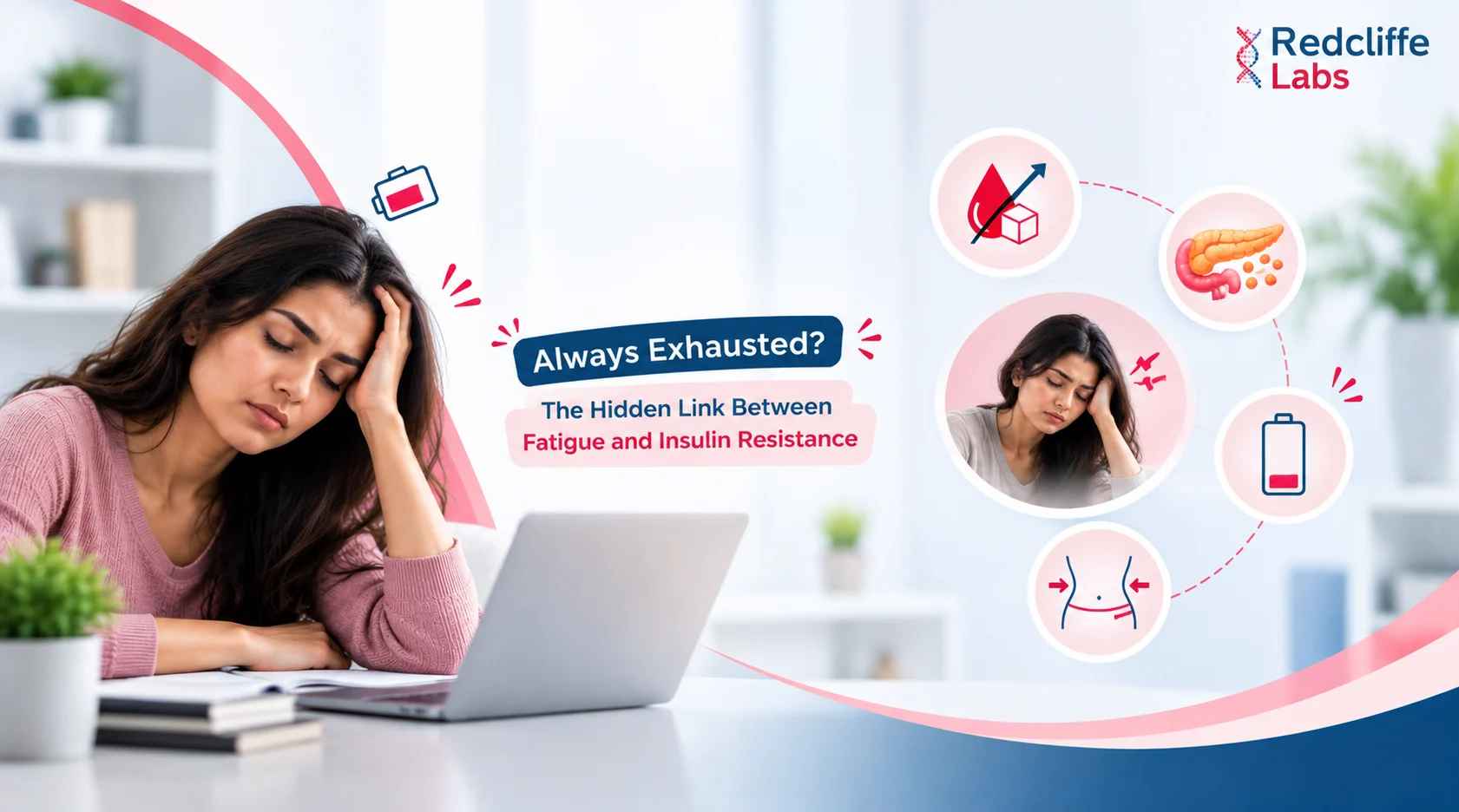
Always Exhausted? The Hidden Link Between Fatigue and Insulin Resistance

Overview
- Insulin resistance hinders your cells from efficiently absorbing glucose for energy. This metabolic inefficiency can leave you feeling constantly exhausted, sluggish, and unrefreshed even after full sleep.
- Persistent fatigue extends beyond insulin resistance. Poor sleep, stress, thyroid imbalances, anemia, and nutritional deficiencies frequently overlap, making comprehensive medical evaluation essential for an accurate diagnosis.
- Insulin resistance often develops quietly. Clues like abdominal weight gain, dark skin patches (acanthosis nigricans), and irregular periods in women can signal underlying metabolic changes before diabetes appears.
- Support your metabolism by building fiber-rich meals with whole grains, legumes, and lean proteins. Combine balanced nutrition with regular physical activity, reduced sugar, and consistent, quality sleep.
- Blood tests like Fasting Glucose, HbA1c, and HOMA-IR evaluate glucose regulation and insulin levels. Early screening identifies hidden risks during the reversible prediabetes stage to protect long-term health.
Do you wake up feeling tired even after a full night's sleep? Or do you often feel sleepy, sluggish, or low on energy during the day? Persistent tiredness can have several causes, including poor sleep, stress, nutritional deficiencies, and certain medical conditions. One possible factor worth discussing with your doctor is insulin resistance and fatigue.
Insulin resistance occurs when the body's cells respond less effectively to insulin, a hormone that helps glucose move from the bloodstream into cells. Over time, this can affect blood sugar regulation and increase the risk of prediabetes and type 2 diabetes. However, fatigue alone does not mean you have insulin resistance.
Understanding the possible connection can help you recognise relevant risk factors, make informed lifestyle choices and determine whether medical evaluation or blood tests are appropriate.
What Is Insulin Resistance?
Insulin resistance is a condition in which cells in the muscles, fat, and liver do not respond as effectively as they should to insulin. As a result, the pancreas may produce more insulin to help maintain blood glucose levels.
For some time, blood glucose may remain within the normal range. If the body cannot compensate adequately, glucose levels may rise, potentially leading to prediabetes or type 2 diabetes.
Insulin resistance may occur alongside other metabolic concerns, including abdominal weight gain, high blood pressure, abnormal cholesterol levels, and polycystic ovary syndrome (PCOS). However, not everyone with insulin resistance experiences noticeable symptoms.
Why Am I So Tired With Insulin Resistance?
Insulin resistance and fatigue may occur together, but the relationship is not straightforward. Insulin resistance can affect how the body regulates glucose, while changes in blood sugar, sleep quality, physical activity, and other health conditions may influence how energetic you feel.
There is no single explanation for tiredness in everyone with insulin resistance. Some people experience fatigue without having abnormal blood glucose levels, while others have no obvious symptoms at all.
Here are a few factors worth understanding:
- Changes in blood glucose: High blood glucose can contribute to tiredness, particularly when accompanied by other symptoms such as increased thirst or frequent urination.
- Sleep disturbances: Conditions such as obstructive sleep apnea can affect sleep quality and are also associated with metabolic risk factors.
- Lifestyle factors: Irregular meals, low physical activity, insufficient sleep and ongoing stress may affect energy levels and metabolic health.
- Other medical conditions: Anemia, thyroid disorders, infections, and nutritional deficiencies can also cause persistent fatigue.
If you regularly feel exhausted, avoid assuming that insulin resistance is the only possible explanation. A healthcare professional can help identify the underlying cause.
What Are the Common Causes of Persistent Fatigue?
The causes of constant tiredness range from everyday lifestyle factors to medical conditions that need treatment. Identifying the pattern of your symptoms and any accompanying signs can help your doctor decide what to investigate.
|
Possible cause |
What you may notice |
|
Poor sleep |
Difficulty concentrating, daytime sleepiness, or waking up unrefreshed |
|
Iron-deficiency anemia |
Weakness, reduced exercise tolerance, or breathlessness |
|
Thyroid disorders |
Fatigue accompanied by changes in weight, temperature sensitivity, or bowel habits |
|
Blood glucose abnormalities |
Tiredness with possible increased thirst or frequent urination |
|
Stress or low mood |
Low motivation, disturbed sleep, or difficulty concentrating |
|
Nutritional deficiencies |
Fatigue that may occur with other symptoms, depending on the deficiency |
|
Low physical activity |
Reduced stamina and difficulty maintaining fitness |
These symptoms overlap, so the table cannot identify a specific condition. A doctor may recommend tests based on your medical history, examination, and individual risk factors.
What Are the Symptoms of Insulin Resistance in Females?
Insulin resistance does not always cause visible symptoms in women. When symptoms or associated conditions are present, they may include certain skin changes, metabolic concerns, or signs related to PCOS.
Possible clues include:
- Dark, velvety skin around the neck, armpits, or groin, a condition called acanthosis nigricans.
- Skin tags, which may be associated with metabolic risk but are common and not diagnostic.
- Abdominal weight gain or difficulty maintaining a healthy weight.
- Irregular periods, acne, or excess facial hair in some women with PCOS.
- Abnormal blood glucose or cholesterol results.
These signs are not specific to insulin resistance. For example, irregular periods can have several hormonal and non-hormonal causes.
Women who have PCOS, a history of gestational diabetes, or a family history of type 2 diabetes may benefit from discussing their metabolic risk with a healthcare professional. The need for testing should be based on individual circumstances rather than symptoms alone.
What Foods Can Help Increase Insulin Sensitivity?
No single food can guarantee improved insulin sensitivity. However, a balanced eating pattern that includes fiber-rich foods, suitable protein sources, healthy fats, and minimally processed carbohydrates can support overall metabolic health.
For an Indian diet, practical choices include:
- Whole grains: Oats, barley, whole-wheat roti, and other minimally processed grains.
- Pulses and legumes: Dal, rajma, chana, lobia, and other beans.
- Vegetables: Include a variety of non-starchy vegetables such as bhindi, beans, cabbage, gourds, and leafy greens.
- Protein sources: Eggs, fish, tofu, paneer, or unsweetened curd, depending on your dietary preferences.
- Nuts and seeds: Almonds, walnuts, flaxseeds, and other unsalted options in suitable portions.
- Whole fruit: Choose whole fruit more often than juice, while considering portion sizes and individual needs.
Everyday habits that may support metabolic health
Here are some daily habits that can support the issues related to the metabolism of the body
- Build balanced meals: Combine vegetables, protein, and fiber-rich carbohydrates instead of relying mainly on refined carbohydrates.
- Reduce excess added sugar. Limit frequent sugary drinks, sweetened tea or coffee, and foods high in added sugar.
- Move regularly: Walking, cycling, strength training, and other activities suited to your ability can support insulin sensitivity. Start gradually if you have been inactive.
- Prioritise sleep: Most adults benefit from consistent sleep schedules and adequate rest.
- Aim for sustainable habits: If you have excess weight, a clinician or dietitian can help you set realistic goals without restrictive or crash diets.
- People have different nutritional needs: If you have diabetes, kidney disease, are pregnant, or have another medical condition, seek personalised dietary advice.
Does Insulin Resistance Mean Diabetes?
No. Insulin resistance does not automatically mean you have diabetes. It can increase the risk of developing prediabetes and type 2 diabetes, but the terms describe different aspects of metabolic health.
A doctor may recommend laboratory testing to understand your glucose regulation.
|
Condition |
What it means |
| Insulin resistance |
The body's cells respond less effectively to insulin. |
|
Prediabetes |
Blood glucose is above the normal range but below the diagnostic threshold for diabetes. |
|
Type 2 diabetes |
Blood glucose meets established diagnostic criteria for diabetes. |
The HbA1c test measures average blood glucose over approximately three months. Fasting plasma glucose measures blood glucose after a period without food. An oral glucose tolerance test may also be used when appropriate.
For non-pregnant adults, commonly used diagnostic thresholds for prediabetes include an HbA1c of 5.7%–6.4% or fasting plasma glucose of 100–125 mg/dL. Diabetes-range thresholds include an HbA1c of 6.5% or higher or fasting plasma glucose of 126 mg/dL or higher. Clinicians generally confirm a diabetes diagnosis with repeat or additional testing when required.
These thresholds are for glucose-based diagnosis, not for interpreting a HOMA-IR result. Pregnancy and certain medical conditions can affect how tests should be interpreted.
Which Tests Can Help Assess Insulin Resistance?
Testing depends on your symptoms, medical history, and risk factors. There is no single routine test that is appropriate for every person with fatigue.
A doctor may consider:
- Fasting plasma glucose: Measures blood glucose at a specific point in time.
- HbA1c: Estimates average blood glucose over the preceding two to three months.
- Oral glucose tolerance test: Measures how the body handles glucose over a specified period.
- Fasting insulin: Measures insulin in the blood and may help with selected clinical assessments.
- HOMA-IR: Estimates insulin resistance using fasting insulin and glucose measurements.
HOMA-IR is a surrogate measure rather than a direct measurement of insulin sensitivity. Its clinical usefulness varies, and it should not be treated as a standalone diagnostic test for diabetes.
What Is HOMA-IR?
HOMA-IR stands for Homeostatic Model Assessment of Insulin Resistance. It uses fasting glucose and fasting insulin values to estimate how effectively the body regulates glucose through insulin.
A commonly used calculation is:
When glucose is measured in mg/dL:
HOMA-IR = fasting insulin (µIU/mL) × fasting glucose (mg/dL) ÷ 405
When glucose is measured in mmol/L:
HOMA-IR = fasting insulin (µIU/mL) × fasting glucose (mmol/L) ÷ 22.5
These calculations are useful for understanding the method, but the result should be interpreted using the laboratory's reporting method and relevant clinical context. There is no single universal cutoff that applies to every population and laboratory.
How Should You Prepare for Testing?
Follow the specific preparation instructions provided by your laboratory and doctor. Depending on the tests ordered, you may need to:
- Fast for the period specified by the laboratory.
- Drink plain water if permitted during the fasting period.
- Tell your doctor about medicines and supplements you take.
- Ask your doctor before changing or stopping any medicine.
Not every glucose-related test requires fasting. HbA1c, for example, generally does not require fasting, while fasting glucose and fasting insulin measurements do.
Understanding Your Results
An abnormal result does not automatically establish a diagnosis or explain why you feel tired. Your doctor may interpret the result alongside your glucose levels, symptoms, medical history, medications, and other relevant findings.
If blood glucose is in the normal range but metabolic risk factors are present, your clinician can decide whether additional evaluation is useful. If glucose results meet the criteria for prediabetes or diabetes, your clinician can discuss the next steps.
When Should You See a Doctor?
Arrange a medical consultation if tiredness persists, keeps returning or affects your work, studies, exercise or daily activities.
Seek an evaluation sooner if fatigue occurs with unexplained weight changes, increased thirst, frequent urination, unusual weakness, heavy menstrual bleeding, or other new symptoms.
Seek urgent medical care for severe or sudden symptoms such as chest pain, significant breathlessness, fainting, or confusion.
Your doctor may review your sleep, diet, physical activity, mental well-being, medicines, and medical history before deciding whether blood tests are necessary. This approach helps avoid attributing every episode of tiredness to one condition.
Conclusion
Feeling tired all the time can be frustrating, especially when rest does not seem to help. Insulin resistance and fatigue may be associated, but persistent tiredness has many possible explanations and should not be used to diagnose a metabolic condition.
A balanced diet, regular movement, adequate sleep and appropriate medical follow-up can support better health. If you have relevant risk factors or ongoing symptoms, speak with your doctor about suitable tests, including glucose-based testing and, when clinically appropriate, HOMA-IR.
The goal is not simply to find a number on a report. It is to understand your health, identify treatable causes of fatigue and choose the right next steps with professional guidance.
FAQs
1. Can insulin resistance cause fatigue after eating?
Some people experience tiredness after meals, but this does not automatically indicate insulin resistance. Meal size, food composition, sleep quality, and other health conditions can influence post-meal energy levels. If fatigue occurs frequently, especially alongside increased thirst or frequent urination, consult a healthcare professional to determine whether blood glucose testing or another evaluation is appropriate.
2. Can insulin resistance affect concentration and memory?
Insulin resistance may occur alongside metabolic changes that can influence overall health, but difficulty concentrating or memory problems alone cannot confirm it. Poor sleep, stress, nutritional deficiencies, and thyroid disorders may also affect cognitive function. If brain fog persists or interferes with daily activities, consult your doctor to identify the underlying cause and discuss appropriate investigations.
3. Is insulin resistance reversible?
Insulin resistance can improve in many people with sustainable lifestyle changes and appropriate medical care. Regular physical activity, balanced meals, adequate sleep, and weight management, when appropriate, may help improve insulin sensitivity. The degree of improvement varies depending on individual health factors. A healthcare professional can help assess metabolic risk and recommend suitable monitoring and treatment.
4. Can a person with a normal BMI have insulin resistance?
Yes, insulin resistance can occur in people whose body mass index (BMI) falls within the normal range. Genetics, abdominal fat distribution, physical inactivity, hormonal conditions such as PCOS, and family history may influence metabolic health. Therefore, body weight alone cannot determine insulin sensitivity. Your doctor can assess your individual risk factors and decide whether testing is necessary.
5. Does skipping breakfast increase insulin resistance?
Skipping breakfast does not automatically cause insulin resistance. Its effects may depend on overall dietary quality, meal timing, physical activity, sleep patterns, and individual metabolic health. However, skipping meals may affect hunger and energy levels in some people. Rather than following a rigid eating schedule, focus on balanced meals and seek personalised advice if you have diabetes or other medical conditions.
6. Can insulin resistance affect sleep quality?
Insulin resistance and sleep problems may occur together, although one does not necessarily cause the other. Conditions such as obstructive sleep apnea are associated with metabolic risk factors and can leave you feeling exhausted despite spending enough time in bed. If you snore loudly, wake up gasping, or experience excessive daytime sleepiness, discuss these symptoms with your doctor.
7. How often should you check blood sugar if you have insulin resistance?
There is no single testing schedule suitable for everyone with insulin resistance. Your doctor may recommend HbA1c or fasting blood glucose testing based on your results, medical history, risk factors, and whether prediabetes or diabetes has been diagnosed. People taking glucose-lowering medication may need additional monitoring. Follow your clinician's advice rather than testing at arbitrary intervals.