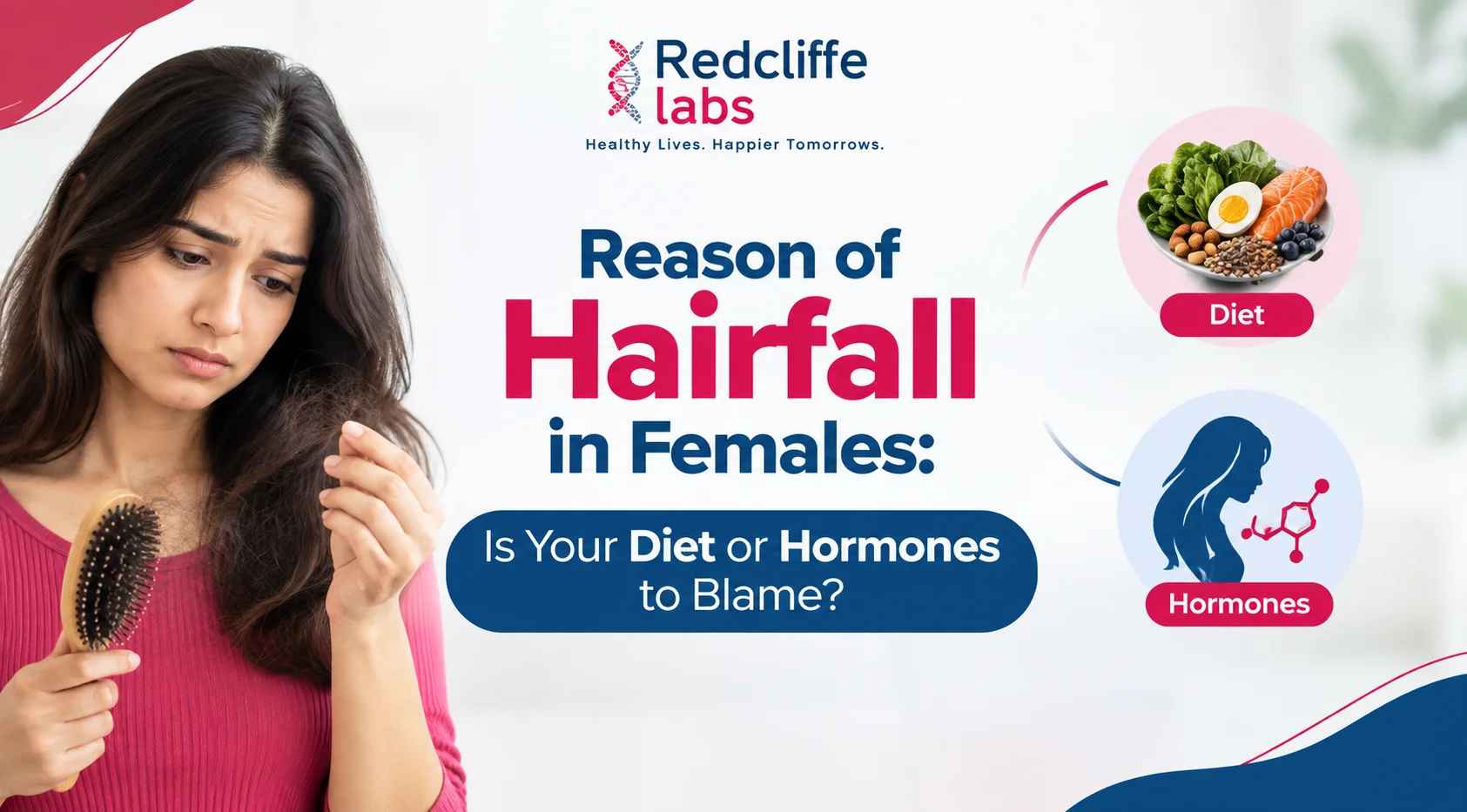
Reason of Hairfall in Females: Is Your Diet or Hormones to Blame?

Overview:
- Hair fall in women can have many causes, including nutritional deficiencies, hormonal changes, stress, illness, pregnancy, thyroid problems, PCOS, and hereditary hair loss.
- Losing around 50–100 hairs a day can be normal, but noticeable changes such as excessive shedding, a widening part, or a thinner ponytail may need attention.
- Iron deficiency, low vitamin D or B12, and inadequate protein intake can contribute to hair shedding in some women.
- Hormonal changes during pregnancy, after childbirth, with thyroid disorders, or with PCOS can also affect hair growth and shedding.
- A balanced diet, identifying the underlying cause, and targeted treatment or supplementation when needed can help manage hair fall more effectively than taking hair supplements without knowing the cause.
Every time you find more hair than usual on your pillow, in your hairbrush, or around the shower drain, the same question can pop up: “Why is my hair falling so much?”
The reason for hairfall in females is not always as simple as using the wrong shampoo or missing a few hair-care steps. Sometimes the trigger is low iron, inadequate nutrition, stress, or recent weight loss. In other cases, hormonal changes, thyroid problems, PCOS, pregnancy, or hereditary hair loss may be involved.
Losing around 50–100 hairs a day can be part of normal shedding. The bigger clue is a noticeable change from your usual pattern: more hair coming out, a widening part, a thinner ponytail, or visible scalp.
So, is your diet affecting your hair?
Could hormones be behind the change?
And when should you actually get your hair fall checked? Let's look at the common causes, the clues your hair may be giving you, and the tests that can help identify what is really going on.
How Much Hair Fall Is Normal for a Woman?
Losing 50 to 100 strands of hair a day is a completely normal part of your hair's natural growth cycle. This means the average female hair fall in a year can be roughly 18,000–36,500 hairs in a year, although the actual number can vary considerably. The human scalp holds approximately 100,000 hair follicles, each constantly cycling through growth, transition, resting, and shedding phases.
So, finding a few strands on your pillow or while washing your hair is usually not a reason to worry.
The major indications are changes such as:
- Hair loss that is greater than what is accustomed to
- The ponytail appears thinner than usual
- A centre hair part that is becoming wider
- The scalp becoming visible as it was not seen before
- Bald areas forming on the head
- Thinning that occurs around the temples
- The hair continues to fall out for quite some time
- The scalp develops signs such as itching, redness, scaling, and pain
Quick check: Ask yourself, “Am I simply shedding more hair, or is my hair actually becoming thinner?”
|
Hair cycle phase |
What happens |
Typical duration |
Approx. scalp hair |
|
Anagen (Growth) |
Hair actively grows from the follicle |
2–6 years |
85–90% |
|
Catagen (Transition) |
Growth slows, and the follicle prepares to rest |
2–3 weeks |
1–2% |
|
Telogen (Resting/Shedding) |
Hair rests and eventually sheds before a new cycle begins |
3–4 months |
10–15% |
When the percentage of your hair that enters the Telogen phase is anywhere between 10%-15%, this signifies that it is time for your hair to lose some of its older roots so that it may regenerate. However, higher numbers may indicate any biological trigger, such as stress or extreme dieting. This may force up to 30% or more of your active hair into the resting phase prematurely, and you will experience sudden heavy shedding known as telogen effluvium.
What Is the Main Reason for Hair Fall in Females?
There is rarely one universal reason. Hair loss in women can happen because of several factors at the same time.
Here are some of the most common possibilities.
1. Nutritional Deficiencies and Restrictive Diets
In order to grow normally, hair needs ample energy, protein, and nutrition.
If you are on a very restrictive diet, haven’t eaten enough protein-rich foods, or recently lost weight, you might find that hair loss increases. Nutritional deficiency of iron, zinc, or protein is well known to cause thinning hair.
Iron is particularly worth considering in women who have heavy menstrual bleeding or follow restrictive diets. Research has found lower ferritin levels in women with nonscarring hair loss, although the relationship between iron status and hair loss is not completely straightforward.
What you notice → what may be worth checking
|
What you notice |
What may be worth discussing with a doctor |
|
Hair fall after crash dieting |
Recent weight loss and overall nutrition |
|
Hair fall + heavy periods |
Iron status/ferritin |
|
Hair fall + very low protein intake |
Protein and overall calorie intake |
|
Hair fall + other symptoms of deficiency |
Targeted nutrient testing |
2. Hormonal Changes
Hormones can affect the hair-growth cycle. Changes associated with the thyroid, PCOS, pregnancy, the postpartum period, and menopause may be linked with hair shedding or thinning. But this does not mean that every case of female hair loss is hormonal.
3. Stress, Illness, and Rapid Weight Loss
Did you realize that your hair has begun falling out significantly months after some stressful event, high temperature, surgery, ailment, or major weight loss?
The timing can give a hint. A form of hair loss can happen to people after suffering physical and emotional stress shocks follicles into the shedding phase. And it often starts several months after the trigger and does not occur right after it.
The good news is that this kind of shedding can easily be addressed once the triggering factor is resolved.
4. Female Pattern Hair Loss
A certain group of women experiences gradual thinning due to a genetic disorder known as FPHL.
Genetics makes women more sensitive to androgens, leading to gradual shrinkage and thinning of hair follicles. A typical first symptom is a widening of the center part line on the scalp or thinning at the crown, rather than sudden spotting of bald patches.
More importantly, female hair loss is well known as a persistent condition, which means that detecting it on time is beneficial.
5. Scalp and External Factors
Scalp issues, inflammation, constantly tight hairstyles, and harsh heat or chemical procedures can cause problems with hair. In some situations, what looks like hair fall may actually be hair breakage.
Could Your Diet Be the Reason for Your Hair Fall?
Yes, nutritional gaps are one of the most frequent and reversible reasons for female hair shedding. Think about what your diet has looked like over the past few months.
Have you:
- Started a very low-calorie diet?
- Cut out several food groups?
- Lost weight quickly?
- Been skipping meals?
- Reduced protein because of dietary restrictions?
- Had very heavy periods?
- Been eating mostly processed foods with little nutritional variety?
If yes, your diet deserves a closer look.
1. Can Iron Deficiency Cause Hair Fall?
This condition can lead to hair loss in certain women, particularly when iron levels are diminished. Iron deficiency, even before it develops into extensive anemia, is one of the main contributors to hair loss in women. The body requires iron to produce hemoglobin, the molecule that carries oxygen to the hair matrix cells. When ferritin (the iron deposits) drops below the necessary amount, the body resorts to available iron for essential organs and halts hair growth while intensifying hair loss.
2. Can Not Eating Enough Protein Affect Hair?
The strands of hair are constructed predominantly of a type of protein called keratin. In the event that a person is unable to consume enough protein in their daily diet, their body will retain its amino acids for the purposes of its most important functions. After a duration of 2 to 3 months of eating a diet very low in protein, the hair follicles go prematurely into the state of rest and start to thin and break.
This is particularly relevant if you have recently started a restrictive diet or lost weight quickly.
Instead of relying on one “hair food”, focus on regular meals containing protein sources such as:
- Dal and beans
- Chickpeas and rajma
- Soy, tofu and tempeh
- Paneer or curd
- Eggs, if you eat them
- Fish or chicken, if you eat non-vegetarian foods
- Nuts and seeds
3. Which Vitamin Deficiency Causes Hair Loss?
There is no single vitamin deficiency responsible for all hair loss. Low levels of certain nutrients, including vitamin D (Essential for creating new hair follicles and awakening dormant ones), vitamin B12 (Essential for red blood cell formation and tissue repair; B12 deficiency leads to poor oxygen delivery to scalp tissues), Folate & Vitamin B6 (support cell division and protein synthesis in growing follicles), and iron and zinc, have been studied in relation to different forms of hair loss. However, having hair fall does not automatically mean that you are deficient.
That is why taking multiple supplements without knowing whether you actually need them is not always the best approach.
4. Can Crash Dieting Cause Hair Fall?
Rapid loss of weight, as well as significant limitations in eating habits, can also result in loss of hair.
This response is caused by the body reacting to such biological strain as energy deprivation or rapid weight fluctuations. Hair loss may not appear as soon as a diet change is made and may take weeks or months before being evident.
If your hair fall started after a major diet change, don't just ask, “Which shampoo should I use?” Also ask, “What changed in my diet or body a few months ago?”
Which Hormone Causes Hair Loss in Females?
This question sounds simple, but the answer is not. No single hormone causes every case of hair loss in women. Different hormonal changes can affect hair in different ways.
1. Androgens and Female Pattern Hair Loss
Androgens like testosterone are considered male hormones, but females also produce a small quantity of them. In case of women who are responsive to androgens, testosterone is converted into the active steroid DHT. DHT binds to receptors in frontal and crown hair follicles, shrinking (miniaturizing) them over time so they produce progressively thinner, shorter strands.
If hair thinning occurs along with acne, increased facial/body hair, irregular periods, or other signs of androgen excess, a doctor may consider hormonal evaluation.
2. Thyroid Hormones and Hair Shedding
Thyroid hormones (T3 and T4) regulate the cellular metabolism of hair follicles. Both an underactive and overactive thyroid can be associated with hair thinning or increased shedding.
If hair fall is accompanied by symptoms such as unusual tiredness, weight changes, feeling unusually cold or hot, changes in heart rate, or menstrual changes, thyroid function may need to be evaluated.
3. PCOS and Hair Loss
PCOS can also include higher androgen activity and might be associated with thinning of hair on the head.
However, losing hair by itself does not indicate you have PCOS. When hair thinning is associated with other symptoms such as irregular menstrual cycles, acne, excessive growth of hair on the face or body, a doctor could check whether you have PCOS, as well as other causes of hormonal changes in the body.
4. Oestrogen Changes During Pregnancy and After Childbirth
Estrogen prolongs the active growth phase (anagen) of hair. During pregnancy, elevated estrogen levels keep hair in the growth phase longer, resulting in fuller, thicker hair. After delivery, estrogen drops rapidly, causing a large percentage of hair to enter the shedding phase all at once.
Hairfall in Pregnancy: Is It Normal?
Pregnancy can make hair feel different. Some women notice fuller-looking hair during pregnancy, while others may experience changes in texture or shedding.
1. Hair Changes During Pregnancy
High levels of circulating estrogen and progesterone during pregnancy keep hair follicles in the growth phase, leading to minimal everyday shedding and visibly thicker hair.
2. Why Some Women Experience Increased Shedding After Delivery
Postpartum hair loss (telogen effluvium gravidarum) is a temporary, normal physiological process. As hormones return to baseline levels 1 to 4 months post-delivery, the excess hair retained during pregnancy sheds in noticeable clumps.
3. When Postpartum Hair Fall Needs Medical Attention
This specifically captures hair fall in pregnancy without treating every pregnancy-related hair change as a disease.
Postpartum shedding typically stabilizes within 6 to 12 months. If excessive shedding continues beyond your baby's first birthday, talk to a doctor if:
- If you have a history of severe or worsening hair loss
- If you notice bald patches emerging
- If your scalp is always red, sore, or in extreme discomfort
- If there is no hair growth pattern visible over a certain period of time
- If you are also experiencing symptoms that indicate anaemia, hypothyroidism, or other diseases
What Causes Hair Fall in Teenage Females?
Hair loss in teenage girls is increasingly common and usually linked to rapid developmental changes and lifestyle factors:
- Pubertal Hormonal Shifts: Fluctuations in estrogen and androgens during puberty.
- Nutritional Deficiencies: Inadequate diet, skipping meals, or onset of heavy menstrual cycles causing iron loss.
- Traction Alopecia: Hair damage from tight ponytails, braids, buns, or chemical styling products.
- Polycystic Ovary Syndrome (PCOS): Can begin during early adolescence alongside irregular cycles and acne.
So if a teenager suddenly starts losing a lot of hair, it is better to look at the whole picture rather than assuming it is simply a vitamin deficiency.
Which Tests Can Help Find Possible Causes of Hair Fall?
To reduce hair loss successfully, it is very important to determine the actual cause of the problem and not resort to guesswork by using topical treatments. A blood test for hair loss in females is enough to identify any underlying hormonal or nutritional deficiency.
1. Thyroid Profile (TSH, T3, T4)
Measures thyroid activity. Abnormal TSH levels indicate thyroid dysfunction that directly causes hair follicle miniaturization and widespread shedding.
2. Ferritin
Serum ferritin is the most sensitive marker for iron deficiency. While standard reference ranges state normal levels start around 15 ng/mL, healthy hair regrowth typically requires ferritin levels above 30 to 50 ng/mL.
3. Vitamin D
A simple blood test checks if low 25-hydroxyvitamin D is contributing to follicle dormancy or alopecia-related hair shedding.
4. Vitamin B12
Checks B12 availability, which is particularly essential for vegetarian or vegan individuals who may have lower dietary intake.
5. Hormonal Panel
A doctor may order testing for Total/Free Testosterone, DHEA-S, LH, and FSH if hair loss occurs alongside irregular periods, adult acne, or excess facial hair.
If you have persistent hair fall and want to investigate possible nutritional or hormonal contributors, Redcliffe Labs offers hair-health and nutrition-focused options such as:
The appropriate package or individual test depends on your symptoms and what your healthcare professional recommends.
How Do I Stop Female Hair Loss?
Rather than promising an instant solution, structure this around cause-based management.
- Correct a Confirmed Deficiency: If blood work reveals low ferritin or Vitamin D, work with your doctor on therapeutic supplementation. Dietary changes alone are often too slow to correct severe clinical deficiencies.
- Eat Enough Protein and Overall Calories: Ensure your daily diet contains adequate calories and high-quality protein (lean meats, eggs, tofu, lentils, dairy) to provide structural building blocks for hair keratin.
- Avoid Crash Diets: Steer clear of extreme calorie cuts, juice cleanses, or rapid weight-loss programs that trigger acute telogen effluvium.
- Manage Thyroid Disorders or PCOS Appropriately: Regulating thyroid medication or using targeted medical treatments for PCOS balances hormones and stops progressive follicle shrinking.
- Reduce Traction and Excessive Hair Damage: Avoid tight hairstyles (high ponytails, tight braids) that cause traction stress on hair roots. Limit chemical treatments, dyes, and heat styling.
- Treat Scalp Conditions When Present: Addressing dandruff, fungal infections, or scalp inflammation with medicated shampoos ensures a healthy environment for follicle growth.
- Get Medical Advice for Persistent or Progressive Thinning: If shedding persists for over 6 months or follows a widening pattern, consult a healthcare expert. Female pattern hair loss and some other forms of alopecia benefit from early assessment because treatment options differ according to the diagnosis.
Also Read:
https://redcliffelabs.com/myhealth/lifestyle/how-to-stop-hair-fall-know-effective-remedies/
What Should You Eat to Support Healthy Hair?
Including nutrient-dense foods in your diet provides essential minerals and vitamins to support growing hair follicles:
- Dal, Lentils & Beans: Rich in protein, iron, zinc, and folate.
- Soy Foods (Tofu, Soy Chunks): Good sources of plant protein, iron, and zinc.
- Spinach & Green Leafy Vegetables: Provide iron, folate, and other essential micronutrients.
- Nuts & Seeds (Walnuts, Almonds, Chia, Flax): Provide healthy fats, zinc, and vitamin E.
- Paneer, Curd & Milk: Good sources of protein and several essential nutrients.
- Millets & Whole Grains (Ragi, Bajra, Oats): Provide protein, iron, zinc, and other micronutrients.
- Fruits & Vegetables: Provide vitamin C, folate, and antioxidants that support overall nutrition.
- Eggs: High in protein and provide biotin and other nutrients.
Do Hair Supplements Help With Hair Fall?
-
Iron: May help when hair fall is linked to iron deficiency.
-
Vitamin D: May be recommended when vitamin D levels are low.
-
Vitamin B12: Useful when a B12 deficiency is identified.
-
Biotin: Helps when deficient, but deficiency is uncommon, and routine high-dose supplementation isn't usually necessary.
-
Zinc: May be considered when zinc deficiency is present.
The Takeaway: Before starting to take supplements, it is essential to find out the cause of hair fall. Moreover, a good diet and the addition of the required vitamins, if any, will be more useful in combating the problem than a bunch of random hair supplements.
When Should You See a Doctor About Hair Fall?
Consider scheduling an evaluation with a doctor or dermatologist if:
- Sudden or rapid hair shedding
- A bald patch or distinct area of hair loss
- Progressively widening part or visible scalp
- Loss of eyebrow or eyelashes in addition to scalp hair loss
- Scalp pain, scaling, redness, or inflammation
- Hair loss with irregular periods, acne, or increased facial/body hair
- Hair loss with significant fatigue or other new health symptoms
- Persistent shedding after pregnancy or a major illness
- Hair loss that occurs despite addressing obvious nutritional and hair-care factors
Frequently Asked Questions
Why am I losing so much hair as a female?
Excessive hair shedding can be caused by stress, illness, rapid weight loss, pregnancy or postpartum state, nutritional deficiencies, thyroid problems, hormonal disorders, female pattern hair loss, or problems with your scalp. The timing and pattern of the hair loss can indicate the cause.
Which vitamin deficiency causes hair loss?
There is not a single vitamin deficiency that causes hair loss. Studies indicate a possible link to vitamin D and B12, but there is no conclusive data. There is a correlation between low iron levels and hair loss in females. It's best to get tested before supplementing.
How do I stop female hair loss?
The most efficient way is to determine and eliminate the underlying cause. It may be a correction of an identified nutrient deficiency, the treatment of an endocrine disorder, a scalp condition, or the use of a specific hair-loss treatment, if applicable.
How will I stop my hair falling?
Avoiding crash diets, maintaining a good nutritional and protein balance, avoiding tight hairstyles and minimizing hair damage, and seeking medical help if needed are some ways to stop your hair from falling. The reason for determining the cause of hair loss is that it will dictate what treatment you may need to undergo.
How to stop hair fall immediately at home for females?
There are no proven remedies for stopping hair shedding immediately. If the hair loss is triggered by stressful events, a serious illness, rapid weight loss, or childbirth, it may take some time to regain the hair’s previous growth pattern. A doctor’s consultation is necessary for persistent heavy shedding.
How to regrow thinning hair in females?
The course of treatment depends on the reason for the female hair loss. It may be enough to address the underlying endocrine irregularity to stop the thinning progress. However, in cases of androgenic alopecia, a proper medical intervention is needed. Consultation with a doctor is always advisable, as any unusual changes in your body need to be investigated.
How to stop hormonal hair loss in females?
Hair loss due to hormonal imbalance should be addressed according to the underlying causes. For example, hair loss caused by thyroid dysfunction should be treated by managing the disease, whereas hormone-dependent alopecia needs to be evaluated for PCOS and other possible conditions.
What vitamins are good for hair loss in women?
Vitamins are only beneficial in the case of deficiency. Both vitamin D and B12 are useful when there is a lack of the substance, but supplementation cannot be regarded as an independent method to address female hair loss.
What treatment is available for hair loss in women?
Treatment is based on the diagnosis. It may include correction of nutritional deficiencies, hormone imbalances, or other underlying causes; treatment of scalp conditions; stopping the pulling on the hair; or specific treatments to stimulate hair regrowth (for female pattern hair loss). A dermatologist can help decide which treatment is needed.
How Much Does a Blood Test for Hair Loss in Females Cost?
The cost of a blood test for hair loss in females depends on the tests recommended, such as ferritin, thyroid, vitamin D, vitamin B12, or selected hormonal tests. A single test usually costs less than a panel that combines multiple investigations, so the total price varies based on the tests required.
The Bottom Line:
Diet and hormones can both contribute to hair fall in women, but neither explains every case. Iron or other nutritional deficiencies, restrictive diets, thyroid disorders, PCOS, pregnancy-related hormonal changes, stress, illness, and female pattern hair loss can all produce different patterns of shedding.
If your hair fall is persistent, worsening, or accompanied by other symptoms, finding the underlying cause is more useful than simply trying another hair supplement. Depending on your symptoms and medical history, targeted testing such as Ferritin, Thyroid Profile, Vitamin D, Vitamin B12, or selected hormonal tests may help guide the evaluation.
Medical Note: Hair loss has many possible causes. The information above is for general education and does not replace an individual medical assessment or diagnosis. Test selection and interpretation should be based on your symptoms, medical history, and healthcare professional's advice.