
Book Ferritin Test: Price, Purpose, Procedure & Parameters
This test measures the amount of stored iron in your body to help detect iron deficiency anemia or iron overload conditions.




Blood


Unlock special
discount on
this package
Login to Unlock 🔓
1 Test Parameters

Ferritin
1 PARAMETER INCLUDED
1 PARAMETER INCLUDED
- Ferritin
Helps you know your test better
Who are eligible for the ferritin test ?
- Any individual is eligible to go for a ferritin test, especially when the healthcare provider suspects that you have too much or too little in your body. The doctor will prescribe you a ferritin test. This test will help to diagnose or determine iron deficiency anaemia and hemochromatosis (a health condition that causes your body to absorb a higher percentage of iron from the food you eat).
Why take a ferritin test?
- You are most likely to undergo a ferritin test to determine the iron levels in your body. A ferritin test helps your doctor determine how much iron your body stores. If a ferritin test indicates that your blood ferritin level is lower than normal, your body’s iron stores are low, and you are diagnosed with an iron deficiency, you could be anaemic.
What are the benefits of the ferritin test?
- A ferritin test helps your doctor determine how much iron your body stores and the lower and higher iron levels in the body so that effective treatment can be planned. The ferritin test helps to diagnose iron deficiency anaemia, liver disease, adult Still’s disease, and hemochromatosis so that chronic health issues can be overcome before it is too late.
Helps you know your test better
Q. What Is A Ferritin Test?
Q. How Is This Test Performed?
Q. What If Ferritin Level Is Abnormal?
Q. Are There Any Risks Of This Test?
Table of Content
Introduction to Ferritin Test
Behind your good health, there lies a power of a protein called Ferritin. As an essential iron storage protein, ferritin has a significant role in storing & releasing the iron that fuels your body’s vitality. Low and high ferritin levels are not good and can cause many health issues. Its levels help healthcare practitioners assess iron status in your body and diagnose conditions related to low & high ferritin levels. If you are experiencing constant fatigue, weakness, pale complexion, brittle nails, restless leg syndrome, or other symptoms suggesting abnormal ferritin levels, your doctor may recommend a Ferritin Test. The test helps to determine the iron status in your body and confirm the cause of your symptoms. This test can uncover the truth behind your symptoms and brings the problem into the spotlight to ensure better tackling with the appropriate treatment.
Appropriate treatment requires a precise diagnosis of the conditions, and for accurate diagnosis, Redcliffe Labs is the reliable choice. Being a dedicated diagnostic service provider, we provide home testing for a Ferritin Test at highly competitive rates.
What Is a Ferritin Test?
A ferritin test is a blood test that measures the level of ferritin in your blood. Ferritin is a protein that stores iron in the body and releases it when needed. Iron helps make healthy red blood cells, supports oxygen transport, and plays an important role in muscles, bone marrow, and several organs. A ferritin test helps doctors determine whether your body has enough stored iron, too little, or too much.
Doctors often recommend the ferritin blood test when a person has symptoms of iron deficiency, anemia, or iron overload. Low ferritin levels may indicate that your iron stores are being depleted, even before severe anemia develops. High ferritin levels may indicate iron overload, liver disease, chronic inflammation, infection, or other health conditions. Because ferritin can rise during inflammation, doctors usually interpret the ferritin test alongside other blood tests such as CBC, serum iron, TIBC, and transferrin saturation.
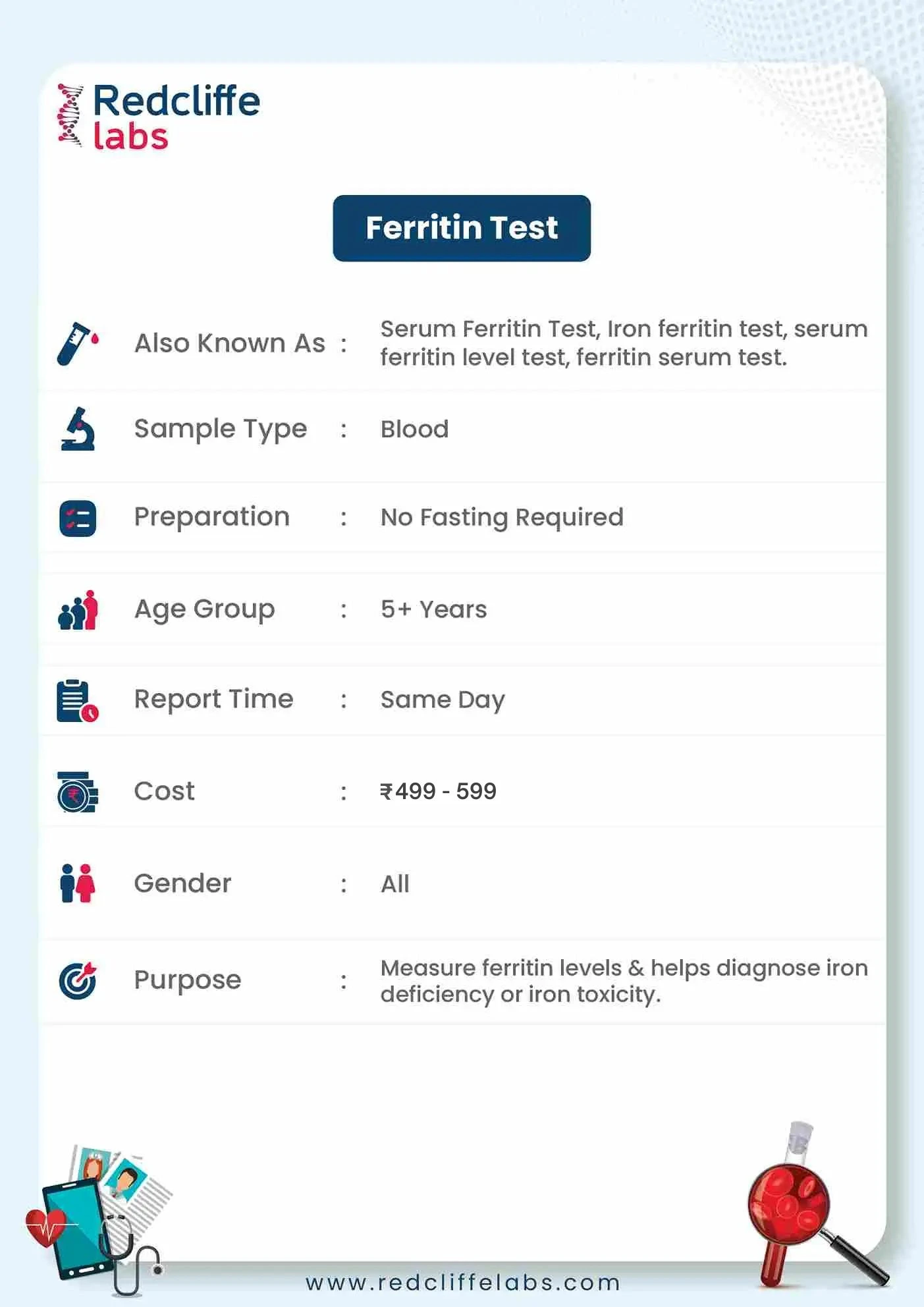
Ferritin Test Details In Brief:
| Also Known As | Serum Ferritin Test, Iron ferritin test, serum ferritin level test, ferritin serum test. |
| Purpose | Measure ferritin levels & helps diagnose iron deficiency or iron toxicity |
| Preparation | Do not take any over-the-counter medicine without confirming with your doctor |
| Fasting | No Fasting Required |
| Get Reports Within | Same Day |
| Ferritin Test Cost | Rs 499 |
Symptoms That May Call For A Ferritin Test:
Some several signs or symptoms indicate abnormal ferritin levels and may prompt a ferritin test, such as:
- Excessive Fatigue: Persistent fatigue or weakness is one of the common signs that your iron levels might not be in balance, and getting tested may be essential to confirm the cause and act accordingly.
- Pale Skin: The sudden change in the skin complexion, like paleness, is another common sign of abnormal ferritin levels.
- Shortness Of Breath: Inadequate iron levels contribute to less oxygen supply to tissues, which further causes difficulty breathing.
- Rapid Heartbeat: Iron deficiency leads to increased heart rate or irregular heartbeat due to low oxygen supply. Therefore, getting screened early is significant to confirm the cause and take control of the condition.
- Brittle Nails & Hair: Insufficient iron levels in the blood can lead to problems with nails and hair.
- Restless Leg Syndrome: Iron deficiency & leg syndrome causes uncomfortable sensations in the legs & uncontrollable urge to move them.
These symptoms can be possible in any other condition too. Therefore, getting tested in time is essential to confirm the cause of your symptoms and help doctors guide appropriate treatment, depending on your situation. So, if your doctor has prescribed the Ferritin Blood Test, do not delay and seek assistance today.

Types of Iron Tests: What's the Difference?
Different iron tests check different markers, so doctors often recommend them together for a complete iron assessment.
Ferritin Test
- A ferritin test measures the amount of stored iron in your body. Ferritin is a protein that stores iron and releases it when your body needs it.
- Low ferritin usually indicates low iron stores and may be an early sign of iron deficiency.
- High ferritin levels may result from iron overload, inflammation, infection, liver disease, chronic illness, or certain blood disorders.
- Doctors often recommend this test when you have fatigue, weakness, dizziness, pale skin, hair fall, heavy periods, or suspected anemia.
Serum Iron Test
- A serum iron test measures the amount of iron currently present in your blood. It shows how much iron is circulating and available for use at the time of testing.
- Low serum iron may suggest iron deficiency, poor absorption, blood loss, or chronic disease.
- High serum iron may suggest excess iron intake, iron overload, liver disease, or certain blood disorders.
TIBC Test:
- TIBC stands for Total Iron-Binding Capacity. This test measures how well your blood can bind and carry iron through transferrin and other proteins.
- A high TIBC level may indicate that your body is trying to capture more iron, which is common in iron deficiency.
- A low TIBC level may occur in conditions such as inflammation, chronic disease, liver disease, malnutrition, or iron overload.
Transferrin Test
- A transferrin test measures the level of transferrin, a protein that carries iron in the blood. Transferrin moves iron from the digestive system and storage sites to the bone marrow and other body tissues.
- High transferrin levels may be seen when iron stores are low, as the body produces more transferrin to carry available iron.
- Low transferrin may occur in inflammation, liver disease, kidney disease, malnutrition, or chronic illness.
CBC Test
- A CBC test helps detect anemia and other blood changes caused by low iron. It checks hemoglobin, hematocrit, MCH, MCHC, red blood cell count, MCV, white blood cell count, and platelet count.
- Low hemoglobin or low hematocrit may suggest anemia.
- Low MCV and MCH may suggest iron-deficiency anemia, in which red blood cells become smaller and carry less hemoglobin.
Iron Studies Test
- An iron studies test is a group of blood tests that gives a complete picture of iron status in the body. It includes parameters such as serum iron, ferritin, TIBC, transferrin, and transferrin saturation.
- This test helps doctors check whether iron levels are low, normal, or high. It can help detect iron deficiency anemia, anemia of chronic disease, iron overload, hemochromatosis, and some liver-related conditions.
- Doctors may recommend iron studies if you have symptoms like tiredness, weakness, pale skin, dizziness, shortness of breath, heavy menstrual bleeding, poor absorption, or abnormal CBC results.
Top Benefits Of Ferritin Levels Test:
- Assess Iron Status: Getting Ferritin Levels check helps doctors measure the amount of iron in your blood and diagnose deficiency or iron overload. This measurement helps healthcare practitioners get an insight into the iron status and suggest appropriate medical treatment to bring the balance.
- Identify Underlying Cause: There are several health conditions, including chronic diseases, certain types of cancers, inflammatory disorders, or liver problems, contributing to abnormal ferritin levels. A Ferritin Level Test helps identify what causes the abnormality, enabling targeted diagnosis & appropriate management.
- Preoperative Assessment: A ferritin test may also help assess an individual’s iron status before a critical surgery or procedure involving significant blood loss. It helps healthcare practitioners to reduce complications.
- Guide Treatment: Assessing the iron status in your body helps healthcare providers suggest treatment and determine the dosage appropriately according to your body & health requirements.
- Monitor Treatment Response: Further, the test helps monitor the treatment response, allowing healthcare providers to alter or adjust your therapy or medicine according to the need.
Overall, a Ferritin Lab Test can provide valuable insight into your health by helping measure iron levels, aiding in diagnosing & monitoring ailments associated with iron deficiency or iron overload and other illnesses. Moreover, it adds to the overall care & management of the condition.
Purpose Of A Ferritin Test:
A doctor may suggest a ferritin test to determine total iron storage capacity in the body, and the test serves the following purposes:
- Check Iron Deficiency: A ferritin test checks the iron storage levels in the body to help confirm iron deficiency, especially in pregnant women, infants, children, & other groups affected with certain medical conditions that affect iron levels.
- Check Iron Overload: Additionally, the ferritin test looks for excessive iron accumulation or iron overload in the body, which, if left unaddressed, can lead to several chronic health conditions, like diabetes, cirrhosis, & heart issues.
Who Should Consider a Ferritin Test?
You should consider a ferritin test if you have symptoms that may suggest low iron levels, high iron levels, or anemia.
- People with symptoms of weakness, fatigue, dizziness, shortness of breath, pale skin, irregular heartbeat, or restless legs.
- People with constant tiredness or weakness
- Women with heavy menstrual bleeding
- Pregnant women
- People with low hemoglobin or low hematocrit
- People with poor iron absorption
- People taking iron treatment
- People suspected of iron overload
- People with chronic illnesses
You should not self-diagnose based on ferritin alone. A doctor may combine your symptoms, medical history, ferritin result, CBC, liver tests, inflammation markers, and iron profile to understand the real cause of abnormal iron levels.
What Parameters Are Checked in a Ferritin Test?
A ferritin test mainly checks one important parameter: serum ferritin. Serum ferritin shows how much iron your body has stored. Ferritin is a protein that stores iron inside your cells and releases it when your body needs it to make healthy red blood cells, support oxygen transport, and maintain normal body functions.
Serum Ferritin
- Serum ferritin is the main parameter checked in a ferritin test. It helps measure the amount of iron stored in the body.
- Doctors use this test to check whether your iron stores are low, normal, or high.
- Low ferritin levels may indicate iron deficiency, which can lead to iron-deficiency anemia if left untreated.
- High ferritin may suggest excess iron storage, also known as iron overload.
- High ferritin levels can cause inflammation, infection, liver disease, chronic illness, autoimmune conditions, or certain blood disorders.
Your doctor may compare ferritin results with CBC, serum iron, TIBC, transferrin saturation, liver function tests, and inflammation markers for better interpretation.
Preparations Required For A Ferritin Test:
General guidelines to follow for a Ferritin Test include the following:
- A Ferritin Test is a simple blood examination that requires no fasting or dietary restrictions and can be done any time of the day.
- Moreover, sleeping before the test and stressing less is essential to ensure hormones are in balance.
- If you take any prescribed or non-prescribed medicines like Ayurvedic or herbal supplements, it is critical to keep your healthcare provider informed and follow their instructions.
- Do not stop or take medicines without consulting your healthcare provider.
- Follow all their instructions to keep the accuracy of the test results intact.
Following instructions from your healthcare provider is essential to avoid discrepancies in the test results and ensure maximum accuracy.
Procedure Of A Ferritin Test:
A simple blood test includes the following steps:
- A phlebotomist will tie a band around the arm and ask you to make a fist to find the vein.
- They will then clean the site using an antiseptic with the help of cotton gauze.
- A phlebotomist will then insert a syringe to withdraw the required amount of blood.
- The blood will be collected in a vial and sent to the laboratory for analysis.
- After the procedure, the band will be removed, and a cotton gauge will be placed at the punctured site.
- They may also put a bandage on the punctured site to prevent infection.
The procedure may cause a little pain, discomfort, or bruising at the punctured site. These symptoms will fade away with time. However, if the problem persists, it is essential to seek medical help at the earliest is essential.
Ferritin Test Normal Range:
| Gender | Normal Range |
| Men | 14.7 to 205.1 ng/mL |
| Women | 30.3 to 565.7 ng/mL |
| Newborns | 25 to 200 ng/mL |
| 1 month old | 200 to 600 ng/mL |
| 2 to 5 months old | 50 to 200 ng/mL |
| Children 6 months to 15 years | 7 to 140 ng/mL |
The Ferritin normal range may vary from lab to lab due to several reasons, and therefore, the interpretation should be done by a professional.
Ferritin Test Result Interpretation:
- Low Ferritin Levels: If Ferritin Levels are lower than normal, it suggests iron deficiency anemia or other health problems associated with low iron levels. If left unaddressed, Low Ferritin Levels can lead to several health issues, like heart problems, infections, and more.
- High Ferritin Levels: On the contrary, if ferritin levels are higher than normal, it implies too much iron in the body, indicating Liver Disease, Hyperthyroidism, Hemochromatosis, and other conditions.
Whether the levels are high or low, getting tested in time is essential to take control of the condition, minimize complications and initiate treatment as early as possible. So, book your Ferritin Blood Test at home with Redcliffe Labs now.
5 Factors Affecting Ferritin Levels
Factors that can affect ferritin levels in the body include:
- Age: Age does play an important role as ferritin levels decrease due to age.
- Gender: Another factor that can affect ferritin levels is gender. Ferritin levels are lower in women than men due to the psychological loss of blood.
- Diet: Eating a diet that lacks iron can be a major cause of concern. It is because it can cause low ferritin levels. Add green leafy vegetables, eggs, and meat into your diet to increase iron in your body. Besides, tea and coffee contain tannins, which can interfere with iron absorption.
- Alcohol consumption: Reduce your alcohol consumption, contributing to the low ferritin levels significantly. It can also damage your liver.
- Certain medications: Non-steroidal anti-inflammatory drugs (NSAIDs) and corticosteroids can interfere with iron absorption and cause low ferritin levels.
Tips To Balance Abnormal Ferritin Levels:
- Identify Underlying Cause: One of the significant steps that can make a difference in your journey to balance ferritin levels is diagnosing the cause of this abnormality. Therefore, book a Serum Ferritin Test to confirm the cause and initiate the preventive measures & treatment in time.
- Take Medicines As Prescribed: Your doctor may suggest a treatment or medication, depending on the status of your ferritin levels. Thus, take the medicines as prescribed to ensure optimum results.
- Eat A Balanced Diet: Diet is another factor that increases normal ferritin levels. If your iron levels are low, your doctor may suggest iron-rich foods. They may recommend foods that can balance iron levels if the levels are high.
- Consider Regular Monitoring: Furthermore, routine monitoring of ferritin levels may be necessary to help healthcare providers assess the effectiveness or response of the treatment and suggest adjustments as required.
These are simple guidelines that can make a significant impact on the health. Therefore, take the Ferritin Lab Test to measure, monitor & manage ferritin levels.
Other Tests to Detect Iron Deficiency Anemia:
In case of a low ferritin level, your healthcare provider may order additional tests to detect the iron deficiency anemia, such as:
1. Serum iron: It checks iron in the liquid part.
- Total iron-binding capacity (TIBC): This test is performed to measure iron levels. The test helps calculate how much iron relates to the protein transferrin, carrying iron in your blood.
- Hemoglobin and hematocrit: Hemoglobin helps RBCs carry oxygen in all body parts. It is a part of RBC. On the other hand, hematocrit points towards the percentage of RBCs in your blood. |
- Complete blood count (CBC): This blood test can reveal a wide range of conditions, including anemia.
- HFE gene test: It is done to check if you have hemochromatosis.
- Zinc Protoporphyrin: It measures the iron levels that can cause toxicity.
2. High ferritin levels can also cause discomfort due to the following reasons:
- Stomachache
- Heart palpitations
- Chest pain
- Unexplained weakness
- Joint pain
- Unexplained fatigue
- Liver damaged or spleen
- Erectile dysfunction
3. Check the effectiveness of the treatment of iron deficiency anemia: Your doctor may also recommend the test if you have already been diagnosed with iron deficiency anemia and are being treated for it. Through this test, the doctor will monitor the treatment and any signs of improvement.
No matter the reason, if your healthcare provider has suggested a ferritin test, get yourself tested immediately. Early and accurate detection helps reduce healthcare costs, mortality from disease, and patient quality of life.
Are ferritin and iron the same?
No, ferritin and iron are not the same.
Below is a table showing the difference between ferritin and iron:
| Ferritin | Iron |
| 1. It is a protein complex that stores and releases iron. This is to maintain the optimal levels of iron in the body. | 1. It is an essential mineral to perform several bodily functions, including energy production and DNA synthesis. |
| 2. Ferritin is an iron storage protein, but it stores iron in a non-toxic form and releases it when required. | 2. Iron produces hemoglobin, a molecule in red blood cells (RBCs). |
Are there any side effects associated with the test?
No, there are no side effects associated with the ferritin test. A small blood sample is required to check the low or high ferritin levels.
While obtaining the blood from your vein, you may feel some discomfort. However, the chances are almost none, but after the test, you may experience:
- Too much bleeding
- Lightheadedness
- Feeling faint
- Bruising
- Infection
Note: Kindly seek medical assistance immediately to prevent serious complications. Any carelessness will reap negative health results.
How can you increase low ferritin levels?
Low ferritin levels need to be evaluated. This is when an expert’s intervention is necessary to check the severity of the deficiency and its causes.
Foods that can help increase low ferritin levels are:
- Lean red meat
- Oysters
- Lentils, beans, and tofu
- Raisins
- Eggs
- Fortified breakfast cereals
- Dark leafy greens
Some foods and beverages that can affect your iron absorption include:
- Foods rich in vitamin C, such as citrus fruits, dark green vegetables, and bell peppers, may help increase iron absorption.
- Compounds such as polyphenols promote health-promoting benefits. However, they can also harm the body by lessening the absorption and bioavailability of essential nutrients, particularly iron.
- Iron supplements can increase ferritin levels. Hence, they must be used in a limited amount under the guidance of a doctor.
How can you lower high ferritin levels?
High ferritin levels mean high iron levels, so the underlying cause needs to be addressed. Treatments for too many ferritin levels include primary hemochromatosis and chelation therapy.
- Primary hemochromatosis is the most common treatment for eliminating too much iron from the body. Also known as hereditary hemochromatosis or classical hemochromatosis, it is a blood test that reveals issues with the DNA.
- Chelation Therapy: Although not a first option, a healthcare provider may suggest chelation therapy. In this treatment, the doctor gives the patient oral or injected medicine to remove excess iron from the body.
Nevertheless, other treatment options are also available. Depending on your health condition, consult your doctor for the best treatment possible.
What Affects Ferritin Test Results?
Several health and lifestyle factors can affect ferritin results. That is why doctors interpret ferritin along with symptoms, medical history, and other test results.
- Inflammation or Infection: Ferritin acts as an inflammation-related marker. Your ferritin level may rise when your body has an infection, autoimmune disease, or inflammatory condition, even if your actual usable iron is not high.
- Liver Disease: Much of the body's ferritin is stored in the liver. Liver damage, fatty liver disease, alcohol-related liver problems, hepatitis, or cirrhosis can increase ferritin levels.
- Iron Supplements: Taking too many iron supplements can increase iron stores and may raise ferritin levels. Always tell your doctor if you take iron tablets, multivitamins, or any other supplements that contain iron.
- Pregnancy: Pregnancy increases iron demand. Some pregnant women may develop low ferritin if their iron intake or absorption does not meet the body's requirement.
What Conditions Can Be Diagnosed With a Ferritin Test?
A ferritin test helps doctors detect or support the diagnosis of conditions related to iron deficiency, iron overload, inflammation, and some chronic diseases. Here are some conditions that can be detected with the Ferritin test:
- Iron Deficiency: Low ferritin often points toward low iron stores. This may happen before anemia becomes severe. Doctors may recommend ferritin testing when a person has fatigue, weakness, dizziness, shortness of breath, pale skin, or low hemoglobin.
- Iron Deficiency Anemia: Iron deficiency anemia happens when the body does not have enough iron to make healthy red blood cells. Low ferritin levels, along with low hemoglobin or hematocrit, may support this diagnosis.
- Hemochromatosis or Iron Overload: High ferritin may suggest iron overload, especially when transferrin saturation is also high. Hemochromatosis causes the body to absorb and store too much iron, which may over time affect organs. Doctors may advise additional tests to confirm the cause.
- Liver Disease: Ferritin may increase in liver disease because the liver stores a large amount of ferritin. Conditions such as fatty liver disease, alcohol-related liver damage, hepatitis, or cirrhosis may show elevated ferritin.
- Chronic Inflammation or Autoimmune Conditions: Ferritin may rise during inflammation. Autoimmune diseases, infections, and chronic inflammatory conditions can increase ferritin levels in the blood.
- Restless Legs Syndrome Linked With Low Iron: Doctors may check ferritin in some people with restless legs syndrome because low iron stores can contribute to symptoms in certain cases.
Ferritin Test for Kidney Conditions
Lower and higher serum ferritin levels are linked with poor kidney function. However, the association is debatable and inconsistent and needs more study. Hence, the ferritin test may or may not be suggested.
Ferritin Test for Liver Conditions
The serum ferritin test has revealed that people with hemochromatosis are at a greater risk of developing cirrhosis. However, the risk is low if the serum ferritin levels are less than 1000 mg/L.
A note from Redcliffe Labs!
Healthy India ki Trusted Labs- Redcliffe Labs is the fastest-growing omnichannel in India, providing world-class diagnostic services in over 220 cities. It is among the country's most trusted labs that offer a full body checkup at home, blood tests online with free home sample collection, and other pathology services are also available. Further, it alets youdiscover the most affordable health tests and packages within your budget for proactive well-being. Get the most accurate health reports within a given time frame.
Ferritin Test vs Iron Test vs TIBC Test: What's the Difference?
Ferritin, iron, and TIBC tests are all used to assess iron levels in the body, but they measure different aspects. Let's understand the difference in detail:
| Test Name | What It Measures | What It Helps Detect |
| Ferritin Test | Measures stored iron in the body | Low iron stores, iron deficiency anemia, iron overload |
| Iron Test / Serum Iron Test | Measures iron circulating in the blood | Current blood iron level, iron deficiency, excess iron |
| TIBC Test | Measures the blood's capacity to bind and transport iron | How much transferrin is available to carry iron |
A ferritin test is often considered an important marker for iron deficiency because ferritin reflects your body's iron reserve. A serum iron test measures the amount of iron in the blood at the time of testing. A TIBC test helps understand whether your body is trying to carry more or less iron. In many cases of iron deficiency, TIBC may increase because the body produces more transferrin to capture available iron. Consult your doctor, and based on your condition, they may recommend the test.
Delay No More! Book Your Ferritin Test With Redcliffe Labs for INR 499 Only!
Measuring ferritin levels early is essential to ensure that you can get control over the condition. It helps healthcare practitioners to suggest preventive measures and treatments that can help bring the balance. So, if you are looking for a reliable diagnostic service provider for a ferritin blood test, call or download the Redcliffe mobile app to book the test online. The ferritin test price at Redcliffe Lab is INR 499 only. Enjoy the most professional blood sample collection service at your doorstep.
Ferritin is a protein that stores iron. A ferritin test may be suggested to measure ferritin levels. It is a quick test that involves taking a blood sample from your vein without too many preparations.
If your ferritin test shows high or low levels, this may indicate an underlying condition, such as iron deficiency anemia, hemochromatosis, or certain types of cancer.
Nevertheless, a healthcare provider may suggest additional testing to confirm a diagnosis and make an effective treatment plan.