Is Watermelon Good for Diabetes? Benefits, Sugar Content and Safe Portions

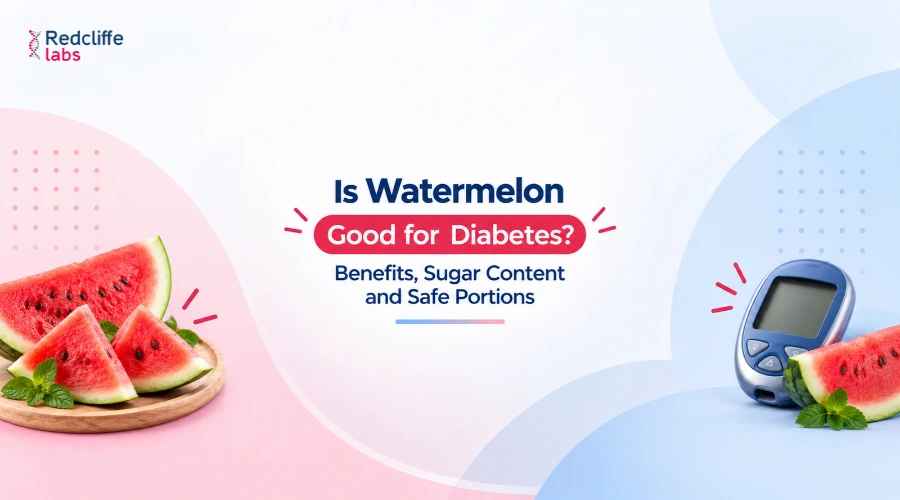
Watermelon is a favourite summer fruit in India, especially on hot days when you want something refreshing and hydrating. But if you have diabetes, you may wonder whether its natural sweetness can raise your blood sugar levels. Do you need to avoid it altogether, or can you enjoy a small bowl?
Is watermelon good for diabetes? Yes, you can include watermelon in a diabetes-friendly diet when eaten in appropriate portions. Although it contains natural sugars and carbohydrates, you do not necessarily need to eliminate it from your diet. The amount you eat, your overall meal pattern, and your individual blood glucose response all matter.
Understanding its nutritional value, glycemic index, and serving size can help you make informed food choices without unnecessarily restricting fruit.
Overview
- Watermelon can fit into a diabetes-friendly diet when portion sizes suit individual carbohydrate needs.
- A 100-gram serving contains approximately 7.6 grams of total carbohydrates, including around 0.4 grams of dietary fibre.
- Watermelon may have a high glycemic index, but a small serving has a relatively low glycemic load.
- Eating a measured portion of whole watermelon is generally preferable to drinking a large glass of juice.
- People with diabetes should consider total carbohydrate intake, their glucose response, and their individual meal plan.
Watermelon Sugar Content and Nutrition Facts
Watermelon contains mostly water, along with natural sugars, small amounts of fibre, and several nutrients. It is also relatively low in calories.
Here is the approximate nutritional value of 100 grams of raw watermelon:
|
Nutrient |
Amount |
|
Calories |
30 kcal |
|
Total carbohydrates |
7.6 g |
|
Natural sugars |
6.2 g |
|
Dietary fibre |
0.4 g |
|
Protein |
0.6 g |
|
Water |
91.5 g |
Watermelon also provides vitamin C, potassium, and lycopene, a plant pigment with antioxidant properties. Its high water content makes it a refreshing snack, particularly during hot weather.
However, watermelon contains relatively little fibre and protein. Its natural sugars contribute to its total carbohydrate content, which matters when planning meals for diabetes.
Also read: https://redcliffelabs.com/myhealth/fruit/watermelon-seeds-benefits-nutrition-and-uses
Does Watermelon Raise Blood Sugar?
Yes. Watermelon contains carbohydrates that the body digests and absorbs into the bloodstream, which can raise blood glucose after eating. This response is normal and does not automatically mean the fruit is unsuitable for someone with diabetes.
Several factors affect this response, including portion size, the rest of the meal, physical activity, medication, and individual glucose regulation.
Two measures can help explain this effect: the glycemic index and glycemic load.
Watermelon Glycemic Index: What Does It Mean?
The glycemic index (GI) measures how quickly a carbohydrate-containing food raises blood glucose compared with a reference food. Foods are generally classified as low GI (55 or below), medium GI (56–69), or high GI (70 or above).
Published measurements for watermelon vary. Some studies and reference tables report a high GI, while others report lower values. Therefore, no single GI value should be treated as universal.
A high GI does not automatically mean a food must be avoided. The GI measures the response to a standard amount of available carbohydrate, not necessarily the amount you eat in an ordinary serving.
Why Watermelon’s Glycemic Load Matters
Glycemic load (GL) considers both a food’s GI and the amount of available carbohydrate in a particular serving. It therefore provides additional context about the potential effect of the portion consumed.
Watermelon is a useful example of why these measures should be considered together. Although its GI can be high, a 100-gram serving contains only about 7.2 grams of available carbohydrate, based on the nutrition figures above. Its estimated glycemic load is relatively low, although published estimates vary depending on the GI value and calculation method used.
A larger serving contains more carbohydrates and can have a higher glycemic load. This is why portion size matters even when a fruit has a relatively low glycemic load in a small serving.
Neither GI nor GL predicts how each person responds. Consider these measures alongside total carbohydrate intake and your overall meal plan.
How Much Watermelon Can a Person With Diabetes Eat Per Day?
No single serving size suits everyone with diabetes. Your carbohydrate requirements, glucose targets, medication, and overall eating pattern all influence how much watermelon fits into your diet.
A practical starting point is a small bowl of about 100–150 grams of fresh watermelon, if it fits your meal plan.
For context, 100 grams contains approximately 7.6 grams of carbohydrates, while 150 grams contains about 11.3 grams. These are estimates, not universal daily limits.
Keep these points in mind when choosing a portion:
- Measure your serving: A small bowl can help you keep track of how much you eat.
- Count carbohydrates: If you follow a carbohydrate-counting plan, include watermelon in your daily or meal-specific carbohydrate intake.
- Avoid oversized portions: Eating several servings at once can increase your total carbohydrate intake.
- Monitor your response: If your healthcare professional has recommended blood glucose monitoring, follow their instructions to understand how your usual portion affects your readings.
- Follow your individual meal plan: If you use insulin or medicines that can cause low blood sugar, coordinate your food intake with your prescribed treatment plan.
You don't need to eliminate naturally sweet fruits just because they contain sugar. The aim is to find portions that fit your nutritional needs and help you manage your glucose levels.
Benefits of Eating Watermelon in Moderation
Watermelon isn't a diabetes treatment, but it can support a balanced eating pattern in several ways.
1. Supports Hydration
Watermelon contains more than 90% water, making it a refreshing option in warm weather. Eating it can contribute to your daily fluid intake, although drinking enough water throughout the day remains important.
2. Provides Vitamin C
Vitamin C supports normal immune function, collagen formation, and wound healing. Watermelon contributes some vitamin C, although the amount depends on your serving size.
3. Contains Antioxidants
Watermelon contains lycopene, a plant pigment with antioxidant properties. Antioxidants help protect cells against damage caused by unstable molecules.
However, no established evidence shows that eating watermelon specifically lowers blood sugar or prevents diabetes complications.
4. Offers a Relatively Low-Calorie Snack
With approximately 30 calories per 100 grams, watermelon can be a refreshing alternative to many calorie-dense desserts.
Its natural sweetness may satisfy a sweet craving without added sugar. Still, you should consider its carbohydrate content when managing diabetes.
How to Eat Watermelon With Diabetes
You can include watermelon in your diet without unnecessarily restricting meals. A few practical habits can help you manage portions and make balanced food choices.
- Choose fresh, whole fruit: Fresh watermelon pieces are generally preferable to juice because they retain the fruit’s structure and are more filling.
- Keep portions consistent: Start with a modest serving and adjust based on your meal plan and glucose response.
- Include it in your meal plan: If you count carbohydrates, account for watermelon alongside other carbohydrate-containing foods.
- Pair it thoughtfully: If suitable for your diet, enjoy a small serving with plain, unsweetened curd or a few nuts. Protein and fat may influence digestion and the post-meal glucose response, but they do not cancel out the fruit’s carbohydrates or guarantee that blood sugar will not rise.
- Eat a variety of foods: Include other whole fruits, vegetables, pulses, and whole grains rather than relying on one fruit to meet your nutritional needs.
- Avoid added sugar: Watermelon is naturally sweet, so you usually do not need to add sugar, syrup, or sweetened toppings.
These habits can help you enjoy seasonal fruit while keeping your overall eating pattern balanced.
Whole Watermelon vs Watermelon Juice
How you consume watermelon also matters.
|
Form |
What to consider |
|
Fresh watermelon pieces |
Provide water and some fibre, with carbohydrates that can be counted by portion. |
|
Homemade watermelon juice |
Can be consumed quickly in larger quantities. Straining may also remove some fibre. |
|
Packaged watermelon drink |
May contain added sugar, so check the ingredient list and nutrition label. |
|
Watermelon smoothie |
Its nutritional content depends on the quantity of fruit and any added ingredients. |
Is Watermelon Juice Good for Diabetics?
Fresh watermelon juice may contain many of the same vitamins and plant compounds as the whole fruit, but it is generally less filling and can be consumed more quickly. Depending on how you prepare it, juicing and straining may also reduce its fibre content.
Drinking juice can make it easier to consume a larger quantity of fruit in one sitting, increasing your carbohydrate intake.
For everyday consumption, choose fresh watermelon pieces more often than juice. If you drink watermelon juice, avoid added sugar, keep the serving small, and include its carbohydrates in your meal plan. Water should remain your main beverage.
When Should People With Diabetes Be More Careful?
People with diabetes do not need to avoid watermelon completely. However, certain situations require closer attention to portions and overall glucose management.
When Blood Sugar Is Above Your Target
If your blood glucose readings are frequently above your prescribed target, review your overall meals and snacks with your healthcare professional. A large serving of watermelon may increase your carbohydrate intake, but one food alone may not explain persistently high readings.
When You Have Prediabetes
People with prediabetes can generally include whole fruit in a balanced eating pattern. Focus on appropriate portions, regular physical activity, and a varied diet that supports healthy blood glucose levels.
When You Take Diabetes Medication
If you use insulin or other glucose-lowering medicines, your meal timing and carbohydrate intake may need to be coordinated with your treatment. Follow your prescribed plan and do not change medication doses based on watermelon consumption without medical advice.
If you are unsure how a particular serving affects you, a healthcare professional or registered dietitian can help you interpret your glucose readings and adjust your meal plan when necessary.
The Bottom Line
Watermelon can fit into a balanced diet for many people with diabetes. It provides hydration, vitamin C, and antioxidant compounds, but it also contains natural sugars and carbohydrates that can raise blood glucose.
Is watermelon good for diabetes? It can be, as long as the portion fits your needs and overall carbohydrate intake. Choose fresh fruit, keep servings moderate, and monitor your glucose response if you track it. Rather than avoiding all sweet fruits, focus on a varied diet, consistent portions, physical activity, and a diabetes management plan developed with your healthcare professional.
Frequently Asked Questions
Can people with diabetes eat watermelon on an empty stomach?
Yes, people with diabetes can eat watermelon on an empty stomach if it fits their meal plan. However, eating it on an empty stomach does not prevent blood sugar from rising. Portion size, total carbohydrate intake, medication, and individual glucose responses matter more than whether the fruit is eaten before or after a meal.
Is watermelon better than mango for people with diabetes?
Neither fruit is automatically better for everyone with diabetes. Watermelon contains more water and fewer calories per 100 grams, while mango generally provides more fibre. Both contain natural sugars and carbohydrates. Portion size, total carbohydrate intake, and individual blood glucose responses should guide fruit choices.
Can eating watermelon help with weight management in diabetes?
Watermelon is relatively low in calories and high in water, making it a refreshing snack. It may fit into a weight-management plan when eaten in appropriate portions. However, watermelon does not directly cause weight loss or treat diabetes. Overall food intake, physical activity, and consistent lifestyle habits remain important.
Is watermelon suitable for people with diabetes and high blood pressure?
Watermelon can fit into a balanced diet for many people managing diabetes and high blood pressure. It contains water and potassium, which supports normal blood pressure regulation. However, it is not a treatment for hypertension. People with kidney disease or on potassium-restricted diets should seek individual dietary advice.
Can people with diabetes eat watermelon after a meal?
Yes, people with diabetes can eat watermelon after a meal if it fits their carbohydrate plan. However, eating it after a carbohydrate-rich meal adds to the total carbohydrate intake and may affect blood glucose. Consider the portion and overall meal composition rather than assuming that eating fruit after meals prevents glucose spikes.
Should people with diabetes avoid watermelon if they have high fasting blood sugar?
Not necessarily. A high fasting blood sugar reading does not automatically mean watermelon must be avoided. However, persistently elevated readings should be reviewed by a healthcare professional. Consider your overall diet, medication, and glucose targets. Seek medical advice before making significant dietary changes in response to recurring high readings.
Explore Diabetes Screening with Redcliffe Labs
Understanding your blood glucose levels can help you and your healthcare professional assess your metabolic health. Redcliffe Labs offers testing options such as the Pre-Diabetes Screening Package, which includes fasting blood glucose and HbA1c tests to help screen for prediabetes and diabetes.
Get More with 4X Value Benefits
- Smart Reports: Understand your health summaries, scores, and trends.
- Expert-Led Report Consultation: Get guidance on understanding your test results.
- AI Health Assistant: Get support with everyday health-related queries.
- Personalized Improvement Plans: Explore diet and lifestyle recommendations aligned with your health goals.
The appropriate tests depend on your health history, symptoms, and individual risk factors. Consult a healthcare professional to understand which tests may be suitable for you. Home sample collection is available in eligible locations, subject to PIN code and slot availability.