Autophagy and Fasting: What Happens to Your Body During a Fast?

Overview
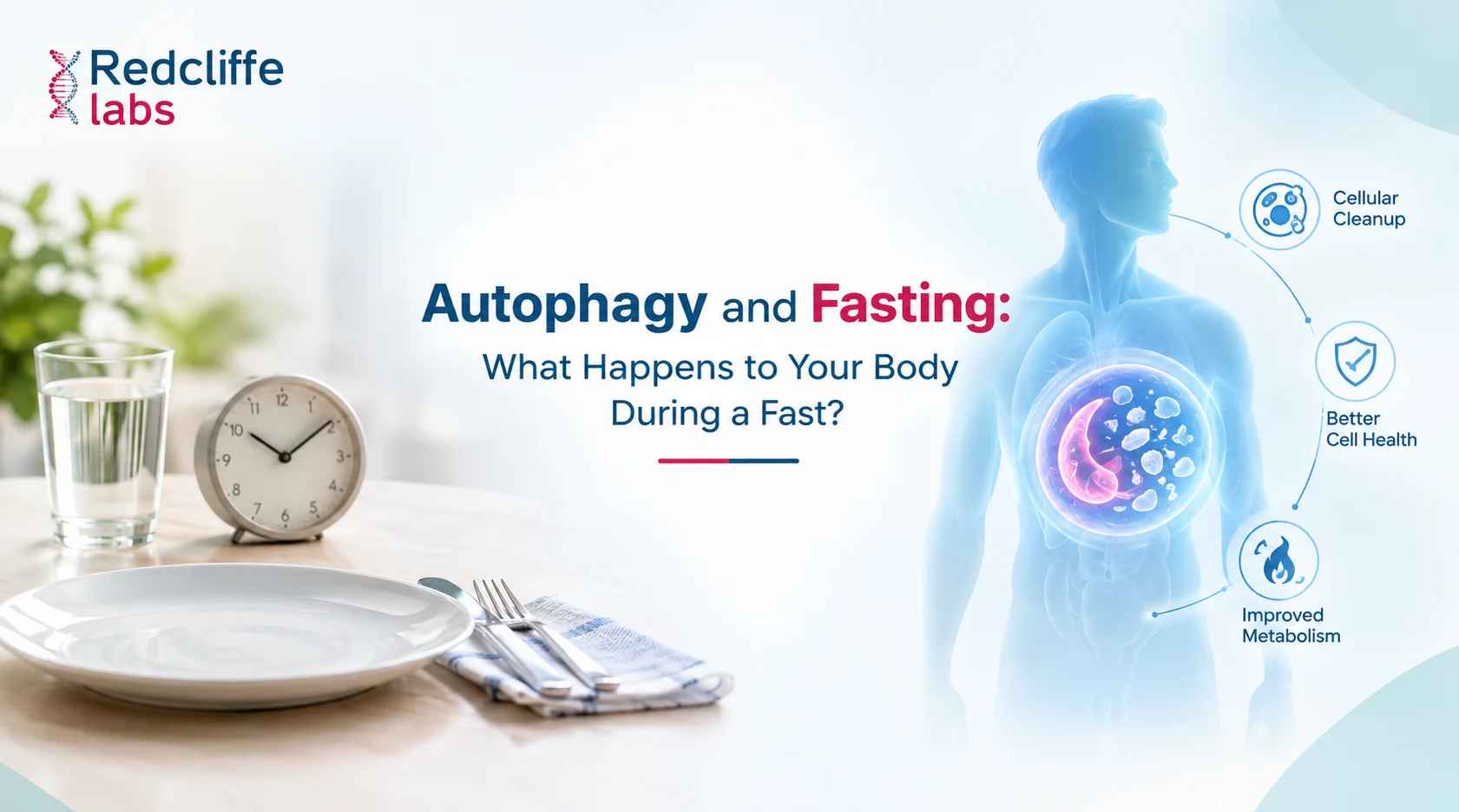
- Autophagy and fasting are linked through the body’s natural cellular recycling process, helping cells break down and reuse damaged or unnecessary components.
- Fasting changes how your body uses energy as the hours pass; it gradually shifts from energy from a recent meal toward stored glycogen, fat, and ketones.
- Fasting may influence autophagy-related pathways, but there is no scientifically proven “magic hour” when autophagy suddenly starts in humans.
- Feeling hungry, energetic, tired, or having bad breath does not confirm autophagy, because the process happens inside cells and cannot be reliably identified by symptoms alone.
- Longer fasting is not automatically better. If you are fasting for weight management, a sustainable eating pattern, balanced nutrition, and overall metabolic health matter more than chasing a specific fasting duration.
- Blood tests such as Blood Glucose, HbA1c, Lipid Profile, LFT, and KFT can help assess important aspects of metabolic health when recommended based on your individual health needs.
Have you ever wished your body had a built-in "reset" button? A way to clear out the old, worn-out cells and make room for fresh, high-performing ones?
Turns out, you do! It’s a process called autophagy (literally translated from Ancient Greek as "self-eating"). While the word might sound like something out of a horror movie, it’s actually one of your body’s most impressive survival mechanisms, and fasting is the master key that unlocks it.
Let's break down what autophagy is, what happens hour-by-hour when you fast, and how you can harness this natural cellular cleanup system to boost your health.
What Is Autophagy?
Think of your cells as tiny, busy factories. They are constantly making proteins, using cellular parts, and getting rid of things that are damaged or no longer needed.
Over time, your cells accumulate junk: damaged proteins, dysfunctional mitochondria, and cellular debris. When autophagy kicks in, your cells encapsulate this cellular garbage, break it down into basic amino acids and building blocks, and reuse them.
And here's something important: The process of autophagy is not something that takes place only when fasting begins but is already taking place in cells. In fact, the level of this process depends on other factors, like food availability and energy reserves.
Fasting is just one of the situations studied by scientists, as it influences food resource sensing pathways in the human body, such as mTOR and AMPK.
The Simple Analogy: Imagine your house filled with broken furniture. Instead of throwing it in the landfill, autophagy takes the broken chairs, chops them into clean lumber, and builds brand-new tables.
What Happens to Your Body During a Fast?
Your body can't switch abruptly from "well-fed" to "fasting." It's a gradual process in which the body adapts its energy production and consumption to the time elapsed since the last meal.
In other words, your metabolism can't be turned off in an instant. It's more like a slow shift from one type of fuel to another in accordance with the passage of time after eating.
1. 0–4 Hours: The Anabolic Phase
Status: Digesting & Storing
Your system is now going through the process of digesting your previous meal. Your insulin levels may go up, and the pancreas produces insulin to help deliver sugar to your cells for immediate energy or for future use. This stage of digestion completely stops the process of autophagy.
2. 4–12 Hours: The Post-Absorptive Phase
Status: Switching Fuel Sources
When digestion comes to an end, food enters your bloodstream and provides gradually smaller amounts of nutrients. Your body starts to reduce the insulin it produces while relying on reserves. Your liver can convert glycogen into glucose in your blood, while the body begins using fat from the fat reserves. Thus, an overnight fast is a period of metabolic transition.
3. 12–24 Hours: The Fasting Threshold & Early Autophagy
Status: Fat Burning & Early Cellular Renewal
The longer you refrain from food intake, the more your body will need to rely on its energy reserves. Fat metabolism occurs faster, and the liver starts making more ketone bodies, which can be used as an alternative fuel by several tissues.
In addition, the body keeps on producing glucose through gluconeogenesis, because some tissues still need glucose. Importantly, there isn't a magic moment when your body suddenly stops using glucose and starts using only fat. These changes happen progressively.
4. 24–48 Hours: Deep Autophagy & Ketosis
Status: Cellular Reboot
At this point, the body's adaptation to fasting becomes more significant.
Liver glycogen stores become increasingly depleted, while fat-derived energy and ketones make a larger contribution to the body's energy needs.
This is very different from simply skipping breakfast or having an early dinner.
A longer fast also places greater physiological demands on the body, which is why a longer fast should not automatically be considered a better fast.
5. Beyond 48 Hours: Extended Fasting
Status: Immune System Reset (Proceed with Caution!)
Very long fasting periods produce further metabolic changes, but they also come with additional considerations around hydration, nutrient intake, blood glucose, and preservation of muscle mass.
There is currently no good reason to assume that simply fasting for longer will continuously increase the health benefits of autophagy.
Note: Fasts longer than 24–36 hours should always be supervised by a healthcare professional.
Autophagy Fasting Chart: What Happens as Fasting Time Increases?
|
Fasting Duration |
Primary Metabolic State |
Main Fuel Source |
Autophagy Activity |
Key Cellular / Hormonal Event |
|
0–4 Hours |
Fed / Anabolic |
Digested Glucose & Amino Acids |
Suppressed (Off) |
Insulin peaks; mTOR activated |
|
4–12 Hours |
Post-Absorptive |
Liver Glycogen |
Baseline |
Insulin drops; Glucagon rises |
|
12–16 Hours |
Early Fasting |
Glycogen + Fat Oxidation |
Early Initiation |
AMPK activated; mTOR suppressed |
|
16–24 Hours |
Intermittent Fasting Threshold |
Fatty Acids & Early Ketones |
Moderate to High |
Glycogen depleted; Ketone levels rise |
|
24–48 Hours |
Deep Fasting |
Ketone Bodies (BHB) & Fat |
High / Peak |
Accelerated cell recycling; High Growth Hormone |
|
> 48 Hours |
Extended Fast |
Ketones & Gluconeogenesis |
Sustained Peak |
Requires strict medical oversight |
How Does Fasting Trigger Autophagy?
The unavailability of food leads to the detection by cells of less energy being available within the body. As a result, several cellular signaling pathways will become affected.
The two critical players in the process are AMPK and mTOR.
- AMPK (Energy Depletion Sensor): During periods of fasting, the level of ATP and energy drops below a critical level, causing AMPK to become activated. AMPK promotes the process of autophagy and teaches cells how to demolish damaged components to provide fuel.
- mTOR (Nutrient Sensor): mTOR becomes activated when carbohydrates and proteins are consumed, allowing for cell expansion and preventing recycling processes. Fasting has an inhibitory effect on mTOR.
Changes in these pathways can influence the machinery involved in autophagy. A simplified way to picture it is:
Less food available → changes in energy and nutrient signals → changes in AMPK/mTOR activity → changes in autophagy-related pathways
But this isn't an on/off button. Autophagy is regulated by several interconnected pathways and can also be affected by factors such as exercise, hormones, nutrient composition, and cellular stress.
How Long Should You Fast for Autophagy?
The exact timeline varies from person to person depending on baseline metabolic health, physical activity, and diet prior to fasting.
- 16:8 Intermittent Fasting (16 hours fast / 8 hours window): A popular daily routine that provides modest autophagy initiation while remaining safe and sustainable for most healthy adults.
- 24-Hour Fast (OMAD - One Meal A Day): Induces clearer markers of liver and tissue autophagy.
- 36–48 Hours: Maximum autophagy stimulation, but recommended only occasionally and under professional guidance.
There is new human research that looks into this issue directly. For example, a study in 2025, involving obese adults, found some evidence that intermittent time-restricted eating can influence autophagic flux over a period of six months. However, the results were just preliminary, and it cannot be concluded that a certain number of fasting hours leads to the internal process happening in every person.
Therefore, if you are fasting to lose weight, do not see a certain autophagic number on the clock as the target goal. It is much more important to have a healthy approach to eating and adequate nutrition.
How Do You Know When You're in Autophagy?
This is one of the most common questions, and the answer may be less exciting than social media makes it sound.
You generally cannot feel autophagy happening. Hunger, feeling energetic, feeling tired, having bad breath, or noticing changes in appetite cannot reliably tell you that autophagy has started.
Why?
Because autophagy happens inside cells. It isn't a sensation like hunger or thirst.
Researchers studying autophagy use laboratory techniques and biomarkers to investigate cellular activity. These methods are very different from simply noticing how you feel during a fast. However, clinical and physiological markers indicate you are in the metabolic state where autophagy thrives:
- Elevated Blood Ketones: Blood beta-hydroxybutyrate (BHB) levels above 0.5mmol/L.
- Suppressed Blood Glucose: Stable, low baseline fasting blood sugar.
- Reduced Appetite & Mental Clarity: Resulting from stable ketone availability to the brain.
What Are the Potential Autophagy Benefits?
Research into cellular recycling suggests several potential health benefits:
- Enhanced Insulin Sensitivity: Clearing dysfunctional cellular components improves metabolic efficiency and glucose uptake.
- Cellular Longevity & Repair: Helps clear damaged organelles and protein aggregates.
- Reduced Systemic Inflammation: Decreases inflammatory signaling markers associated with metabolic syndrome.
- Neuroprotective Support: Promotes clearance of abnormal protein accumulation in brain tissue.
Autophagy Diet: What Should You Eat After Fasting?
There is no single food or eating plan scientifically proven to be an “autophagy diet.” And fasting doesn't make food quality irrelevant.
If you choose an intermittent fasting pattern, what you eat during your eating window still matters.
- Start Small: Begin with easy-to-digest foods like bone broth, cooked vegetables, or a light protein dish.
- Prioritize Nutrient Density: Focus on lean proteins, healthy fats (avocado, olive oil), and complex, non-starchy vegetables.
- Avoid Immediate Heavy Carbohydrates: Refined sugars and heavy meals right after a fast can cause rapid insulin spikes and gastrointestinal discomfort.
A balanced meal pattern can include:
- Protein: pulses, beans, dairy, eggs or other suitable protein sources
- Vegetables: a variety of colourful vegetables
- Fruits: whole fruits for fibre and micronutrients
- Whole grains: oats, whole wheat, millets and other minimally processed grains
- Healthy fats: nuts, seeds and appropriate plant-based oils
- Fluids: adequate water throughout the day
Rather than looking for a special “autophagy food,” focus on getting enough protein, fibre, vitamins, minerals and other nutrients.
For weight management, the overall dietary pattern and energy intake matter far more than trying to manipulate a single cellular pathway.
Can You Drink Water During Autophagy?
Yes. Plain water does not interrupt fasting or disrupt autophagy, as there are no calories in plain water, nor will it trigger any insulin production.
- What You Can Drink: Plain water, sparkling water, black coffee without sugar or milk, and plain green or herbal tea.
- Drinks You Should Avoid: Any type of drink that contains calories, as well as any drinks that include milk, cream, and sweeteners that may cause the body to produce insulin or have any other metabolic reactions.
Is Fasting for Autophagy Safe for Everyone?
While short intermittent fasts are generally safe for healthy adults, fasting is not suitable for everyone.
Who Should Avoid Fasting Without Doctor Approval:
- Individuals with Type 1 or Type 2 Diabetes taking glucose-lowering medication (risk of hypoglycemia).
- Pregnant or breastfeeding women.
- Individuals with a history of eating disorders.
- Underweight individuals (BMI<18.5kg/m2).
- Children and teens under 18.
- Have or have had an eating disorder
- Have a chronic medical condition
- Take medicines that need to be taken with food
- Have previously experienced low blood glucose or dehydration during fasting
Blood Tests for Weight Loss and Metabolic Health
Fasting and autophagy are deeply tied to your overall metabolic baseline. Before making major changes to your dietary routine, tracking key blood biomarkers ensures your body is transitioning healthily.
1. Blood Glucose (Fasting)
What It Measures: Circulating blood sugar levels after an 8–12 hour fast.
Normal Range: 70-99mg/dL.
Interpretation: Levels 126mg/dL on multiple tests indicate diabetes; 100-125mg/dL indicates prediabetes.
2.HbA1c (Glycated Hemoglobin)
What It Measures: Average blood sugar levels over the past 2 to 3 months.
Normal Range: Below 5.7\%.
Interpretation: 5.7%-6.4% indicates prediabetes; 6.5% or higher indicates diabetes.
3. Lipid Profile
What It Measures: Total cholesterol, HDL (good), LDL (bad), and Triglycerides.
Normal Ranges:
- Total Cholesterol: <200mg/dL
- HDL: >40mg/dL (men), >50mg/dL (women)
- LDL: <100mg/dL
- Triglycerides: <150mg/dL
4. LFT (Liver Function Test)
What It Measures: Liver enzymes (ALT, AST, ALP) and bilirubin to evaluate liver cell health and fatty liver risk.
Why It Matters: The liver is the central hub for glycogen storage, ketosis, and fasting-induced autophagy.
5. KFT (Kidney Function Test)
What It Measures: Serum Creatinine, Blood Urea Nitrogen (BUN), and Uric Acid.
Why It Matters: Evaluates filtration efficiency and hydration status, especially important during prolonged fasting states.
Obesity Screening: What Can It Assess?
An Obesity & Metabolic Screening Package evaluates underlying metabolic dysfunction, insulin resistance, thyroid function, and organ health that might hinder weight loss or cell repair.
Depending on the package and clinical context, screening may include assessments related to:
- Blood glucose
- Long-term glucose control
- Lipid levels
- Liver health
- Kidney health
You can explore the Obesity Screening Package to understand what is included.
If a screening result is outside the expected range, it should be interpreted in the context of your overall health and discussed with a healthcare professional.
FAQs
Does coffee break autophagy during a fast?
Plain black coffee without sugar, milk, or cream does not break a fast and may even support cellular autophagy processes due to natural polyphenols.
Does exercise speed up autophagy?
Yes. Physical exercise, particularly endurance and high-intensity interval training (HIIT), depletes glycogen rapidly and triggers AMPK, accelerating autophagy alongside fasting.
How many hours of fasting are required for peak autophagy?
While early autophagy begins around 12–16 hours, deeper levels of autophagy generally peak between 24 and 48 hours of nutrient deprivation.
Can supplements break a fast?
Gummy vitamins, branched-chain amino acids (BCAAs), and protein supplements contain calories or amino acids that activate mTOR and break a fast. Pure minerals or unflavored electrolytes generally do not.
How long should I fast for autophagy?
There is no established fasting duration that guarantees autophagy in humans. Fasting can influence cellular pathways associated with autophagy, but the exact timing and extent of the response are not fully established.
How do I know when I'm in autophagy?
You cannot reliably identify autophagy from a specific feeling or symptom. Hunger, increased energy, fatigue, or bad breath are not proof that autophagy has started.
Can we drink water during autophagy?
Plain water can generally be consumed during a non-medical fast and helps maintain hydration. If you are fasting for a blood test or medical procedure, follow the instructions provided by your healthcare professional or laboratory.
Is 16 hours of fasting enough for autophagy?
There is no established evidence that 16 hours is a universal autophagy threshold in humans. A 16-hour fast can produce metabolic changes associated with fasting, but it cannot confirm a specific level of autophagy.
How often should you fast for autophagy?
There is no universal fasting schedule recommended specifically to increase autophagy. If you choose intermittent fasting, the appropriate pattern depends on your nutritional needs, health status, lifestyle, and medical conditions.
Does fasting help with weight loss?
Fasting can help some people manage their food intake and may support weight loss, but weight management depends on overall energy intake, diet quality, physical activity, sleep, and other factors. Fasting is not suitable for everyone.
Key Takeaway:
Autophagy is your cells' natural recycling system, and fasting can influence the pathways that regulate it. But there is no proven “magic hour” when autophagy suddenly begins. If you are considering fasting for weight management, focus on a sustainable eating pattern rather than chasing a specific number of fasting hours. And if you have diabetes, take regular medication, are pregnant or breastfeeding, have a history of eating disorders, or have another medical condition, speak with a healthcare professional before starting a fasting routine.