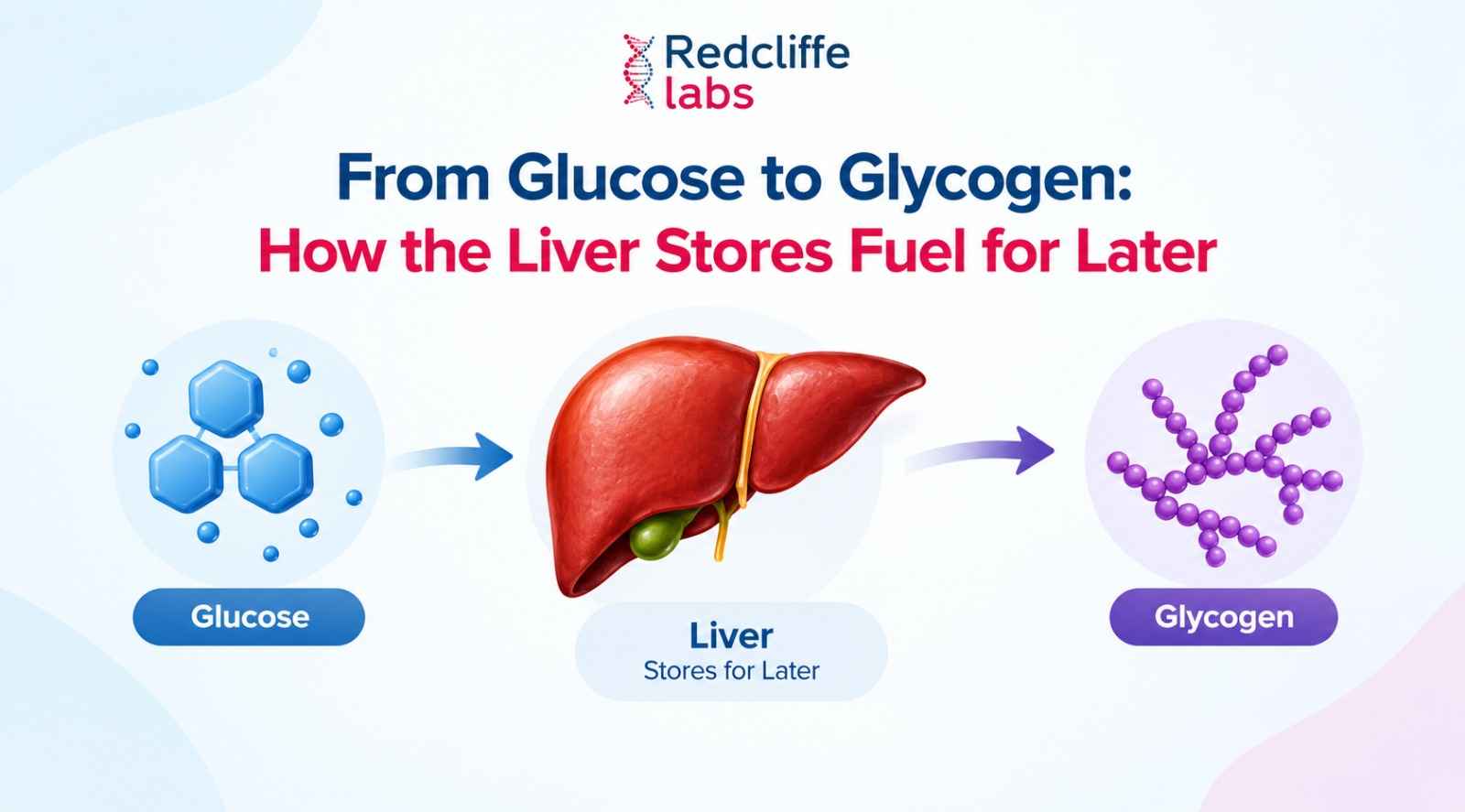
From Glucose to Glycogen: How the Liver Stores Fuel for Later

At any one time, the amount of glucose in your blood is only about one teaspoon. This small quantity is sufficient to supply your body with energy for a few minutes. You may feel dizzy, shaky, weak, or confused if your blood sugar becomes too low. On the other hand, if it remains too high, it can damage the body's cells and tissues over time.
So how does your body manage that small amount of glucose every day, day after day?
That is where glycogenesis comes in. It is the process by which the liver stores any excess glucose in the form of glycogen. Once you eat a meal and have more glucose in the blood than the body needs immediately, the liver takes some of it and links the glucose molecules to form glycogen.
Imagine your liver as a fuel bank: it stores extra glucose when there is an abundance and releases it when your body needs additional energy. While you are fasting, exercising, or under stress, the liver can break down the glycogen it has stored and release glucose back into your blood.
Let's examine how this remarkable process functions and consider why it is important to keep both your liver and your blood sugar in good condition for your long-term health.
What is glucose, and why is it essential?
Glucose is a simple sugar (a monosaccharide) and acts as the main, essential energy source for human cellular metabolism. All the cells in your body depend on it to produce adenosine triphosphate (ATP), which is the energy molecule that powers chemical reactions.
The brain and central nervous system depend heavily on a supply of blood glucose since, unlike muscles, they cannot easily use unrefined fatty acids to meet their immediate energy needs. The body obtains glucose.
- Dietary Carbohydrates: Complex carbs (whole grains, legumes) and simple sugars (fruits, sweets) break down during digestion into basic glucose units.
- Gastrointestinal Absorption: In the small intestine, enzymes such as amylase and maltase break down carbohydrates so that glucose can enter the bloodstream directly.
- Gluconeogenesis: When dietary intake is absent, the liver can manufacture new glucose from non-carbohydrate sources like amino acids, lactate, and glycerol.
- Systemic Circulation: After entering the blood, glucose is carried to organs through specialized transporter proteins (GLUT transporters) so it can serve as immediate fuel.
Also Read: Understanding Liver Swelling (Hepatomegaly): Causes, Symptoms, and Recovery
What is glycogen, and how does it function?
Glycogen is a large, highly branched polymer composed of thousands of linked glucose molecules. Think of glucose as loose cash and glycogen as a dense stack of bills stored safely inside a vault.
Because individual glucose molecules attract water via osmotic pressure, storing them individually would cause cells to swell and burst. Converting glucose to glycogen packs maximum energy into a tiny volume without altering cellular fluid balance.
The main differences between liver glycogen and muscle glycogen
| Primary Role & Behavior | Acts as a selfless energy buffer for the entire body by breaking down and releasing glucose into the bloodstream to nourish the brain and vital organs. | Acts purely selfishly, reserved strictly for local physical exertion because muscle tissue lacks the enzyme required to release glucose into the blood. |
| Storage Capacity | 100 to 120 grams (~400 calories) | 400 to 500 grams (~2,000 calories total across skeletal muscle) |
| Depletion Time | Exhausts within 12 to 24 hours of fasting | Depletes based on physical activity intensity and exertion |
The Biological Step-by-Step Pathway: Glycogenesis
After a meal, digestive organs transport a massive wave of glucose through the portal vein straight into the liver. The liver immediately initiates glycogenesis, the process of synthesizing glycogen from glucose.
Step 1: Phosphorylation: Keeping Glucose Inside the Liver
When glucose reaches the liver cell, the enzyme glucokinase adds a small phosphate group to it. This changes glucose into glucose-6-phosphate (G6P). Think of this step as putting a "lock" on glucose—it keeps it inside the liver cell instead of allowing it to move back into the bloodstream.
Step 2: Isomerization: Getting Glucose Ready
Next, the enzyme phosphoglucomutase moves the phosphate group from the 6th position to the 1st position. This changes Glucose-6-Phosphate (G6P) into Glucose-1-Phosphate (G1P). In simple terms, glucose is being rearranged into the right form so it can move forward and eventually be stored as glycogen.
Step 3: Activation: Preparing Glucose for Storage
Glucose-1-Phosphate now combines with UTP, with help from the enzyme UDP-glucose pyrophosphorylase. This creates UDP-glucose, an activated form of glucose. Think of this as preparing glucose for its next job: being added to the growing glycogen molecule for storage.
Step 4: Chain Elongation: Building the Glycogen Chain
Now comes the actual building process. Glycogen synthase takes glucose from UDP-glucose and adds it to a growing glycogen chain. Glycogenin helps provide the starting point. One glucose molecule is added after another, creating a longer chain that can store more glucose for later use.
Step 5: Branching: Making Storage More Efficient
The final step is branching. The branching enzyme takes part of the straight glucose chain and attaches it elsewhere, creating side branches. This gives glycogen its tree-like structure. These branches make glycogen compact and, importantly, help the body access stored glucose quickly when it needs energy.
Hormonal Regulation: The Biological Switches
Hormones act as master switches that dictate whether your liver stores energy or burns it. Insulin, glucagon, and epinephrine are the primary controllers of this pathway.
Key Hormonal Roles
- Insulin: When your blood sugar rises after a meal, the pancreas releases insulin. It tells the liver that enough glucose is available. Insulin activates glycogen synthase, allowing the liver to store extra glucose as glycogen and reducing further glycogen breakdown.
- Glucagon: When you have not eaten for several hours, blood sugar can start falling. The pancreas then releases glucagon. It signals the liver to break down stored glycogen and release glucose into the bloodstream, helping maintain a steady blood sugar level.
- Epinephrine (Adrenaline): During exercise, stress, or sudden danger, your body needs energy quickly. Adrenaline helps break down glycogen rapidly, making glucose available for immediate energy. This supports the muscles and other tissues during the body's "fight-or-flight" response.
- Cortisol: Cortisol helps the body manage energy during longer periods of stress. It encourages the liver to make new glucose through gluconeogenesis. When cortisol remains high for a long time, it can also affect how well the body responds to insulin.
When Glycogen Reserves Run Out: Fasting and Exercise
When you fast overnight or push through an intense physical workout, your body continuously pulls glucose from the liver.
Once liver glycogen drops below critical thresholds, your metabolism enters a transition state to protect brain function:
What occurs to glycogen during fasting?
- Glycogenolysis Activation: When you stop eating, your blood sugar gradually starts to fall. The hormone glucagon tells the liver to break down stored glycogen and release glucose into the blood. This helps maintain a steady blood sugar level, especially during the first 8 to 12 hours of fasting.
- Increased Gluconeogenesis: As the liver's glycogen stores begin to decrease, the body needs another way to make glucose. The liver starts gluconeogenesis, producing new glucose from substances such as amino acids and glycerol. This helps provide fuel as stored glycogen becomes limited.
- Metabolic Flexibility Shift: If fasting continues for around 16 to 24 hours, liver glycogen can become very low. The body then relies more on fat for energy. The liver also produces ketone bodies, such as acetoacetate and beta-hydroxybutyrate, which can provide an alternative fuel source for the brain.
Quick Fact: A healthy liver may store roughly 100 to 120 grams of glycogen. However, the exact amount varies from person to person depending on factors such as diet, body size, activity level, and when they last ate. During fasting, these stores are gradually used up, and the body increasingly turns to other fuel sources.
Metabolic Overload: Fatty Liver, Insulin Resistance, and NAFLD
So what happens when you eat more carbohydrates and calories than your liver can store?
Your liver can store only a limited amount of glucose as glycogen, around 100–120 grams. Once these glycogen stores are full, the body must handle the extra glucose another way.
The liver can start converting some of this excess glucose into fat through a process called de novo lipogenesis (DNL). These fats can build up inside liver cells over time, contributing to fatty liver disease, now called Metabolic Dysfunction-Associated Steatotic Liver Disease (MASLD).
Eating too much added sugar and refined carbohydrates, especially when overall calorie intake is high, can increase this process. Fructose is also mainly processed by the liver and can contribute to fat production when consumed in excess.
In simple terms: once your glycogen storage is full, consistently eating more energy than your body needs can push the liver toward storing some of that extra energy as fat.
Also Read: 10 Surprising Functions of the Liver You Probably Didn't Know
Key Clinical Markers: Testing Liver and Metabolic Health
Monitoring your liver's ability to handle glucose and store glycogen requires evaluating specific blood biomarkers. Diagnostic testing providers like Redcliffe Labs offer comprehensive diagnostic panels to assess liver function, metabolic stability, and early tissue damage.
| Diagnostic Test Name | Primary Medical Purpose | Clinical Significance |
| Fast Blood Sugar (FBS) | Measures baseline blood glucose after an 8–12 hour fast | Evaluates basic glucose control and liver glucose output |
| HbA1c (Glycated Hemoglobin) | Reflects average blood sugar over the past 2–3 months | Identifies long-term blood sugar trends and prediabetes |
| Liver Function Test (LFT) | Evaluates enzymes like ALT, AST, ALP, and total bilirubin | Detects cellular stress, inflammation, or fatty tissue accumulation |
| Lipid Profile | Measures circulating triglycerides, HDL, LDL, and total cholesterol | Assesses De Novo Lipogenesis activity and cardiovascular risk |
| Fasting Insulin Test | Measures baseline insulin secreted by the pancreas | Identifies early-stage insulin resistance before blood sugar spikes |
Quick Fact: According to global health studies, metabolic liver disease affects nearly 25% to 30% of the adult population worldwide, with a strong correlation to high-carbohydrate diets, sedentary lifestyles, and insulin resistance.
Simple Ways to Support Healthy Glucose and Liver Function
Protecting your liver's energy storage capacity doesn't require extreme measures. Simple, evidence-based lifestyle changes keep your metabolic engine running smoothly:
Choose Complex Carbohydrates: Choose foods such as oats, sweet potatoes, whole grains, vegetables, and legumes more often. They provide fiber and are digested more slowly, which can help avoid sharp rises in blood sugar and keep you fuller for longer.
Stay Physically Active: Regular walking, strength training, or other exercise helps your muscles use stored glycogen for energy. This creates room for your body to store glucose from your next meal and can also support better insulin sensitivity.
Be Mindful of Meal Timing: Some people prefer leaving a 12- to 16-hour gap between dinner and breakfast. This may give the body more time between meals, but intermittent fasting is not suitable for everyone. Choose a routine that fits your health needs and your doctor's advice.
Cut down on added sugar and alcohol: It is a good idea to reduce your intake of sugary drinks, sweets, and other foods high in added sugar. It is also important to limit alcohol consumption if you want to stay healthy for your liver. Eating a well-balanced diet with fewer highly processed foods can help reduce unnecessary metabolic stress.
Have regular health checks: Routine tests such as Liver Function Tests (LFTs) and HbA1c can provide useful information about liver health and long-term blood sugar levels, and regular testing can help detect changes early, particularly if you have diabetes or other risk factors.
Conclusion
Your liver's ability to turn glucose into stored glycogen is essentially the body's final safety measure, keeping energy levels stable, supplying power to your brain, and protecting your metabolic health. Yet if you consume refined sugars chronically and lead a sedentary lifestyle, this storage system can become overloaded, leading to fat buildup and insulin resistance.
To protect this important pathway, make deliberate lifestyle choices: focus on whole foods, stay active, and monitor regularly. Routine diagnostic screenings via Redcliffe Labs will give you practical information about your metabolic condition early on. If you respect your liver's limited capacity, you will take active control of your daily energy levels, your potential for a long life, and your overall well-being.
FAQs
1. What is glycogen, and why does the liver store it?
Glycogen is the stored form of glucose that the body can use when energy is needed. The liver stores glycogen to help maintain steady blood sugar between meals and during fasting. When blood glucose falls, the liver breaks down glycogen and releases glucose into the bloodstream to provide energy.
2. How does the liver convert glucose into glycogen?
After you eat, carbohydrates are broken down into glucose, increasing blood sugar levels. When enough glucose is available, insulin signals the liver to store some of it. Liver cells convert glucose into smaller glucose units and link them together to form glycogen. This stored glycogen can later be broken down when the body needs glucose.
3. What is the process of converting glucose to glycogen called?
The process of converting glucose into glycogen is called glycogenesis. It mainly occurs in the liver and muscles when glucose is available after eating. Insulin supports this process by helping the body store excess glucose. Glycogenesis helps prevent blood sugar from rising too much while creating an energy reserve for later use.
4. When does the liver store glucose as glycogen?
The liver mainly stores glucose as glycogen after meals, when blood glucose levels rise. Insulin signals liver cells to take up and store excess glucose. This process helps keep blood sugar within a healthy range. The liver can then release glucose from glycogen between meals, overnight, or during short periods when you are not eating.
5. How does the body use stored glycogen for energy?
When your body needs glucose between meals or during fasting, hormones signal the liver to break down glycogen. This process, called glycogenolysis, releases glucose into the bloodstream, providing fuel for organs, especially the brain. Muscles also store glycogen, but muscle glycogen is mainly used locally to support muscle activity rather than raising blood glucose.
6. What happens when liver glycogen stores are full?
When liver glycogen stores are full, the body has limited capacity to store additional glucose as glycogen. If excess calories remain available, some glucose can be converted into fatty acids and stored as fat. This process is called de novo lipogenesis. However, the amount of glucose converted to fat depends on overall energy intake and metabolic conditions.
7. How long can the liver store glycogen?
Liver glycogen is not designed for long-term energy storage. During fasting, liver glycogen can help maintain blood glucose for roughly 12–24 hours, although the exact duration varies depending on your diet, activity level, metabolism, and glycogen stores. As liver glycogen decreases, the body increasingly uses other sources, including fat, while producing glucose through gluconeogenesis.
8. What is the difference between glucose and glycogen?
Glucose is a simple sugar that circulates in the blood and provides energy for cells. Glycogen is the body's stored form of glucose, made by linking many glucose molecules together. The liver stores glycogen mainly to help maintain blood sugar between meals, while muscles store glycogen primarily for their own energy needs during physical activity.