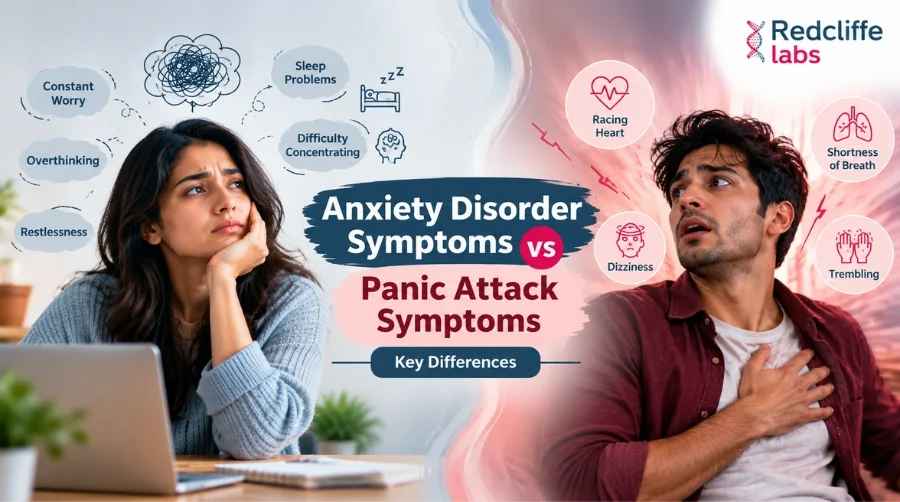
Anxiety Disorder Symptoms vs Panic Attack Symptoms: Key Differences

Overview
- Anxiety disorder symptoms frequently include persistent concern, tension, restlessness, or fear that affects your everyday activities.
- A panic attack is a sudden increase in intense fear or discomfort along with physical and emotional symptoms.
- One panic attack does not automatically mean a person has panic disorder.
- Blood tests do not diagnose an anxiety disorder, but doctors may recommend tests to look for medical conditions that can cause similar symptoms.
- Anxiety disorders are treatable, although treatment and long-term recovery vary from person to person.
Knowing the difference can help you understand what you may be experiencing. Anxiety disorder symptoms often involve ongoing worry, fear, or tension that may build around a concern or situation, while a panic attack is a distinct episode of intense fear or discomfort that can come on quickly and may occur with or without an obvious trigger. However, anxiety symptoms are not always gradual, and panic attacks are not always completely unexpected. Looking at the onset, pattern, intensity, duration, and triggers can help distinguish between them.
The symptoms can overlap, so a physical symptom should not automatically be assumed to be anxiety.
Anxiety Disorder Symptoms vs Panic Attack Symptoms: What Is the Difference?
The biggest difference is how the symptoms begin and how they behave over time.
|
Feature |
Anxiety Disorder Symptoms |
Panic Attack Symptoms |
|
How it starts |
Often develops or increases around ongoing worries, stress, or perceived threats, but the pattern can vary depending on the anxiety disorder |
Often begins quickly as a distinct surge of intense fear or discomfort; it may be triggered by a situation or may occur without an obvious trigger |
|
Main feeling |
Persistent worry, nervousness, dread, or feeling on edge |
Sudden intense fear, discomfort, or a feeling of losing control |
|
Pattern and duration |
Symptoms may come and go or remain present for longer periods, depending on the anxiety disorder |
Symptoms usually reach their highest intensity within minutes and then begin to subside; the overall duration can vary |
|
Common thoughts |
“What if something goes wrong?” or repeated worry about everyday problems |
“Something is seriously wrong,” “I may lose control,” or fear of dying |
|
Physical symptoms |
Muscle tension, fatigue, sleep problems, sweating, stomach symptoms, rapid heartbeat, or feeling breathless |
Racing heart, sweating, trembling, chest discomfort, dizziness, nausea, shortness of breath, chills, or tingling |
|
What happens afterward |
Worry may continue, particularly if the underlying anxiety disorder is untreated |
A person may feel exhausted or become worried about having another attack |
Panic attacks can occur as part of panic disorder, but they can also occur in other anxiety disorders and in some medical or substance-related situations.
What Are the Symptoms of Anxiety Disorder?
Anxiety disorder symptoms can include ongoing worry, feeling nervous or on edge, restlessness, irritability, trouble concentrating, muscle tension, tiredness, and sleep problems.
Anxiety can also cause physical symptoms such as sweating, trembling, dizziness, headaches, stomach discomfort, a fast heartbeat, or shortness of breath. These symptoms may become more noticeable when stress or anxiety is high.
For example, someone under constant work pressure may spend much of the day worrying about deadlines, thinking about what could go wrong, and finding it hard to sleep, even when there is no immediate danger.
What Are Generalized Anxiety Disorder Symptoms?
Generalized anxiety disorder (GAD) involves excessive and difficult-to-control worry about several areas of life, occurring more days than not for at least six months, along with symptoms such as restlessness, fatigue, difficulty concentrating, irritability, muscle tension, or sleep problems. The six-month duration is a diagnostic criterion for GAD; it does not mean that every anxiety disorder must last for six months.
However, this does not mean that everyone who worries too much has GAD. There are many things to take into consideration, such as the duration, severity, effect on daily life, and the possibility of other mental or physical conditions before making a diagnosis. A healthcare professional can help you figure this out.
What Does a Panic Attack Feel Like?
A panic attack is a sudden episode of intense fear or discomfort. It can happen during an obviously stressful situation, but it can also seem to come out of nowhere.
Common panic attack symptoms include:
- A pounding or racing heart
- Sweating or chills
- Trembling or shaking
- Shortness of breath or a feeling of being unable to breathe normally
- Dizziness, weakness, or light-headedness
- Chest pain or discomfort
- Nausea or stomach discomfort
- Tingling or numbness
- Feeling detached from yourself or your surroundings
- Fear of losing control
- A strong feeling that something terrible is about to happen or that you might die
Panic attacks can be expected or unexpected. An expected panic attack occurs in response to a known trigger or feared situation, while an unexpected panic attack appears to occur without an obvious trigger. Both can cause the same intense physical and emotional symptoms.
A panic attack by itself does not mean that a person has panic disorder. Panic attacks can occur in panic disorder, other mental health conditions, or in response to certain medical conditions or substances.
Can Anxiety Cause Panic Attacks?
Yes. Panic attacks can occur in people with anxiety disorders, but they can also happen without an anxiety disorder and may occur in some medical or substance-related situations.
Having a panic attack does not automatically mean that a person has panic disorder. Panic disorder involves recurrent, unexpected panic attacks, followed by at least one month of persistent concern about having another attack, concern about what the attacks mean, or significant changes in behaviour to avoid future attacks. A healthcare professional also needs to consider whether the symptoms are better explained by a substance, medication, medical condition, or another mental health condition.
This distinction is useful because an isolated panic attack, recurrent panic attacks, panic disorder, and other anxiety disorders are not the same diagnosis.
How Are Anxiety Disorders and Panic Attacks Diagnosed?
Blood tests do not diagnose anxiety disorders or panic disorder. Diagnosis is mainly based on a detailed clinical assessment of symptoms, how they started, how often they occur, how long they have been present, possible triggers, their effect on daily life, medical history, and other mental-health symptoms.
A healthcare professional may also perform a physical examination or order targeted investigations when a medical condition could be causing or contributing to symptoms that resemble anxiety or panic. For example, doctors may consider thyroid problems, anaemia, abnormal blood glucose, or certain vitamin deficiencies when the symptoms and medical history make these possibilities relevant.
Is There an Anxiety Test?
Some questionnaires can help screen for anxiety.
One commonly used tool is the GAD-7 (Generalized Anxiety Disorder-7). It asks about anxiety-related symptoms over the previous two weeks and can help identify people who may need further assessment or help monitor symptom severity.
However, a GAD-7 score is not the same as a formal diagnosis. A healthcare professional considers the questionnaire along with symptoms, history, and clinical assessment.
Which Blood Tests May Be Considered for Anxiety-Like Symptoms?
Blood tests do not diagnose anxiety disorders. Depending on a person's symptoms, medical history, medicines, diet, and examination findings, a doctor may order targeted tests to look for physical conditions that could contribute to anxiety-like symptoms. Not everyone with anxiety symptoms needs blood tests.
|
Test |
Why it may be considered |
|
Thyroid problems can cause symptoms that overlap with anxiety, such as changes in heart rate, tremor, changes in energy, and sleep problems. The specific thyroid tests ordered depend on the clinical situation; TSH may be used as an initial test in many adults, with additional thyroid hormone testing when indicated. | |
|
CBC (Complete Blood Count) |
May help identify conditions such as anaemia or other blood abnormalities that can contribute to symptoms such as fatigue, weakness, or breathlessness. It does not diagnose anxiety. |
|
May be considered when vitamin B12 deficiency is suspected, particularly when symptoms such as fatigue, numbness, tingling, cognitive changes, or other neurological symptoms are present. It is not a routine test for anxiety. | |
|
May be considered when vitamin D deficiency is suspected or when relevant risk factors are present. It is not a diagnostic test for anxiety. | |
|
Blood Glucose |
May be considered when symptoms such as shakiness, sweating, dizziness, weakness, or confusion raise concern about abnormal blood glucose. |
A doctor does not necessarily need all of these tests. The choice depends on symptoms, medical history, medicines, diet, risk factors, and examination findings. Blood tests or heart-related tests may also be considered when symptoms resemble those of a physical illness.
For people considering a broader preventive health check rather than an anxiety-specific evaluation, Redcliffe Labs offers Fit India Full Body Checkup that helps you understand your vital markers and stay one step ahead of health risks. You can also get tests such as CBC, thyroid testing, blood glucose, Vitamin B12, Vitamin D, and other health markers, depending on the package selected.
Is Anxiety Disorder Curable?
The word “curable” can be misleading because anxiety disorders do not have one universal cure that works for everyone. They are treatable, and many people experience substantial improvement and better daily functioning with appropriate treatment.
The most appropriate treatment depends on the type and severity of the anxiety disorder, how much it affects daily life, other health conditions, and the person's preferences. For GAD, both psychological treatment and medicines may be considered depending on symptom severity and the person’s circumstances. CBT is also a well-established treatment for panic disorder.
While improvement may take time, symptoms may recur for some people, including during periods of significant stress. This does not necessarily mean treatment has failed. A healthcare professional can adjust the treatment plan according to the person’s symptoms and response.
When Should You Seek Medical Help?
Consider speaking with a doctor or mental health professional when anxiety:
- is becoming difficult to control
- is affecting work, studies, sleep or relationships
- is causing repeated panic-like episodes
- leads you to avoid places, activities or situations
- has continued for several weeks or is getting worse
- is accompanied by significant physical symptoms that have not been evaluated
Seek medical care for symptoms such as:
- New or severe chest pain or pressure
- Severe difficulty breathing
- Fainting or loss of consciousness
- Symptoms that are substantially different from previous panic episodes
- New, severe, or unusual symptoms that you have not experienced before
These symptoms can have causes other than anxiety or panic and should not automatically be attributed to a panic attack. When symptoms are severe, new, or concerning, seek urgent medical care
If someone is having thoughts of suicide or self-harm, seek urgent mental-health or emergency support.
In India, people experiencing significant mental-health distress can contact Tele-MANAS at 14416 or 1800-89-14416, the Government of India’s 24×7 national tele-mental-health service. Anyone having thoughts of self-harm or suicide should seek urgent professional or emergency help rather than trying to manage the situation alone.
What Can You Do Next?
If you are experiencing anxiety disorder symptoms or recurring panic-like episodes, start by looking at the pattern rather than one isolated symptom.
Keep a simple record of when the symptoms occur, how long they last, any possible trigger, the physical symptoms you notice, and what happened before and after the episode. This information can help a healthcare professional understand the pattern and decide whether further assessment or testing is appropriate.
A doctor can then decide whether you need a physical evaluation, an anxiety screening questionnaire such as GAD-7, a mental-health assessment, blood tests, or another investigation.
Most importantly, you do not need to diagnose yourself from a symptom list. Anxiety and panic symptoms are real, treatable health concerns, but similar physical symptoms can have other causes. The right assessment helps separate the possibilities and identify appropriate care.
FAQS
1. What are the most common anxiety disorder symptoms?
Excessive worrying, nervousness, restlessness, irritability, not being able to concentrate, muscle tension, fatigue, and issues with sleep are some common anxiety disorder symptoms. Sweating, trembling, dizziness, stomach issues, a fast heartbeat, and breathlessness are some common physical symptoms of an anxiety disorder.
2. How are anxiety disorder symptoms different from panic attack symptoms?
Anxiety disorder symptoms may involve ongoing worry, fear, tension, or physical symptoms that come and go or persist over time. Panic attack symptoms usually occur as a distinct surge of intense fear or discomfort that reaches high intensity quickly and then begins to subside. However, anxiety symptoms are not always gradual, and panic attacks are not always unexpected. A person can experience both ongoing anxiety and panic attacks.
3. Can you have a panic attack without having an anxiety disorder?
Yes. A person can experience an isolated panic attack without meeting the criteria for panic disorder or another anxiety disorder.
4. Can thyroid problems feel like anxiety?
Yes. Thyroid disorders can produce symptoms that overlap with anxiety, including changes in heart rate, nervousness, sleep problems, and changes in energy. A doctor may consider thyroid testing when the symptoms and medical history make it appropriate.
5. Does a CBC test diagnose anxiety?
No. A CBC does not diagnose an anxiety disorder. It may help identify blood-related conditions such as anemia that can contribute to symptoms such as fatigue or weakness.
6. Can Vitamin B12 deficiency cause anxiety-like symptoms?
Vitamin B12 deficiency can cause neurological and psychological symptoms, including numbness, cognitive changes and, in some people, anxiety or mood-related symptoms. Testing may be appropriate when deficiency is suspected.
7. Is anxiety disorder curable?
Anxiety disorders are treatable, and many people improve significantly with appropriate therapy, medication, or a combination of treatments. Whether someone experiences complete long-term remission varies from person to person.
8. Is there a test for anxiety?
There is no single blood test that diagnoses an anxiety disorder. A clinician may use an anxiety screening questionnaire such as the GAD-7 to assess symptoms and decide whether further evaluation is needed. The GAD-7 is a screening tool, not a stand-alone diagnostic test.
9. When should a doctor check panic-like symptoms?
A first or unusually severe episode, especially with chest pain, severe breathing difficulty, fainting, or other unusual symptoms, should be medically assessed rather than automatically assumed to be a panic attack.
10. Can anxiety cause chest pain and shortness of breath?
Yes, anxiety and panic attacks can cause physical symptoms such as chest discomfort, a racing heart, and shortness of breath. However, these symptoms can also occur with medical conditions. New, severe, or unusual chest pain, severe breathing difficulty, fainting, or symptoms that feel different from previous panic episodes should be medically assessed rather than automatically attributed to anxiety.