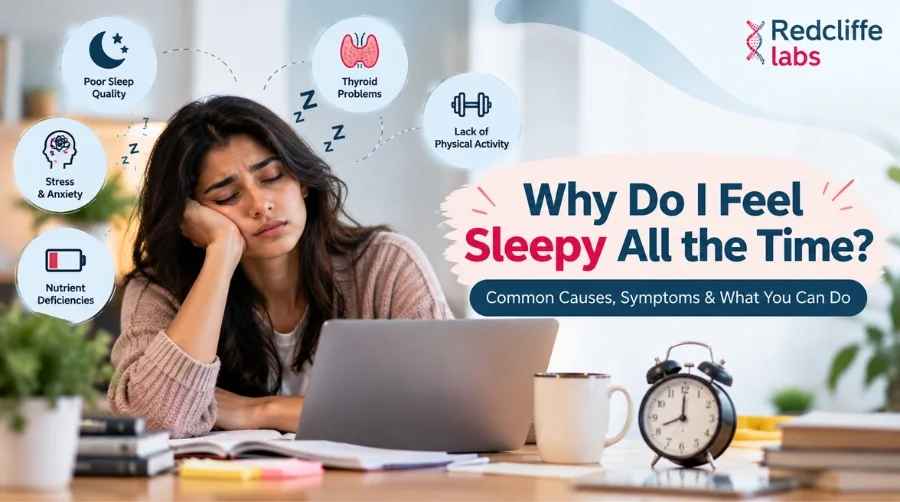
Why Do I Feel Sleepy All the Time? Causes, Symptoms & What to Do

Overview
- Daytime sleepiness means having an increased urge or tendency to fall asleep, while fatigue is more about low energy or exhaustion.
- Not getting enough or good-quality sleep is one common reason for daytime sleepiness.
- Sleep disorders, medicines, stress and some health conditions can also contribute to persistent sleepiness.
- If you regularly feel sleepy during the day despite getting enough sleep, especially if it affects your daily activities, it deserves evaluation.
- A healthcare professional can help decide whether you need lifestyle changes, blood tests, a sleep assessment, or other evaluation.
Feeling sleepy after a late night is normal. But what if you feel sleepy almost every day, even after getting what seems like enough sleep?
Daytime sleepiness is different from simply feeling tired. Sleepiness means you have an urge to fall asleep or struggle to stay awake, while fatigue usually means low energy or exhaustion without necessarily wanting to sleep.
There are many possible reasons for feeling sleepy all the time. You may not be sleeping long enough, your sleep may be poor quality, or your daily routine may be affecting your sleep. In some cases, ongoing daytime sleepiness can be linked to a sleep disorder, certain medicines, anemia, thyroid problems, blood-sugar problems, or other health conditions.
If you are getting enough sleep but still regularly struggle to stay awake during the day, it is worth looking beyond sleep duration and considering sleep quality, medicines, sleep disorders and other possible causes.
The good news is that finding the reason can help you take the right next step.
Why Do I Feel Sleepy All the Time?
Feeling sleepy all the time can have many causes. Sometimes the reason is simple, such as staying up late or having an irregular sleep schedule. At other times, you may be sleeping for enough hours but not getting good-quality sleep.
For most adults, regularly getting 7 or more hours of sleep is recommended, although individual sleep needs can vary.
Common reasons for daytime sleepiness include:
- Not getting enough sleep
- Poor-quality or interrupted sleep
- An irregular sleep schedule
- Working night or rotating shifts
- Stress or emotional problems
- Certain medicines
- Alcohol or other substances
- Sleep disorders such as sleep apnea
- Medical conditions that can contribute to sleepiness or fatigue
Feeling sleepy does not automatically mean that you have a medical condition. The pattern of your symptoms matters.
If you are getting 7 or more hours of sleep but still have persistent daytime sleepiness, especially if you struggle to stay awake during normal daytime activities, consider discussing it with a healthcare professional.
Sleepiness vs Fatigue: What’s the Difference?
The words “sleepy” and “tired” are often used to mean the same thing, but medically they can describe different feelings.
- Sleepiness means you feel that you could fall asleep or have difficulty staying awake. For example, you may struggle to keep your eyes open while reading, studying, watching TV, or sitting in a meeting.
- Fatigue is more about having low energy or feeling physically and mentally exhausted. You may feel fatigued without actually wanting to sleep.
Some people experience both at the same time. Knowing which one you are experiencing can help a healthcare professional better understand what may be causing your symptoms.
Common Reasons You May Feel Sleepy All the Time
1. You Are Not Getting Enough Sleep
One of the simplest explanations is not getting enough sleep.
Late-night work, studying, social media, watching shows, long travel times, or an irregular routine can reduce your total sleep time.
If you regularly sleep for fewer hours than your body needs, you may feel sleepy during the day.
Try to look at your sleep over several days rather than judging it from one night.
2. Your Sleep Quality Is Poor
You can spend enough time in bed and still experience daytime sleepiness if your sleep is frequently interrupted or not restorative.
For example, you may:
- Wake up several times during the night
- Have trouble falling asleep
- Wake up much earlier than planned
- Snore loudly
- Wake up gasping or choking
- Feel unrefreshed in the morning
Poor-quality sleep can leave you sleepy during the day. Some people may also experience fatigue or low energy at the same time.
3. Your Sleep Schedule Keeps Changing
Going to bed at very different times each night can make it harder for your body to follow a regular sleep-wake rhythm.
This can happen with:
- Night shifts
- Rotating work schedules
- College or exam schedules
- Frequent late nights
- Long travel
- Regularly sleeping much later on weekends
A more consistent sleep and wake time can help support better sleep.
4. Stress Can Affect Your Sleep
Stress can make it difficult to relax at night.
You may lie in bed thinking about work, studies, money, relationships or other problems. Even if you eventually fall asleep, your sleep may not feel refreshing.
Stress can interfere with sleep and may contribute to daytime fatigue or sleepiness. However, persistent excessive daytime sleepiness should not automatically be attributed to stress, especially if you are getting enough sleep or have other symptoms.
If stress, anxiety or low mood continues for a long time, consider discussing it with a healthcare professional.
5. Some Medicines Can Cause Drowsiness
Certain medicines can make people sleepy.
Examples include:
- Antihistamines used for allergies
- Sleeping medicines
- Pain medicines
- Psychiatric medicines
- Other medicines with sedating effects
Do not stop a prescribed medicine on your own. If you think a medicine is making you sleepy, ask your doctor or pharmacist whether it could be contributing to your symptoms.
6. You May Have a Sleep Disorder
Sometimes the problem is not the number of hours you sleep. The problem may be a sleep disorder.
One important example is obstructive sleep apnea.
Sleep apnea happens when breathing repeatedly stops and starts during sleep. Possible clues include loud snoring, witnessed pauses in breathing, gasping or choking during sleep, and excessive daytime sleepiness. However, not everyone with sleep apnea has all of these symptoms, and some people may not know that their breathing is being interrupted during sleep.
Other sleep disorders can also cause excessive daytime sleepiness, including restless legs syndrome, narcolepsy and hypersomnia disorders. These are less common causes and usually require a more detailed sleep history and, in some cases, specialist assessment.
If someone who sleeps near you notices loud snoring,
Could a Health Problem Be Making You Sleepy?
Yes. Some health conditions can contribute to daytime sleepiness, fatigue or low energy. However, sleep duration, sleep quality, medicines and sleep disorders should also be considered, because one symptom alone usually cannot identify the cause.
Anemia or Iron Deficiency
Anemia means your blood does not have enough healthy red blood cells or enough hemoglobin to carry oxygen properly.
Iron deficiency is one common cause of anemia. Possible symptoms include:
- Tiredness
- Weakness
- Dizziness
- Headaches
- Trouble concentrating
- Shortness of breath, especially with activity
A CBC can help evaluate blood counts, while iron-related tests may be used when iron deficiency is suspected.
Thyroid Problems
An underactive thyroid, also called hypothyroidism, can cause symptoms such as fatigue, feeling slowed down, weight gain, feeling unusually cold, constipation, and dry skin.
These symptoms can have many other causes, so they do not prove that someone has a thyroid problem. When thyroid dysfunction is suspected, TSH is usually the initial thyroid blood test in adults when a pituitary cause is not suspected. Free T4 or other thyroid testing may be added depending on the results and clinical situation.
Blood Sugar Problems
Diabetes and changes in blood sugar can sometimes contribute to fatigue or low energy.
If you also have symptoms such as increased thirst, frequent urination, unexplained weight changes, or blurred vision, speak with a healthcare professional.
A doctor may recommend blood-glucose testing based on your symptoms, risk factors and health history rather than as a routine test for everyone with daytime sleepiness.
Vitamin B12 Deficiency
Vitamin B12 helps the body make healthy red blood cells and supports the nervous system.
Low vitamin B12 can be associated with fatigue, weakness, lightheadedness and other symptoms. The risk can be higher in some people because of diet, problems absorbing nutrients, or certain medical conditions.
Vitamin B12 testing may be considered when symptoms or medical history make deficiency a possibility.
Vitamin D Deficiency
Vitamin D deficiency can be associated with certain symptoms, but it should not automatically be assumed to be the reason for daytime sleepiness. Vitamin D testing may be considered when a healthcare professional thinks it is clinically appropriate based on symptoms, risk factors or other findings.
Other Causes
Daytime sleepiness or fatigue can also occur with infections, chronic health conditions, mental health conditions, long-term pain, certain medicines, and other problems.
This is why persistent symptoms are better evaluated as a whole rather than trying to identify one cause from a single symptom.
What Are the Symptoms of Excessive Daytime Sleepiness?
Excessive daytime sleepiness (EDS) means having an increased tendency to fall asleep or struggling to stay awake during the day, especially in situations where you would normally be expected to remain alert.
You may notice that you:
- Struggle to stay awake during work or classes
- Feel sleepy while reading or watching TV
- Need frequent naps
- Have trouble concentrating
- Feel sleepy even after a full night’s sleep
- Have difficulty staying alert during conversations
- Feel sleepy while travelling or commuting
- Fall asleep unintentionally during the day
If you are struggling to stay awake while driving or operating machinery, stop immediately and do not continue until you are fully alert. Drowsiness can impair attention and reaction time and can create a serious safety risk.
How Can I Reduce Daytime Sleepiness?
The right solution depends on the cause. Lifestyle changes may help when sleep habits or routine are contributing to sleepiness, but persistent excessive daytime sleepiness may need medical evaluation rather than lifestyle changes alone.
Try these steps:
- Keep a regular sleep schedule: Go to bed and wake up at roughly the same time each day.
- Give yourself enough time to sleep: Most adults generally need 7 or more hours of sleep regularly, although individual needs vary.
- Get daylight during the day: Natural light, especially earlier in the day, can support your sleep-wake rhythm.
- Stay physically active: Regular activity can support sleep and overall health.
- Reduce habits that disturb sleep: Limit things that make it harder for you to sleep, especially close to bedtime.
- Create a relaxing bedtime routine: Give your mind and body time to slow down before bed.
- Watch your caffeine intake: Caffeine later in the day can interfere with sleep for some people.
- Avoid relying on self-medication: If you regularly need medicines or supplements to manage sleepiness, discuss the problem with a healthcare professional.
If these changes do not help and you remain sleepy most days, look for the underlying cause rather than simply trying to stay awake with caffeine.
When Should You See a Doctor?
Persistent daytime sleepiness does not always require urgent care, but the right next step depends on how severe it is and whether other symptoms are present.
Routine medical evaluation
Consider speaking with a healthcare professional if:
- You feel sleepy most days for several weeks.
- Sleepiness is affecting your work, studies, or daily activities.
- You sleep enough but still feel very sleepy.
- You regularly wake up unrefreshed.
- You snore loudly or wake up gasping.
- Someone notices that your breathing stops during sleep.
- You frequently fall asleep unintentionally during the day.
- Medicine may be making you drowsy.
- Your sleepiness is persistent or unexplained despite getting enough sleep.
Seek urgent medical assessment
Get urgent medical care if severe or new sleepiness occurs with symptoms such as significant confusion, fainting, significant breathing difficulty, chest pain, or another serious or rapidly worsening symptom.
Immediate safety issue
If you are struggling to stay awake while driving or operating machinery, stop the activity and do not continue until you are alert.
The priority in this situation is safety, not trying to overcome sleepiness with caffeine or other stimulants.
Why Am I Sleepy Even After 8 Hours of Sleep?
Getting 8 hours of sleep does not always guarantee that you will feel alert during the day. Sleep quality, repeated awakenings, an irregular sleep schedule, medicines and sleep disorders can affect how refreshed you feel.
For example, sleep apnea can interrupt breathing repeatedly during the night without you fully realizing it. Other sleep disorders can also cause excessive daytime sleepiness.
If you regularly feel sleepy despite getting around 8 hours of sleep, especially if you snore, wake up gasping, have unrefreshing sleep or fall asleep unintentionally during the day, consider speaking with a healthcare professional.
What Tests May Help Find the Cause?
There is no single blood test that explains every case of daytime sleepiness.
Your doctor may first ask about:
- Your usual sleep hours
- Your bedtime and wake-up time
- Snoring or breathing problems at night
- Daytime naps
- Your medicines
- Your diet
- Stress and mood
- Other symptoms
- Your medical history
Depending on the situation, targeted blood tests may be considered.
|
Test |
What it may help evaluate |
|
CBC |
Blood counts and possible anemia |
|
Ferritin/iron studies |
Iron stores and iron status when iron deficiency is suspected |
|
Vitamin B12 |
Vitamin B12 status when deficiency is suspected |
|
Vitamin D |
Vitamin D status when testing is clinically indicated |
|
TSH |
Initial assessment of thyroid function when thyroid dysfunction is suspected |
|
Free T4 / other thyroid tests |
Additional thyroid assessment when indicated by the clinical situation or TSH result |
|
Blood glucose |
Blood glucose when a glucose disorder is suspected |
|
HbA1c |
Average blood glucose over the previous few months |
These are targeted investigations, not a standard blood-test panel required for everyone with daytime sleepiness. The appropriate tests depend on your symptoms, medical history, risk factors, medicines, and healthcare professional’s assessment.
A test result by itself does not always identify the cause of sleepiness.
When Is a Sleep Study Needed?
If your symptoms and medical history suggest a sleep disorder, your healthcare professional may recommend a sleep study.
A sleep study is particularly considered when obstructive sleep apnea or another sleep disorder is suspected. The type of sleep study depends on the condition being evaluated and your individual circumstances.
For suspected obstructive sleep apnea in some adults, testing may involve an in-laboratory polysomnography (PSG) or, when clinically appropriate, a home sleep apnea test (HSAT).
A sleep study is not necessary for everyone who feels sleepy. The decision should be based on your symptoms, sleep history and clinical assessment.
If you are searching for a sleep study test cost, remember that the price can vary depending on the type of study, location, and testing facility. Check the current price directly with the diagnostic or sleep centre rather than relying on an old online price.
Is It Normal to Sleep 12 Hours a Day?
Sleeping 12 hours occasionally does not necessarily mean that something is wrong.
You may sleep longer after several nights of poor sleep, during recovery from illness, or when your body needs extra rest.
However, the number of hours alone does not diagnose a sleep problem. Regularly sleeping for very long periods deserves more attention when it is accompanied by excessive daytime sleepiness, unrefreshing sleep, difficulty functioning during the day, or other symptoms.
Instead of focusing only on the number of hours, look at the bigger picture:
How long do you sleep? → How well do you sleep? → How do you feel during the day? → Are there other symptoms?
If excessive sleepiness continues, discuss it with a healthcare professional.
What Should You Do If You Feel Sleepy Every Day?
Start by looking at your sleep routine and whether the sleepiness is persistent or affecting your daily functioning.
Ask yourself:
- Am I getting enough sleep?
- Do I wake up several times during the night?
- Do I snore loudly or wake up gasping?
- Do I take medicines that can cause drowsiness?
- Am I under unusual stress?
- Do I have other symptoms such as weakness, dizziness, weight changes, or unusual thirst?
- Is sleepiness affecting my work, studies, or safety?
If the problem continues despite healthy sleep habits, speak with a healthcare professional.
They can help determine whether the issue is related to sleep duration, sleep quality, medicines, a sleep disorder, or another health condition, and whether targeted tests or a sleep assessment are appropriate.
Can Blood Tests Help When You Feel Tired or Sleepy?
Sometimes, yes.
Blood tests may help look for certain conditions that can contribute to fatigue, low energy or daytime sleepiness, such as anemia, iron deficiency, thyroid problems, vitamin B12 deficiency, or blood-sugar problems.
However, not everyone needs every test. The right tests depend on your symptoms, medical history, age, medicines, risk factors, and clinical assessment.
Redcliffe Labs offers individual tests such as CBC, vitamin B12, vitamin D and other health markers. If a healthcare professional recommends testing, you can choose the specific investigations that are appropriate for your situation rather than assuming that a broad health package is necessary.
If you are unsure which tests are appropriate, speak with a healthcare professional before booking a large test panel.
Bottom Line
Feeling sleepy all the time can have a simple explanation, such as not getting enough sleep or having an irregular routine. But persistent daytime sleepiness can also be linked to poor-quality sleep, sleep disorders, medicines or certain health conditions.
Remember the difference: sleepiness means an increased tendency to fall asleep, while fatigue mainly means low energy or exhaustion. If you continue to feel unusually sleepy despite getting enough sleep, especially if it affects your daily activities or safety, talk with a healthcare professional to find out what may be causing it.
And if you are struggling to stay awake while driving or operating machinery, stop and do not continue until you are alert.
FAQs
1. Why do I feel sleepy and tired all the time?
Feeling sleepy and feeling tired are not exactly the same. Sleepiness means you feel an urge to sleep or have trouble staying awake, while fatigue means low energy or exhaustion. Persistent sleepiness can happen because of insufficient or poor-quality sleep, an irregular schedule, medicines, sleep disorders or certain health conditions. If you regularly feel sleepy despite getting enough sleep, especially if it affects your daily activities, consider speaking with a healthcare professional.
2. How can I reduce daytime sleepiness?
You can start by maintaining a regular sleep and wake-up time and getting enough sleep each night. Staying active during the day and getting some natural light can also help. Check if caffeine, medicines, or your daily habits are affecting your sleep. If you still feel very sleepy despite these changes, talk to a healthcare professional.
3. Is it normal to sleep 12 hours a day?
Sleeping 12 hours occasionally can happen during recovery from illness or after losing sleep. Regularly needing 12 hours of sleep and still feeling tired or sleepy is different and should be discussed with a healthcare professional.
4. Can vitamin deficiency make you sleepy?
Some vitamin deficiencies can contribute to tiredness or low energy. Vitamin B12 deficiency, for example, can cause fatigue and weakness. However, sleepiness has many possible causes, so a vitamin deficiency should not be assumed without appropriate evaluation.
5. Can anemia cause sleepiness?
Anemia can cause tiredness, weakness, dizziness, and problems with concentration. Whether it is responsible for your sleepiness depends on your overall symptoms and the underlying cause of anemia. A CBC can help evaluate blood counts.
6. Can thyroid problems make you feel sleepy?
An underactive thyroid can cause fatigue and feeling slowed down. Other symptoms may include weight gain, constipation, feeling cold, and dry skin. Thyroid symptoms can overlap with many other conditions, so testing may be needed when clinically appropriate.
7. When should I worry about excessive sleepiness?
You should worry about excessive sleepiness if it continues despite adequate sleep, affects work, studies or daily activities, causes unintended sleep episodes, or occurs with symptoms such as loud snoring, witnessed breathing pauses, gasping during sleep or unexplained weakness.
8. Can stress make me feel sleepy?
Yes. Stress can affect your sleep and may contribute to tiredness or daytime sleepiness. Ongoing stress can make it harder to fall asleep or stay asleep, which may leave you feeling less rested during the day. If sleepiness continues or affects your daily activities, talk with a healthcare professional.