Insulin Resistance Symptoms: Early Signs, Causes & When to Get Tested

Overview
- Insulin resistance often has no clear symptoms, so you may not know you have it without testing.
- Dark, thickened skin, especially around the neck or armpits, can be associated with insulin resistance.
- Family history, excess weight, low physical activity, PCOS, and past gestational diabetes can increase the risk.
- HbA1c, fasting blood glucose, and other tests can help identify prediabetes or diabetes.
- Healthy eating, regular exercise, weight management, and medical care can help improve insulin sensitivity and lower the risk of type 2 diabetes
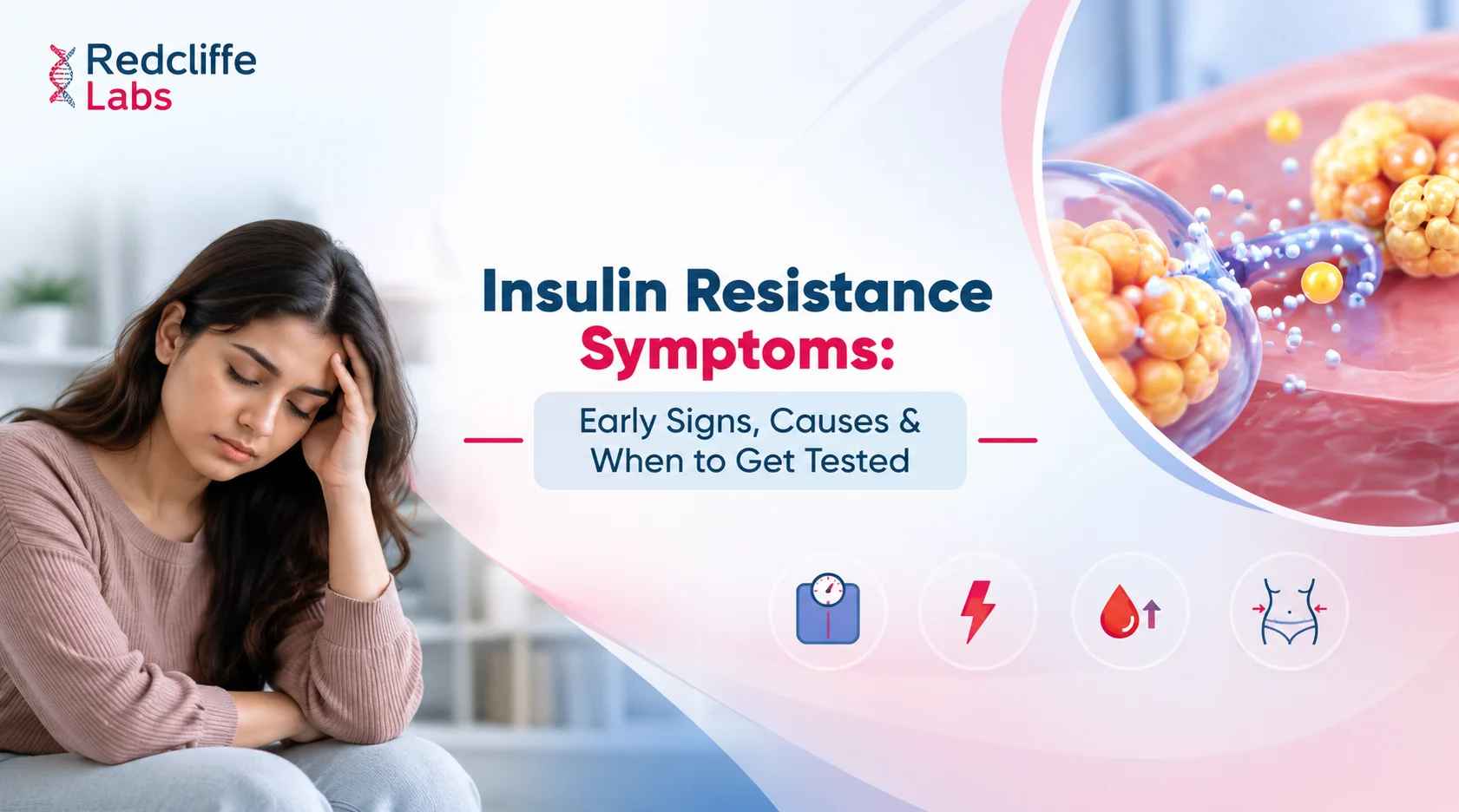
Insulin resistance often causes no noticeable symptoms. When signs do occur, they may include acanthosis nigricans and metabolic changes such as increasing waist circumference, while thirst, frequent urination and unexplained weight loss are more suggestive of high blood glucose or diabetes.
People often search for these as insulin resistance symptoms, but these changes can have many other causes and do not, by themselves, confirm insulin resistance.
In fact, insulin resistance often has no clear symptoms at all. That is why it can go unnoticed for years. The first clue may come from a blood test showing prediabetes or diabetes, or from a health problem such as polycystic ovary syndrome (PCOS) or fatty liver disease.
Insulin resistance is not the same as diabetes. Finding it early gives you an opportunity to improve your health and lower the risk of progressing to type 2 diabetes.
What Are The Symptoms Of Insulin Resistance?
Insulin resistance usually does not cause obvious symptoms by itself. Some people may develop signs associated with insulin resistance, such as dark, thickened skin called acanthosis nigricans, particularly around the neck, armpits or groin.
Symptoms such as excessive thirst, frequent urination, increased hunger, tiredness, blurred vision, or unexplained weight loss are more typical of high blood sugar or diabetes, rather than insulin resistance itself.
This distinction matters because a symptom alone cannot confirm insulin resistance.
What Is Insulin Resistance?
Insulin resistance means that the body’s cells do not respond to insulin as well as they should.
Think of insulin as a key. After you eat, food is broken down into glucose, or sugar, which enters your blood. Insulin helps move that glucose from the blood into cells, where it can be used for energy.
With insulin resistance, the “key” does not work as effectively. The pancreas often responds by producing more insulin to help glucose enter the cells.
For some time, this extra insulin may help keep blood glucose within the normal range. But if insulin resistance becomes more severe and the pancreas cannot keep up, blood glucose can start to rise. This can lead to prediabetes and eventually type 2 diabetes.
So, insulin resistance and diabetes are related, but they are not the same condition.
What Are The Early Signs Of Insulin Resistance?
There is no single symptom that proves insulin resistance. However, certain signs or health findings may make a healthcare professional look more closely at your blood sugar and metabolic health.
1. Dark, thickened skin
One of the more visible signs associated with insulin resistance is acanthosis nigricans.
It causes darker, thicker, and sometimes velvety-looking skin, commonly around:
- the back of the neck
- armpits
- groin
- elbows or knees in some people
Acanthosis nigricans can occur for different reasons, but it is commonly associated with insulin resistance and can be a sign of prediabetes or type 2 diabetes.
It should not be treated as a diagnosis on its own.
2. Increasing waist size or excess body weight
Extra body fat, especially around the abdomen, is associated with a higher risk of insulin resistance. It is better understood as a risk factor or associated finding rather than a symptom of insulin resistance.
However, a person does not have to have obesity to develop insulin resistance. Some people with a normal-looking body size can still have insulin resistance or develop type 2 diabetes.
3. Blood tests showing prediabetes
Sometimes the first clue is not something you can see or feel. A blood test may show that glucose levels are higher than normal but not yet in the diabetes range. This is called prediabetes.
Prediabetes is an important metabolic finding because it increases the risk of developing type 2 diabetes, although progression to diabetes is not inevitable.
Also Read: https://redcliffelabs.com/myhealth/diabetes/prediabetes-5-things-you-need-to-do-immediately/
4. High blood sugar symptoms
As insulin resistance progresses and blood glucose rises, some people may eventually develop symptoms of high blood sugar.
These can include:
- increased thirst
- frequent urination
- increased hunger
- tiredness
- blurred vision
- sores that heal slowly
- repeated infections
- unexplained weight loss
These symptoms are more closely linked to diabetes or significantly high blood glucose than to insulin resistance itself. Some people with type 2 diabetes have very few symptoms for a long time.
Insulin Resistance Symptoms In Women: What Should You Know?
Women do not usually experience a completely different set of insulin resistance symptoms.
However, insulin resistance is often discussed alongside polycystic ovary syndrome (PCOS) because it is common in people with PCOS and is linked with a higher risk of type 2 diabetes. PCOS itself does not automatically mean that a person has insulin resistance.
PCOS can cause symptoms such as:
- irregular or absent periods
- excess facial or body hair
- acne
- oily skin
- difficulty becoming pregnant
- darkened, thickened skin such as acanthosis nigricans
These are symptoms of PCOS, not proof of insulin resistance. A woman with irregular periods, for example, does not automatically have insulin resistance. PCOS and insulin resistance need to be assessed separately.
Women who have had gestational diabetes during pregnancy also have an increased future risk of type 2 diabetes and may need regular follow-up testing.
Insulin Resistance Symptoms In Men: Are There Specific Signs?
There is no established group of symptoms that occurs only in men because of insulin resistance.
The basic process is the same: the body’s cells become less responsive to insulin, and the pancreas may produce more insulin to compensate.
A man may have insulin resistance without feeling anything unusual. Risk is more likely to be identified through factors such as increasing abdominal weight, physical inactivity, a family history of type 2 diabetes, abnormal blood glucose, high triglycerides, low HDL cholesterol, or high blood pressure.
This is why waiting for symptoms is not a reliable way to find insulin resistance.
What Causes Insulin Resistance?
Insulin resistance usually develops from a combination of genetic, lifestyle, and health-related factors rather than from one single cause.
Common risk factors include:
- Excess body fat, especially around the abdomen
Being overweight or obese increases the risk of insulin resistance, particularly when excess fat is concentrated around the waist.
- Physical inactivity
Regular physical activity helps the body use glucose and respond better to insulin. Being physically inactive is an established risk factor for prediabetes and type 2 diabetes.
- Family history
Having a close family member with type 2 diabetes can increase your risk.
- Increasing age
The risk of type 2 diabetes generally increases with age, although younger people can also develop insulin resistance and type 2 diabetes.
- PCOS
Insulin resistance is commonly associated with PCOS and contributes to the increased risk of metabolic problems seen in some women with PCOS.
- Previous gestational diabetes
People who have had gestational diabetes have an increased risk of developing type 2 diabetes later in life.
- Certain health conditions and medicines
Conditions such as severe obesity and metabolic dysfunction-associated steatotic liver disease (MASLD) can occur alongside insulin resistance and are associated with increased metabolic risk.
However, only having a risk factor does not mean you definitely have insulin resistance.
Can You Have Insulin Resistance Without Diabetes?
Yes. Insulin resistance can exist before blood glucose reaches the level used to diagnose prediabetes or diabetes.
The pancreas may initially produce more insulin to keep blood glucose under control. Over time, however, the body’s ability to compensate may decrease. Blood glucose can then rise, first into the prediabetes range and later, in some people, into the diabetes range.
This is one reason early testing can be useful for people who have several risk factors.
How Is Insulin Resistance Diagnosed?
This is where many online articles become confusing.
It is also important to understand what these tests actually measure: HbA1c, fasting plasma glucose (FPG), and the 2-hour oral glucose tolerance test (OGTT) assess blood glucose and glucose regulation. They are used to identify prediabetes or diabetes, but they do not directly measure insulin resistance.
This distinction is consistent with ADA 2026, which identifies A1C, FPG and 2-hour OGTT as appropriate tests for screening and diagnosis of prediabetes and diabetes.
Healthcare professionals usually look at the overall picture, including your medical history, risk factors, and blood glucose results.
Tests commonly used to identify prediabetes or diabetes include:
|
Test |
What it measures |
Prediabetes range |
Diabetes range |
|
Average blood glucose over roughly the previous 2–3 months |
5.7–6.4% |
≥6.5% | |
|
Blood glucose after at least 8 hours without calories |
100–125 mg/dL |
≥126 mg/dL | |
|
2-hour OGTT |
Blood glucose 2 hours after a 75-g glucose drink |
140–199 mg/dL |
≥200 mg/dL |
|
Blood glucose measured at any time |
Not used alone to define prediabetes |
≥200 mg/dL with classic symptoms or hyperglycemic crisis |
These are ADA 2026 diagnostic criteria for nonpregnant individuals. Laboratory methods and clinical circumstances matter, and an abnormal result may need confirmation when there is no unequivocal hyperglycemia.
What does the HbA1c test tell you?
HbA1c, also called glycated haemoglobin, gives an estimate of your average blood glucose over the previous few months.
Fasting is generally not required for an HbA1c test.
However, HbA1c may not accurately reflect glucose levels in certain situations, including conditions that change the normal lifespan or turnover of red blood cells or some haemoglobin disorders. A healthcare professional can decide when another glucose test is more appropriate.
What is a fasting blood sugar test?
A fasting plasma glucose test measures blood glucose after you have had no caloric intake for at least 8 hours.
It is a simple test and can be used to screen for and diagnose prediabetes and diabetes.
What is an oral glucose tolerance test?
An oral glucose tolerance test (OGTT) measures how your body handles a measured amount of glucose.
For the standard test, blood glucose is measured after fasting and again 2 hours after drinking a solution containing 75 grams of glucose. It can identify abnormal glucose handling that may not be obvious from a fasting glucose test alone.
What Are Insulin Resistance Levels?
There is no single universal “normal insulin resistance level” that can be used for everyone.
You may see online references to a calculation called HOMA-IR, which uses fasting glucose and fasting insulin. HOMA-IR can be useful for research and may be used in selected clinical settings, but different studies and populations use different cut-offs. There is no universally accepted global HOMA-IR threshold that can reliably diagnose insulin resistance in every person.
That means a HOMA-IR number should not be interpreted by comparing it with a random number found online.
The same principle applies to fasting insulin. A higher or lower insulin value needs to be interpreted in the right clinical context, along with glucose levels, medicines, health conditions, and other findings.
When Should You Get Tested For Insulin Resistance Or Diabetes?
You do not need to wait until you feel sick. Testing may be especially appropriate if you have one or more risk factors such as:
- overweight or obesity
- increasing waist size
- a parent, brother or sister with type 2 diabetes
- high blood pressure
- abnormal cholesterol or triglycerides
- PCOS
- physical inactivity
- previous gestational diabetes
- acanthosis nigricans
- fatty liver disease
- certain medicines that increase diabetes risk
The ADA 2026 Standards of Care recommend risk-based screening and state that routine screening should begin by age 35 for adults without earlier risk-based indications. In people with overweight or obesity and additional risk factors, testing may be appropriate at a younger age.
For adults of Asian ancestry, ADA 2026 uses a BMI threshold of ≥23 kg/m² when considering risk-based screening in people who are overweight plus additional diabetes risk factors. This does not mean that everyone above this BMI has diabetes or insulin resistance; screening decisions should still consider the person’s overall risk profile.
If you are unsure whether you may have risk factors for prediabetes, the Redcliffe Labs app also offers a pre-diabetes checker that can be used as an initial risk-checking tool. It does not replace laboratory testing or a medical diagnosis, but it can help you understand whether discussing screening with a healthcare professional may be worthwhile.
How Can Insulin Resistance Be Improved?

The treatment of insulin resistance depends on why it is happening and whether you also have prediabetes, diabetes, PCOS, or another condition.
There is no single treatment that works for everyone.
1. Be physically active
Regular activity helps your muscles use glucose and improves insulin sensitivity.
For people at high risk of type 2 diabetes, the ADA recommends at least 150 minutes of moderate-intensity physical activity per week, such as brisk walking. Strength or resistance exercises can also be included.
You do not have to start with a difficult workout. For example, you might begin with a 20–30 minute brisk walk and gradually build up your activity.
Breaking up long periods of sitting can also help. Even small changes, such as standing up and moving around regularly, are better than remaining inactive for long stretches.
2. If you have overweight or obesity, work toward a realistic weight-loss goal
For people with prediabetes and overweight or obesity, the ADA recommends aiming for at least 5–7% reduction from initial body weight through healthy eating and physical activity. This level of weight loss can improve glucose and other metabolic risk factors.
This does not mean that everyone needs to reach a particular body weight.
A healthcare professional can help set a realistic goal based on your age, health conditions, medicines, and lifestyle.
3. Build a balanced diet rather than completely removing one food group
You do not necessarily need to stop eating all carbohydrates.
A healthier approach is to focus more often on:
- vegetables and leafy greens
- whole fruits
- pulses and beans
- whole grains and minimally processed grains
- nuts and seeds
- eggs, fish or other appropriate protein sources
- unsweetened or minimally processed foods
At the same time, reduce frequent intake of sugar-sweetened drinks, sweets, refined grains, and highly processed foods.
The ADA recommends eating patterns that emphasize vegetables, whole fruits, legumes, lean proteins, whole grains, nuts and seeds while limiting sugar-sweetened beverages, sweets, refined grains and processed or ultraprocessed foods. The ICMR-NIN Dietary Guidelines for Indians 2024 similarly emphasize dietary variety and limiting foods high in fat, sugar and salt.
For an Indian diet, this can be as simple as choosing dal, vegetables, beans, whole grains, curd and other suitable protein-rich foods more often while reducing sugary drinks, sweets and heavily processed snacks.
4. Get enough sleep
Sleep is part of metabolic health. Poor sleep and sleep problems can make healthy eating, activity and weight management more difficult.
If you regularly sleep poorly, snore heavily, wake up feeling exhausted or suspect sleep apnea, discuss it with a healthcare professional.
5. Manage other health conditions
Blood pressure, cholesterol, PCOS, fatty liver disease and other health problems can affect your overall metabolic risk.
Treating these conditions is part of reducing your long-term risk rather than focusing only on one blood sugar number.
6. Take medicines only when they are appropriate for you
There is no universal medicine that everyone with insulin resistance should take.
Some people with prediabetes at particularly high risk may be considered for medicines such as metformin. The ADA 2025 guidance, for example, identified higher-risk groups in whom metformin may be considered for diabetes prevention, including some younger adults with marked obesity, higher glucose or HbA1c, and people with a history of gestational diabetes. Medication decisions should be individualized by a healthcare professional.
Do not start, stop, or change a diabetes medicine on your own.
Do Supplements Treat Insulin Resistance?
Supplements are often marketed as a quick solution for insulin resistance, but they should not replace proven lifestyle measures or prescribed treatment.
The ADA 2026 Standards of Care do not recommend routine use of vitamins, minerals or herbal products such as chromium, cinnamon or aloe vera for glycemic benefits in people with diabetes. Evidence for many supplements remains inconsistent, and some can interact with medicines.
A supplement may be appropriate when a healthcare professional has identified a genuine nutritional deficiency or another specific reason for using it.
Can A Home Insulin Resistance Test Diagnose The Condition?
A home blood glucose meter can measure glucose, but that is not the same as diagnosing insulin resistance.
Likewise, a single fasting insulin result or HOMA-IR result should not be interpreted without clinical context.
If you are concerned about insulin resistance, a healthcare professional may recommend laboratory testing such as HbA1c, fasting plasma glucose, or an OGTT depending on your risk factors and symptoms.
What Happens If Insulin Resistance Is Ignored?
Insulin resistance does not automatically become diabetes. However, persistent insulin resistance can contribute to rising blood glucose. Over time, this may lead to prediabetes and, in some people, type 2 diabetes.
Prediabetes is also associated with a higher risk of cardiovascular disease and other metabolic problems.
The important point is that early action can change the situation.
If testing shows prediabetes, the goal is not to panic. It is to understand your risk, make sustainable changes, and follow the monitoring plan recommended by your healthcare professional.
When Should You Speak To A Doctor?
Make an appointment if you have risk factors for insulin resistance or diabetes, particularly if you have several of them together.
You should also seek medical evaluation if you develop symptoms such as:
- extreme thirst
- frequent urination
- unexplained weight loss
- persistent blurred vision
- unusual or severe tiredness
- repeated infections
- wounds that do not heal normally
These symptoms can have many causes, but they may occur when blood glucose is significantly elevated.
If symptoms are severe or develop suddenly, seek prompt medical care.
Bottom Line
If you have several risk factors or are concerned about your blood sugar, consider discussing HbA1c and fasting blood glucose testing with a qualified healthcare professional.
Redcliffe Labs offers HbA1c, fasting glucose, and diabetes-related testing options, making these tests available as part of a broader health assessment. Test selection and interpretation should still be based on your individual clinical situation.
Frequently Asked Questions
Can insulin resistance be present even if my blood sugar is normal?
Yes. Insulin resistance can be present even when your blood sugar is normal. In the early stages, the body may make more insulin to keep blood sugar in the normal range. Over time, blood sugar can rise if the body can no longer keep up.
Is dark skin on the neck always a sign of insulin resistance?
No. Dark skin on the neck can have several causes. One possible cause is acanthosis nigricans, which is often linked to insulin resistance and can also occur with prediabetes or type 2 diabetes. If the skin change persists or seems unusual, it is best to have it checked by a healthcare professional.
What is the best test for insulin resistance?
There is no single test that is considered the best routine test for insulin resistance in every person. Doctors commonly use HbA1c, fasting plasma glucose, or an OGTT to identify prediabetes or diabetes. Tests such as fasting insulin or HOMA-IR may be used in selected situations, but their interpretation and cut-offs are not standardized worldwide.
Can insulin resistance be improved naturally?
Lifestyle changes can improve insulin sensitivity and reduce the risk of progressing to type 2 diabetes. Regular physical activity, a balanced eating pattern, and appropriate weight management are among the most important measures. Some people may also need medical treatment depending on their health and test results.
Are supplements such as cinnamon or chromium recommended for insulin resistance?
Routine use of supplements such as cinnamon or chromium is not recommended for glycemic benefits by the ADA. Evidence for supplements varies, and some products can interact with medicines. Talk with a healthcare professional before using a supplement for blood sugar or insulin resistance.
Can young adults develop insulin resistance?
Yes. Young adults can develop insulin resistance and type 2 diabetes, especially with risk factors like excess weight, low physical activity, family history of diabetes, or PCOS. Being young does not rule it out.
Should I check insulin resistance if I have a family history of diabetes?
A family history of type 2 diabetes is an important risk factor. It can be a reason to discuss screening for prediabetes or diabetes with a healthcare professional, especially when other risk factors are present.
Can you have insulin resistance without symptoms?
Yes. Insulin resistance often causes no noticeable symptoms, especially in its earlier stages. A person may have insulin resistance while blood glucose is still normal because the body can produce more insulin to keep glucose under control. Testing may be recommended based on your risk factors and overall health.
What is the difference between insulin resistance and prediabetes?
Insulin resistance means the body's cells do not respond to insulin as well as they should. Prediabetes means blood glucose or HbA1c is above the normal range but below the threshold used to diagnose diabetes. Insulin resistance can contribute to prediabetes, but the two terms do not mean exactly the same thing.