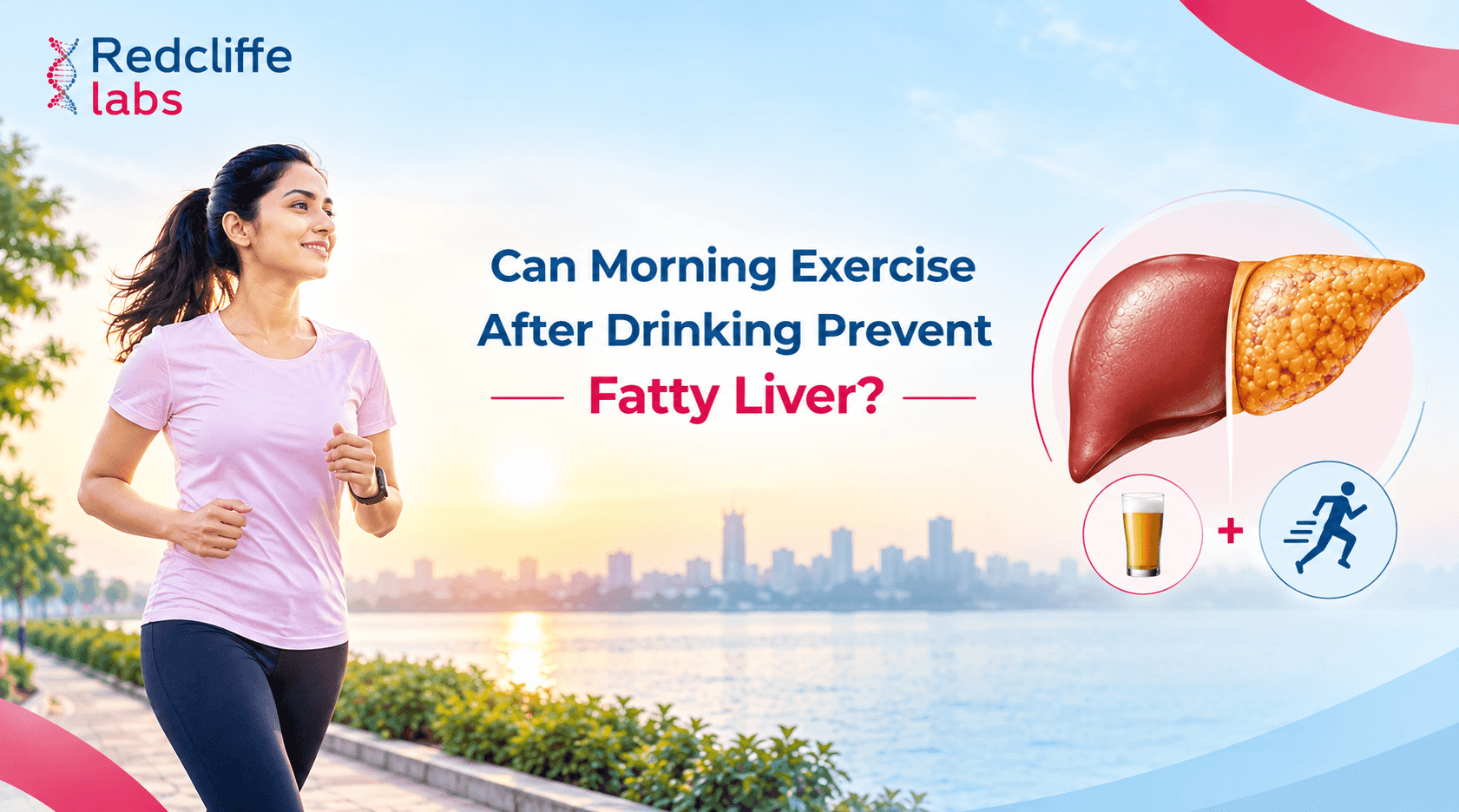
Can Morning Exercise After Drinking Prevent Fatty Liver?

Overview
- Understand why exercising the next morning cannot cancel alcohol’s effects or prevent liver damage caused by regular or excessive alcohol consumption.
- Learn how frequent alcohol intake can contribute to fat accumulation, inflammation, and progressive liver damage, including alcohol-associated liver disease.
- Discover why sweating or exercising cannot speed up alcohol metabolism or reverse its effects, despite exercise being beneficial for overall health
- Explore practical exercise, nutrition, and lifestyle habits that can support a healthier liver and help manage fatty liver risk.
- Know which warning signs and risk factors may require medical evaluation and how timely liver testing can help identify potential concerns early.
Drinking alcohol at night and exercising the next morning may seem like a way to balance an unhealthy habit with a healthy one. Some people believe that sweating during a workout can help remove alcohol from the body or prevent fatty liver.
But can exercise really undo the effects of alcohol?
No. Morning exercise cannot cancel the effects of alcohol consumed the previous night or guarantee protection against fatty liver. Exercise supports long-term physical and metabolic health, but it does not speed up the body's processing of alcohol or reverse alcohol-related liver injury.
If you are wondering whether drinking after a workout can be balanced by exercising the next morning, the answer is also no. Protecting your liver depends more on your overall drinking pattern, diet, physical activity, metabolic health, and timely medical evaluation.
What Does the Expert Perspective Say?
According to Deepika Lalwani, Clinical Nutritionist and Wellness Coach at Redcliffe Labs, exercise is certainly beneficial for overall health, but it should not be treated as a way to compensate for alcohol consumption.
If someone consumes alcohol at night, exercising the next morning does not reverse the effects of alcohol on the liver. A single workout cannot undo the impact of drinking or guarantee that fatty liver will be avoided.
The important point is to look at the overall pattern of alcohol consumption and lifestyle habits, rather than trying to compensate for drinking with exercise.
Regular physical activity, a balanced diet, and reducing or avoiding alcohol are more meaningful steps for supporting long-term liver health.
People who regularly consume alcohol and are concerned about alcoholic liver disease should also discuss their drinking pattern and individual risk factors with a healthcare professional.
Expert takeaway: Exercise supports health, but it is not an antidote to alcohol. A morning workout cannot erase the effects of drinking the previous night.
Also Read: Understanding Liver Swelling (Hepatomegaly): Causes, Symptoms, and Recovery
Does Exercise Make Alcohol Leave the Body Faster?
Exercise does not significantly speed up the metabolism of alcohol. The body needs time to process alcohol, and activities such as intense exercise, drinking coffee, or taking a cold shower cannot make a person sober faster. This is important because a person may feel more alert after exercising without actually having cleared the alcohol from their system.
If you still feel intoxicated, dizzy, unusually sleepy, or poorly coordinated, avoid exercising, driving, or performing activities that require concentration and balance.
What Happens to Your Liver After Drinking Alcohol?
The liver plays a major role in metabolizing alcohol. During this process, alcohol is converted to acetaldehyde and then further broken down.
Repeated excessive alcohol exposure can put the liver under stress and contribute to the accumulation of fat in liver cells. In some people, continued harmful alcohol use can progress from liver fat to inflammation, fibrosis, and eventually cirrhosis.
This spectrum is commonly referred to as alcoholic liver disease, although healthcare professionals increasingly use the term alcohol-associated liver disease.
The risk is not identical for everyone. Drinking pattern, quantity, duration, body weight, metabolic health, genetics, and other factors can influence an individual's risk.
Can One Night of Drinking Cause Fatty Liver?
One night of drinking should not automatically be interpreted as fatty liver.Fatty liver is best understood in the context of a person's long-term alcohol intake, metabolic health, and other risk factors. However, repeated heavy alcohol consumption can increase the risk of liver fat accumulation and progressive liver injury.
A person can also have more than one risk factor at the same time. For example, someone who drinks regularly may also have obesity, diabetes, or high triglycerides. This is why the cause of liver fat should not be assumed based only on drinking habits or symptoms.
Can Drinking After a Workout Affect Liver Health?
Exercise does not make alcohol harmless. A person may exercise regularly, maintain good muscle strength and still be exposed to alcohol-related health risks if they drink frequently or heavily.
For example, completing a workout does not provide a “buffer” that allows someone to drink without consequences. If drinking after a workout becomes a regular habit, the overall amount and frequency of alcohol consumption are more important considerations than the number of calories burned during exercise.
Exercise remains valuable, but it should be viewed as one part of a healthy lifestyle, not a method of cancelling alcohol exposure.
What Increases the Risk of Fatty Liver?
Fatty liver can result from several different factors. Important risk factors include:
|
Risk factor |
Why it matters |
|
Frequent or excessive alcohol intake |
Can increase the risk of alcohol-related liver injury |
|
Overweight or obesity |
Associated with greater metabolic risk |
|
Type 2 diabetes |
Can increase the likelihood of metabolic fatty liver |
|
Insulin resistance |
Can affect how the body handles fats and glucose |
|
High triglycerides |
Associated with metabolic liver risk |
|
Physical inactivity |
May contribute to poorer metabolic health |
|
Excess calorie intake |
Can contribute to weight gain and liver fat |
|
Certain medicines or medical conditions |
May contribute to liver abnormalities |
Alcohol and metabolic risk factors can sometimes occur together, making individual assessment important.
What Are the Signs of Liver Problems?
Fatty liver may not cause noticeable symptoms, particularly during its early stages.
Some people may experience:
- Fatigue
- Feeling generally unwell
- Reduced appetite
- Nausea
- Mild abdominal discomfort
More advanced liver disease can cause symptoms such as:
- Yellowing of the skin or eyes
- Swelling of the abdomen
- Swelling of the legs or ankles
- Dark urine
- Easy bruising or bleeding
- Persistent itching
- Confusion or changes in alertness
These symptoms can have several possible causes and do not automatically indicate liver disease. However, persistent or concerning symptoms should be medically evaluated.
Best Exercise for Liver Disease: What Actually Helps
There is no single exercise that is best for every person with liver disease.
For people who are medically fit to exercise, a combination of aerobic activity and resistance training can support overall fitness and metabolic health.
Examples include:
- Walking
- Cycling
- Swimming
- Jogging, when appropriate
- Resistance or strength training
- Other activities that can be performed consistently
The goal should be regular, sustainable activity rather than an intense workout designed to compensate for drinking.
If you have known liver disease, significant symptoms or other medical conditions, discuss an appropriate exercise plan with your healthcare professional.
What About Exercising the Morning After Drinking?
The answer depends on how you feel and how much alcohol you consumed.
A hangover may involve headache, nausea, weakness, dizziness, fatigue, and poor concentration. An intense workout may make these symptoms worse for some people. If you feel unwell, prioritize rest and recovery rather than forcing a strenuous workout.
Most importantly, do not exercise if you are still intoxicated. Poor coordination and impaired judgment can increase the risk of injury.
Also Read: How Is Liver Health and Dark Circles Related?
What to Drink Early Morning to Reduce Fatty Liver?
There is no morning drink that can directly remove liver fat or reverse alcohol-related liver injury. Water is a sensible choice if you are thirsty or dehydrated. Once you feel able to eat, a balanced meal can help you return to your normal routine.
Be cautious about drinks, supplements, or herbal products marketed as liver detoxes. A “detox” drink cannot replace addressing the underlying cause of fatty liver.
For better long-term liver health, focus on sustainable habits such as reducing alcohol consumption, maintaining regular physical activity, eating a balanced diet, and managing conditions such as diabetes and high cholesterol.
How Is Fatty Liver and Liver Injury Evaluated?
A healthcare professional may consider several factors when evaluating liver health, including:
- Alcohol consumption and drinking pattern
- Weight and metabolic health
- Diabetes or insulin resistance
- Symptoms
- Cholesterol and triglyceride levels
- Medical and family history
- Medicines and supplements
- Physical examination
- Blood test results
- Imaging, when appropriate
A Liver Function Test may be used as part of an evaluation of liver health. It can provide information about certain liver enzymes, proteins, and bilirubin.
However, abnormal or normal results do not tell the entire story. A blood test alone may not establish the exact cause or severity of liver disease.
Depending on the clinical situation, a doctor may recommend additional investigations such as ultrasound, other imaging tests, or fibrosis assessment.
Why Should You Not Rely Only on Liver Enzymes?
Liver enzymes can provide useful information, but they need to be interpreted in context.
A person may have liver disease without dramatic enzyme abnormalities, while elevated enzymes can have several possible causes. That is why a healthcare professional may consider laboratory results alongside symptoms, alcohol intake, metabolic risk factors, medical history, and imaging findings.
If you are concerned about your liver health, avoid diagnosing yourself from a single laboratory value.
Can Fatty Liver Be 100% Reversed?
It depends on the cause and the stage of liver damage. Early fatty liver can often improve substantially when the underlying cause is addressed. For alcohol-related fatty liver, stopping alcohol exposure can allow liver fat to improve in many people.
However, continued liver injury can lead to inflammation and fibrosis. Advanced scarring or cirrhosis represents significant structural damage and cannot simply be reversed through exercise.
For metabolic fatty liver, addressing weight, physical activity, diet, blood sugar and other metabolic risk factors can help improve liver health.
Therefore, instead of asking whether fatty liver can always be “100% reversed,” it is more useful to determine what is causing it and whether there is already liver fibrosis or advanced disease.
Can Exercise Reverse the Effects of Alcohol?
Exercise can support cardiovascular fitness, muscle strength, and metabolic health. Regular physical activity can also be an important part of a healthy lifestyle for people concerned about liver health.
But exercise is not an antidote to alcohol. If drinking after a workout becomes frequent, increasing exercise alone is not an adequate strategy for protecting the liver. Reducing or avoiding alcohol is more important when alcohol is contributing to liver injury.
If reducing alcohol feels difficult, speaking with a healthcare professional can help. Problematic alcohol use is a medical concern, and evidence-based support is available.
How Can You Protect Your Liver After a Night of Drinking?
There is no instant “reset” for the liver. Instead, focus on habits that support long-term health.
1. Do not use exercise as compensation
Avoid treating a hard work compensation. t as a way to erase the effects of alcohol.
2. Give your body time
Alcohol metabolism takes time. Exercise, coffee, and cold showers cannot instantly remove alcohol from your body.
3. Stay hydrated
Drink water according to your body's needs. Do not assume that special detox beverages are necessary.
4. Eat a balanced diet
Choose vegetables, fruits, whole grains, protein-rich foods, and minimally processed foods as part of a balanced eating pattern.
5. Stay physically active
Regular activity is more beneficial than occasional intense workouts designed to compensate for drinking.
6. Review your drinking pattern
If alcohol consumption is frequent, excessive, or difficult to control, consider discussing it with a healthcare professional.
When Should You See a Doctor?
Consider speaking with a healthcare professional if you:
- Drink frequently or heavily
- Have previously been diagnosed with fatty liver
- Have diabetes or obesity
- Have high triglycerides
- Have repeatedly abnormal liver blood tests
- Experience persistent fatigue or abdominal discomfort
- Develop yellowing of the skin or eyes
- Notice abdominal or leg swelling
- Develop dark urine
- Have unexplained bleeding or bruising
- Are concerned about your alcohol consumption
Seek urgent medical attention for severe symptoms such as confusion, difficulty staying awake, seizures, breathing problems, severe abdominal pain, or significant vomiting.
Conclusion: How Redcliffe Labs Can Help You Check Your Liver Health
If you are concerned about your liver, appropriate screening can be an important part of understanding your health.
Redcliffe Labs offers a Fatty Liver Screening Package in selected locations. The package may include parameters relevant to liver and metabolic health, but exact package contents and availability can vary by location. It should be viewed as a screening option and not as a standalone diagnosis of fatty liver or liver fibrosis.
A Liver Function Test may also be recommended depending on an individual's symptoms, medical history, and clinical assessment. Laboratory results should be interpreted by a healthcare professional who can determine whether further testing or evaluation is appropriate.
Frequently Asked Questions
How long does alcohol stay in the body after drinking?
The time alcohol remains in the body varies depending on factors such as the amount consumed, drinking speed, body composition, sex, food intake and individual metabolism. There is no reliable way to calculate sobriety based only on how you feel, so time is the primary factor.
Can alcohol cause liver problems even if I exercise regularly?
Yes. Being physically active does not eliminate the liver risks associated with excessive alcohol consumption. Exercise can support overall metabolic health, but regular heavy drinking can still contribute to liver injury. Overall alcohol intake and drinking patterns remain important when assessing liver health.
Does alcohol affect muscle recovery after exercise?
Alcohol can interfere with aspects of recovery, including sleep quality, hydration and processes involved in muscle repair. If fitness or muscle recovery is a priority, frequent or heavy alcohol consumption may work against those goals, even when someone maintains a consistent exercise routine.
Can drinking alcohol affect sleep after a workout?
Yes. Although alcohol may initially make some people feel sleepy, it can disrupt sleep quality later in the night. Poor sleep can affect recovery, energy levels and exercise performance the following day. Therefore, using alcohol to relax after exercise may not support effective recovery.
Does body weight determine how much alcohol is safe?
Body weight can influence how alcohol is distributed in the body, but it does not determine a universally “safe” amount. Alcohol-related health risks depend on several factors, including quantity, frequency, drinking pattern, individual health and existing medical conditions.
Can people with diabetes drink alcohol?
People with diabetes should discuss alcohol consumption with their healthcare professional because alcohol can affect blood glucose levels and may interact with certain medicines. Individual recommendations depend on diabetes control, medications, other health conditions and the amount and frequency of alcohol consumption.
Does alcohol increase the risk of high triglycerides?
Alcohol can contribute to elevated triglyceride levels in some people, particularly with excessive consumption. High triglycerides are also associated with metabolic health problems. If triglycerides remain elevated, a healthcare professional can assess dietary habits, alcohol intake, medications and other possible causes.
Can fatty liver occur without any symptoms?
Yes. Fatty liver may be present without noticeable symptoms, particularly in its earlier stages. Some people discover it incidentally during blood testing or abdominal imaging performed for another reason. This is one reason risk factors and appropriate medical evaluation can be important even when a person feels healthy.
Can supplements protect the liver from alcohol?
There is no supplement that can be relied upon to make excessive alcohol consumption safe. Some supplements marketed for “liver detox” may also have risks or interact with medicines. Liver protection should focus on addressing the underlying risk, particularly excessive alcohol consumption.
What lifestyle factors besides alcohol affect liver health?
Liver health can also be influenced by body weight, physical activity, diet, blood sugar, cholesterol and triglyceride levels, certain medicines and other medical conditions. A healthy lifestyle therefore involves more than simply exercising; it includes managing overall metabolic and cardiovascular health.