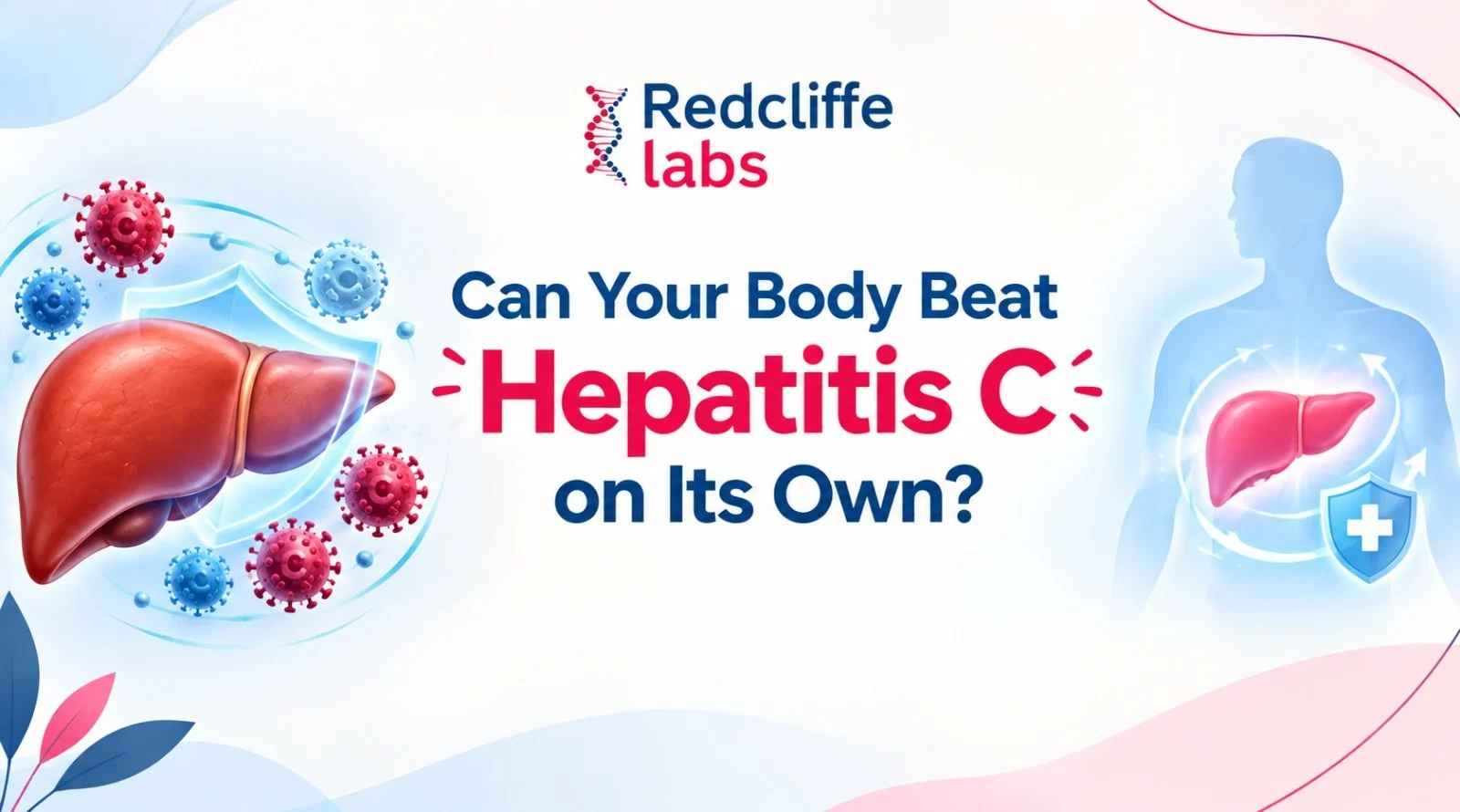
Can HCV Be Cured Without Treatment?

Overview
- Your immune system can clear Hepatitis C on its own, but only in the early, acute stage of the infection.
- Between 15 to 45% of people clear the virus naturally within six months of exposure, without medication.
- If the virus remains in your body for more than six months, it will become a chronic infection and cannot clear up on its own.
- With modern Direct-Acting Antiviral (DAA) drugs, over 95 percent of people suffering from chronic Hepatitis C are cured within eight to twelve weeks.
- The virus cannot be prevented from causing reinfection even if you are exposed again in the future.
What Do You Mean by HCV?
HCV stands for Hepatitis C Virus, a viral infection that affects human liver cells and can cause inflammation and tissue damage.
Upon entering liver cells, the virus uses them to replicate. This triggers an immune response, and the liver becomes inflamed (swollen). Over time, this ongoing inflammation interferes with the liver's normal functions, including removing toxins from the blood, digesting food, and storing energy.
Medical science categorizes Hepatitis C infection into two distinct phases:
- Acute Hepatitis C: The initial stage of infection occurring within the first 6 months after exposure.
- Chronic Hepatitis C: A long-term infection that persists beyond 6 months, requiring medical evaluation and antiviral treatment.
How did you get Hep C?
Hepatitis C can be transmitted only when blood comes into contact with another person's blood, meaning an infected person's blood must enter the bloodstream of an uninfected person. The virus is not transmitted by casual physical contact, coughing, sneezing, hugging, or sharing eating utensils.
Primary Transmission Routes
- The sharing of injection equipment: It is most common to share needles, syringes, or other equipment used for preparing and injecting drugs.
- Unregulated Tattoos and Piercings: Receiving tattoos or body piercings with unsterilized needles or contaminated ink can transmit the virus.
- Accidental Healthcare Exposures: Healthcare workers can contract the infection through accidental needle-stick injuries while caring for infected patients.
- Blood Transfusions Before 1992: Individuals who received blood transfusions or organ transplants before widespread blood screening was introduced in 1992 may have been exposed.
- Perinatal Transmission: A mother with an active Hepatitis C infection can pass the virus to her baby during childbirth (occurring in roughly 6% of such pregnancies).
- Personal Hygiene Items: Sharing personal items that may hold microscopic amounts of blood, such as razors, nail clippers, or toothbrushes, carries a small risk.

What Are the First Signs of Having Hep C?
Medical professionals frequently describe hepatitis C as a "silent infection." Around 80% of people do not experience any noticeable symptoms in the early acute stage. When symptoms do occur, they typically appear 2 to 12 weeks after exposure and are generally mild and nonspecific.
Early Symptoms to Watch For
- Extreme Fatigue: Feeling unusually exhausted despite getting adequate rest.
- Jaundice: A noticeable yellowing of the skin and the whites of the eyes caused by a buildup of bilirubin in the blood.
- Dark Urine: Urine appearing dark amber or tea-colored.
- Pale or Clay-Colored Stool: Stool losing its normal brownish color because bile flow is blocked.
- Abdominal Discomfort: Mild pain or soreness located in the upper right side of the abdomen, where the liver sits.
- Flu-Like Symptoms: Mild fever, joint aches, loss of appetite, nausea, and general weakness.
Because the symptoms resemble common illnesses like the flu, most people don't suspect a liver infection until they get blood tests.
Which Is More Harmful, Hepatitis B or C?
Both Hepatitis B (HBV) and Hepatitis C cause liver inflammation. They can lead to serious liver disease, but they differ significantly in prevention, transmission, the risk of chronic illness, and treatment outcomes.
|
Feature |
Hepatitis B (HBV) |
Hepatitis C |
|
Primary Transmission |
Blood, sexual contact, childbirth |
Blood-to-blood contact |
|
Vaccine Availability |
Yes (Safe and effective vaccine) |
No (No vaccine currently exists) |
|
Adult Chronic Rate |
Low (5% to 10% of adults become chronic) |
High (55% to 85% become chronic) |
|
Complete Cure |
Rarely cured; managed with long-term therapy |
Curable (>95% cured with 8–12 weeks of pills) |
|
Cancer Risk Path |
Can cause liver cancer directly without cirrhosis |
Usually leads to liver cancer after severe scarring |
Point to remember:
No single virus is inherently worse, since the problems associated with them differ. While there is a vaccine available to prevent hepatitis B, chronic infections with it are seldom entirely cured and usually demand a lifetime of management. On the other hand, hepatitis C has no preventative vaccine and is more likely to become chronic in adults, but it can now be completely cured using antiviral medication.
Can Your Body Fight Hep C on Its Own?
The human body can clear the Hepatitis C virus without medication, but this immune response succeeds only during the acute infection period (the first 6 months).
When the hepatitis C virus enters the bloodstream, the immune system responds with white blood cells (more precisely, T-cells) and antibodies, which identify and destroy the virus.
In 15% to 45% of infected people, this natural immune response eliminates all viral particles. The infection is then permanently cured without drugs.
In 55 to 85 percent of cases, the Hepatitis C virus mutates quickly and can escape immune cells; if the immune system does not eliminate the virus within six months, the infection becomes firmly established in the liver tissue.
Also Read: Blood Tests for Hepatitis: Detection and Diagnosis in 2026
Can HCV Be Cured Without Treatment?
The answer depends entirely on whether the infection is acute or chronic.
|
Infection Stage |
Outcome Without Treatment |
What Happens Next |
|
Acute Phase (First 6 months) |
15% – 45% achieve Spontaneous Clearance (cured naturally). |
The body's immune system eliminates the virus without medication. |
|
Chronic Phase (Beyond 6 months) |
55%–85% develop chronic infection (0% natural cure rate). |
The virus cannot be cured naturally and requires Direct-Acting Antiviral (DAA) therapy (>95% cure rate). |

1. Acute Phase (0 to 6 Months)
- Status: The body can clear the virus naturally.
- Mechanism: Spontaneous viral clearance happens when immune cells remove viral particles.
- Outcome: If cleared, you no longer harbor the virus and cannot transmit it to others.
2. Chronic Phase (Beyond 6 Months)
- Status: The body cannot clear the virus on its own.
- Mechanism: The virus hides inside liver cells, continually replicating while avoiding immune clearance.
- Outcome: Spontaneous cure does not happen during chronic infection. If left untreated, chronic infection causes ongoing liver damage.
What Factors Increase the Chances of Clearing HCV Naturally?
Medical research shows that biological and genetic factors influence natural clearance during the acute phase:
- When people develop symptoms (such as jaundice) early in the infection, they are more likely to clear the virus on their own. The appearance of symptoms indicates that the immune system is carrying out a vigorous attack on the virus.
- Regarding biological sex, females tend to have a higher rate of spontaneous clearance than males, probably because of hormonal and immune differences that offer protection.
- Variations in the genetic material near the IFNL4 (formerly IL28B) gene on chromosome 19 are strongly associated with natural clearance of the virus; individuals with the favorable genetic variant clear the virus naturally at twice the rate of people without it.
- Younger people, including children and young adults, have a slightly higher rate of spontaneous clearance than older adults.
How Do I Know if My Hepatitis C Cleared on Its Own?
You can't tell whether Hepatitis C has cleared based on how you feel. Because liver damage occurs slowly and often silently, blood tests are required to confirm your status.
The Two-Step Testing Process
-
HCV Antibody Test:
- Purpose: To determine if your immune system has at any time made antibodies against the Hepatitis C virus.
- Interpretation: If your antibody test is positive (that is, reactive), it means that you were exposed to HCV at some time in your life, and the antibodies will stay in your blood even if the virus is no longer there.
-
HCV RNA (PCR) Test:
- Purpose: To determine the amount of actual genetic material (RNA) from the Hepatitis C virus present in your blood.
- Interpretation: This test determines whether the infection is currently active.
|
HCV Antibody Test |
HCV RNA (PCR) Test |
Clinical Diagnosis |
What It Means |
|
Negative |
Not Needed |
No Infection |
You have never been exposed to the virus. |
|
Positive |
Undetectable |
Cleared / Cured |
You were exposed, but your body cleared the virus naturally (or via treatment)—no active infection. |
|
Positive |
Detectable |
Active Chronic Infection |
You currently have an active viral infection that requires medical evaluation and treatment. |
What Happens If Chronic Hepatitis C Is Left Untreated?
Assuming that a chronic infection with Hepatitis C will go away on its own, thus ignoring it, results in continuous, long-term inflammation of the liver. Over many decades, untreated chronic infection leads to progressive damage to tissue:
- Persistent inflammation replaces normal liver tissue with scar tissue, gradually reducing blood flow through the liver.
- In the case of untreated individuals, about 10 to 20 percent will develop cirrhosis after 20 to 30 years of having a chronic infection, involving scar tissue permanently replacing healthy liver cells.
- In advanced cirrhosis, the liver can no longer process nutrients, cleanse the blood, or produce necessary proteins, resulting in liver failure.
- Individuals with HCV-induced cirrhosis face a 1% to 4% annual risk of developing primary liver cancer.
How Is Chronic Hepatitis C Cured Today?
If blood tests confirm active chronic Hepatitis C infection, modern treatment can provide a complete cure with minimal burden.
Direct-Acting Antivirals (DAAs)
Hepatitis C treatment relies on oral medications called Direct-Acting Antivirals (DAAs). DAAs directly target and block specific proteins that the Hepatitis C virus needs to replicate itself inside liver cells.
- The dosage is simple: treatment typically consists of taking between 1 and 3 pills each day for a period of 8 to 12 weeks.
- Modern direct-acting antivirals achieve cure rates of 95 percent to 98 percent across all major hepatitis C virus strains (genotypes).
- Modern DAAs are well tolerated and may cause only mild side effects, such as temporary fatigue or a headache; nowadays, the older and more toxic treatments that require weekly injections of interferon are no longer used.
- A sustained virologic response (SVR): a patient is considered cured when the HCV RNA test is still undetectable 12 weeks after completing treatment (SVR12).
Can You Get Hepatitis C Again After Clearing It?
Spontaneous clearance or DAA-based cure does not provide permanent immunity to hepatitis C.
- Why Reinfection Happens: Unlike viral infections like measles, exposure does not produce long-term protective immunity. The antibodies remaining in your blood indicate past exposure, but they do not prevent a new strain of the virus from infecting your liver.
- Prevention Strategies: To avoid reinfection after natural clearance or medical cure, avoid direct exposure to unsterilized injection equipment, ensure all tattoo or piercing equipment is sterile, and avoid sharing personal care items that could carry blood.
Diagnostic Flowchart & Next Steps
If you suspect you have been exposed to Hepatitis C, consult a healthcare provider or visit a clinic for a simple blood test.
|
Test Result (HCV RNA / PCR) |
Diagnostic Status |
Required Action / Next Step |
|
HCV RNA Undetectable |
Spontaneous Clearance or Previous Cure (No active virus present) |
No further treatment needed. Focus on preventing future reinfection (antibodies do not grant permanent immunity). |
|
HCV RNA Detectable |
Active Infection (the virus is currently active in the body). |
Consult a Specialist & Begin Treatment. See a Hepatologist or Gastroenterologist to start an 8-to-12-week Direct-Acting Antiviral (DAA) pill regimen. |
If the virus is detected and tested for early on, it is possible for modern medical treatment to completely get rid of the virus, protect your liver from permanent damage, and restore your health even if your body failed on its own to clear the virus.
Also Read: Hepatitis B: What is it? Symptoms, Causes, and Treatment
The Bottom Line
Can Hepatitis C go away on its own? Yes, in some cases. The body can clear Hepatitis C naturally during the first 6 months of infection. However, if the virus stays in the body for longer, it can become chronic and usually needs treatment.
The good news is that Hepatitis C is now highly curable with modern antiviral medicines. So, if you think you may have been exposed to the virus or have a positive HCV antibody test, don't ignore it or wait for symptoms. Get the right blood tests to know if the virus is still present.
With Redcliffe Labs, you can book a blood test with convenient home sample collection and get your reports digitally, making testing simple and hassle-free.
FAQs
Can HCV be cured without treatment?
Yes, the Hepatitis C Virus (HCV) can go away without treatment, but only during the initial, acute stage of the infection. About 15% to 45% of people infected will naturally clear the virus without medical intervention. However, once the infection turns chronic (lasting longer than six months), a spontaneous cure is virtually non-existent, and direct-acting antiviral medications are necessary to achieve a permanent cure.
Can Hepatitis C clear on its own?
Hepatitis C can clear on its own, a process called spontaneous viral clearance. This occurs when the host's immune system successfully detects, targets, and destroys the virus during the early stage of exposure. If spontaneous clearance happens, the body eliminates the live virus. However, the person will continue to test positive for Hepatitis C antibodies for the rest of their life, even though they are completely virus-free.
How often does HCV clear without treatment?
Spontaneous clearance occurs in roughly 15% to 45% of people who contract hepatitis C. On average, about 30% of newly infected individuals clear the virus naturally. The remaining 55% to 85% of people are unable to clear it without medical help and will transition into a chronic Hepatitis C infection, which requires specialized prescription medication to eliminate.
How long does it take for HCV to clear naturally?
When the virus clears naturally, it typically occurs within the first 6 months following the initial exposure. Most spontaneous clearances happen between 2 and 12 months after infection, with peak clearance rates seen around the 6-to-12-month mark. Spontaneous clearance after 12 months is extremely rare. If the virus remains detectable in the blood beyond six months, it is considered a chronic infection.
Can acute HCV infection go away without treatment?
Yes, acute Hepatitis C infection—which represents the first six months after exposure—can go away completely without treatment. A strong, coordinated immune response during this acute window enables about 15% to 45% of individuals to resolve the infection on their own. Because many acute infections cause mild or no symptoms, individuals may clear the virus without ever realizing they were infected.
Can chronic Hepatitis C resolve without treatment?
No, chronic Hepatitis C rarely resolves without treatment. Once the virus persists in the body beyond six months, the immune system can no longer clear it on its own. Spontaneous clearance during the chronic phase occurs in less than 1% of cases. Chronic Hepatitis C is a lifelong, progressive infection that requires oral direct-acting antiviral (DAA) medications to eradicate the virus and protect liver function.
What are the chances of spontaneous HCV clearance?
The overall chances of spontaneous clearance are about 15% to 45% during the acute stage. Several factors increase these odds, including being female, younger age at infection, symptomatic jaundice, and specific genetic variations (such as the IFNL4 gene). Conversely, individuals with compromised immune systems, co-infections (like HIV), or heavy alcohol use have significantly lower chances of clearing the virus naturally.
Can the immune system eliminate HCV on its own?
Yes, the immune system can eliminate the virus on its own, but only in a minority of cases during the acute phase. A robust response involving T-cells and neutralizing antibodies can successfully suppress viral replication and eliminate the virus within months. However, in most people, the virus mutates rapidly to evade immune detection, overwhelming the body's defenses and establishing a persistent, chronic liver infection.
Is Hepatitis C always curable with treatment?
While not quite 100%, modern Hepatitis C treatments are effective enough that doctors consider the disease almost universally curable. Current direct-acting antiviral (DAA) pills boast a cure rate of over 95% to 98% across most viral genotypes. Treatment typically lasts just 8 to 12 weeks, involves minimal side effects, and achieves a cure even in individuals who have lived with chronic Hepatitis C for decades.
What happens if HCV is left untreated?
If chronic Hepatitis C is left untreated, it causes ongoing, silent inflammation and progressive liver damage over decades. About 15% to 30% of untreated individuals will develop liver cirrhosis (severe scarring) within 20 years. Over time, cirrhosis can lead to life-threatening complications, including liver failure, end-stage liver disease, and hepatocellular carcinoma (liver cancer), often ultimately requiring a liver transplant.