10 Warning Signs of Buerger's Disease That Could Save Your Limbs

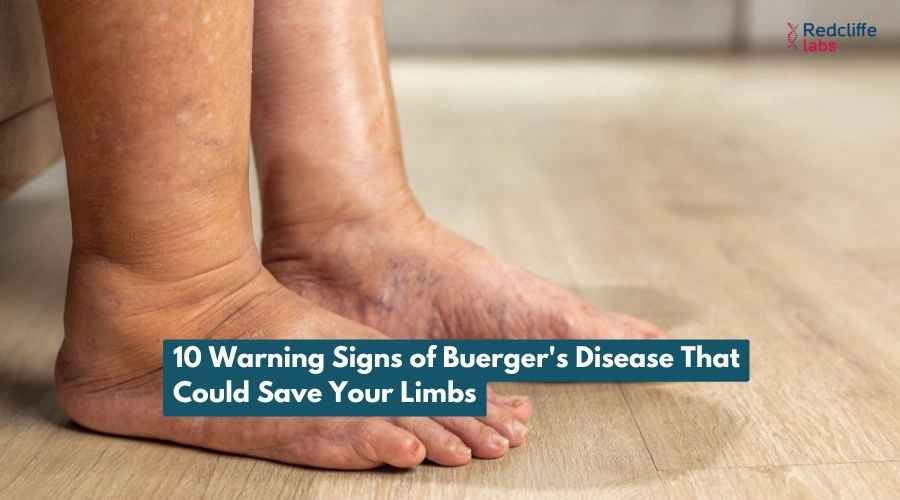
Losing a limb rarely happens overnight. It often begins with small warning signs that are easy to overlook.
You might notice a numb toe, unexplained pain in your fingers, or that your hands and feet are colder than others'. While these issues may seem minor, they can be early signs of Buerger's disease, a rare condition that limits blood flow. Without enough oxygen and nutrients, tissues can become damaged, leading to pain, slow-healing wounds, and, in severe cases, the loss of a finger, toe, or limb.
Buerger's disease mainly affects people who use tobacco, such as cigarettes, bidis, cigars, or chewing tobacco. Spotting symptoms early and quitting tobacco can slow the disease and help prevent serious problems. In this article, you'll learn about the 10 warning signs, why you shouldn't ignore them, treatment options, and simple steps to protect your limbs and improve your health.
What Is Buerger's Disease?
Buerger's disease, also known as thromboangiitis obliterans, is a rare condition in which small and medium-sized blood vessels become inflamed and blocked. As the blood vessels narrow, less oxygen-rich blood reaches the hands, feet, fingers, and toes. Over time, this poor circulation can damage tissues, causing pain, slow-healing wounds, infections, and, in severe cases, tissue death (gangrene).
Unlike many other blood vessel diseases, Buerger's disease is strongly linked to tobacco use. It most commonly affects people between the ages of 20 and 45 who smoke cigarettes, bidis, cigars, chew tobacco, or use other nicotine-containing products. Even occasional tobacco use can trigger disease progression in susceptible individuals. The condition cannot be cured completely, but early diagnosis and complete tobacco cessation can stop further damage and significantly reduce the risk of amputation.
10 Warning Signs of Buerger's Disease
Recognizing the symptoms of Buerger's disease early can help you protect your hands and feet. Many people ignore these warning signs because they seem small at first. But as the disease gets worse, it can cause severe pain, wounds that do not heal, and even lead to amputation. If you notice any of the following symptoms, do not ignore them. Talk to a doctor as soon as possible.
1. Your Hands or Feet Always Feel Cold
One of the first signs of Buerger's disease is constant coldness in your hands or feet. Even when the weather is warm, or everyone around you feels comfortable, your fingers or toes may still feel cold. This happens because the blood vessels become swollen and narrow. As a result, less warm blood reaches your hands and feet. Poor blood circulation makes them feel colder than usual. If this feeling does not go away or keeps coming back, it is important to get it checked.
2. Your Fingers or Toes Change Color
Have you ever noticed your fingers or toes turning white, blue, or red without any clear reason? This could be another warning sign of Buerger's disease. Cold weather or stress can further reduce blood flow. At first, the affected area may turn white because very little blood reaches it. Then it may become blue as oxygen levels drop. When blood flow returns, the skin often turns red and may throb, sting, or hurt. These color changes should never be ignored, especially if they happen often.
3. You Feel Pain While Walking
Pain in your feet, ankles, or calves during walking is another common symptom. Many people think it is due to tiredness or aging, but it can be a sign of poor blood circulation. When you walk, your muscles need more oxygen. If the blood vessels cannot supply enough blood, your muscles start to hurt or cramp. The pain usually improves after resting for a few minutes, but returns when you start walking again.
4. You Feel Tingling or Numbness
Many people with Buerger's disease complain of tingling or a "pins and needles" sensation in their hands or feet. Some also lose sensation and feel numb. This happens because the nerves do not get enough oxygen-rich blood. Without a healthy blood supply, the nerves cannot work properly. You may find it difficult to hold small objects, button a shirt, or even walk comfortably.
5. You Have Pain Even When You Are Resting
As the disease becomes more serious, the pain may not stop even when you are sitting or lying down. The blocked blood vessels cannot supply enough blood to the tissues, even at rest. This often causes a burning, aching, or throbbing pain, especially at night. The pain can become so severe that it disturbs your sleep and affects your daily life.
6. You Develop Small Sores That Do Not Heal
If you notice small cuts, blisters, or sores on your fingers or toes that take a long time to heal, do not ignore them. Because the skin does not receive enough blood, it cannot repair itself properly. Even a small injury can turn into a painful open wound. These sores are also more likely to become infected, making treatment more difficult.
7. Your Skin Looks Different
Buerger's disease can also change the appearance of your skin. The skin on your hands or feet may become pale, shiny, thin, or tight. In some cases, it may look blue or purple because it is not getting enough oxygen. These changes usually appear slowly, so many people fail to notice them until the disease has progressed.
8. You Notice Swollen or Painful Veins
Some people develop swollen, red, and painful veins just under the skin. These veins may feel hard or tender when touched. This happens because small blood clots form in the veins, leading to inflammation. Doctors call this condition superficial thrombophlebitis. It can appear before other symptoms become severe.
9. Your Pulse in the Hands or Feet Feels Weak
Healthy blood flow creates a strong pulse that doctors can feel at your wrist or the top of your foot. In Buerger's disease, blocked blood vessels reduce blood flow, making the pulse weak or difficult to find. You may not notice this yourself, but your doctor can detect it during a physical examination. A weak pulse is an important sign that your blood circulation needs to be checked.
10. Your Fingers or Toes Turn Black
This is the most serious warning sign of Buerger's disease and needs immediate medical attention. When blood flow to a part of the body is cut off for a long time, the tissue begins to die. The affected finger or toe may turn black, become dry, and lose all feeling. This condition is called gangrene. Without urgent treatment, doctors may have to remove the damaged tissue or even amputate the affected finger, toe, or limb to prevent the infection from spreading.
The Strong Connection Between Tobacco and Buerger's Disease
Tobacco is the biggest cause of Buerger's disease. Almost everyone diagnosed with this condition has a history of using cigarettes, bidis, cigars, chewing tobacco, or other nicotine products. Doctors believe that the harmful chemicals in tobacco damage the blood vessels and trigger inflammation. Over time, blood vessels narrow or become blocked, reducing blood flow to the hands and feet.
This can lead to pain, ulcers, and even tissue damage. The most important part of treatment is quitting all forms of tobacco and nicotine. Medicines cannot stop the disease if tobacco use continues. Quitting completely can slow or stop the disease from getting worse and greatly reduce the risk of serious complications, including amputation.
Who Is Most at Risk?
Buerger's disease can affect anyone who uses tobacco. However, some people have a higher risk than others. Doctors have found that the disease is more common in certain age groups, people who use tobacco regularly, and those living in regions where tobacco use is widespread.
Age and Gender
Buerger's disease is most common in adults between 20 and 45 years of age. It has traditionally affected more men. However, as more women have started using tobacco, the number of women diagnosed with this disease has also increased.
Heavy Tobacco Use
People who smoke cigarettes, bidis, or cigars, or use pipes and chewing tobacco regularly, have the highest risk of developing Buerger's disease. Using tobacco for many years greatly increases the chances of blood vessel damage and disease progression.
Socioeconomic and Regional Factors
Buerger's disease can occur anywhere in the world, but it is more common in countries where tobacco use is high. It is seen more often in parts of Asia, the Middle East, and Eastern Europe, where smoking and smokeless tobacco use are more common.
Treatment Strategies: Saving Your Limbs
If you have Buerger's disease, starting treatment early is very important. The main goal is to improve blood flow, reduce inflammation, relieve pain, and prevent permanent damage to your fingers, toes, hands, or feet. Here are the main treatment options doctors recommend.
1. Quit All Tobacco and Nicotine Completely
The most important treatment for Buerger's disease is to stop using all forms of tobacco and nicotine. This includes cigarettes, bidis, cigars, chewing tobacco, vapes, and e-cigarettes. You should also avoid secondhand smoke. Doctors may even advise against nicotine gums and patches because nicotine can continue to narrow the blood vessels. Quitting completely is the best way to stop the disease from getting worse and lower the risk of amputation.
2. Medicines to Improve Blood Flow
Your doctor may prescribe medicines to improve blood circulation and reduce pain. Some medicines help widen the blood vessels, allowing more blood to reach the hands and feet. Others help reduce blood vessel spasms or control inflammation. In severe cases, doctors may give medicines through a vein to improve blood flow and help painful ulcers heal. Your treatment will depend on the severity of your condition.
3. Take Good Care of Your Skin and Wounds
Poor blood flow makes it harder for cuts and wounds to heal. Even a small blister or scratch can become a serious infection. Check your hands and feet every day for cuts, redness, or swelling. Keep your skin clean and dry, wear comfortable shoes, and avoid injuries. If you notice a wound that is not healing, see a doctor immediately. Early treatment can prevent serious complications.
4. Surgery and Other Advanced Treatments
If medicines do not work, doctors may suggest advanced treatments. In some cases, a procedure called sympathectomy can help reduce pain by relaxing the blood vessels. Some hospitals may also use treatments like stem cell therapy or hyperbaric oxygen therapy to improve blood flow and support healing. Although these treatments may help some people, quitting tobacco remains the most important step in managing Buerger's disease.
Conclusion: Take Action Before It's Too Late
Buerger's disease can progress quickly, but you have the power to slow it down. Persistent chills, frequent foot cramps, or slow-healing sores are not just small problems; they are important warning signs from your body.
If you use tobacco and notice these warning signs, don't wait until the damage is permanent. Acting early can help stop tissue damage and protect your limbs.
Take control of your health today. If you have circulation problems, Redcliffe Labs can help you on your path to recovery. Book your health screenings with us and get a free doctor consultation and a free diet consultation to help you build a healthier, smoke-free life. Don't wait for a crisis and schedule your test now.
FAQs
1. What are the first signs of Buerger's disease?
The first signs of Buerger's disease often include cold hands or feet, pain while walking, numbness, tingling, and fingers or toes that change color in cold weather. These symptoms occur because blood flow is reduced. If you notice these signs, especially if you use tobacco, consult a doctor, as early treatment can help prevent serious complications.
2. How do you know if you have Buerger's disease?
You may have Buerger's disease if you use tobacco and experience symptoms like pain in your hands or feet, cold fingers or toes, numbness, slow-healing wounds, or skin color changes. A doctor will review your medical history, examine your blood flow, and perform tests to confirm the diagnosis and rule out other conditions.
3. What are the warning signs of Buerger's disease?
Common warning signs include cold hands or feet, pain when walking, tingling or numbness, fingers or toes turning white, blue, or red, slow-healing sores, and severe pain even at rest. If left untreated, the disease can lead to gangrene and increase the risk of losing fingers, toes, or even a limb.
4. Can Buerger's disease cause loss of fingers or toes?
Yes. If Buerger's disease is not treated, poor blood flow can damage the tissues in the fingers or toes. In severe cases, the tissue may die, a condition called gangrene. Doctors may need to remove the affected finger, toe, or part of a limb. Early diagnosis and quitting tobacco greatly reduce this risk.
5. Who is most at risk for Buerger's disease?
People between 20 and 45 years of age who regularly use tobacco have the highest risk of developing Buerger's disease. It is more common in men, but the number of women affected is increasing because more women use tobacco. People living in regions with high tobacco use are also at greater risk.
6. Is Buerger's disease caused by smoking?
Smoking and other forms of tobacco use are the biggest risk factors for Buerger's disease. Harmful chemicals in tobacco damage the blood vessels and reduce blood flow to the hands and feet. Although the exact cause is not fully understood, quitting all forms of tobacco is the most effective way to stop the disease from worsening.
7. Can Buerger's disease be cured?
There is no complete cure for Buerger's disease. However, quitting all forms of tobacco can stop the disease from progressing and help prevent further damage. Doctors may also prescribe medicines to improve blood flow and manage symptoms. Early treatment can lower the risk of ulcers, gangrene, and amputation.
8. How is Buerger's disease diagnosed?
Doctors diagnose Buerger's disease by asking about your symptoms and tobacco use, performing a physical examination, and checking blood flow in your hands and feet. They may also recommend blood tests, imaging tests such as an angiogram, or other investigations to rule out conditions with similar symptoms.