Probiotics vs Prebiotics: The Difference and Which One You Need

Overview
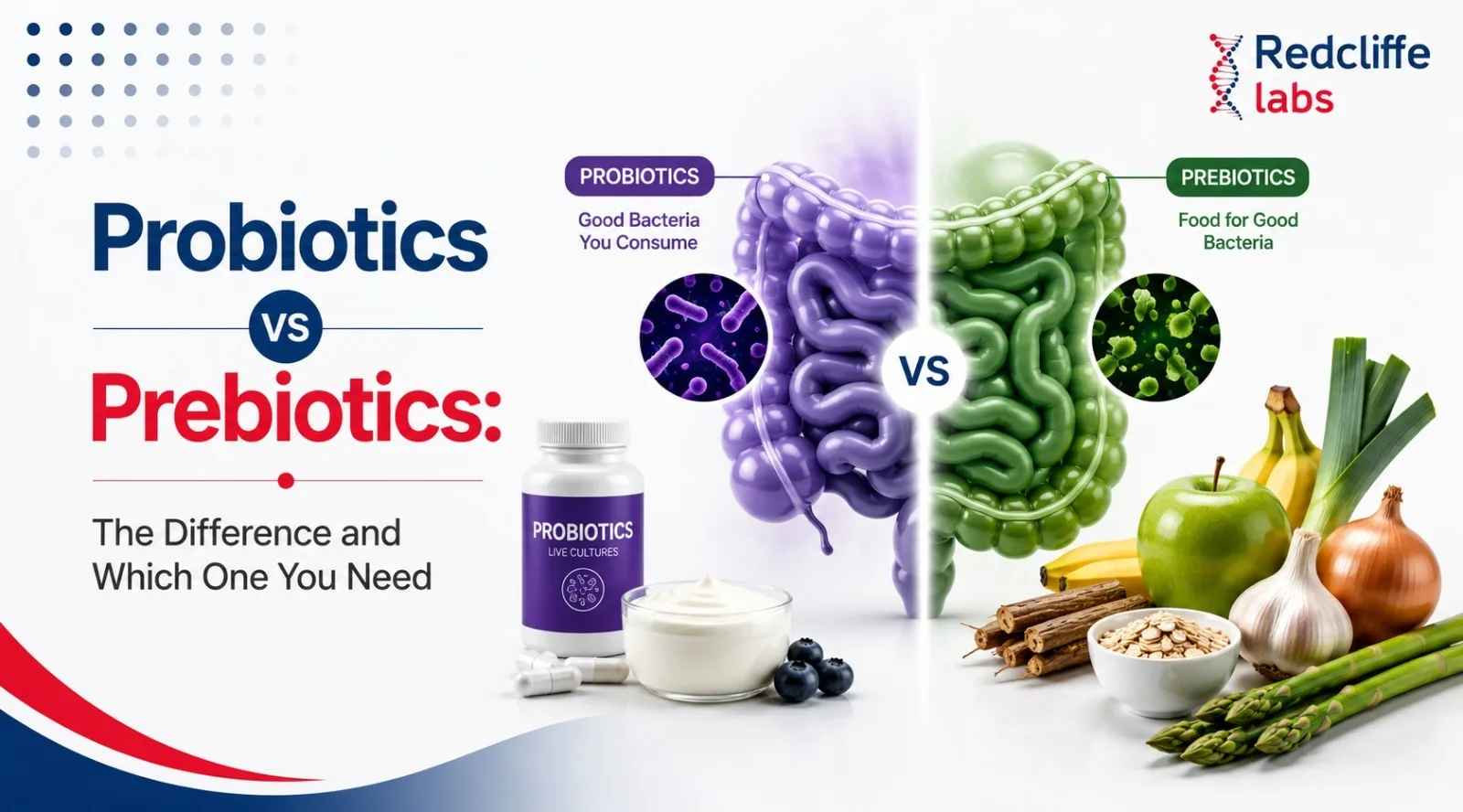
- Probiotics are live microorganisms that may help maintain gut health, and prebiotics are specific fibers that feed certain beneficial microorganisms already present in the gut.
- Yogurt, kefir, and fermented vegetables are examples of probiotic sources, whereas onions, garlic, bananas, asparagus, oats, legumes, and whole grains are prebiotic foods.
- Probiotics can help maintain digestive health and promote regular bowel movements, whereas prebiotics can feed helpful microbes and aid the production of short-chain fatty acids in the gut.
- Probiotics and prebiotics can be used together, but neither offers a quick solution. A varied, high-fiber diet, along with appropriate fermented foods, can provide a good foundation for gut health.
- There is no need for everyone to take supplements; if you have specific digestive problems, consult a healthcare professional to determine whether targeted probiotics, prebiotics, dietary changes, or further assessment would be appropriate.
Introduction
A whole micro-world exists within your digestive system and could have a greater effect on your health than you realize. It contains trillions of microorganisms, such as bacteria and other microbes. Together, these organisms make up a complex community, commonly known as the gut microbiome. Maintaining this community has become an important element in discussions about digestive and general health.
That is where probiotics and prebiotics fit in. Probiotics are live microorganisms that may provide health benefits when taken in the right amount. Prebiotics are substances, usually particular dietary Fibers, that beneficial microbes can use as a food source.
Although they may seem similar, the roles of these two substances are different, and understanding that difference can explain why having a diverse, Fiber-rich diet is generally more beneficial than just taking a fashionable supplement. Therefore, should your focus be on probiotics, prebiotics, or on both? Let's find out.
What Are Probiotics?
Probiotics are live microorganisms that, when consumed in adequate amounts, provide a health benefit. They are found in certain fermented foods and are also available as dietary supplements. Certain probiotic microorganisms are members of groups including Lactobacillus, Bifidobacterium, and some yeasts. The fact is, though, that the term 'probiotic' does not imply that every microorganism or fermented food offers a proven health benefit.
The effect of a probiotic will vary according to the particular strain, the dose, the quality of the product, and the health issue in question.
For instance, one specific probiotic strain might have evidence showing that it supports digestive health in a given situation, whereas another strain could have entirely different effects.
Common Probiotic Foods
Probiotic microorganisms occur naturally in several fermented foods.
- Yogurt, which contains live cultures, can supply helpful microorganisms and also serves as a convenient source of both protein and calcium.
- Kefir is a fermented milk beverage that includes a mix of microorganisms and is generally naturally rich in various kinds of live cultures.
- Foods like cabbage or other vegetables that have been traditionally fermented may contain live microorganisms, even though the precise amount of these microbes will differ.
- In some fermented foods, although certain traditional fermented foods contain live cultures, processing, pasteurization, and storage can influence whether or not these microorganisms remain alive.
The key thing to note is that just because something is fermented doesn't mean it is probiotic. To be considered a probiotic according to scientific standards, a food must contain suitable live microorganisms in adequate quantities, and there must be evidence that they provide a health benefit.
Also Read: Relationship Between Gut and Immunity

What Are Prebiotics?
Since probiotics are beneficial microorganisms, prebiotics are substances that can help to feed some of the microorganisms that are already in your gut. Prebiotics are usually certain kinds of dietary fiber and other related substances that are selectively utilized by beneficial microorganisms, resulting in health benefits.
Inulin, fructooligosaccharides (FOS), galactooligosaccharides (GOS), and resistant starch are all common examples, even though not all kinds of fiber are considered to be prebiotics. The difference is important since although "fiber" and "prebiotics" are connected, the two terms are not the same. Natural plant foods contain many prebiotic compounds.
Foods That Contain Prebiotic Fibers
- Onions and garlic have fructans, including compounds that certain gut microorganisms can use.
- Bananas contain more resistant starch when they are slightly green than when they are fully ripe, which makes them a noteworthy source of fermentable carbohydrate.
- Asparagus has inulin-type fructans, which certain gut microbes can use.
- Oats contain beta-glucan and other substances, which are beneficial for a diet high in Fiber, even though not all of the Fiber found in oats is technically considered a prebiotic.
- Beans, chickpeas, and lentils contain fiber and resistant starch, which gut microorganisms can ferment.
- Whole grains: Whole grains provide different types of dietary fiber, and it is generally more helpful to include a variety of plant foods in your diet than to look for a single 'superfood.'
What's the difference between probiotics and prebiotics?
|
Feature |
Probiotics |
Prebiotics |
|
What They Are |
Live microorganisms (beneficial bacteria and yeasts) |
Specific food components used by beneficial microbes |
|
Where to Find Them |
Found in some fermented foods and dietary supplements |
Mainly found in certain plant foods and natural fibers |
|
Primary Action |
Introduce or provide live microorganisms to your system. |
Support and nourish microorganisms already present in your gut. |
|
Key Variable |
Health effects depend heavily on the specific strain used. |
Health effects depend on the type and amount of prebiotic compound consumed. |
|
Important Nuance |
Not all probiotic products work in the same way. |
Not every fiber is technically classified as a prebiotic |
How Do Probiotics and Prebiotics Work Together?
Your gut microbiome is not a single group of bacteria. It is a complex ecosystem. By eating prebiotic fibers, certain microbes ferment them and produce short-chain fatty acids (SCFAs), such as acetate, propionate, and butyrate. These compounds are important because they act on the cells that line the intestine and have a role in the gut environment, metabolism, and immune function.
Meanwhile, different strains of probiotics may interact with the existing microorganisms and the intestinal environment in various ways.
That is one reason why the idea of just taking "good bacteria" is an oversimplification.
Your gut contains an ecosystem, and the things that you feed it are just as important as the things that you add to it.
Benefits of Probiotics
The benefits of probiotics will depend on the strain and the individual in question.
Some probiotics have been studied for digestive concerns, including certain types of diarrhea, such as antibiotic-associated diarrhea. Evidence is also available for some strains in conditions such as irritable bowel syndrome, although results are not uniform.

Potential Benefits Include
Supporting digestive health: Probiotic strains in certain cases may help maintain or restore certain aspects of the intestinal microbial environment.
Supporting recovery after antibiotics: In some cases, certain probiotic strains may help to reduce the risk of antibiotic-associated diarrhea; however, the effect varies according to the strain and the circumstances.
Supporting bowel regularity: Different people may experience changes in their bowel habits as a result of certain probiotic products.
Supporting the gut environment: Probiotics can interact with the microbiome and the intestinal environment, though their effects are generally only temporary and not permanent colonization.
The main point is simple enough: probiotics don't work for everyone.
Also Read: The Best Supplements For Gut Health
Benefits of Prebiotics
A significant benefit of prebiotics is that they act upon the microorganisms that are already present in your gut ecosystem.
Potential Benefits Include
Supporting beneficial gut microbes: Prebiotics can serve as a source of nutrition for certain microorganisms, which use them in the process of fermentation.
Supporting short-chain fatty acid production: Short-chain fatty acids such as butyrate can be produced when certain prebiotic fibers are fermented.
Supporting digestive function: If you gradually increase the amount of Fiber that you eat, this will help to maintain regular bowel movements and promote good digestive health.
Supporting dietary diversity: Many foods that are rich in prebiotics are also naturally nutritious and contain vitamins, minerals, antioxidants, and other beneficial plant compounds.
Yet having more is not necessarily a good thing since a sharp rise in fiber can lead to gas and bloating, particularly in those who do not usually eat a high-fiber diet.
Which One Do You Need: Probiotics or Prebiotics?
It's here that the answer takes on a more personal touch.
For most healthy individuals, the focus should not be deciding whether to take a probiotic capsule or a prebiotic supplement; rather, it should be adopting a well-balanced, high-fiber, varied diet. When the foods you eat on a day-to-day basis already include vegetables, fruits, legumes, whole grains, nuts, seeds, and other plant-based foods, you are automatically giving a variety of different fibers to your gut microbiome. You can also add some fermented foods provided that you like them and can tolerate them.
It might be a good idea to talk to a healthcare professional about taking a probiotic supplement in cases where there is a specific digestive problem or in situations for which a particular strain has evidence to support it.
In other words:
Start with a healthy diet and then consider supplementation only if there is a clear reason to do so.
Bottom line
Although probiotics and prebiotics may seem similar, they have different functions when it comes to promoting gut health. Probiotics introduce helpful live micro-organisms, and prebiotics supply food for some of the microbes that are already in your gut. Both can be included in a well-balanced way of life, but neither offers a quick solution. Supporting a healthy gut environment can be achieved by having a diverse diet that includes fruits, vegetables, whole grains, legumes, and appropriate fermented foods.
If you have persistent digestive problems or are concerned about your health, it is advisable to consult a healthcare professional before starting any supplements. Redcliffe Labs provides home sample collection together with smart digital reports so that you can more easily access and understand your diagnostic results. Ultimately, looking after your health begins with paying attention to your body and making well-informed decisions.
FAQs
What is the difference between prebiotics and probiotics?
Probiotics are live microbes that, when taken in sufficient quantities, may have health benefits. Prebiotics are particular kinds of dietary fiber and other substances that the beneficial microorganisms in the gut can use as a source of nutrition. To put it simply, probiotics supply helpful microbes, whereas prebiotics help to support certain microbes that are already in your gut. Although they function in different ways, they can work together to enhance each other's effects. Probiotics are usually available in some fermented foods and in supplements, and prebiotics occur naturally in foods such as onions, garlic, bananas, legumes, oats, and some vegetables.
Is it the case that probiotics and prebiotics are the same thing?
No, probiotics and prebiotics are different even though they are closely related. Probiotics are live microorganisms that may offer health benefits when eaten in sufficient quantities. Prebiotics are specific food components, usually certain fibers, that are used by beneficial microorganisms in the gut. You can think of probiotics as helpful microbes and prebiotics as nourishment for some of those microbes. While both can help maintain a healthy gut environment, they function in different ways. A well-balanced diet can supply many of the nutrients and fibers needed to support gut health naturally.
What is better for gut health, probiotics or prebiotics?
It is not the case that one is generally better since probiotics and prebiotics have different functions; probiotics introduce specific live microorganisms, whereas prebiotics supply nourishment for some of the beneficial microbes that are already in the gut. A diverse diet rich in fiber, including vegetables, fruits, legumes, whole grains, nuts, seeds, and appropriate fermented foods, can form a good basis for ordinary gut health. Probiotic supplements might be of use in certain circumstances, depending on the strain and the particular health issue. However, if you are experiencing persistent digestive symptoms, it is advisable to seek advice from a healthcare professional before deciding to take supplements.
Do I need probiotics or prebiotics?
Most healthy people do not automatically need probiotic or prebiotic supplements. A balanced diet rich in plant foods can provide various types of fiber that support a healthy gut environment. Fermented foods containing live cultures may also be included if you tolerate them well. However, certain health conditions or specific digestive concerns may make targeted probiotic use appropriate. The right choice depends on your diet, symptoms, health history, and the specific product. If you are considering supplements, speak with a healthcare professional for personalized guidance rather than choosing one based only on general health claims.
What are probiotics, and how do they work?
Probiotics are live microorganisms that may provide health benefits when consumed in adequate amounts. They are found in certain fermented foods and dietary supplements. Different probiotic strains can have different effects, so not every probiotic product works in the same way. Depending on the strain, probiotics may interact with existing microorganisms and the intestinal environment. Some have been studied for specific digestive concerns, including certain types of diarrhea. However, probiotics are not a universal solution for every gut problem, and their benefits depend on the strain, dose, individual, and reason for use.
What are prebiotics, and how do they benefit the body?
Prebiotics are specific substances, often certain types of dietary fiber, that beneficial microorganisms in the gut can use as nourishment. When gut microbes ferment these fibers, they can contribute to the production of short-chain fatty acids such as acetate, propionate, and butyrate. Prebiotic-rich foods include onions, garlic, asparagus, bananas, oats, legumes, and some whole grains. Including a variety of these foods can support a diverse diet and a healthy gut environment. However, increasing fiber suddenly may cause gas or bloating, so it is better to increase fiber gradually and maintain adequate fluid intake.
Can probiotics and prebiotics be taken together?
Yes, probiotics and prebiotics can be used together. Products that combine both are sometimes called synbiotics. The basic idea is to provide beneficial microorganisms along with a substrate that supports them. However, simply combining the two does not automatically make a product better. The specific probiotic strains, prebiotic ingredients, dose, product quality, and scientific evidence all matter. For everyday health, you can also obtain these components through food by including suitable fermented foods alongside a varied, fiber-rich diet. If you are considering supplements, professional guidance can help you choose appropriately.
What foods contain probiotics naturally?
Probiotic microorganisms can occur naturally in certain fermented foods. Yogurt containing live cultures is one of the most familiar options. Kefir, traditionally fermented vegetables, and some other fermented foods may also contain live microorganisms. However, not every fermented food is technically a probiotic because processing, heating, storage, and the specific microorganisms present can affect whether it meets the scientific definition of a probiotic. When choosing yogurt or other products, check the label for live-culture information. Including fermented foods as part of a balanced diet can be one simple way to add variety to your meals.