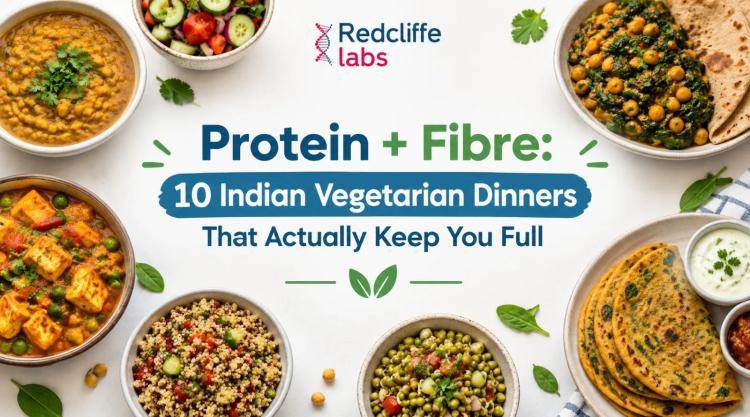
Beyond Dal and Paneer: Top High-Protein Vegetarian Foods You're Missing Out On


Overview:
- Dal and paneer aren't your only protein options. Soya, tofu, beans, sattu, nuts, and seeds can also boost your protein intake.
- Your protein needs depend on age, weight, and life stage. For healthy adults, ICMR-NIN 2024 recommends 0.83 g/kg/day.
- Vegetarians can get enough protein without meat by eating a variety of pulses, soy foods, dairy, nuts, and seeds.
- Protein content varies by food and preparation. Raw, dry, and cooked foods can show very different values per 100 g.
- Simple Indian meals can help you meet your needs, from dal with rice or roti to moong chilla, sattu, and tofu or paneer dishes.
"Eat your dal, it's full of protein!" If you grew up in an Indian household, you've heard this a thousand times. Hit the gym, and the advice flips to: "Just eat 200 grams of paneer daily."
Here's the catch: a bowl of watery dal gives you far more carbs than protein per calorie, while heavy paneer intake comes loaded with saturated fat. It's the ultimate Indian diet paradox: feeling full, yet staying subtly undernourished.
According to the ICMR-NIN Dietary Guidelines for Indians (2024), getting enough protein isn't just about total calories; it's about amino acid quality and bioavailability.
Whether you want to lose weight, build lean muscle, or boost daily energy without touching meat, it's time to look beyond the usual staples. Let's break down the highest-yielding plant proteins, true daily RDA needs, and easy meal strategies to hit your goals effortlessly.
Which Vegetarian Foods Have the Most Protein?
Not all plant foods are the same. If you want enough protein without extra calories, you need to know which foods deliver the best results.
When we measure these foods raw and dry (before cooking), here is how they compare per 100 grams:
High-Protein Foods at a Glance (per 100g raw):
| Food | Protein Content | Calorie Level | What You Need to Know |
| Soya Chunks | ~52g | Medium | Top choice. Pure protein with almost no fat. |
| Hemp Seeds | ~31g | High | Has all essential proteins + healthy fats. |
| Peanuts | ~26g | High | Good protein, but high in fats and calories. |
| Moong Dal | ~24g | Medium | Super easy to digest with no heavy stomach feeling. |
| Rajma / Chana | ~19g – 24g | Medium | Packed with fiber; soak overnight before cooking. |
| Paneer | ~18g – 20g | High | High in calcium, but also high in fat. |
| Hung Curd / Greek Yogurt | ~8g – 10g | Low to Medium | High-protein dairy option. Rich in gut-friendly probiotics and much lighter than paneer. |
| Pumpkin Seeds | ~19g | High | Great source of healthy minerals like zinc. |
| Tofu (Firm) | ~14g – 17g | Low | Best for weight loss. Good protein with very little fat. |
The Top Foods Explained Simply:
- Soya Chunks (~52g Protein): This is the undisputed protein champion. Made from soybeans with the oil removed, soya chunks give you more than double the protein of chicken breast gram for gram, without adding unwanted fat.
- Seeds & Nuts (~19g–31g Protein): Hemp and pumpkin seeds are super easy to add to meals. Sprinkling just two spoonfuls over your breakfast or salad easily adds 8g to 10g of clean protein.
- Dals and Pulses (~19g–24g Protein): Uncooked lentils look great on paper, but remember one thing: when you boil 100g of dry dal in water, it swells into a large bowl of soup. This means one cooked bowl gives you around 4g to 6g of actual protein.
- Hung Curd (~8g–10g Protein): Regular dahi is mostly water, but straining it into hung curd eliminates the liquid whey and concentrates the protein. It delivers double the protein of standard curd, makes a great creamy base for dips or bowls, and provides gut-friendly probiotics with far less fat than paneer.
- Paneer vs. Tofu: Paneer has slightly more protein, but it brings 3 times the calories and a lot of saturated fat. If your goal is to lose weight or stay lean, tofu gives you high protein with far fewer calories.
What Are the Best Vegan Protein Sources?
Going completely plant-based without milk, curd, or paneer is much easier than most people think. You don't need dairy to hit your daily targets; you just need the right vegan protein staples.
Here are the best, most effective vegan protein sources explained in simple terms:
Top Vegan Protein Staples:
1.) Soy Powerhouses (Tofu, Tempeh, Soya Chunks): Soy is special because it is a complete protein, meaning it contains all 9 essential amino acids your body cannot make on its own.
- Firm Tofu (~14g–17g protein per 100g): Low in calories and completely free of dairy fat.
- Tempeh (~19g protein per 100g): Made from fermented soybeans, making it super easy on the stomach while supporting gut health.
- Soya Chunks (~52g dry protein per 100g): The budget-friendly heavyweight champ for maximum protein per rupee.
2.) Seitan / Vital Wheat Gluten (~25g protein per 100g cooked): Made by washing the starch away from wheat dough, seitan has a chewy, meat-like texture and packs a massive amount of protein. (Note: Skip this if you have gluten sensitivity or celiac disease).
3.) Nutritional Yeast (~8g protein per 2 tablespoons): A cheesy-tasting powder loved by vegans. Sprinkle it over pasta, popcorn, or soups for extra protein and fortified Vitamin B12.
4.) Pseudo-Grains (Quinoa & Amaranth / Rajgira): Unlike regular rice or wheat, Quinoa and Amaranth are seeds that act like grains. They offer ~14 g of complete protein per 100g raw, along with rich amounts of iron and fiber.
5.) Nuts, Seeds & Seed Butters: Hemp seeds, pumpkin seeds, and peanut butter are easy protein add-ons. Adding 2 tablespoons of hemp seeds to a smoothie adds 6g–10g of clean protein instantly.
Which Indian Foods Are Naturally High in Protein?
You don't need expensive imported superfoods to hit your protein targets. Traditional Indian kitchens are already packed with simple, accessible, and naturally high-protein staples.
Here are the best high-protein Indian foods explained simply:
Everyday High-Protein Indian Staples:
1. Sattu (~20g protein/100g)
Made from roasted chana, this is India's original protein drink. Stir 30g into water with cumin and lemon for a quick 6g–8g protein boost.
2. Kala & Kabuli Chana (~19g protein/100g dry)
Loaded with slow-digesting carbs and fiber, a cooked bowl (150g) yields ~10g–12g protein.
3. Sprouted Moong (~24g protein/100g dry)
Sprouting removes antinutrients, eases digestion, and gives you ~7g–9g protein per salad bowl.
4. Besan (~22g protein/100g)
Swap plain wheat rotis for 2 Besan Chilas to easily pack in ~10g–12g protein at breakfast.
5. Hung Curd (~8g–10g protein/100g)
Straining whey out of regular dahi doubles its protein content while keeping probiotics intact.
6. Green Peas (~5g protein/100g cooked)
A simple add-in for poha or sabzi that adds extra protein with minimal calories.
Can You Get Enough Protein from Dal?
While dal is the backbone of Indian homes, relying on it as your primary protein source comes with an unexpected nutritional trade-off.
Raw lentils are undeniably packed with protein, but cooking changes the equation entirely. When you boil a cup of dry dal, it absorbs water and expands into a large bowl of liquid stew. As a result, a single standard bowl (katori) of cooked dal yields only about 4g to 6g of protein, along with 15g to 20g of carbohydrates.
To hit a target of 30 grams of protein from liquid dal alone, you would need to drink 5 to 6 large bowls in one sitting, which easily leads to calorie and carb overload.
The Power of Smart Pairing:
Does this mean dal is useless for protein? Not at all; it just needs a partner.
Most legumes are naturally low in the essential amino acid methionine but high in lysine. On the flip side, grains like rice and wheat are high in methionine but low in lysine.
When you combine them in a 2:1 or 3:1 cereal-to-pulse ratio (think classic Rajma-Chawal, Khichdi, or Idli/Dosa), their amino acid profiles balance each other out, creating a complete protein that your body can use just as efficiently as animal protein.
Which Dal Has the Most Protein?
If you lined up every dal in your pantry, you'd find that Moong Dal takes the crown, closely followed by Urad Dal.
However, protein numbers on paper are only half the story. The real secret lies in how easily your body can digest it without causing gut distress.
Here is how common Indian dals rank per 100g raw, dry weight:
1. Moong Dal (Yellow / Green Split): ~24.5g Protein
The Undisputed Winner. Moong packs the highest raw protein while being the gentlest on your stomach. Because it causes minimal gas and bloating, your body actually absorbs its nutrients efficiently.
2. Urad Dal (Black Gram): ~24.0g Protein
A close runner-up in raw numbers. It is extremely nutrient-dense, which is why it forms the backbone of heavy, energy-boosting batters like idli and dosa.
3. Chana Dal (Bengal Gram): ~22.5 g Protein
Rich in complex carbohydrates and slow-release fiber, making it great for keeping your blood sugar stable and keeping you full longer.
4. Toor / Arhar Dal (Pigeon Pea): ~22.0 g Protein
The ultimate daily staple across Indian households. While slightly lower in protein than moong, its mild profile makes it ideal for everyday pairing with rice or rotis.
5. Masoor Dal (Red Lentil): ~21.8 g Protein
Cooks fast, tastes rich, and gives you a solid dose of iron alongside its protein content.
The Takeaway: If your goal is maximum protein with zero digestive sluggishness, make Moong Dal your daily go-to.
How Much Protein Do You Need Every Day?
Your daily protein requirement is not a random guess; it depends on your ideal body weight, age, and activity level.
According to the ICMR-NIN Dietary Guidelines for Indians (2024), the recommended dietary allowance (RDA) for protein for healthy adults is 0.83 g per kg of body weight per day.
For example, if your healthy target weight is 60 kg, your baseline requirement is roughly 50- 60 g of protein daily.
Do Vegetarians Need More Protein?
Not necessarily. Vegetarians and vegans can meet their protein requirements through a varied diet containing pulses, legumes, soy foods, nuts, seeds and, for vegetarians, dairy products. Since different plant foods provide different amino-acid profiles, eating a variety of protein sources throughout the day is a practical way to improve overall protein quality.
How Much Protein Do Children, Adults and Older Adults Need?
Daily Protein Requirements by Age & Life Stage:
| Life Stage / Group | Daily Protein Target | Main Nutritional Goal |
| Children (1–3 Years) | ~12.5 g / day | Basic growth & tissue formation |
| Children (4–9 Years) | ~16 g – 23g / day | Supporting active play & bone growth |
| Adolescents (10–18 Years) | ~32 g – 55g / day | Pubertal growth spurts & muscle development |
| Adults (19–59 Years) | 0.83g – 1.0g per kg body weight | Daily muscle maintenance & metabolic health |
| Older Adults (60+ Years) | 1.0g – 1.2g per kg body weight | Preventing sarcopenia (age-related muscle loss) |
Key Takeaways:
- Growing Kids & Teens: Children need a high concentration of protein relative to their body size to fuel rapid bone and muscle growth.
- Older Adults Need More: As we age, our bodies become less efficient at processing protein (protein resistance). Bumping daily intake to 1.0g–1.2g per kg helps preserve strength, balance, and independence.
How Much Protein Do Women Need Per Day?
A woman's protein needs shift across her lifespan due to changing hormone levels, natural muscle density loss, and life milestones like pregnancy and menopause.
According to the ICMR-NIN Dietary Guidelines for Indians (2024), here is how daily requirements break down for women of all ages:
Daily Protein Requirements for Women Across All Ages:
|
Age Group / Life Stage |
Daily Target |
Primary Nutritional Focus |
|
Young Adult Women (19–29 Years) |
~46g – 55g / day (0.83g–1.0g/kg) |
Maintaining lean tissue, energy levels, and hormonal health. |
|
Active Women in Their 30s & 40s |
~60g – 70g / day (1.1g–1.2g/kg) |
Countering early muscle density drop and managing metabolic rate. |
|
Pregnant Women (2nd & 3rd Trim.) |
Baseline + 8g to 18g / day |
Supporting baby growth and placenta expansion. |
|
Lactating Mothers (0–6 Months) |
Baseline + 17g to 20g / day |
Essential for quality milk production without depleting mom's reserves. |
|
Menopausal Women (Perimenopause / Post) |
~65g – 75g / day (1.1g–1.3g/kg) |
Offsetting estrogen decline, protecting bone density and heart health. |
|
Older Women (60+ Years) |
~65 g – 80g / day (1.2g–1.5g/kg) |
Preventing sarcopenia (muscle loss), maintaining joint and mobility strength. |
Why Do Needs Change Across Life Stages?
- Young Adults (19–29 Years): Daily protein repairs tissue, maintains steady energy, and keeps blood sugar balanced.
- Women in Their 30s & 40s: Natural muscle loss starts around age 30 (~3–8% per decade). Upping protein helps maintain your metabolism and prevents weight gain.
- Menopausal Women: Falling estrogen levels accelerate bone and muscle loss. Pairing protein with calcium protects bone density and reduces joint stiffness.
- Older Women (60+ Years): Aging bodies process protein less efficiently ("anabolic resistance"). Higher intake per meal (25g–30g) preserves muscle strength and mobility.
Easy High-Protein Vegetarian Breakfast, Lunch and Dinner Ideas
1. High-Protein Breakfast Ideas:
- Palak Moong Dal Chilla (~14g Protein)
Grind soaked yellow or green moong dal with spinach and spices, then cook it like a thin pancake.
Protein Boost: Eat with 2 spoonfuls of thick curd or top with fresh paneer.
- Sattu & Paneer Paratha (~16g Protein)
Stuff roasted chana flour (sattu) and grated paneer into whole-wheat dough and make a paratha.
Protein Boost: Enjoy it with a bowl of thick hung curd.
- Sprouts Upma / Poha (~13g Protein)
Add a full cup of boiled mixed sprouts or green moong and roasted peanuts into your regular poha or rava upma tempering.
Protein Boost: Serve with a bowl of curd or strained hung curd.
2. High-Protein Lunch Ideas:
- Chickpea & Quinoa Pulao (~18g Protein)
Cook boiled white chickpeas (chole) together with quinoa, vegetables, and basic spices in one pot.
Protein Boost: Combining grains and beans creates a complete, high-quality protein.
- Rajma / Chole with Brown Rice or Roti (~18g Protein)
A thick curry of kidney beans or chickpeas cooked with onions, tomatoes, and home spices, paired with a small portion of rice or whole-wheat rotis.
Protein Boost: Pairing legumes with grains creates a complete protein profile.
- Paneer Jowar Roll (~16g Protein)
Make a soft jowar roti and wrap it around sautéed paneer cubes, onions, and mint chutney.
Protein Boost: Use firm tofu instead of paneer for a lower-calorie option.
3. High-Protein Dinner Ideas:
- Paneer & Veggie Bowl (~22g Protein)
Pan-fry paneer cubes (or tofu) with green peas and your favorite veggies, then serve over a small portion of rice or millets.
Protein Boost: Sprinkle a spoonful of pumpkin or hemp seeds on top.
- Kala Chana Chaat Wrap (~15g Protein)
Mix boiled black chickpeas with chopped tomatoes, onions, lemon juice, and chaat masala, then roll it into a roti.
Protein Boost: Spread a layer of thick curd inside the wrap before rolling.
- Soy Chunk & Matar Curry (~20g Protein)
Boil soya nuggets and simmer them with green peas in a simple onion-tomato gravy, served with 2 phulkas.
Protein Boost: Soya nuggets pack over 50g of protein per 100g dry, making this an easy protein-heavy-hitter.
Can You Get Enough Protein Without Eating Meat?
A common myth claims that plant foods cannot meet your daily protein needs. While animal sources provide all essential amino acids in a single serving, plant proteins work a bit differently, yet they are just as effective.
- Smart Food Pairing: Combining pulses with grains (like dal with rice or chana with rotis) creates a complete protein that your body absorbs efficiently.
- High-Density Staples: Foods like soya chunks (~52g protein/100g), paneer, tofu, and sprouts deliver heavy doses of protein per serving.
- Added Health Perks: Plant proteins come naturally packed with dietary fiber, complex carbs, and antioxidants without the extra cholesterol or heavy saturated fats.
Who Should Be Careful About Certain High-Protein Foods?
- Kidney Disease (CKD): High-protein diets strain damaged kidneys. Dals, nuts, and seeds are also high in potassium and phosphorus, which kidneys struggle to filter.
- Gout & Uric Acid: Pulses, lentils, and soya are moderate in purines, which can spike uric acid levels and trigger severe joint pain.
- Thyroid Issues: Raw or excessive soya (chunks, tofu, soy milk) contains goitrogens that can interfere with thyroid hormone absorption.
- Sensitive Digestion / IBS: Heavy legumes (Rajma, Chana, Urad) cause gas and bloating. Soaking, sprouting, and cooking with hing or ajwain makes them easier to digest.
- Lactose Intolerance: Paneer can cause stomach distress. Tofu and lentils are great non-dairy alternatives.
How Much Protein Do You Need for Weight Loss or Muscle Gain?
Your baseline RDA covers basic survival and tissue maintenance, but active fitness goals require higher daily protein targets.
| Target Goal | Recommended Daily Intake | Primary Mechanism |
| Weight Loss & Fat Reduction | 1.2g – 1.6g per kg body weight | Increases satiety, boosts thermogenesis, and prevents muscle loss in a deficit. |
| Muscle Gain | 1.6g – 2.2g per kg body weight | Delivers essential amino acids to repair micro-tears and build muscle tissue. |
1.) Protein for Weight Loss
Eating enough protein protects you from two major traps during a calorie deficit: intense hunger and loss of lean muscle.
- Keeps You Full: Protein boosts satiety hormones (GLP-1, PYY) while lowering the hunger hormone ghrelin.
- Higher Calorie Burn: Your body uses 20% to 30% of protein calories just to digest it (compared to 5–10% for carbs and 0–3% for fats).
- Protects Muscle: It forces your body to burn stored body fat for energy while preserving metabolism-boosting lean muscle.
2.) Protein for Muscle Building
Building muscle requires progressive strength training paired with sufficient amino acid building blocks.
- Triggers Muscle Growth: Consuming 1.6g–2.2g per kg helps keep muscle protein synthesis higher than muscle breakdown.
- Speeds Up Recovery: Adequate post-workout protein accelerates tissue repair and reduces muscle soreness.
- Optimal Timing: Space your intake across 3 to 4 meals (25g–35g per sitting) to maximize muscle retention and growth.
Do Vegetarians Need Protein Supplements?
Whether protein powders are necessary depends heavily on your specific health goals, daily routine, and diet structure. While whole foods can meet basic requirements, supplements can be a convenient tool under certain conditions.
For most moderately active individuals aiming for baseline maintenance (~0.83 g–1.0g per kg), traditional Indian meals rich in paneer, tofu, soya, dals, sprouts, and seeds comfortably cover daily targets without any powder intervention.
However, supplements become particularly useful when active fitness goals (like building muscle at 1.6g–2.2g per kg) or strict calorie deficits make consuming large food volumes impractical. In these cases, dairy-based whey protein or multi-source plant blends (such as pea and rice protein) offer a convenient, low-calorie way to hit your daily target efficiently.
What Happens If You Don't Get Enough Protein?
Protein is essential for continuous tissue repair, hormone synthesis, and structural support. When daily intake falls below your body's functional requirements over time, several physiological signs begin to appear:
- Muscle Loss and Weakness: Your body breaks down skeletal muscle tissue to supply essential amino acids to critical organs, leading to loss of strength and reduced metabolism.
- Increased Cravings and Hunger: Low protein intake delays satiety signals, triggering frequent energy dips and strong cravings for high-carb, sugary snacks.
- Hair, Nail, and Skin Breakdown: Hair and nails are made of structural proteins like keratin. Deficiency leads to thinning hair, brittle nails, and dry or sagging skin.
- Slower Injury Recovery: Minor cuts, workout-induced muscle soreness, and tissue injuries take significantly longer to heal due to a lack of cell-rebuilding blocks.
- Weakened Immune Response: Antibodies and immune cells depend heavily on amino acids. Inadequate protein lowers your resistance to common infections and illness.
- Bone Fragility: Protein makes up nearly half of your bone volume. Long-term deficiency reduces bone mineral density, increasing fracture risk.
Frequently Asked Questions
1. What is the highest protein vegetarian food in India?
Soya chunks rank at the top, packing roughly 52g of protein per 100g (raw). Other high-density sources include hemp seeds, paneer, firm tofu, roasted chana, and yellow moong dal.
2. Can I build muscle on a 100% vegetarian diet?
Yes, you can gain muscle on a 100% vegetarian diet. We don't need animal protein to gain muscle. We need total protein in the diet to gain muscle, and we can get it by combining different vegetarian items like legumes with cereals, or by eating soy products, paneer, tofu, etc., which are good protein sources.
3. Is paneer or soya chunks better for protein?
Soya chunks provide a considerably higher protein-per-calorie ratio (~52 grams/100 grams in a raw state) while containing negligible fat. Paneer has only ~18 grams of protein per 100 grams but may increase saturated fat and calorie intake; hence, soya is a better choice for weight management.
4. Does dal have enough protein to meet daily needs?
The protein in a bowl of cooked dal depends on the type of dal, the amount used, and how much water is added during cooking. To complete the protein content in dal, it is advisable to eat it with cereals (like rice or roti) and add ingredients like paneer, sprouts, or curd to the meal for better absorption.
5. How much protein should I eat per day?
For healthy adults, the ICMR-NIN 2024 RDA is 0.83 g/kg body weight/day. Individual needs can vary with age, pregnancy, activity, health, and other factors.
6. Do women and men need different amounts of protein?
The 2024 ICMR-NIN RDA for healthy adult men and women is 0.83 g/kg/day. The actual daily amount therefore depends partly on body weight and life stage.
7. What is the best vegan substitute for paneer that holds its texture in curries?
The best option is to use extra-firm tofu, as it contains similar amounts of protein and less fat and calories. Other good substitutes include tempeh, made from fermented soybeans, and seitan, made from vital wheat gluten.