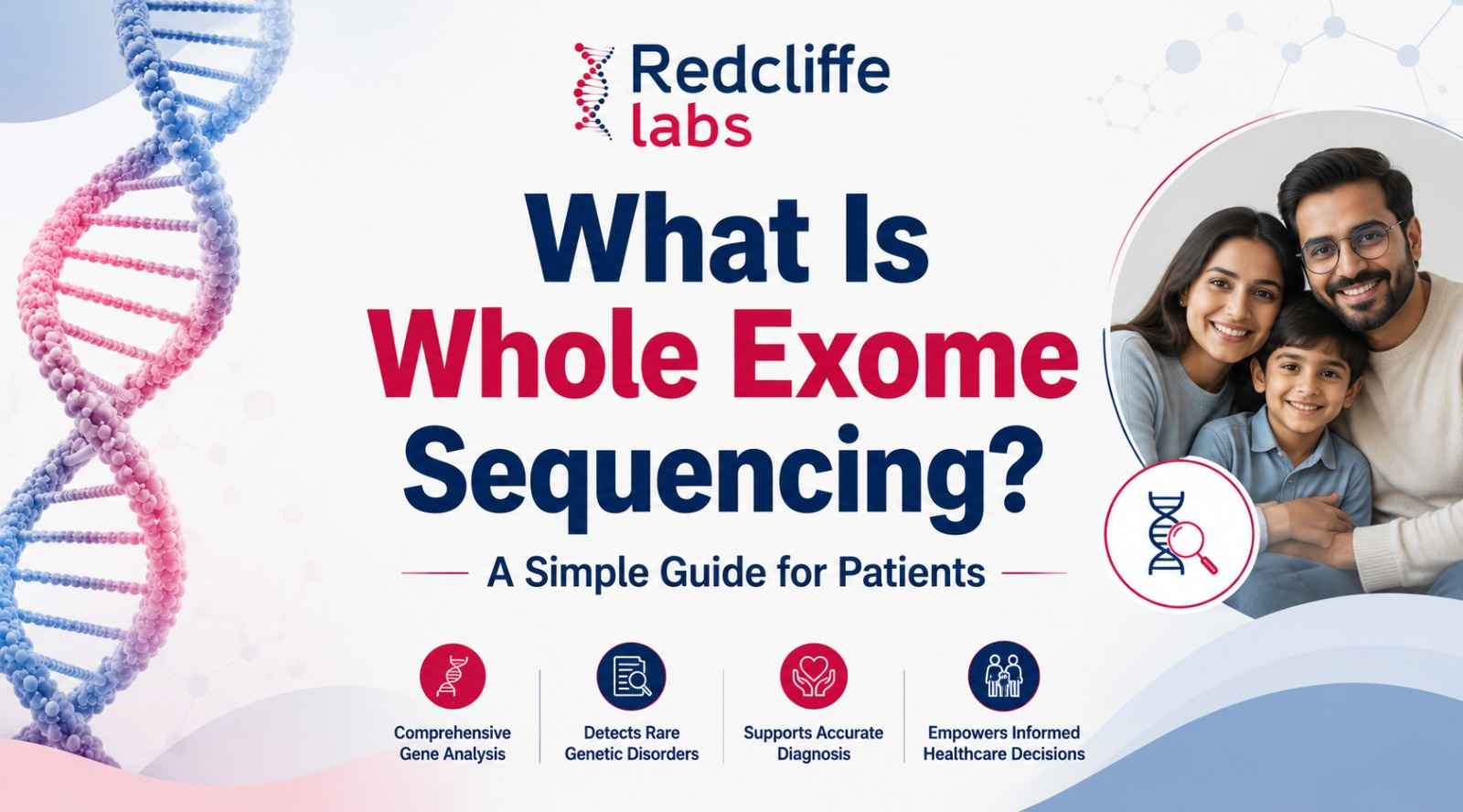
What Is Whole Exome Sequencing? A Simple Guide for Patients
Whole Exome Sequencing At a Glance
- Whole Exome Sequencing (WES) can help identify the genetic cause of many rare and inherited disorders.
- By analyzing over 20,000 genes at once, WES can provide answers faster than testing one gene at a time.
- Understanding your results, including positive, negative, and uncertain findings, is essential for making informed healthcare decisions.
- While WES is a powerful diagnostic toolDiagnostic odysseys: cases where a patient has seen many specialists over months or years without a clear answer.
Testing many genes at once can reduce the need for multiple individual genetic tests.
How Long Does a Whole Exome Sequencing Test Take?
The time it takes to deliver your results depends on the urgency of the case.
- Standard exome sequencing: Standard Whole Exome S, it has limitations and may not detect all types of genetic changes.
- Choosing a trusted diagnostic laboratory and expert genetic counseling can help you get the most value from your test.
What Is Whole Exome Sequencing? A Simple Guide for Patients
If your doctor has just mentioned "whole exome sequencing," maybe after months of unexplained symptoms, or as part of your child's diagnostic workup, it's normal to feel a little lost. The term sounds overwhelming, but the idea behind it is actually pretty simple once you break it down.
Unlike traditional tests that examine one or a few genes at a time, this advanced genetic test analyzes thousands of genes simultaneously. It can help doctors identify the underlying cause of rare genetic disorders, guide treatment decisions, and provide valuable information for families planning future pregnancies.
In this guide, you'll learn what Whole Exome Sequencing (WES) is, how the test works, who may benefit from it, and what to expect from the results.
What Is Whole Exome Sequencing?
Whole exome sequencing (WES) is a genetic test that reads the parts of your DNA that contain instructions for making proteins. These protein-coding regions are called exons, and together they make up the exome, about 1-2% of your entire genetic code, but the part responsible for the vast majority of known disease-causing genetic changes.
Instead of testing one gene at a time, WES scans roughly 20,000 genes at once, looking for spelling changes (variants) that might explain a medical condition.
Why "Exome" and Not "Genome"?
You have 3 billion genetic letters in your DNA, out of which just 1–2% constitute the exome, the coding regions of genes containing instructions for producing proteins. Even though the exome makes up such a tiny part of your genome, about 85% of known disease-causing variants are found in the exome.
Because most disease-causing mutations occur in these protein-coding regions, doctors often recommend Whole Exome Sequencing as the first step in investigating suspected genetic disorders. This technique gives useful diagnostic information without taking much time and is more cost-effective than analyzing the entire genome.
In contrast, Whole Genome Sequencing (WGS) covers almost all your DNA, including both coding and non-coding regions. Although this method helps identify some genetic abnormalities not detected by WES, it yields significantly more information for analysis and requires more time and money.

Why Would a Doctor Order This Test?
Doctors may suggest genetic testing when routine investigations fail to explain a patient's symptoms or when an inherited disorder is suspected.
Common reasons include:
- Unexplained developmental delay or intellectual disability in children
- Multiple congenital anomalies (birth differences affecting more than one body system)
- Unexplained seizures or epilepsy
- Suspected rare or inherited disorders after other tests came back negative.
- Critically ill newborns or infants in the ICU, where a rapid diagnosis can change treatment decisions
- Sequencing results are typically available within 3-6 weeks
- Rapid exome sequencing is for critically ill patients and can provide provisional results in about a week, with the complete report following shortly.
- Ultra-rapid testing, which is more commonly used in ICU settings alongside whole-genome sequencing, can provide results within a few days, especially when speed is critical.
How Does the Test Work?
The Whole Exome Sequencing test involves several steps:
- Sample Collection
Usually a blood draw or a saliva/cheek swab. It's quick and doesn't require any special preparation.
- DNA Extraction
Laboratory specialists isolate DNA from the collected sample.
- Sequencing
Advanced DNA sequencing technology reads out the DNA letters (A, T, C, G) across all captured exons, generating millions of short reads.
- Data Analysis
Bioinformatics tools compare the DNA sequence with the reference human genome to identify genetic variants that may explain the patient's symptoms.
5. Report Interpretation
Clinical geneticists classify the identified variants as pathogenic, likely pathogenic, benign, or variants of uncertain significance (VUS). The results are then reviewed with the treating physician and, when appropriate, a genetic counselor.
Trio Testing

Labs usually advise performing trio testing, i.e., the patient plus both biological parents, because it helps improve variant interpretation. Analyzing the three DNA samples side by side makes it easier to determine whether a variant is new, inherited from one of the parents, or a common variation within the family, thereby improving test accuracy and often shortening the time to a diagnosis.
Are There Any Risks?
Physical risks are minimal; the test typically requires only a blood or saliva sample.
However, learning about inherited conditions can carry emotional, psychological, or family implications. Pre-test and post-test counseling is often recommended for this reason.
Understanding Your Results
Genetic results generally fall into a few categories:
- Positive/diagnostic: a variant is found that strongly explains your symptoms.
- Negative: no explanatory variant was found. This doesn't rule out a genetic cause; it may mean the answer lies outside the exome, or in a gene we don't yet understand well.
- Variant of uncertain significance (VUS): a genetic difference has been found, but scientists don't yet know whether it's harmless or disease-causing. These are common and don't usually change medical management right away.
- Incidental/secondary findings: sometimes the test reveals unrelated but medically important findings (for example, a cancer risk gene). Patients are usually asked in advance whether they want to know about these.
A genetic counselor is typically the best person to explain the findings and discuss what they mean for you and your family.
Limitations of Whole Exome Sequencing
While whole exome sequencing is a powerful genetic test, there are certain drawbacks patients should know about.
- It does not analyze the whole genome; whole exome sequencing examines the protein-coding parts of the genome (the exome), which make up only 1-2% of the total genome. This test may not detect any genetic mutation in non-coding regions that affects gene function.
- Some genetic changes may be missed: certain types of mutations, such as large deletions, duplications, chromosomal rearrangements, and repeat expansion disorders, may require additional specialized tests.
- Certain parts of the genome cannot be analyzed: some complex regions cannot be sequenced, which can lead to missing information in the results.
- The meaning of some results may be uncertain: whole-exome sequencing results may show variants of uncertain significance (VUS), for which current scientific knowledge cannot determine whether the change causes disease.
- A negative result does not always rule out a genetic condition: a negative test is not conclusive evidence of no genetic disorder, since the cause of the disorder may lie beyond the exome or arise from genes whose functions are not yet understood.
- Unexpected findings may occur: At times, the testing process may reveal information about other health risks that are not related to the reasons the patient is undergoing testing.
- Results may change over time: As genetic research advances, the interpretation of certain variants may be updated.
Is Whole Exome Sequencing Accurate?
Whole Exome Sequencing (WES) is a highly accurate genetic test, especially when performed in a reliable diagnostic laboratory. It will identify many genetic variants in the exons, the protein-coding regions of genes.
However, accurate does not mean complete. WES covers only roughly 1-2% of the genome, and some genetic changes that lie outside these regions may go unnoticed, such as specific non-coding variants, major structural changes in DNA, or repeat expansion disorders.
Having a negative WES result does not guarantee one is free from a genetic disorder. It simply means that no disease-causing variant was identified in the exome analyzed by the test. The accuracy and usefulness of results also depend on factors such as exome coverage, laboratory quality, and expert interpretation of the findings.
Is It the Same as a "DNA Test" or Ancestry Test?
No, Whole Exome Sequencing (WES) is different from a general DNA or ancestry test.
A DNA test is a broad term for any test that analyzes genetic material. WES is a medical genetic test that specifically examines the exons, the protein-coding regions of genes, to identify genetic variants associated with health conditions.
An ancestry test focuses on genetic markers that help estimate family origins, ethnicity, and ancestry patterns. It is not designed to diagnose genetic disorders.
In simple terms, ancestry tests tell you where your DNA may come from, while WES helps understand whether genetic changes may be linked to a medical condition.
Conclusion
Whole Exome Sequencing (WES) has changed how genetic conditions are diagnosed, offering answers that were once out of reach for many patients and families. While it isn't a perfect or complete test, it remains one of the most powerful tools available today for identifying the root cause of unexplained symptoms, especially when paired with expert interpretation and counseling. If you're considering this test, working with a trusted lab and genetics team can make all the difference in turning results into a clear, actionable path forward.
Why Choose Redcliffe Labs for Reliable Whole Exome Sequencing?
Whole Exome Sequencing can offer the clarity you've been searching for, and with Redcliffe Labs, you get more than results; you get a partner in understanding them.
With every test, unlock 4X Value Benefits designed to help you understand your health better and take informed steps forward:
- Digital Reports with Consultation: Whole Exome Sequencing involves detailed genetic analysis, so results typically take 32 days (4 weeks and 4 days) to ensure accuracy. Once ready, an expert consultation helps you understand your results and their implications.
- AI Health Assistant: Get quick health guidance, answers to everyday health queries, and support whenever you need it.
- Personalized Health Improvement Plans: Receive lifestyle and wellness recommendations aligned with your health goals.
- Transparent Pricing: Know exactly what you'll pay with live pricing and offers available online.
What to expect:
- Advanced Genetic Testing: Whole Exome Sequencing analyzes protein-coding regions of genes to identify genetic variants that may provide insights into inherited health conditions.
- NABL-Accredited Testing: Samples are processed in NABL-accredited laboratories using standardized laboratory practices and quality checks to ensure reliable results.
- Convenient Sample Collection: Get safe, hassle-free sample collection at your preferred location, with trained professionals following hygiene protocols.
How to Schedule Your Whole Exome Sequencing Test with Redcliffe Labs?
Booking your Whole Exome Sequencing test is simple:
- Call 898 898 87 87, head to the website, or open the app.
- Select the Whole Exome Sequencing test and complete the booking process.
- Schedule sample collection at your preferred time and location.
- A trained professional collects the sample following appropriate safety and hygiene practices.
- The sample is analyzed in the laboratory using advanced genetic testing methods.
- Get your digital report within a stipulated time frame, ready to discuss with your doctor.
Choose Redcliffe Labs for Whole Exome Sequencing and take a step towards understanding your genetic health with reliable testing and expert guidance.
FAQs
-
Who should consider Whole Exome Sequencing?
This test is often recommended for children with developmental delay, intellectual disability, or congenital abnormalities. It may also be advised for individuals with unexplained seizures or suspected rare genetic disorders that remain undiagnosed despite extensive testing.
-
How is the sample collected?
The sample collection process is simple and minimally invasive. It usually requires a blood sample or, in some cases, a saliva or cheek swab. No special preparation, fasting, or recovery is required. Samples are collected in accordance with strict quality and safety protocols to help ensure reliable results.
-
What is trio testing, and is it necessary?
Trio testing includes sequencing of the patient and both biological parents. Although not mandatory, trio testing can improve diagnostic accuracy by helping distinguish disease-causing variants from inherited benign genetic variations. When available, trio testing is often recommended because it increases the likelihood of identifying the genetic cause of a condition.
-
How long does it take to get results?
Standard Whole Exome Sequencing results are typically available within several weeks, as the test involves detailed DNA sequencing and expert analysis. Rapid Whole Exome Sequencing may be available for critically ill patients and can provide results more quickly.
-
Does a negative result mean there's no genetic condition?
No. A negative Whole Exome Sequencing (WES) result does not necessarily rule out a genetic condition. It means that no disease-causing variant was identified in the exome analyzed by the test. However, some genetic changes may lie outside the exome or may not yet be detectable with current technology. Your doctor may recommend additional testing if needed.