NT-proBNP Test: What Your Heart May Be Telling You Before Symptoms Appear

Overview
- Learn what an NT-proBNP test measures and what it can tell you about cardiac stress.
- Understand why NT-proBNP may be elevated in heart failure as well as in other heart and non-heart-related conditions.
- Discover how NT-proBNP can help doctors evaluate symptoms such as breathlessness, fatigue, and swelling when heart failure is suspected.
- Understand why NT-proBNP can provide clues about subclinical cardiac stress in selected clinical settings but is not a routine screening test for everyone.
- Learn how NT-proBNP differs from BNP and why their results and clinical cutoffs should not be compared directly.
- Understand how NT-proBNP results are interpreted alongside symptoms, medical history, kidney function, and other tests such as ECG and echocardiography.
NT-proBNP Test: What Your Heart May Be Telling You Before Symptoms Appear
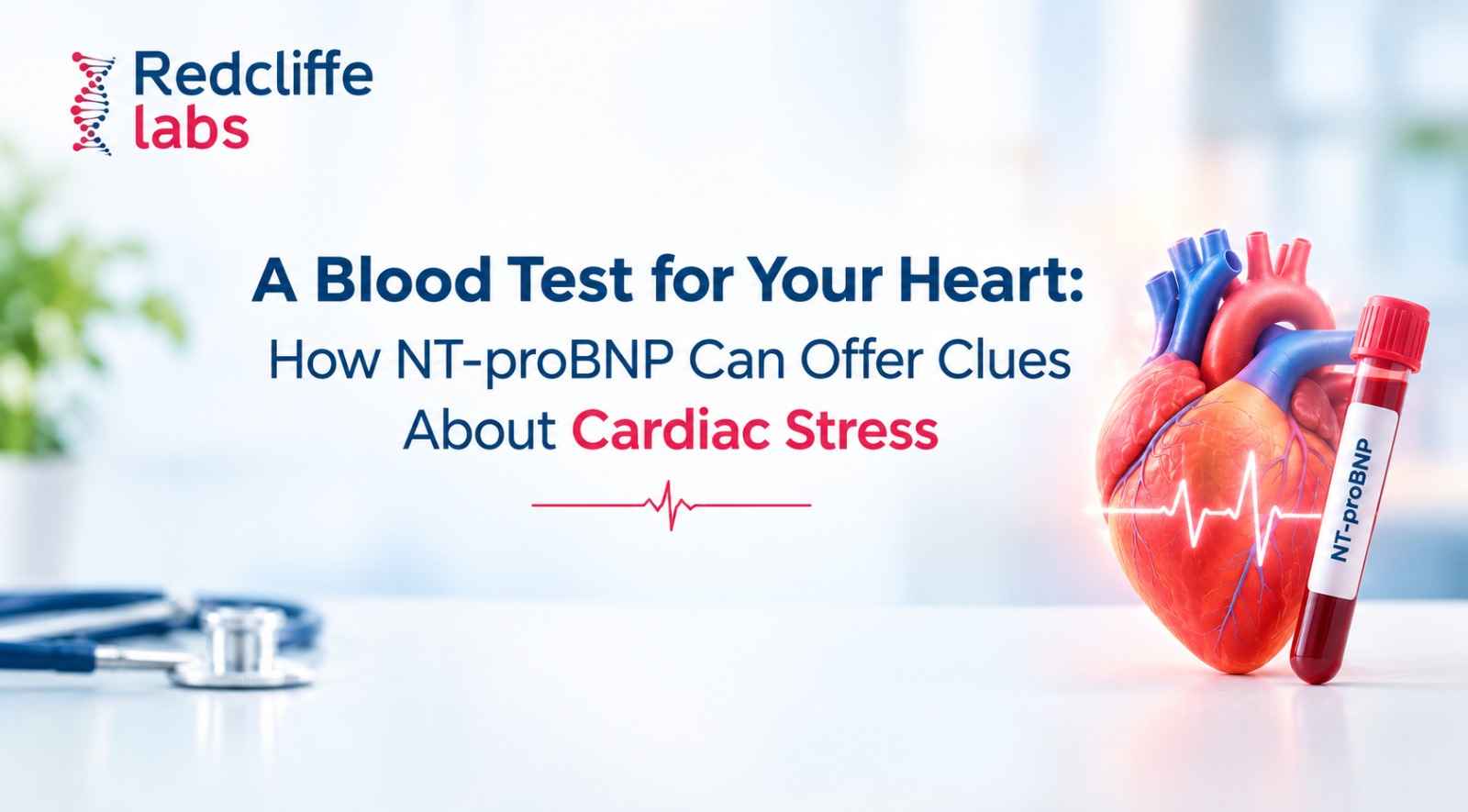
You may have heard of cholesterol, blood pressure and blood sugar as important markers of heart health. But doctors may also check another blood marker when they are trying to understand how the heart is functioning: NT-proBNP. It can become particularly relevant when someone develops unexplained breathlessness, tiredness, swelling in the legs, or other symptoms that could be linked to heart failure. Because NT-proBNP can rise when the heart is under increased pressure or stretch, it may provide clues about cardiac stress in some people, including those who may not yet have prominent symptoms.
Know the Test: NT-proBNP in Simple Words
What is it? A blood test that measures NT-proBNP, a biomarker associated with stress or pressure on the heart.
Why is it done? It can help doctors evaluate symptoms that may be related to heart failure and assess whether the heart may be under increased stress.
What sample is needed? A blood sample.
Does it confirm heart failure? No. The result needs to be interpreted with symptoms, clinical examination, and other investigations.
Who interprets it? A healthcare professional considers the result in the context of the individual's overall clinical picture.
What Is NT-proBNP and Why Does the Heart Release It?
NT-proBNP stands for N-terminal pro-B-type natriuretic peptide. The heart produces a precursor molecule called proBNP, which is then divided into two parts: biologically active BNP and NT-proBNP, an inactive fragment that can be measured in the blood.
When the heart chambers are exposed to increased pressure or stretching, levels of these natriuretic peptides can rise. This makes NT-proBNP a useful biomarker when doctors are assessing whether the heart may be experiencing increased wall stress or pressure.
Importantly, NT-proBNP is a biomarker, not a diagnosis. An elevated result does not automatically mean that a person has heart failure. Other heart and non-heart-related conditions can also influence NT-proBNP levels.
Can NT-proBNP Provide Clues Before Symptoms Become Obvious?
NT-proBNP may provide information about subclinical cardiac stress and cardiovascular risk in selected clinical settings. However, an elevated result does not by itself mean that a person has heart failure. Age, sex, and kidney function can influence NT-proBNP levels and need to be considered when interpreting the result.
NT-proBNP is not a routine screening test for every healthy person. However, in people with relevant risk factors, existing cardiovascular conditions, or clinical findings that raise suspicion, it may provide additional information to guide further assessment.
In other words, NT-proBNP can offer a clue about cardiac stress, but it should not be treated as a standalone test for detecting hidden heart disease before symptoms appear.
Why Do Doctors Order an NT-proBNP Test?
Doctors may order NT-proBNP when they suspect that symptoms could be related to heart failure. Heart failure can affect the heart's ability to fill with or pump blood effectively, and symptoms may develop gradually.
The test may be considered when a person has:
- Unexplained or persistent breathlessness
- Reduced ability to exercise or unusual fatigue
- Swelling in the feet, ankles or legs
- Symptoms suggesting fluid retention
- New or worsening symptoms in someone with an existing heart condition
- Symptoms where heart failure needs to be considered as one possible cause
Causes of Elevated NT-proBNP Levels
An elevated NT-proBNP level can indicate increased cardiac wall stress or pressure, but it does not identify the underlying cause on its own.
Cardiac Causes
- Heart Failure: Heart failure is an important cause of elevated NT-proBNP. When the heart is under increased pressure or volume stress, natriuretic peptide levels may increase.
- Heart Valve Disorders: Conditions such as aortic stenosis or mitral regurgitation can place additional pressure or volume load on the heart.
- Cardiomyopathy: Diseases of the heart muscle can affect the heart's structure and function and may be associated with increased NT-proBNP levels.
- Abnormal Heart Rhythms: Arrhythmias such as atrial fibrillation can affect the heart's function and are associated with changes in natriuretic peptide levels.
- Other Cardiovascular Conditions: Conditions involving increased pressure or strain on the heart can also influence NT-proBNP levels.
Other Factors and Conditions
- Reduced Kidney Function: Kidney function can influence NT-proBNP concentrations, so people with reduced kidney function may have higher levels. This is one reason kidney function needs to be considered when interpreting the result.
- Advanced Age: NT-proBNP levels tend to increase with age, meaning age is an important factor when interpreting the test.
- Pulmonary Embolism: A blood clot in the lungs can increase pressure on the right side of the heart and may raise natriuretic peptide levels.
- Severe Infections or Sepsis: Severe systemic illness can place additional stress on the cardiovascular system and may be associated with elevated NT-proBNP.
Also read:
Understanding NT-proBNP Levels and Clinical Cutoffs
NT-proBNP levels naturally vary with age, kidney function, and the clinical setting, so no single value applies to everyone. Common clinical decision thresholds vary depending on the clinical setting and guideline:
Common NT-proBNP Thresholds by Clinical Setting
| Clinical Setting / Age Group | NT-proBNP Threshold | How It Is Used |
| Non-acute / outpatient setting | < 125 pg/mL | A rule-out threshold in the appropriate clinical context, not a universal normal value. |
| Acute setting – all adult age groups | <300 pg/mL | Helps rule out acute heart failure |
| Acute setting – under 50 years | 450 pg/mL or higher | Age-specific threshold that may support the diagnosis of acute heart failure |
| Acute setting – 50 to 75 years | 900 pg/mL or higher | Age-specific threshold that may support the diagnosis of acute heart failure |
| Acute setting – over 75 years | 1,800 pg/mL or higher | Age-specific threshold that may support the diagnosis of acute heart failure |
These are clinical decision thresholds, not universal normal ranges. Interpret NT-proBNP results alongside symptoms, physical examination, medical history, and other investigations. Age and kidney function can also influence NT-proBNP levels.
What Other Tests May Be Done Along With NT-proBNP?
If NT-proBNP is elevated or symptoms suggest a possible heart problem, a doctor may recommend additional tests to understand the underlying cause.
These may include:
- Electrocardiogram (ECG): To assess the heart's electrical activity and identify abnormal heart rhythms or other cardiac abnormalities.
- Echocardiogram: To examine the heart's structure, pumping function, and valves.
- Chest imaging: May help identify other causes of breathlessness or signs of fluid accumulation.
- Kidney function tests: Kidney function can affect NT-proBNP levels and is therefore important when interpreting the result.
- Other blood tests: Depending on the symptoms and suspected condition.
An echocardiogram can provide important information about the heart's structure and function when heart failure or another structural heart condition is suspected.
Also read:
https://redcliffelabs.com/myhealth/lab-test/blood-tests-for-heart-diagnosing-heart-conditions/
NT-proBNP vs BNP: Are They the Same?
Similarities
- Both are related natriuretic peptide biomarkers associated with increased pressure or stretching of the heart chambers.
- Both can support the evaluation of suspected heart failure and provide prognostic information in appropriate clinical settings.
- Both can help evaluate shortness of breath when the cause is unclear.
- BNP or NT-proBNP may be measured again in selected clinical situations, depending on the patient, treatment, and clinician's assessment.
Differences
- Origin: ProBNP is cleaved into two fragments: biologically active BNP and inactive NT-proBNP.
- Biological activity: BNP has direct effects, including promoting sodium and water excretion and relaxing blood vessels. NT-proBNP does not have these direct effects.
- Half-life: BNP is cleared from the blood more quickly, while NT-proBNP remains in the bloodstream longer.
- Stability: NT-proBNP is generally more stable in blood samples than BNP.
- Kidney function: NT-proBNP levels can be significantly influenced by reduced kidney function, which is important when interpreting the result.
- Medications: Some medicines can affect BNP and NT-proBNP differently, so the type of test used is important when interpreting the result.
- Reference ranges: BNP and NT-proBNP use different laboratory cutoffs, so you should not compare their values directly.
- Clinical use: Both tests are useful, but the preferred test depends on local guidelines, laboratory availability, and the patient's clinical situation.
What to Do If Your NT-proBNP Level Is High
Learning your level is elevated can feel unsettling, but remember this is a starting point for further evaluation, not a final diagnosis. A sensible next-step approach usually includes:
- Discussing the result with your doctor in the context of your symptoms and history
- Getting an echocardiogram if recommended, to directly assess heart function
- Reviewing relevant cardiovascular risk factors, such as blood pressure, blood sugar and cholesterol, when appropriate.
- Checking kidney function, since reduced kidney function can influence NT-proBNP levels.
- Repeating the test if your doctor considers it clinically appropriate to monitor changes over time.
Can Heart Strain Be Prevented?
Many healthy lifestyle habits support overall cardiovascular health and may help reduce the risk of conditions that place long-term strain on the heart. Helpful, evidence-backed habits include:
- Keeping blood pressure and blood sugar within a healthy range
- Staying physically active with regular, moderate exercise
- Following your healthcare professional's advice about salt intake, particularly if you have heart failure or fluid retention.
- Maintaining a healthy body weight
- Avoiding smoking and limiting alcohol
- Getting regular check-ups if you have a family history of heart disease
Does the NT-proBNP Test Require Fasting?
No, fasting is generally not required for an NT-proBNP test. However, if it is prescribed with other blood tests, follow the preparation instructions provided by your doctor or diagnostic laboratory.
Why Choose Redcliffe Labs for an NT-proBNP Test?
Redcliffe Labs offers convenient home sample collection, subject to availability in your location, along with 4X Value Benefits to make testing more informative and convenient:
- Smart Reports
Get easy-to-understand health summaries, health scores, and trend tracking to help you follow changes over time.
- Expert-Led Report Consultation
Get expert guidance to help you understand your test results, discuss their possible significance, and identify appropriate next steps.
- AI Health Assistant
Access support for general health-related questions and receive help in understanding common health information simply and conveniently.
- Personalized Improvement Plans
Receive personalized diet and lifestyle guidance designed around your individual health goals and everyday wellness needs.
Conclusion
The NT-proBNP test can provide valuable information about cardiac stress and can help doctors evaluate whether heart failure may be contributing to symptoms such as breathlessness, fatigue or swelling. Research and clinical practice also show that NT-proBNP can provide information about subclinical cardiac stress and cardiovascular risk in selected situations.
At the same time, an elevated NT-proBNP level is not a diagnosis on its own. Age, kidney function, heart rhythm and other medical conditions can influence the result, which is why it needs to be interpreted alongside symptoms, examination findings and other investigations.
If your doctor recommends an NT-proBNP test, understanding the result is only the first step. The more important question is what that result means in the context of your overall health and whether further evaluation is needed.
FAQs
1. What is the NT-proBNP test used for?
The NT-proBNP test is a blood test used to help evaluate whether symptoms such as breathlessness, fatigue or swelling may be related to heart failure. It measures NT-proBNP, a biomarker that can rise when the heart is exposed to increased pressure or stretching. Doctors interpret the result alongside symptoms, medical history, examination findings and other tests.
2. Can NT-proBNP be high without heart failure?
Yes. A high NT-proBNP level does not always mean heart failure. Levels can also be influenced by factors such as older age, reduced kidney function, abnormal heart rhythms and certain heart or lung conditions. This is why an elevated result should not be interpreted on its own and needs to be assessed in the context of your overall health.
3. Can NT-proBNP detect heart problems before symptoms appear?
NT-proBNP may provide information about subclinical cardiac stress and cardiovascular risk in selected clinical settings. However, it is not a routine screening test for every healthy person and cannot independently detect all hidden heart problems. In people with relevant risk factors or clinical findings, doctors may use NT-proBNP as part of a broader cardiovascular assessment.
4. Is NT-proBNP the same as BNP?
No. BNP and NT-proBNP are related but different blood biomarkers. When the heart produces the precursor molecule proBNP, it is divided into biologically active BNP and inactive NT-proBNP. Both can support the evaluation of suspected heart failure, but they have different properties and clinical thresholds. Do not compare results directly without considering the test used.
5. Does the NT-proBNP test require fasting?
Fasting is generally not required for an NT-proBNP test. However, if your doctor orders NT-proBNP along with other blood tests, you may need to follow specific preparation instructions. Always check the requirements provided by your doctor or diagnostic laboratory before the test to ensure that any additional tests are performed under the appropriate conditions.