From Fasting to Fitness: Navratri Diet Plan for Weight Loss

Medically Reviewed By
Dr. Mayanka Lodha Seth
Written By Ankita Mishra
on Sep 24, 2025
Last Edit Made By Ankita Mishra
on Sep 24, 2025

Aaye Haloo..
Yes, it's that time of the year again, Navratri outfits are out, dhandiya and garba nights are planned, but then suddenly you look into the mirror, "Uff, these inches never go".
Did that sound like a you problem?
Are you thinking that the 9 days of fasting will work their magic and give you the glow you are waiting for?
Uh-oh, let's break it to you: those sabudana vadas, fried aalos, or vrat ke chips aren't going to do the trick!
So, what if this Navratri, fasting wasn't just about devotion but also about wise choices that actually help you feel lighter and look fitter?
Yes, it's possible, and keep on reading to know how.
5 Key Principles of Navratri Diet for Weight Loss:
Navratri fasting is not only about devotion or what you cannot eat; it is more about what you choose to eat.
Instead of skipping meals in the name of fasting, you can make smart choices and include nutrient-dense meals in your "vrat ka khana"; even your body will thank you.
Here are 5 essential tips to keep in mind if you are starting your Navratri fasting:
- Eat Light, Eat Clean:
Replace deep-fried puris with steamed or roasted options, which can make your body feel lighter and leave you more energized. - Stay Hydrated:
Drink coconut water, lemon water, or buttermilk throughout the day to stay hydrated and avoid packaged drinks. - Protein Matters:
Paneer, curd, and nuts will keep your muscles strong. Yes, you can freely eat paneer during fasting without worrying about breaking any norms. - Portion Control:
Remember, even vrat food can be high in calories; eating mindfully is important, especially if you are trying to lose weight during fasting. - Cooking Style Counts:
Roasting, baking, and steaming often take precedence over frying.
Now that you have understood these golden rules of fasting, it is time to implement them with proper meal planning for Navratri.
9 Days Navratri Weight Loss Plan:
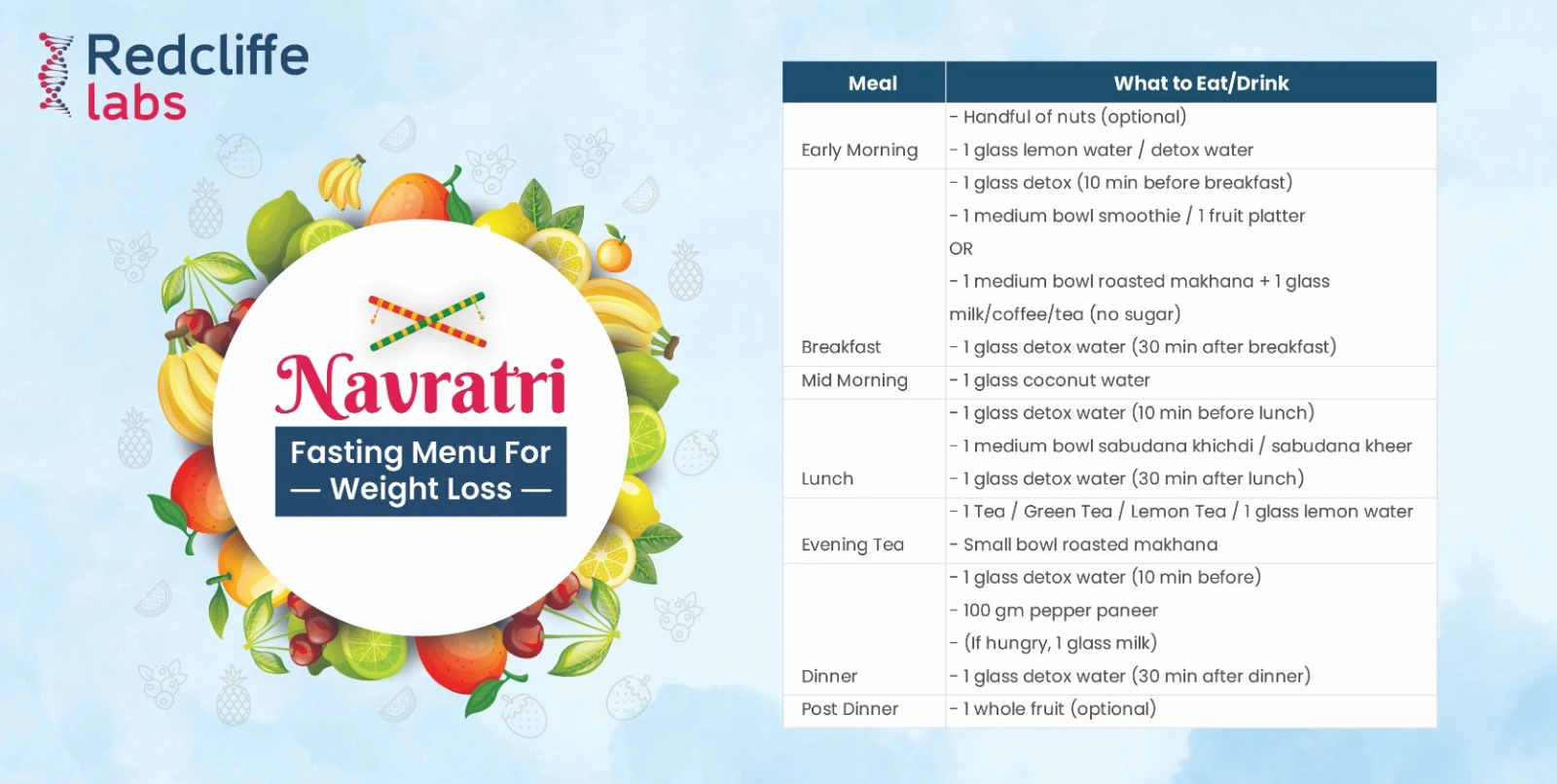
Navratri fasting doesn't mean you should go hungry. It means eating mindfully within the fasting guidelines.
This 9-day plan is structured into three phases: detox, balance, and strength, allowing your body to adapt smoothly.
Day 1-3: Detox and Eat Light
Pre Breakfast: Almonds soaked in warm lemon water (5–6).
Breakfast: Samak rice idlis with green chutney.
Mid-morning: Apple and coconut water.
Lunch: Cucumber salad, lauki ki sabzi, and kuttu atta roti.
Evening: Green tea with roasted makhana.
Dinner: Paneer bhurji or Lauki soup, which is mildly sautéed.
During the first three days, your body gets ready to cleanse and curb cravings. You can switch to a more balanced plan after the body has adjusted.
Day 4-6: Energy and Protein Balance
Pre Breakfast: Herbal tea with walnuts in the morning (2–3).
Breakfast: Sabudana khichdi with peanuts (little ghee).
Midmorning: Musk or papaya melon.
Lunch: Samak rice pulao with mixed vegetables.
Evening: Either baked aloo chaat or roasted sweet potatoes.
Dinner: Salad, paneer curry, and singhara atta roti for dinner.
Your body needs energy by the middle of Navratri to support the fasting, pooja preparation, and dance.
At this stage, balanced proteins and carbohydrates are introduced to support endurance and energy levels.
By day 6, you have burned a lot of calories with all the garba nights and pandal hopping; now it is time to replenish that energy and boost your lost immunity.
Day 7-9: Strengthening and Immunity Boost
Pre Breakfast: Warm water with chia seeds and one banana.
Breakfast: Consists of nuts and amaranth (rajgira) porridge.
Mid-day: Coconut water or buttermilk.
Lunch: Kuttu dosa with mint chutney and paneer filling.
Evening: Enjoy mixed nuts with herbal tea for a snack.
Dinner: light sabudana khichdi with vegetables and curd.
In addition to increasing immunity and ensuring your weight-loss efforts yield results, this phase, as Navratri draws to a close, keeps you energized for the lavish celebrations.
A diet by itself, however, is insufficient; you also need to understand which foods are your closest buddies and which are really slowing you down.
Note: Remember, all the food needs to be prepared in Sendha Namak (Rock Salt).
Food Items to Eat for Weight Loss During Navratri:
Here are the best weight-loss-friendly vrat foods to help you maintain a healthy fast:
Grain: Singhara atta, buckwheat (kuttu), amaranth (rajgira), and samak rice.
Protein: Milk, almonds, seeds, paneer, and yogurt (also known as curd).
Veggies: Lauki, carrots, spinach, cucumber, and pumpkin.
Fruits: Watermelon, papaya, banana, apple, and pomegranate.
Snacks: Boiled arbi, baked sweet potatoes, and roasted makhana.
Drinks: Buttermilk, tea, lemon water, and coconut water.
You can ensure your fast is nutrient-dense by including these foods.
On the other hand, there are typical pitfalls that could undo your weight loss gains.
Food to Avoid for Weight Loss During Navratri:
When consumed improperly, even vrat foods might undermine your efforts. What to omit is this:
- Deep-fried vrat snacks, such as puris, vadas, and pakoras
- Potato overuse (high starch can lead to weight gain)
- Sweets and sugary sherbets
- Packaged vrat namkeens that are high in salt and preservatives
- Too much salt (which makes you bloated)
Avoiding them will give you more energy and a lighter stomach. Combine the appropriate nutrients with wise lifestyle changes to enhance your results.
Fasting Tips for People with NCDs:
Certain vrat meals may increase your energy levels, while others may cause discomfort or trigger symptoms, depending on your health.
Making small dietary changes can make fasting safer, more efficient, and still fulfilling, regardless of whether you're treating diabetes, thyroid issues, high blood pressure, or acid reflux.
- For Diabetics:
- Avoid fried sabudana and potatoes (they contain high amounts of sugar).
- Prefer meals based on lauki, pumpkin, and paneer.
- Stick to low-glycemic index (GI) fruits like apples, guavas, and papayas.
- For Acidity:
- Avoid fried vrat snacks and too much ghee.
- Prefer dishes made with lauki, pumpkin, and cucumber.
- Eat small, frequent meals instead of large, infrequent ones.
- For hypertension (High BP):
- Limit salt intake and use sendha namak in moderation.
- Avoid fried foods that retain water and raise pressure.
- Drink coconut water for natural electrolytes.
By following these health-specific tips, you can enjoy fasting without compromising your well-being.
Simple modifications, such as portion control and mindful food choices, ensure that your Navratri experience is energizing, safe, and aligned with your personal health goals.
Easy Weight Loss Recipes for Navratri:
There is no need for monotonous meals or interminable limitations when fasting during Navratri. You can enjoy delicious, satisfying, and vrat-friendly meals that promote weight loss and maintain a high level of energy throughout the day by following the proper recipes.
These easy recipes, which range from morning porridges to evening snacks and light dinners, make it simple to stick to a diet without feeling deprived.
- Samak Idli:
Ingredients:
- 1 cup samak rice (barnyard millet)
- ½ cup curd
- ½ tsp sendha namak (rock salt)
- ½ tsp cumin seeds
Method:
- Soak samak rice for 4-5 hours.
- Grind with curd into a smooth batter.
- Add salt and cumin seeds, mix well.
- Pour the batter into idli molds and steam for 10–12 minutes.
- Baked Sabudana Tikki:
Ingredients:
- 1 cup soaked sabudana
- 1 small boiled potato
- 1 green chili, chopped
- Coriander leaves
- Sendha namak
Method:
- Mash the potatoes, then mix them with soaked sabudana and spices.
- Shape into small tikkis.
- Bake at 180°C for 10-12 minutes, or air-fry.
- Paneer Bhurji:
Ingredients:
- 100g paneer, crumbled
- 1 tsp ghee
- Chopped tomatoes, green chilies, and coriander
- Sendha namak
Method:
- Heat the ghee, add the tomatoes and green chilies, and cook for 2-3 minutes.
- Add the crumbled paneer and cook for an additional 3 minutes.
- Garnish with coriander and serve hot.
These recipes show that fasting during Navratri can be both filling and nutritious. You may satisfy your cravings, fuel your body, and enhance the enjoyment of your fasting days by opting for baked, steamed, or softly sautéed foods instead of fried or sugary ones.
Takeaway:
Navratri fasting doesn't have to mean compromise, neither on devotion nor on health. By following the correct methods, mindful eating habits, and health-specific adjustments, you can make these nine days a powerful reset for your body.
From baked sabudana tikki to light millet-based meals, small changes can make a huge difference in energy, digestion, and weight management. This Navratri, let your meals support your health, your prayers uplift your spirit, and your fasting leave you feeling lighter, fitter, and more energized for the festivities.
Frequently Asked Questions (FAQs):
Q1. Can I really lose weight while fasting during Navratri?
Yes, if you avoid fried and sugary foods and stick to light, protein-rich vrat meals, weight loss happens naturally.
Q2. Which grain is best for weight loss in Navratri?
Samak rice and kuttu are both light, gluten-free, and easy to digest, making them perfect for fasting.
Q3. Can I eat potatoes daily?
Potatoes are allowed, but too much can slow down weight loss. Swap with sweet potato or lauki for better results.
Q4. What's the best evening snack option?
Roasted makhana, baked sweet potato, or a handful of nuts.
Q5. How do I control cravings during Navratri?
Drink water before meals, use small plates for portion control, and eat fruits when you crave sweets.
Q6. Is it safe to exercise while fasting?
Yes, but stick to yoga, stretching, or brisk walking instead of intense workouts.