Is Fasting Required for a Thyroid Test?

Medically Reviewed By
Dr. Mayanka Lodha Seth
Written By Sheena Mehta
on Jan 9, 2026
Last Edit Made By Sheena Mehta
on Jan 28, 2026

Since many blood tests require fasting, it is natural to wonder whether you should fast before a thyroid test. Hence, proper preparation can help ensure accurate results and reduce anxiety.
Healthcare professionals may recommend thyroid tests to assess how well your thyroid gland is functioning. A butterfly-shaped gland positioned at the front of your neck helps control your metabolism. This gland may produce too little or too much thyroid hormone, which can indicate thyroid disease.
While imaging techniques like ultrasound are available to diagnose these disorders, doctors more commonly recommend blood tests to check if the thyroid gland is functioning correctly.
The good news: Fasting is usually not required for thyroid blood tests. These tests measure hormone levels that remain stable regardless of diet, making preparation simple for most people.
Let’s explore why you might need a thyroid test and how to prepare for it, including when fasting might be recommended.
Understanding Thyroid Blood Tests
A thyroid test is a blood test that evaluates the health of the thyroid gland. It includes:
- TSH (Thyroid Stimulating Hormone): A hormone released by the pituitary gland that indicates how well the thyroid gland is responding to the body’s need for thyroid hormones.
- T3 (Triiodothyronine): It regulates metabolism, energy levels, and body temperature.
- T4 (Thyroxine): It is the primary hormone produced by the thyroid gland that is converted into T3 to support normal growth and metabolism.
These tests help diagnose conditions such as hypothyroidism (underactive thyroid), hyperthyroidism (overactive thyroid), thyroiditis, Graves’ disease, Hashimoto’s disease and also help monitor ongoing treatment.
Who Should Get Tested?
Thyroid testing is not always included in a routine health checkup, but it can be suggested if you experience:
Symptoms of Hypothyroidism May Include:
- Weight gain
- Tiredness
- Low tolerance for cold temperatures
- Facial puffiness
- Irregular menstruation
- Constipation
- Hair loss
Symptoms of Hyperthyroidism May Include:
- Weight loss
- Tremors in the hands
- Increased heart rate
- Anxiety
- Diarrhea
Other Risk Factors Include:
- Family history of thyroid disease
- Autoimmune conditions like Type 1 diabetes or celiac disease
- Pregnancy or planning pregnancy
- Age over 35, especially in women
High-Risk Groups:
- People with a history of radiation exposure.
- Individuals with a previous history of thyroid disease or known thyroid conditions.
Monitoring Treatment:
- Individuals already diagnosed with thyroid disease may need periodic testing to help monitor thyroid function and adjust treatments as needed.
- Thyroid testing helps detect imbalances early, guide treatment, and prevent complications.
Thyroid Testing at Redcliffe Labs
At Redcliffe Labs, thyroid tests including TSH, T3, and T4 are available with home sample collection, making it easier to get tested without visiting a lab. Reports are available within 13 hours and are reviewed by qualified professionals to support timely diagnosis and follow-up.
Fasting and Timing Guidelines for Thyroid Blood Tests
Food and beverages do not significantly affect hormone levels. Always follow your doctor’s advice, but in most cases you can eat normally before sample collection.
Thyroid tests can be done any time of the day unless your doctor advises otherwise due to other tests being done at the same time.
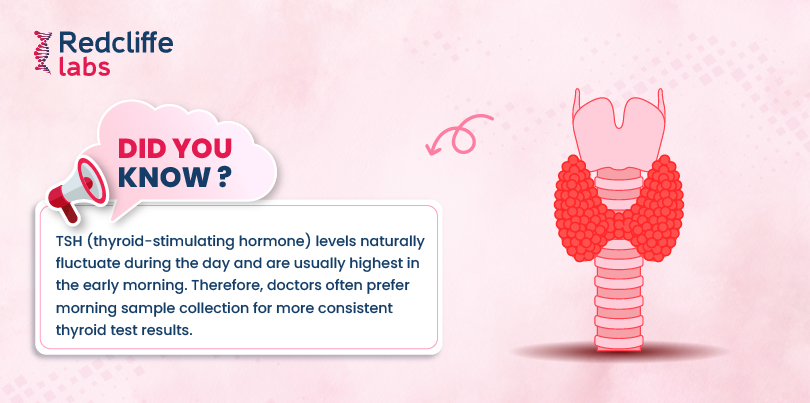
Early morning sample collection is preferred because TSH levels naturally fluctuate.
Sample Collection and Testing Process
Here’s what you can expect before, during, and after a thyroid blood test to ensure a smooth experience.
Before the Test:
- Generally, a thyroid blood test does not require any special preparation and you may eat and drink as usual unless directed otherwise by your healthcare provider.
During the Test:
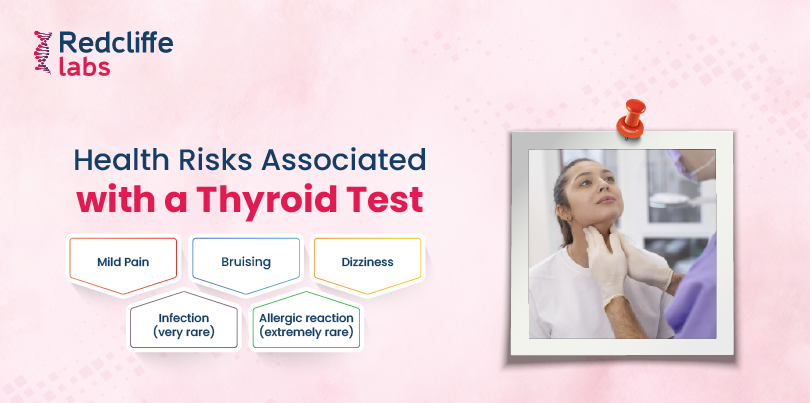
- A small blood sample will be taken from a vein in your arm during the test and is sent to a laboratory for analysis.
After the Test:
- You can resume your daily activities immediately after the test.
- Your doctor will go through the results, explain what they mean, and suggest additional tests if needed.
Food, Supplements, and Medications That May Influence Thyroid Test Results
These include:
- Food: You can eat normally before the test, as regular meals do not affect thyroid hormone levels.
- Water: Drink plain water before the test. It is considered safe and encouraged.
- Supplements: High doses of biotin (vitamin B7) may interfere with test results.
- Medications: For most accurate results, inform your doctor about any medicines or supplements you are taking, as some can affect thyroid hormone levels. Your doctor may advise timing adjustments to ensure accurate results.
Situations Where Fasting May Be Recommended
Fasting may be recommended if your thyroid test is a part of a comprehensive health checkup that includes other tests such as blood glucose, or lipid profile.
Note: In such cases, fasting is required for those tests, not the thyroid test itself.
Final thoughts
Fasting is not necessary for a standalone thyroid test. Thyroid hormone levels are not affected by food. Nevertheless, individual requirements may vary, and you may need to take the test on an empty stomach.
Always check with your doctor, especially, if the test is part of a broader health checkup to ensure the best possible results.
FAQs
1. Is it okay to take a thyroid test during pregnancy?
Yes, thyroid tests are safe and highly recommended during pregnancy. The balance of thyroid hormone is essential for normal fetal brain development and to ensure a healthy mother.
A physician would likely recommend thyroid testing if there is a pre-existing condition or if there is a history of thyroid diseases, symptoms, or risk factors, to prevent complications like miscarriage or preterm birth.
2. What is the normal range for thyroid test?
Normal Range for Thyroid Test Results may vary slightly between laboratories, typical values include:
- TSH: 0.4 to 4.0 mU/L
- Free T4: 0.7 to 1.9 ng/dL
- Free T3: 2.3 to 4.1 pg/mL
- Anti-TPO Antibodies: Less than 35 IU/mL
Doctors interpret results along with symptoms, age, pregnancy status, and medical history for accurate diagnosis.
3. Can I take thyroid tablets before thyroid test?
If you are on any thyroid medications, your doctor may advise to have your blood sample collected before your daily thyroid medication, especially when testing TSH levels.
It is important that you do not change or stop taking your thyroid medications without consulting your doctor, as it may affect accuracy of test results.
4. Do I need to fast before a thyroid test?
Most thyroid function tests, like TSH, T3, and T4, do not require fasting. Food intake has little to no impact on the hormone levels measured with these tests.
However, fasting may be advised if the thyroid test is part of a broader health checkup that includes glucose or lipid tests.
5. Why are thyroid tests done?
Thyroid blood tests are done to evaluate how well the thyroid gland is functioning. These tests are used to diagnose conditions such as:
- Hypothyroidism
- Hyperthyroidism
- Thyroiditis
- Autoimmune thyroid diseases.
Additionally, these tests help monitor the efficacy of treatment and adjust medication dosages when needed.
6. What precautions should be taken before a thyroid blood test?
Generally, no special preparation is required. However, prior to the test, you must inform your doctor of all over-the-counter medications, supplements, and recent illness, if any.
High-dose biotin supplements should be avoided for at least 24 to 48 hours before the test. Please follow all instructions provided by your doctor.
7. What does high or low TSH mean?
Elevated TSH readings (high TSH) typically imply hypothyroidism (low level of thyroid function). Conversely, decreased TSH readings (low TSH) suggest hyperthyroidism (a high degree of thyroid function).
When interpreting a TSH result, both T3 and T4 test results must be reviewed to accurately diagnose a thyroid condition.
8. How frequently should thyroid tests be taken?
In general, healthy adults without any symptoms may be advised to get tested based on risk factors. However, if you are pregnant, being treated for thyroid disease, or if you have a thyroid disease, your healthcare provider may recommend testing every 6-12 weeks until you reach a stable hormone level and move to a routine testing schedule.
9. Can thyroid tests be done at home?
Yes. Redcliffe Labs offers thyroid testing at home. Call 898 898 87 87 or download our mobile app or visit the website to book a thyroid test online
A trained phlebotomist will come to your place to collect the blood sample, which is analyzed in a certified laboratory. Results are shared digitally and reviewed by qualified medical professionals.
10. At what age should thyroid screening begin?
Routine thyroid screening is advised for adults above 35 years, especially women. Earlier testing may be needed if symptoms appear, during pregnancy, or if there is a family history of thyroid diseases or autoimmune conditions. Doctors determine screening based on individual risk factors.